 Anacortes Siding
 Board & Batten Siding for Conway Homes
Conway sits in the low, flat delta country between the Skagit River and Puget Sound, and that geography shapes what siding actually holds up here. Homes in this pocket of Skagit County take on wind-driven rain off the water, salt-laden air pulled in from the Sound, and long stretches of gray, damp weather that never really let a wall assembly dry out completely between storms. Board and batten is one of the most requested looks for farmhouses, shop-style homes, and newer builds in this area, and it can be a genuinely good fit for the region's aesthetic. Whether it holds up depends entirely on what it's made of and how it's installed.
This page covers board and batten siding specifically for Conway properties — what the local climate demands from a vertical siding system, what correct installation looks like, and why we install this profile only in James Hardie fiber cement rather than wood or vinyl-style alternatives.
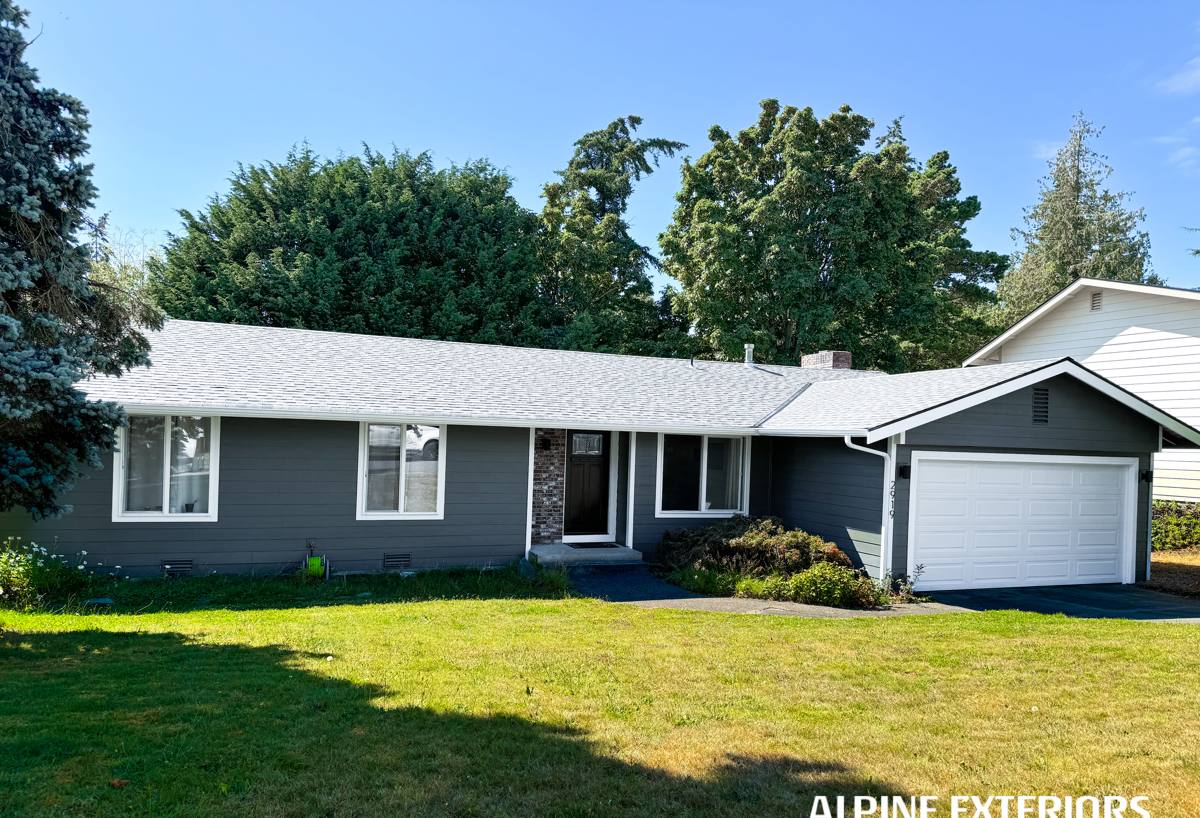
What Conway's Climate Does to Vertical Siding
Board and batten is a vertical siding pattern: wide boards or panels with narrow battens covering the seams. That vertical orientation is part of why it looks so good on rural and semi-rural homes, but it also means every seam runs with gravity instead of shedding water horizontally the way lap siding does. In a climate like Conway's, that detail matters more than it would somewhere dry.
Salt Air
Proximity to Puget Sound means airborne salt is a constant, low-level presence on exterior surfaces here, even a few miles inland. Salt accelerates corrosion of fasteners and metal flashing and speeds up the breakdown of paint films and lower-grade composite products. Any board and batten system in this area needs corrosion-resistant fasteners and a finish that isn't going to chalk or fail early from salt exposure.
Driving Rain
Storms coming off the water don't just fall straight down — they drive rain sideways into vertical seams, batten joints, and around window and door openings. A board and batten wall with poor flashing detail or gaps behind the battens gives that wind-driven water a direct path to the sheathing.
A Long Moss Season
Skagit County's shaded, moisture-heavy winters run long, and board and batten's vertical grooves and batten shadow lines are exactly the kind of surface where moss, algae, and mildew like to establish themselves — especially on north-facing walls and anywhere tree cover keeps a wall from drying out between rains. A siding material that absorbs moisture gives that growth something to root into. A material that doesn't absorb water just gets a rinse.
What a Correct Board & Batten Job Involves
The board and batten look is simple. Doing it correctly, so it survives a Conway winter for decades instead of years, comes down to details most homeowners never see once the job is finished.
Water Management Behind the Boards
Every board and batten installation we do starts with a drainage plane — a weather-resistive barrier and, on most walls, a rainscreen gap that lets any moisture that gets behind the siding drain and evaporate instead of sitting against the sheathing. This is the single biggest difference between a board and batten wall that lasts and one that rots from the inside out, and it's invisible once the siding goes up.
Flashing at Every Penetration
Windows, doors, hose bibs, light fixtures, and any other penetration through a board and batten wall need proper head flashing and kick-out flashing where a roofline meets the wall. Vertical siding patterns are less forgiving of flashing shortcuts than horizontal lap siding, because a missed detail sends water straight down the seam instead of shedding it outward.
Fastening and Batten Spacing
Battens need to be fastened into framing, not just into sheathing, and spaced and blind- or face-nailed according to the manufacturer's engineering — not by eye. Correct fastener type matters as much as placement given the salt exposure described above; the wrong fastener corrodes, stains the siding, and eventually loosens the batten.
Proper Clearance at the Bottom
Board and batten siding installed too close to grade, a deck, or a roofline is one of the most common failure points we see on this style of siding. Manufacturer-specified clearance keeps splash-back and standing moisture away from the bottom edge of the boards.
Why We Install Board & Batten Only in James Hardie
Board and batten is available in real wood, engineered wood, vinyl-style panel systems, and fiber cement. We install it exclusively in James Hardie fiber cement, and the reasoning is straightforward given everything above.
Fiber cement doesn't absorb water the way wood and wood-composite products do, which matters enormously on a vertical profile in a climate that stays damp for months at a time. It doesn't feed moss and mildew growth the way organic wood fiber can. It holds a factory-applied ColorPlus finish that's engineered to resist fading and chalking under UV and salt exposure far longer than field-applied paint, which means fewer repaint cycles over the life of the siding — a real consideration on a profile with this much visible trim and seam detail. And it's non-combustible, which is a growing consideration for homeowners in this region regardless of siding profile.
James Hardie's board and batten options are purpose-built for this look, not a retrofit of a lap product. HardiePanel vertical siding paired with HardieTrim battens gives you the same shadow-line aesthetic as traditional board and batten, engineered as a system with documented fastening and clearance specs — which is what lets us stand behind the installation.
| Factor | Wood / Engineered Wood | Vinyl-Style Panel | James Hardie Fiber Cement |
|---|---|---|---|
| Moisture absorption | High — swells, cups, invites rot | None, but panels can warp with heat/cold cycling | Minimal — engineered for wet climates |
| Moss/algae resistance | Poor without frequent cleaning | Fair | Good; factory finish sheds growth more easily |
| Finish longevity | Repaint every 3-7 years | Can fade/chalk; color baked in, not repaintable easily | ColorPlus finish typically outlasts field paint significantly |
| Fire performance | Combustible | Can soften/deform near heat | Non-combustible |
| Salt air durability | Fasteners and finish degrade faster | Panels generally hold up; seams can be a weak point | Engineered for coastal and marine-influenced climates |
Our Process for Conway Projects
Every board and batten job we take on in Conway starts with an on-site look at the specific exposure of that wall — which elevations take the most wind-driven rain, where tree cover keeps moisture around longer, how close grade or hardscape sits to the wall base. That assessment drives decisions on rainscreen use, flashing detail, and clearance before a single board goes up.
- On-site evaluation of existing siding, sheathing condition, and moisture exposure by elevation
- Written scope covering drainage plane, flashing, batten layout, and fastening schedule
- Removal of failing siding and inspection of sheathing for hidden rot before covering anything up
- Installation to James Hardie's published specifications for batten spacing, fastener type, and ground clearance
- Flashing at every window, door, and roof-to-wall intersection
- Final walkthrough covering care and what to watch for going forward
Maintaining Board & Batten Siding in a Wet Climate
Fiber cement board and batten is low-maintenance, not no-maintenance. A short annual routine keeps it performing the way it's designed to, especially given how much moss and algae pressure this area sees.
- Rinse the siding annually, focusing on shaded and north-facing walls where moss and algae take hold first
- Check caulking at trim and window edges yearly and re-caulk any joints that have opened up
- Keep gutters clear so overflow doesn't run down the face of the siding
- Trim back vegetation and tree cover that keeps a wall from drying out between rains
- Watch the bottom few inches of siding near grade, decks, and walkways for splash-back staining
Why Local Experience Matters for This Style
Board and batten looks straightforward from the curb, but it's one of the less forgiving siding profiles when it comes to water management — every mistake in flashing or drainage plane shows up as a vertical seam pointed straight at the sheathing. A crew that already works walls exposed to Skagit County's combination of salt air, driving storms, and long wet winters knows where those failures actually start on this style of siding, and builds the wall to keep water moving out instead of in. That's the difference between board and batten that looks good for two years and board and batten that holds up for decades.
If you're planning a board and batten project in Conway, we'll walk your home, look at how weather actually hits your walls, and put together a straightforward scope — no pressure, no surprises. Request a free estimate below and we'll get you a time that works.