 Anacortes Siding
 The Question Every Anacortes Homeowner Eventually Asks
At some point, almost every siding job on Fidalgo Island starts with the same question: is this a repair, or does the whole wall need to come off? It's a fair question, and the honest answer is "it depends" — but it doesn't have to be a guessing game. There are specific, checkable signs that separate a legitimate spot repair from a house that's telling you it's done. This page walks through how to tell the difference, what our climate here in Skagit County does to that decision, and how to think about cost before you commit either way.
We're not going to tell you every job is a replacement job. Plenty aren't. But we will tell you what we look for, in plain terms, so you can make a decision that fits your house and your budget instead of just taking someone's word for it.
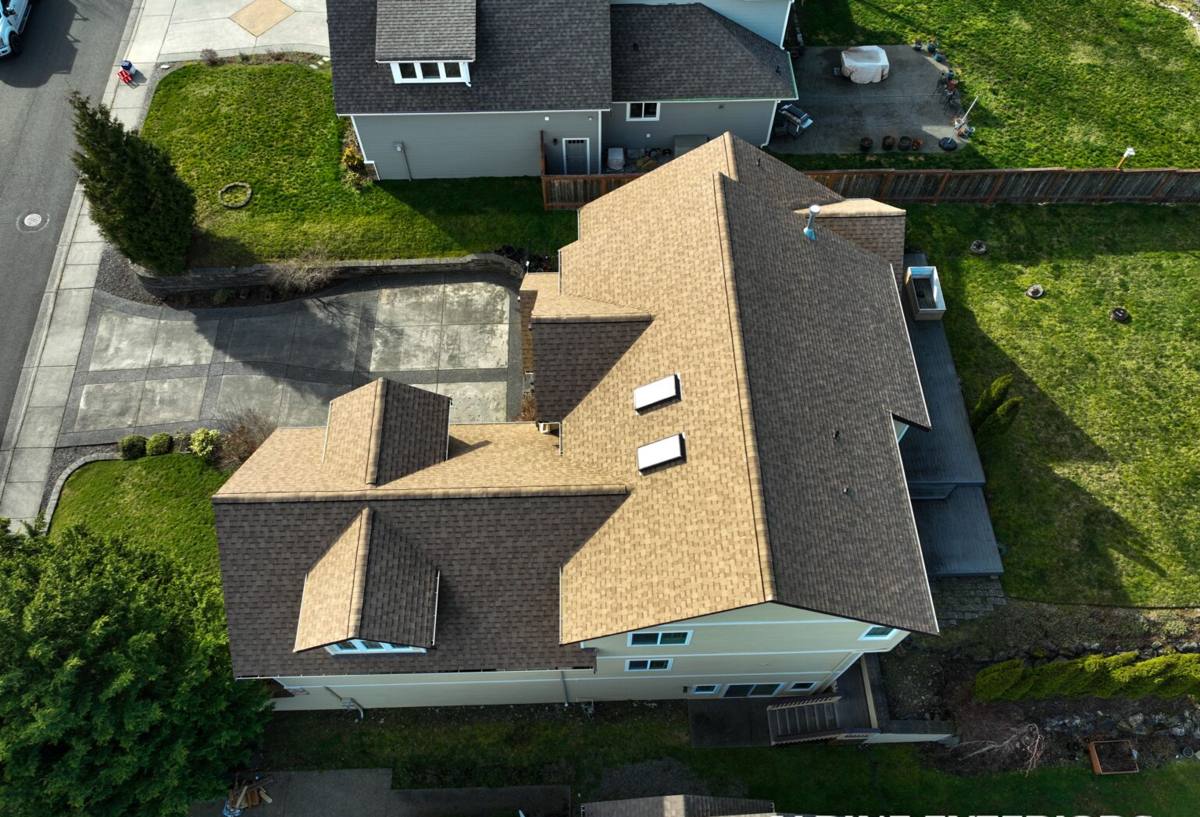
Signs Your Siding Can Still Be Repaired
If the damage is limited and the material underneath is sound, repair is usually the right call. Look for these patterns:
- Damage confined to one or two boards or panels — a cracked piece from a falling branch, a dent from a ladder, a section that got hit by a mower-thrown rock.
- Failure at a specific detail — a butt joint that opened up, a piece of trim that pulled away, caulking that's failed at one window.
- Cosmetic fading or chalking on siding that's otherwise structurally solid, especially on newer material.
- Isolated moisture staining that hasn't traveled — meaning the sheathing behind it, when checked, is still dry and firm.
- Loose or missing fasteners on an otherwise intact wall.
In these cases, a good repair — matched material, correct fastening, proper flashing at the repair edges — can genuinely extend the life of the siding for years without the cost of a full re-side.
Signs You're Really Looking at Replacement
The harder conversation is when the damage looks small on the surface but the wall behind it isn't. These are the signs that tell us patching would just be delaying — and often hiding — a bigger problem:
- Soft or spongy spots when you press on the siding, especially near the bottom courses, around windows, or at deck ledgers.
- Damage that shows up in multiple, unrelated spots across the house rather than one isolated area — a sign of age or systemic moisture exposure rather than a single incident.
- Visible delamination or swelling on engineered wood products, or persistent bubbling under paint.
- A musty smell or interior wall staining that lines up with an exterior siding problem — that usually means water has already gotten past the siding.
- Siding that's simply reached the end of its expected service life, even if it "looks okay" from the street.
- Repeated repairs to the same wall over the past several years without the underlying moisture source ever being fixed.
If you're seeing two or more of these, it's worth having someone actually pull a board or check behind the trim before you decide, rather than repairing what's visible and leaving what isn't.
Why Anacortes' Climate Changes the Math
This decision doesn't play out the same way here as it would somewhere dry and inland. Anacortes sits right on the water, and the marine environment affects siding in ways that are easy to underestimate:
Salt Air
Homes closer to the waterfront and ferry terminal deal with airborne salt that accelerates corrosion on fasteners, flashing, and any exposed metal trim. A repair that reuses old fasteners or skips corrosion-resistant hardware tends to fail again faster here than it would inland.
Driving Rain
Wind off the Salish Sea doesn't just drop rain straight down — it drives it sideways into walls, which is exactly the condition that finds every weak seam, gap, and undersized overlap in a siding system. A repair that would hold up fine in a calmer climate can still leak here if the water-shedding details aren't done right.
A Long Moss Season
Skagit County's damp, mild stretch from fall through spring keeps moss, algae, and mildew active on north-facing and shaded walls for much of the year. Beyond the cosmetic issue, moss holds moisture against the siding surface longer, which matters a lot more for wood-based products than for materials engineered to resist it.
All three of these push the same direction: on this peninsula, marginal siding tends to fail sooner than the manufacturer's spec sheet would suggest, and a repair on a wall that's already fighting moisture and salt exposure has a shorter clock than the same repair would have somewhere drier.
Repair vs. Replacement, by Material
Not all siding materials age or fail the same way, and that affects whether a repair is worth doing at all. Here's how the materials we commonly see on Anacortes homes tend to behave:
| Material | How It Typically Fails | Repairability |
|---|---|---|
| Cedar / primed spruce | Rot at end grain and butt joints, cupping, paint failure from repeated wet-dry cycling | Repairable early on; once rot sets in, it usually spreads faster than patches can keep up with |
| Vinyl | Cracking in cold snaps, fading, warping near heat sources, panels popping loose in wind | Individual panels can be swapped, but color-matching aged vinyl is difficult and the whole wall can look patchworked |
| LP SmartSide (engineered wood) | Edge swelling and delamination where moisture gets into the substrate, especially at cut ends and seams | Repairable if caught early; once the substrate swells, the board itself is compromised and needs replacing, not patching |
| Fiber cement (James Hardie) | Rarely rots or delaminates; most failures are workmanship-related — caulking, flashing, or fastener issues rather than the material itself | Individual planks can be replaced cleanly without disturbing the rest of the wall |
This is a big part of why we standardized on James Hardie fiber cement for the work we install: it's non-combustible, dimensionally stable, and doesn't swell or delaminate the way wood-based products can when moisture gets past a seam. That doesn't mean it's immune to problems — bad flashing or a poor caulk job can cause issues on any siding — but the material itself isn't usually the failure point, which makes future repairs simpler and less likely in the first place.
What Repair vs. Replacement Actually Costs
Cost is rarely just "repair is cheap, replacement is expensive." The real comparison has to account for what you're buying with each option:
| Factor | Repair | Full Replacement |
|---|---|---|
| Upfront cost | Lower — limited to affected area and access | Higher — full material, labor, and disposal for the whole house |
| Color/material match | Can be difficult if the original product is discontinued or faded | Not an issue — everything is new and consistent |
| Warranty | Usually limited to the repaired section and workmanship | Full manufacturer and installer warranty across the whole house |
| What's behind the wall | Only inspected where the repair happens | Sheathing, flashing, and moisture barrier can be fully inspected and corrected |
| Long-term cost | Can add up if repeated over several years on an aging wall | One project resets the clock on the whole exterior |
The honest rule of thumb: if you're facing your first repair on a wall, or an isolated incident, repair almost always makes financial sense. If you're looking at your third or fourth repair on the same wall, or repairs are showing up in new spots every year or two, the math usually favors replacement — you're paying repair prices repeatedly for a problem that a full re-side would solve once.
The Hidden Cost of "Just Patch It"
The riskiest version of this decision is patching over damage without checking what's behind it. Siding is a system — the visible material is the last line of defense, sitting in front of a water-resistive barrier, flashing details, and the wall sheathing. If moisture has already worked its way behind a damaged section, replacing just the surface material without addressing what's underneath doesn't fix the problem — it just makes it harder to see next time.
This is especially relevant on older Anacortes homes near the water, where decades of driving rain and salt exposure can mean the sheathing behind an aging wall isn't in the shape you'd assume from the outside. A repair done right always includes checking what's underneath before closing the wall back up, even if that means the estimate changes once the siding actually comes off.
A Quick Self-Assessment Before You Call Anyone
Before you decide which conversation you're having, walk your exterior and check:
- Is the damage in one spot, or showing up in multiple places around the house?
- Does the siding feel firm when you press on it, or soft and spongy?
- Is there staining, bubbling, or a musty smell on the inside wall behind the damaged area?
- Do you know roughly how old the current siding is, and where it falls relative to its expected lifespan?
- Has this same wall been repaired before — and did the repair actually hold?
- Is the affected wall a north-facing or shaded side that stays damp and mossy most of the year?
If most of your answers point toward "isolated, firm, and dry," a repair is a reasonable place to start. If you're circling "soft," "repeated," or "spreading," it's worth getting a full look before spending money on a patch that won't hold.
What We Recommend When Replacement Is the Right Call
When a house does need a full re-side, this is where our position is straightforward: we install James Hardie fiber cement siding, and that's it. We don't put up vinyl, LP SmartSide, Cemplank, Allura, or unprimed cedar and spruce, because after years of doing this work in a marine climate, we've seen how those products age here specifically — and we'd rather stand behind one system we trust completely than offer several we have reservations about.
James Hardie's HZ5 product line is engineered for exactly the conditions Anacortes deals with — moisture cycling, wind-driven rain, and the freeze-thaw swings that come with Pacific Northwest winters. The ColorPlus factory finish holds up to UV and salt air better than field-applied paint, and the warranty is transferable if you sell the house. None of that makes a Hardie installation immune to problems — bad flashing or poor caulking can still cause issues on any siding system — but it does mean the material itself isn't the thing likely to fail first.
Get an Honest Look Before You Decide
The right answer for your house depends on what's actually happening behind the siding, not just what it looks like from the driveway. If you're weighing repair against replacement, we're glad to come take a look, tell you honestly which side of that line your house falls on, and walk you through what a repair or a full re-side would actually involve — no pressure, no obligation. Reach out for a free estimate whenever you're ready.