 Anacortes Siding
 Vinyl Siding Isn't a Bad Product — It's Just Not Right for This Coastline
We get asked about vinyl siding often enough that it's worth explaining plainly why we don't install it, even though it's one of the most common siding materials sold in the country. Vinyl isn't junk. It's affordable, it's light, it goes up fast, and for a lot of climates it does a perfectly reasonable job for a while. Our objection isn't that vinyl is a scam or that every vinyl job fails. It's that Anacortes sits in a specific climate niche — salt air off Rosario Strait and Guemes Channel, driving rain that comes in sideways off the Sound, and a moss season that can run nine months of the year — and vinyl's known weak points line up almost exactly with what this stretch of Skagit County throws at a house.
As a company, we made a call a while back to install one siding system, James Hardie fiber cement, and to stop installing everything else, including vinyl, LP SmartSide, and cedar. This page is about the vinyl half of that decision.
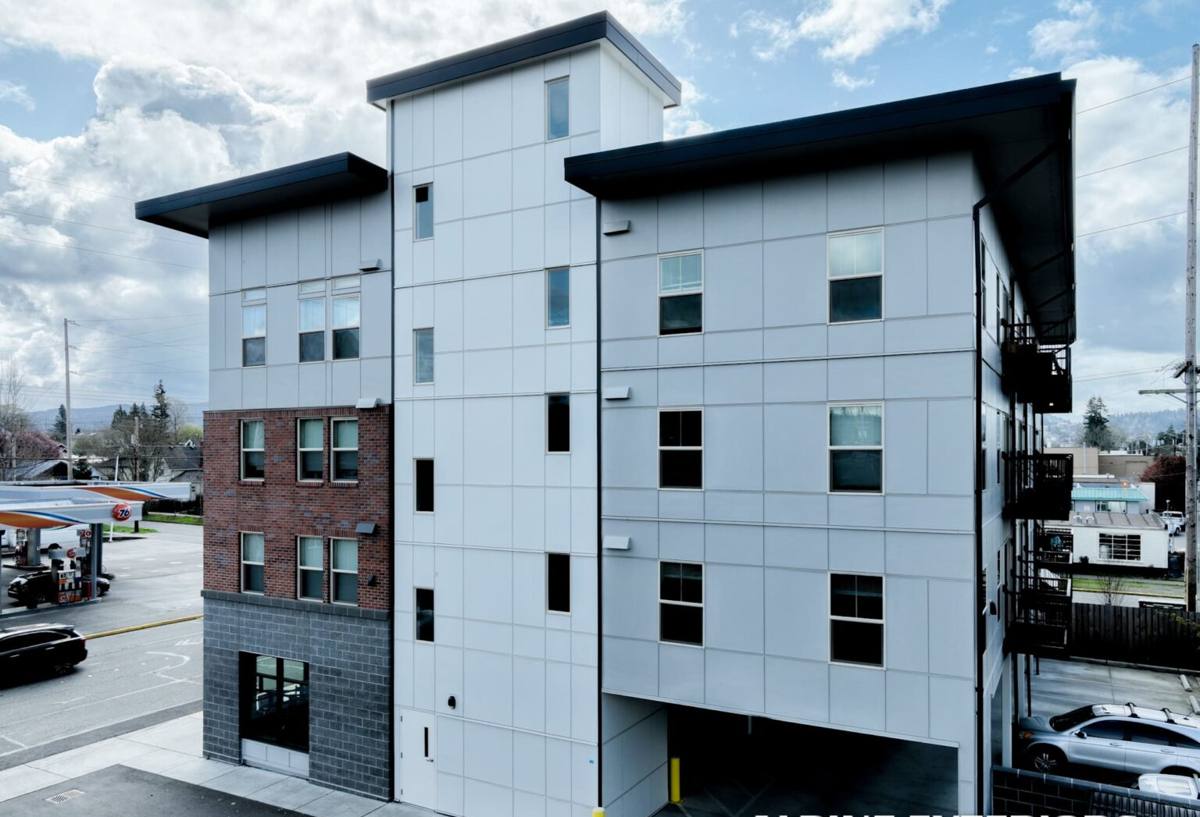
What Vinyl Siding Actually Gets Right
Fair is fair. Vinyl earns its popularity honestly:
- Lower material and installation cost than fiber cement or wood
- Lightweight, which speeds up installation labor
- Won't rot, and doesn't need repainting the way wood does
- Wide color and profile selection from most manufacturers
- Reasonable performance in dry, moderate climates with little coastal exposure
If you live somewhere with mild humidity, minimal salt exposure, and calm weather patterns, vinyl can be a sound, budget-friendly choice for decades. Anacortes just isn't that place.
Salt Air Is the First Problem
Anacortes is a peninsula town surrounded by saltwater on three sides. Salt-laden air moves inland with the wind and settles on every exterior surface, including siding. Vinyl itself doesn't corrode the way metal does, but the fasteners, trim accessories, and any exposed metal flashing behind and around a vinyl installation are vulnerable to accelerated corrosion in a salt environment. Over years, that corrosion can loosen panels, stain trim, and create small gaps where wind-driven moisture works its way in.
Vinyl also chalks and fades faster under UV and salt exposure than most homeowners expect from the sales pitch. The color is baked into the material, so it won't peel, but it does dull, and that dulling happens noticeably faster on west- and south-facing elevations that catch both sun and salt spray off the water.
Heat, Sun, and Panel Movement
Vinyl is a plastic product, and plastic expands and contracts with temperature more than fiber cement or wood. Anacortes doesn't get brutal summer heat, but southwest-facing walls that catch direct afternoon sun for extended stretches can still get hot enough to cause visible waviness or "oil-canning" in vinyl panels, especially darker colors that absorb more heat. It's rarely a structural problem, but it's a permanent cosmetic one, and once a panel telegraphs waviness, it doesn't correct itself.
Driving Rain and Wind-Driven Water
Vinyl siding is installed as an overlapping, hanging system — panels lock into each other and hang loosely on nailing flanges rather than being fastened tight to the wall. That design assumes rain falls mostly straight down and drains off the face of the panel. It works fine in that scenario.
Anacortes doesn't get that scenario very often. Storms coming off the Strait of Juan de Fuca and the Sound routinely arrive with real horizontal force, and driving rain gets pushed sideways and even slightly upward into panel laps, seams, and J-channels around windows and corners. Because vinyl relies on the water-resistive barrier and flashing behind it to do the real waterproofing work, any gap, warped panel, or degraded caulk joint becomes an entry point. The failures we see aren't usually in the vinyl itself — they're in the wall assembly behind it, discovered only when siding comes off for a remodel or repair.
Moss, Mildew, and the Space Behind the Panel
Skagit County's long wet season is hard on any exterior surface, but the loose-hanging design of vinyl creates a shaded, often damp cavity between the panel and the house wrap that's a comfortable environment for algae and mildew to take hold, particularly on north-facing walls and anywhere trees keep a wall in shade most of the day. Vinyl doesn't feed mold the way wood siding can, but the grime and green-black staining that builds up in its ribbed profile is difficult to fully clean without pressure washing aggressively enough to risk driving water behind the panels — which defeats the point of cleaning it in the first place.
Impact and Wind Resistance
Vinyl is more brittle in cold temperatures and can crack from impact — a thrown rock, a ladder bump, hail, debris in a windstorm — in ways that are difficult to spot-repair cleanly. Discontinued colors and profiles are a real issue industry-wide; a five- or ten-year-old vinyl siding job with a cracked panel often can't be matched exactly, leaving a visibly different patch. Wind is the other factor: Anacortes gets genuine winter windstorms off the water, and vinyl's fastening system is rated for wind resistance, but panels that aren't installed with the exact nailing pattern and clearance the manufacturer specifies are more prone to rattling loose or blowing off in a bad storm. That's an installation-sensitivity problem as much as a material one, but it's one more reason we don't want our name on it.
Vinyl and Fiber Cement Side by Side
| Factor | Vinyl Siding | James Hardie Fiber Cement |
|---|---|---|
| Salt air / coastal exposure | Fasteners and trim vulnerable to corrosion; fades and chalks faster | Non-combustible, engineered for moisture and coastal climates |
| Driving rain resistance | Relies entirely on the barrier behind it; loose panel design | Rigid panel, tight installation, proper flashing detail |
| Heat / sun exposure | Can warp or oil-can on hot, sun-exposed walls | Dimensionally stable; won't warp from heat |
| Moss and algae | Hanging design traps moisture behind panel | Tight to the wall assembly with proper drainage plane |
| Impact resistance | Can crack in cold; hard to color-match repairs later | Dense, impact-resistant fiber cement board |
| Finish | Color molded through material; fades over time | Factory-baked ColorPlus finish with long fade warranty |
| Upfront cost | Lower | Higher |
| Typical lifespan before major issues | 15-25 years, climate dependent | Decades, with proper installation and maintenance |
None of this means every vinyl-sided house in town is falling apart. It means the margin for error is thinner here than it is in a drier, calmer climate, and the failure points tend to show up in the wall assembly rather than on the surface, which makes them easy to miss until they're expensive.
Why We Standardized on James Hardie Instead
We install James Hardie fiber cement siding exclusively. It's a cement-and-cellulose composite, non-combustible, engineered specifically for different climate zones through Hardie's HZ product lines, and finished with a factory-applied ColorPlus coating that holds color far longer than field-painted or molded-through finishes. It's heavier and more labor-intensive to install correctly than vinyl, and it costs more up front. We think that trade-off is worth it on a peninsula where the house is going to spend every day of its life absorbing salt air, taking rain sideways, and sitting under a marine layer that keeps things damp.
Hardie siding is also backed by a strong, transferable manufacturer warranty when installed to spec — which matters, because fiber cement's real-world performance depends heavily on correct installation: proper clearances, fastening, joint treatment, and flashing detail. That's true of any siding system, but it's especially true here, and it's the standard we hold every job to.
What We'd Tell You to Check If You're Still Considering Vinyl
If another contractor is quoting vinyl for your Anacortes home and you're weighing it against fiber cement, these are the questions worth asking before you decide:
- What's the wind rating of the specific vinyl product, and is your home's exposure (open water view, hilltop, tree line) factored into that rating?
- What house wrap and flashing details are being used behind the siding, not just the panel brand?
- Is the color you're picking still in production, in case a repair is needed in ten years?
- What's the manufacturer's warranty for coastal or high-salt environments specifically, and does it require anything of the installer to stay valid?
- How is the contractor detailing corners, window trim, and butt joints where wind-driven rain concentrates?
- Who's responsible if moisture is found behind the siding five years from now — the installer, the manufacturer, or you?
We're not the right contractor for a vinyl job, since we don't install it, but those questions apply no matter who ends up doing the work.
Get a Straight Answer for Your Home
Every house on this peninsula sits a little differently — how exposed it is to wind off the water, how much shade it holds, which walls take the worst of the rain. We're happy to walk your property, point out where those factors matter most, and give you a straightforward estimate for James Hardie fiber cement siding, with no pressure and no obligation.