 Anacortes Siding
 Siding Built for Skyline's Corner of Skagit County
Skyline sits close enough to the water that Anacortes' marine weather is a daily fact of life, not an occasional event. Homes here deal with salt-laden air blowing off Rosario Strait and Guemes Channel, long stretches of driving rain through fall and winter, and a moss and mildew season that can run eight or nine months out of the year in shaded, north-facing spots. Siding in this neighborhood isn't just a cosmetic choice — it's the first line of defense against moisture intrusion, and the material and installation quality matter more here than they would in a drier inland climate.
We install James Hardie fiber cement siding exclusively. That's not a marketing line — it's a standard we hold ourselves to because we've seen what Skagit County's climate does to lesser-suited products over time, and we'd rather turn down a job than install something we don't believe will hold up on a Skyline exterior.
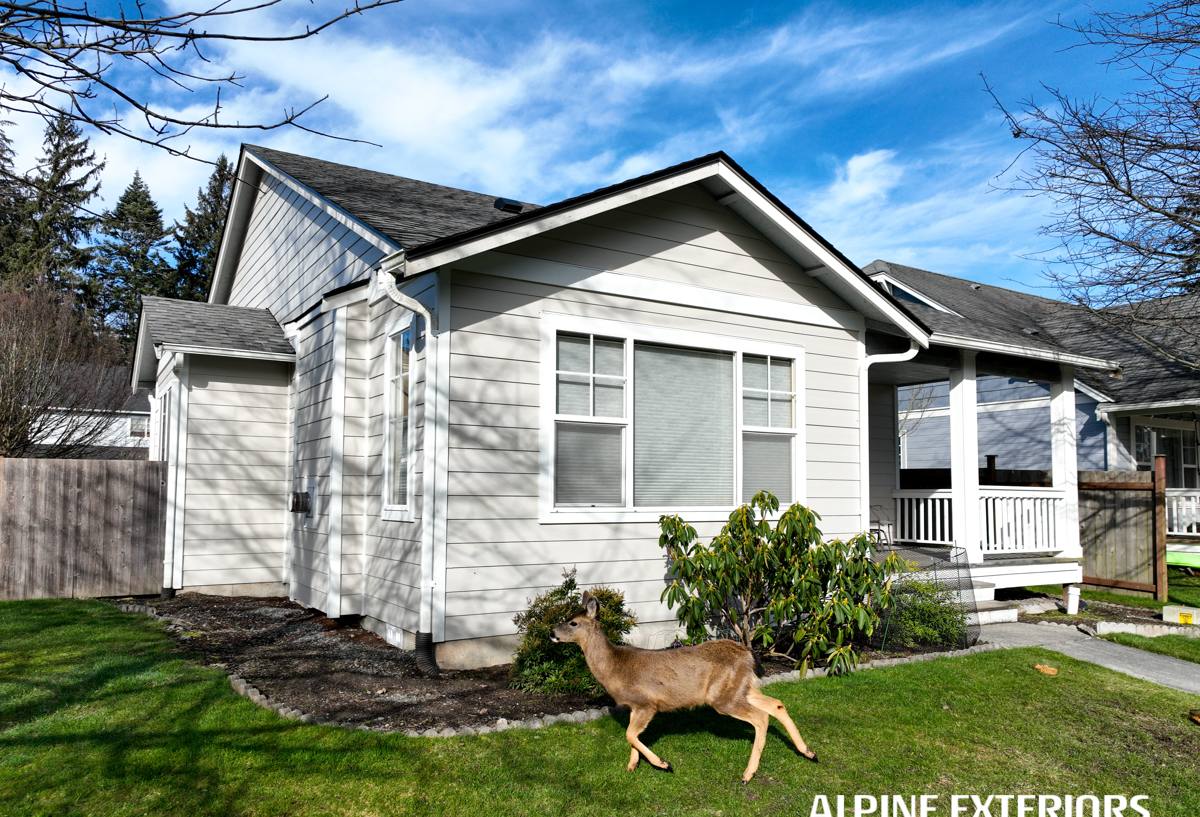
What Skyline Homes Actually Face
Salt Air and Metal Fastener Corrosion
Properties within a mile or two of the water take on airborne salt that accelerates corrosion of exposed fasteners, flashing, and unprotected trim. Over years, this shows up as rust streaking, staining, and eventually failure points where water can sneak behind the siding plane. Correct fastener selection and flashing details matter more here than in most parts of the state.
Driving Rain and Wind-Driven Moisture
Storms coming off the Strait don't just fall straight down — wind pushes rain sideways into wall assemblies, especially on west and southwest exposures. Siding systems with weak seams, absorbent substrates, or poor lap detailing are the ones that let water find its way behind the cladding. A house that "looks fine" from the street can still be taking on moisture at the laps if it wasn't installed with the right overlaps and gaps.
Moss, Algae, and Prolonged Dampness
Skyline's tree cover and marine humidity keep north- and east-facing walls damp for much of the year. Moss and algae growth on siding isn't just an appearance issue — sustained dampness against a wall surface is exactly the condition that breaks down materials that can't tolerate repeated wetting and drying cycles.
Why We Standardized on James Hardie
James Hardie fiber cement is engineered specifically for the kind of climate exposure Anacortes and the rest of Skagit County deal with. It's non-combustible, dimensionally stable, and doesn't absorb and swell with moisture the way wood-based or wood-adjacent products can. Hardie's factory-applied ColorPlus finish is baked on under controlled conditions, which gives it far more consistent adhesion and fade resistance than field-applied paint ever achieves — a real advantage in a climate where exterior paint jobs take a beating from UV, salt, and rain in the same season.
We also value that Hardie backs its products with a strong, transferable warranty and manufactures HZ5 product lines specifically engineered for the kind of moisture and freeze-thaw cycling the Pacific Northwest sees. When it's installed to Hardie's published specifications — correct clearances, proper fastening, sealed cut edges, and flashing that actually sheds water — it's a system we're comfortable standing behind for decades, not just through the warranty period.
Why We Don't Install Everything Else
Homeowners in Skyline sometimes ask us to bid vinyl siding, LP SmartSide, Cemplank, Allura, or primed spruce and cedar products. We don't install any of them, and we think it's fair to explain why rather than just saying no.
- Vinyl siding is inexpensive and low-maintenance in mild climates, but it can become brittle in cold snaps, distort under sustained heat, and its seams and J-channels are common points where wind-driven rain gets behind the cladding — a real risk given how much sideways rain Skyline sees.
- LP SmartSide is an engineered wood product. It performs reasonably well when detailing is perfect, but wood-based substrates are inherently more vulnerable to swelling, delamination, and rot if moisture finds a way in — and in a marine climate with near-constant humidity, that margin for error is thinner than we're comfortable with.
- Cemplank and Allura are fiber cement competitors to Hardie, and on paper they look similar. In practice, we've found Hardie's factory finish quality, engineering tolerances, and warranty structure to be more consistent, and we'd rather standardize on one system we know thoroughly than juggle multiple product lines with different installation quirks.
- Primed spruce and cedar are real wood. They can look beautiful, but they require ongoing maintenance — recaulking, repainting, and vigilance against rot — that most homeowners underestimate, especially in a climate that gives wood siding very little time to dry out between rain events.
None of these are "bad" products in every context. They're just trade-offs we've decided aren't worth making on a Skagit County exterior, where the climate doesn't offer much forgiveness for installation shortcuts or material weaknesses.
Comparing Siding Options for a Marine Climate
| Material | Moisture Resistance | Maintenance Burden | Typical Lifespan Here |
|---|---|---|---|
| James Hardie fiber cement | Excellent when installed to spec | Low — occasional wash, no repainting for years | 30+ years |
| Vinyl | Moderate — seam and channel vulnerabilities | Low, but limited repair options | 15-25 years |
| LP SmartSide / engineered wood | Moderate — depends heavily on detailing | Moderate — inspect seams and cut edges | 20-30 years with diligence |
| Cedar / primed spruce | Lower without diligent upkeep | High — recoat and recaulk regularly | 15-25 years with upkeep |
How Our Process Works for a Skyline Project
Assessment and Moisture Check
We start by walking the exterior and looking specifically at the areas most exposed to weather: west and south walls, anything near grade, and spots where past caulking or trim work suggests prior moisture issues. On homes with existing wood or composite siding, we check for soft spots, delamination, and staining before we ever talk product.
Removal and Sheathing Inspection
Once old siding comes off, we inspect the sheathing and house wrap underneath. This is often where the real story is — hidden rot or compromised weather barriers that wouldn't show from the outside. Anything damaged gets repaired before new siding goes on; covering up a problem with new material doesn't fix it.
Installation to Manufacturer Spec
Correct installation is what actually makes the difference between siding that lasts three decades and siding that fails in ten years. That means proper clearances from grade and roof lines, correctly lapped and sealed joints, factory-matched touch-up where needed, and flashing details sized for the amount of rain this area actually gets — not the minimum code requirement.
Final Walkthrough
We walk the finished job with the homeowner, checking sightlines, trim details, and touch-up work before calling it done.
Beyond Siding: Roofing, Windows, and Decks
Siding rarely fails in isolation. A roof that's shedding water improperly, windows with failing flashing, or a deck ledger board that's trapping moisture against the house can all undermine even well-installed siding. Because we handle roofing, window replacement, and deck construction as well, we look at the whole exterior envelope rather than treating siding as a standalone project — which matters in a climate where water finds every gap you leave it.
What to Ask Before Hiring Any Siding Contractor
- Are they licensed and insured in Washington State, and can they provide proof without hesitation?
- Do they carry manufacturer certification for the specific siding product they're proposing to install?
- Will they inspect and repair sheathing and house wrap before installing new siding, or just cover what's there?
- Do they detail flashing and clearances specifically for wind-driven rain, or use generic national installation minimums?
- Is their warranty tied to the manufacturer's transferable warranty, and do they explain what voids it?
A local crew that works Skagit County exteriors regularly will have answers to all of these without needing to look anything up — because they've run into these exact conditions on other Anacortes-area homes.
Why a Local Crew Matters in Skyline
Contractors who don't work this specific stretch of coastline regularly can miss the details that matter here — how much clearance to leave near grade given the rainfall totals, which exposures need extra attention to flashing, and how much moss and algae growth to expect on shaded walls. We work Anacortes and the surrounding Skagit County area consistently, which means we're not guessing at how James Hardie siding needs to be detailed for this specific combination of salt air, rain, and shade.
If you're weighing a siding project for a home in Skyline, we're happy to take a look and walk you through what we see — no pressure, no obligation. Use the form below to request a free estimate.