 Anacortes Siding
 Conway's Exterior Challenge: Low, Wet, and Salt-Touched
Conway sits down in the Skagit River valley, close enough to the water that homes there deal with a particular combination of conditions: damp, low-lying ground that holds moisture longer than higher terrain, salt-laden air drifting in off the nearby saltwater, and a wet season that can stretch for months at a time. It's a beautiful place to live, but it's not an easy place to be a house exterior. Siding, trim, roofing, and window seals in this part of Skagit County take a steady beating from moisture, and the homes that hold up best are the ones built and maintained with that reality in mind.
We work throughout the Anacortes area and out into communities like Conway because the exterior problems here are consistent and predictable once you've seen enough of them. Homes need materials and installation details that are matched to this specific climate, not a generic weather profile from somewhere drier.
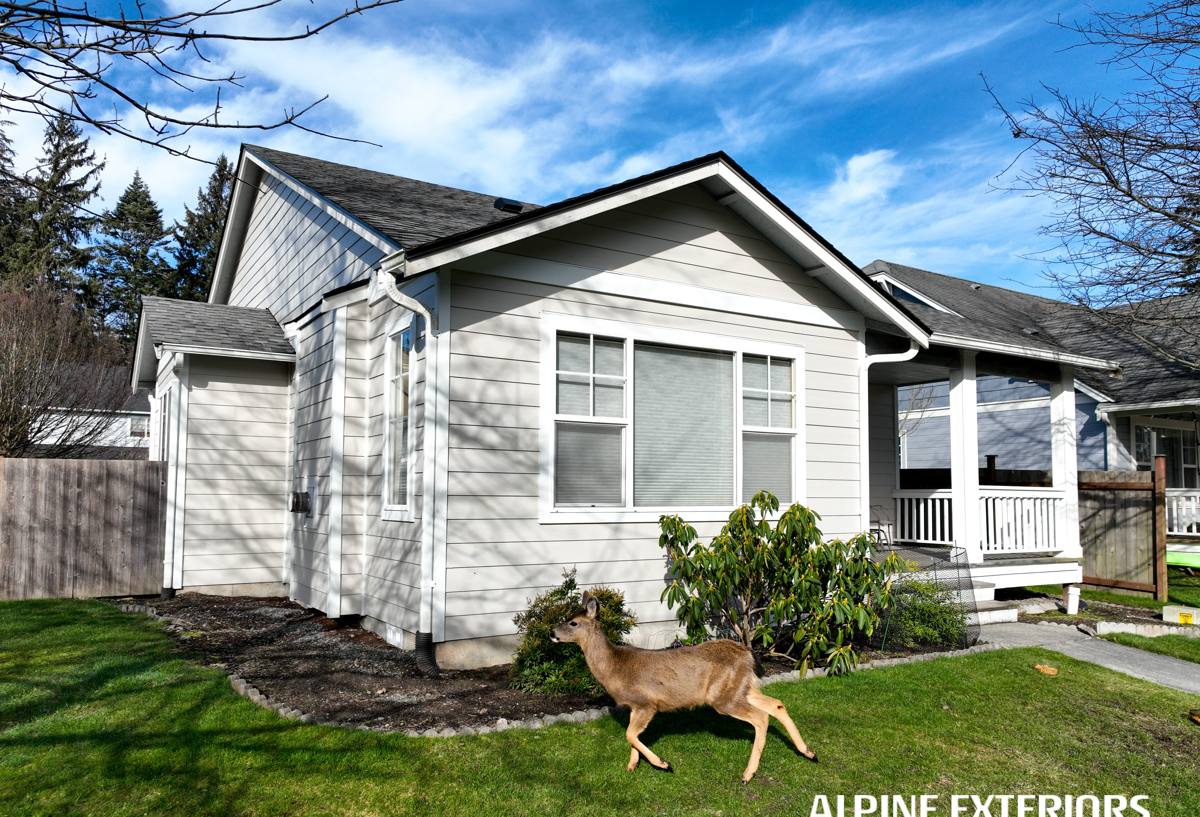
What the Climate Actually Does to a House
Salt Air and Driving Rain
Salt-carrying air corrodes fasteners, degrades paint films, and accelerates the breakdown of materials that aren't rated for coastal exposure. Combine that with wind-driven rain — rain that doesn't fall straight down but gets pushed sideways into wall assemblies, window flashing, and butt joints — and you get moisture intrusion in places a fair-weather installation would never account for. A siding job done to a minimum standard might look fine for a year or two before these two forces start finding the weak points.
Moss and Prolonged Dampness
Skagit County's long moss season isn't just a roofing issue. Moss and algae take hold anywhere organic material and shade allow moisture to sit — north-facing walls, areas under trees, low ground clearance near the soil line. On the wrong siding material, moss growth traps moisture against the substrate, which leads to swelling, delamination, or rot depending on what the product is made of. On the wrong roofing material, moss lifts shingles and holds water against the roof deck. Either way, it's a maintenance burden that never really goes away in a climate like this — it just gets managed well or managed poorly.
Freeze-Thaw and Seasonal Movement
Western Washington doesn't get brutal winters, but it does get repeated cycles of cold snaps followed by wet, milder weather. Materials that absorb moisture and then experience even mild freezing can crack, check, or separate at seams over time. It's a slower failure mode than a hard freeze climate, but it's just as real over a 10-20 year window.
Why We Install Only James Hardie Fiber Cement
We made a deliberate decision as a company to install James Hardie fiber cement siding exclusively — no vinyl, no LP SmartSide, no Cemplank, no Allura, no primed spruce or cedar. That's not a marketing position, it's a practical one built around what actually holds up in Skagit County conditions.
Fiber cement is non-combustible and dimensionally stable, meaning it doesn't expand and contract with moisture and temperature the way wood-based or engineered wood products can. James Hardie's HZ5 product line in particular is engineered for climates with significant moisture exposure — it's built to resist moisture-related damage better than standard formulations. The factory-applied ColorPlus finish is baked on under controlled conditions, which gives it better adhesion and color retention than field-applied paint, and it comes with a real transferable warranty backing it.
We're not going to tell you every alternative product is unusable — plenty of homes around the country wear vinyl or engineered wood siding without major issues. But for the specific combination of salt air, driving rain, and heavy moss exposure that Conway-area homes face, we've made the call that fiber cement is the product we're willing to put our name behind. Wood-based siding requires more diligent maintenance to keep moisture out at seams and end cuts. Vinyl can warp under sustained heat and doesn't offer the same fire resistance or rigidity. We'd rather install one product well than install several products and manage inconsistent long-term outcomes.
How We Approach a Conway Exterior Project
Assessment First
Every project starts with a walk-around of the home — looking at existing siding condition, moss and algae patterns, trim and flashing details, roof condition, and window seal integrity. In a damp, low-lying area like Conway, we're specifically checking ground clearance, gutter performance, and any spots where water tends to collect or linger against the structure.
Moisture Management Details
The siding material matters, but installation detail matters just as much. Proper house wrap and drainage plane, correctly lapped flashing at windows and doors, rainscreen or furring where conditions call for it, and correct fastener spacing and type all determine whether a fiber cement installation performs the way it's designed to. A great product installed with sloppy flashing details will still leak. We treat the water-management layer as the actual job, with the visible siding as the finish over top of it.
Roofing, Windows, and Decks — Same Standard
Because we handle roofing, windows, and decks in addition to siding, we can look at a Conway home's full exterior envelope as one system rather than treating each component in isolation. A roof that's shedding water properly, gutters that are sized and pitched correctly, windows with intact seals, and siding that's installed with the right drainage details all work together. Deck framing and decking materials in this climate face the same moss and moisture pressure as siding, and get the same attention to drainage and fastening detail.
Comparing Siding Options for a Coastal-Adjacent Climate
| Material | Moisture Behavior | Maintenance Burden | Fire Rating | Typical Lifespan |
|---|---|---|---|---|
| James Hardie Fiber Cement | Dimensionally stable, engineered moisture resistance (HZ5) | Low — factory finish, periodic wash | Non-combustible | 30+ years with correct install |
| Vinyl Siding | Can warp/distort under heat cycling | Low, but limited repair options if damaged | Combustible | 20-30 years, variable |
| LP SmartSide / Engineered Wood | Requires intact seal at all cuts/seams to resist swelling | Moderate — seam and cut-edge vigilance | Combustible | Varies with maintenance diligence |
| Cedar / Primed Spruce | Absorbs moisture readily; needs consistent refinishing | High — regular staining/painting | Combustible | Shorter without diligent upkeep |
This table reflects general product behavior, not a claim about any specific manufacturer's failure rate. It's the reasoning behind our own standardization on fiber cement for this region.
What a Homeowner in Conway Can Check Right Now
- Look for moss or algae staining on siding, especially on north-facing or shaded walls
- Check caulking and trim joints around windows and doors for gaps or cracking
- Look at the bottom few inches of siding near the foundation for staining, swelling, or soft spots
- Check gutters and downspouts are clear and directing water away from the foundation, not pooling near siding
- Look at roof valleys and north-facing roof slopes for moss buildup
- Note any siding panels that look warped, bowed, or separated at seams
None of these checks require getting on a ladder or taking anything apart — they're visual cues from ground level that tell you whether it's worth having someone take a closer look.
Cost Factors Worth Understanding Up Front
Every home is different, and we don't post blanket pricing because square footage, existing wall condition, trim complexity, and access all move the number. That said, a few factors consistently affect the estimate on a Conway-area home:
- Substrate condition — if there's existing rot or moisture damage under the current siding, that repair work happens before new siding goes on, and it affects scope
- Trim and detail complexity — homes with more corners, dormers, and window trim take more labor per square foot than a simple rectangular footprint
- Siding profile — lap width, panel vs. plank format, and whether you're adding architectural trim details all shift material and labor cost
- Access — tight lot lines, landscaping, or multi-story sections can add time and equipment needs
An in-person estimate is really the only way to get a number that means anything, which is why we walk the property before quoting rather than pricing off a phone call.
Why a Local Crew Matters for Conway Homes
Skagit County conditions aren't uniform even within a small radius — a home tucked in the Conway lowlands deals with different moisture and shade patterns than one on higher, more exposed ground near Anacortes proper. A crew that works this region regularly recognizes those differences on sight: where moss tends to establish first, which wall orientations take the worst wind-driven rain, and where drainage tends to be a problem before it shows up as visible damage. That local pattern recognition doesn't replace a proper inspection, but it does mean fewer surprises and a scope that's realistic from the start.
It also matters for accountability. A crew based in the area is going to be around for warranty follow-up, seasonal questions, and the occasional issue that shows up after the first heavy winter — not just for the install and gone.
Get a Straightforward Look at Your Home
If you're in Conway and dealing with siding that's showing its age, moss that keeps coming back, or you're just planning ahead for an exterior update, we're happy to come take a look. The estimate is free, there's no pressure, and we'll give you an honest read on what your home actually needs — whether that's a full siding replacement or just some targeted repair and maintenance.