 Anacortes Siding
 Roofing Built for Conway's Skagit Valley Conditions
Conway sits low in the Skagit River delta, sandwiched between farmland, tidal sloughs, and the damp marine air that rolls in off Skagit Bay and Puget Sound. That combination is tough on roofs. Homes here deal with near-constant humidity, long stretches of driving rain off the water, and a moss season that can run eight or nine months out of the year in shaded, north-facing areas. A roof that would hold up fine in a drier inland climate can fail early in Conway if it wasn't designed and installed with these specific conditions in mind.
When we replace a roof in Conway, we're not just swapping old shingles for new ones. We're building a system that sheds water fast, resists moss colonization, and stands up to salt-laden air without the fasteners and flashings corroding out from under a roof that otherwise still looks fine.
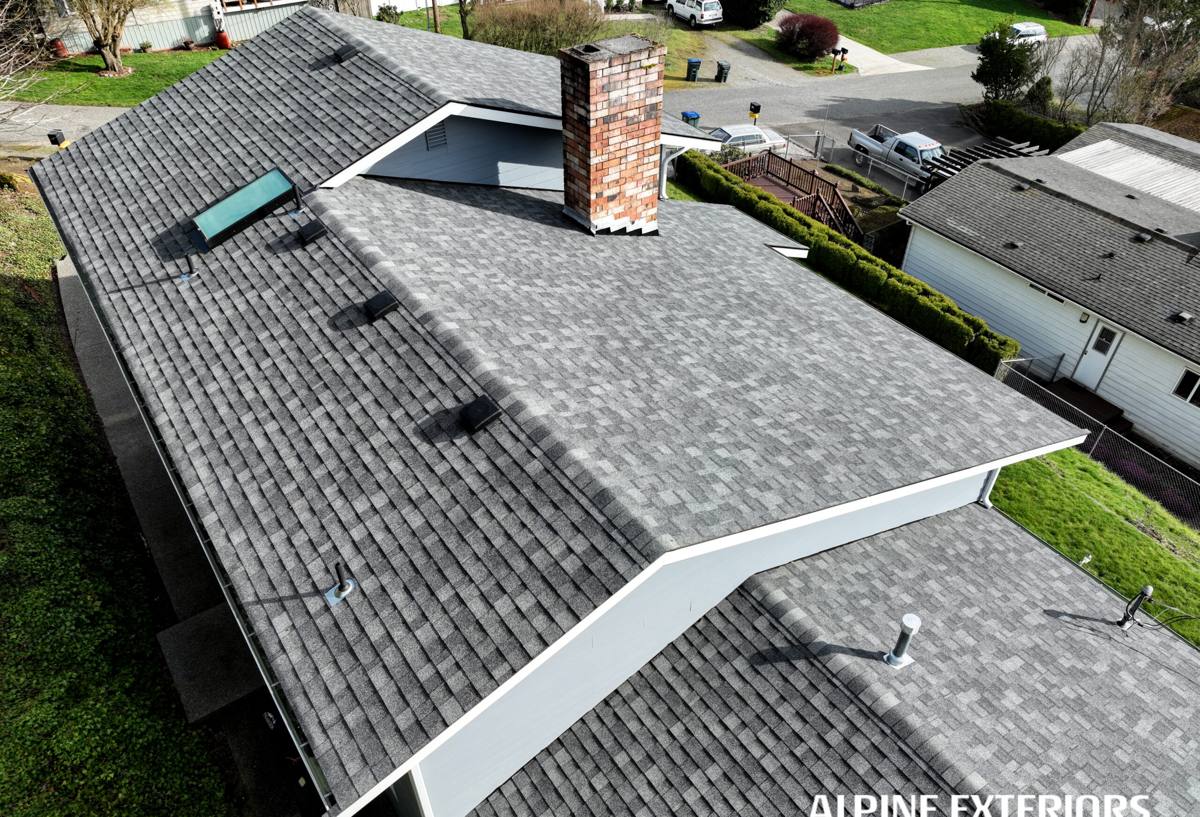
What Conway's Climate Actually Does to a Roof
Moisture That Never Fully Dries Out
Low-lying, near-water sites like Conway rarely get the kind of dry, breezy stretches that let a roof fully dry between rain events. Moisture sits in valleys, under debris, and in shaded sections longer than it would on a more exposed or elevated lot. Over time, that constant dampness breaks down organic-mat shingles faster than the manufacturer's rated lifespan and creates ideal conditions for moss, moldy sheathing, and slow leaks that don't show up inside the house until they've been running for months.
Moss and Organic Growth
Moss doesn't just sit on top of a roof looking bad — it holds water against the shingle surface, lifts shingle edges as it grows, and works its way into fastener penetrations and valleys. Left unchecked over a few seasons, moss growth can shorten a roof's usable life significantly, especially on the north- and west-facing slopes that stay shaded longest.
Salt Air and Metal Corrosion
Being close to tidal water means a steady low dose of salt in the air. Standard electro-galvanized nails, exposed metal flashing, and lower-grade fasteners corrode noticeably faster here than they would twenty miles inland. Corrosion at fastener heads and flashing seams is one of the most common causes of hidden leaks we find on older Conway roofs during tear-off.
Wind-Driven Rain
Storms coming off the Sound and across open farmland don't just drop rain straight down — they push it sideways under improperly lapped shingles, around poorly sealed penetrations, and into any gap in the underlayment. A roof here needs water-shedding detail work that a fair-weather climate wouldn't require.
What a Correct Roof Replacement Involves
A roof replacement done right for this environment isn't just about the shingle brand on top. It's a full system, and every layer matters.
- Full tear-off and deck inspection — we don't roof over old material. Tear-off lets us see the actual condition of the sheathing, find soft or delaminated spots from long-term moisture, and replace only what's genuinely bad.
- Ice-and-water shield at vulnerable points — valleys, eaves, and around penetrations get self-adhering waterproof membrane, not just standard felt, because these are the spots where wind-driven rain and ice damming find their way in.
- Synthetic underlayment across the full deck — more consistent water resistance than old-style felt, and it holds up better through a longer install timeline if weather interrupts the job.
- Corrosion-resistant fasteners and flashing — given the salt air, we don't cut corners here. Stainless or high-grade coated fasteners and properly formed flashing at every wall, chimney, and penetration cost more up front and save a callback five years later.
- Balanced attic ventilation — intake and exhaust that actually moves air, so moisture from inside the house doesn't condense against the underside of the deck and rot it from below.
- Proper shingle selection for a wet, shaded climate — algae-resistant, moss-resistant shingle lines exist for a reason in this region, and we default to them unless a homeowner has a specific reason to go another direction.
Choosing Materials for a Wet, Shaded Property
Conway lots vary a lot — some are open and get decent sun and wind exposure, others sit under tree cover near sloughs and drainage ditches where shade and moisture linger. We factor that into the material conversation rather than defaulting to one answer for every house.
| Factor | Open, Sun-Exposed Lot | Shaded, Low-Lying Lot |
|---|---|---|
| Moss risk | Lower — sun and wind help shingles dry | Higher — needs algae/moss-resistant shingle and more frequent maintenance |
| Shingle drying time | Faster after rain | Slower — moisture sits longer, accelerates aging |
| Fastener/flashing corrosion | Present due to salt air, but slightly reduced by airflow | Accelerated where humidity stays trapped near tree cover |
| Ventilation priority | Standard balanced ventilation | Critical — poor airflow compounds moisture problems |
| Recommended shingle class | Standard architectural, algae-resistant | Algae/moss-resistant with copper or zinc strip consideration at ridges |
None of this means a shaded lot can't have a long-lasting roof — it just means the detailing has to be more deliberate, and maintenance expectations should be set honestly up front.
Signs a Conway Roof Needs Replacing, Not Patching
Not every roof problem calls for full replacement, and we'll tell you that directly if a repair is the honest answer. But there are signs that point toward replacement being the smarter long-term move:
- Granule loss heavy enough that shingles look bald or patchy in multiple areas, not just one spot
- Moss that keeps returning within a season or two of cleaning, especially with visible lifting at shingle edges
- Soft or spongy decking found during any repair work, indicating moisture has already reached the sheathing
- Multiple past repairs in different areas of the same roof — a sign the whole system is aging out together
- Visible corrosion or staining at flashing, valleys, or fastener heads
- Roof age approaching or past its rated lifespan, especially if it's never had moss treatment or ventilation upgrades
Our Process for Conway Roof Replacements
1. On-Site Inspection and Honest Assessment
We walk the roof, check the attic from inside where accessible, and look at drainage, tree cover, and sun exposure specific to your property — not a generic checklist. You get a straight answer on whether replacement or repair makes more sense.
2. Clear, Written Estimate
Material options, scope of work, and cost broken out in plain language, so you know exactly what you're paying for and why — including where we're recommending upgrades like better underlayment or ventilation and why those matter in this climate.
3. Scheduling Around Skagit County Weather
We plan around realistic weather windows rather than rushing a job into a forecast that's likely to turn. Tear-off sections are kept manageable so your home isn't sitting exposed if conditions shift mid-project.
4. Tear-Off, Deck Repair, and Full System Install
Old material off, deck inspected and repaired as needed, then underlayment, flashing, ventilation, and shingles installed in that order, with attention to every valley and penetration — the details that actually determine how the roof performs in wind-driven rain.
5. Final Walkthrough
We review the completed roof with you, cover basic moss-prevention maintenance for your specific lot, and make sure you know what a properly finished job looks like on your own house.
Why Hiring a Crew That Works Conway Regularly Matters
A roofing crew that mostly works drier, inland areas can still do competent work in general, but they won't necessarily default to the moss-resistant shingle lines, corrosion-rated fasteners, or ventilation detailing that Skagit County's marine-influenced microclimate calls for unless they're specifically asked. A crew that regularly works Conway and the surrounding Anacortes area already knows which slopes on a property will stay shaded longest, how quickly moss comes back on an untreated roof out here, and where salt air tends to bite first on flashing and fasteners. That local pattern recognition shows up in fewer callbacks and a roof that actually performs the way it was sold to, not just on the spec sheet.
What to Expect Cost-Wise
Roof replacement costs vary by roof size, pitch, number of layers being removed, decking condition once we get into it, and material choice. A straightforward asphalt shingle replacement on a typical Conway home generally lands in a mid-range bracket compared to premium metal or high-end architectural systems, with the final number shaped most by square footage and how much of the deck needs repair. We won't give you a number over the phone with no inspection — we'll walk your roof and give you a real, written estimate based on what's actually there.
If your Conway roof is showing its age, dealing with recurring moss, or you just want an honest read on how much life it has left, we're happy to take a look. Fill out the form below for a free, no-pressure estimate.