 Anacortes Siding
 Decking Built for Oak Harbor's Weather, Not Just Its View
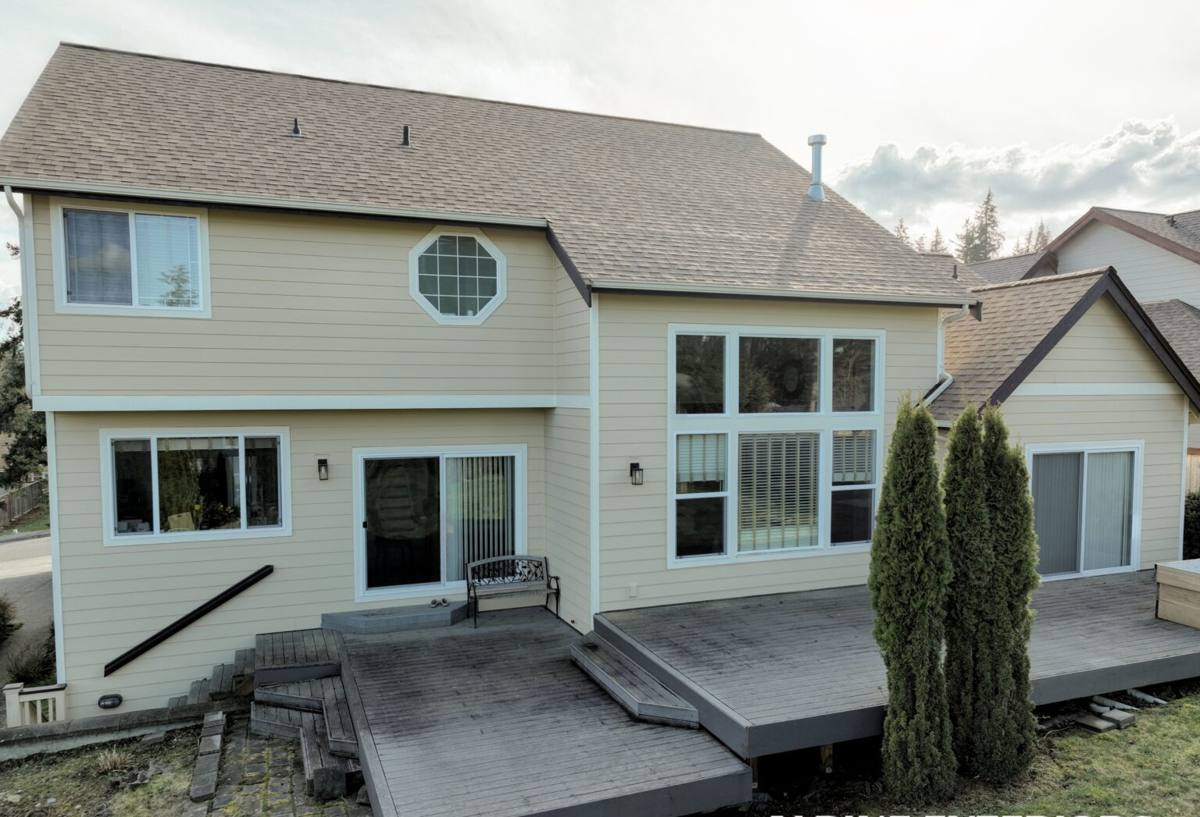
Oak Harbor sits close enough to the water that every outdoor structure on a property deals with the same three things year-round: salt-laden air off the Sound, long stretches of driving rain, and a moss season that seems to start earlier and last longer every year. A deck here isn't just a place to put a grill — it's a wood or composite structure that has to survive months of damp shade, wind-blown moisture, and UV swings between soggy winters and bright summer afternoons. Composite decking has become the go-to answer for homeowners who are tired of re-staining, re-sealing, and scraping moss off a wood deck every spring. Done right, it's a one-time investment that holds up to what this corner of Skagit County throws at it.
This page is specifically about composite decking installation for Oak Harbor properties — what the climate demands, what a correct install actually involves, and why hiring a crew that already understands this area's conditions matters more here than in drier parts of the state.
What Oak Harbor's Climate Actually Does to a Deck
Salt Air and Metal Hardware
Proximity to Puget Sound means airborne salt settles on every exposed surface, including the fasteners and structural hardware underneath a deck's boards. Standard hot-dip galvanized screws and joist hangers can start showing corrosion years before they should. Any deck built this close to saltwater needs stainless steel or marine-grade coated fasteners and connectors — not because it's an upsell, but because it's the difference between hardware that lasts and hardware that has to be replaced under a deck that's already built.
Driving Rain and Moisture Intrusion
Rain in this part of Washington rarely falls straight down — wind pushes it sideways, which means it gets up under rail posts, around ledger boards, and into any gap in flashing that wasn't detailed correctly. A composite deck surface sheds water fine on its own, but the substructure and the points where the deck meets the house are where moisture problems actually start. That's true whether the surface is composite or wood.
Moss, Algae, and Shaded Ground Level
Long wet seasons combined with tree cover and north-facing exposures common in Oak Harbor's residential areas create ideal conditions for moss and algae growth, especially underneath the deck and along board edges where airflow is limited. Composite boards resist moss far better than wood because they don't have the same open grain for spores to root into, but they aren't immune — proper spacing, ventilation underneath, and periodic cleaning still matter.
Why Composite Makes Sense for This Specific Area
Composite decking (a blend of wood fibers and recycled plastics, capped with a protective outer layer on most modern products) was originally developed to solve exactly the problems this climate creates: rot from sustained moisture, surface checking from UV and temperature swings, and the endless maintenance cycle of staining and sealing wood. In a climate like Anacortes and Oak Harbor's, where a deck might not fully dry out between rain events for weeks at a time, that moisture resistance carries more weight than it would in a drier region.
We're not going to tell you composite is right for every situation — cedar and other wood decking still have a place, and some homeowners genuinely prefer the look and don't mind the upkeep. Our professional standard is to walk you through the real trade-offs rather than push one product, and for most Oak Harbor properties exposed to salt air and heavy rain, composite ends up being the lower-maintenance, longer-term choice.
Wood vs. Composite Decking: The Honest Comparison
| Factor | Wood Decking | Composite Decking |
|---|---|---|
| Maintenance | Annual cleaning, staining or sealing to prevent rot and moisture damage | Occasional washing; no staining or sealing required |
| Moss/algae resistance | Open grain holds moisture and spores, especially in shade | Capped boards resist moss rooting; still needs airflow underneath |
| Salt air exposure | Accelerates weathering and fastener corrosion | Board material unaffected; fastener quality still matters |
| Upfront cost | Generally lower material cost | Higher material cost, offset by lower long-term upkeep |
| Lifespan (properly installed) | 15-20 years with consistent maintenance | 25-30+ years with minimal upkeep |
| Appearance over time | Grays, splinters, or requires refinishing to keep color | Color-stable, resists splintering and cupping |
The lifespan and maintenance numbers above are general industry ranges, not guarantees — actual performance depends on installation quality, board brand, and how consistently a deck is maintained.
What a Correct Composite Deck Install Actually Involves
Substructure First
The composite boards get all the attention, but the framing underneath is what determines whether the deck lasts. That means pressure-treated or naturally resistant framing lumber, joist spacing matched to the specific composite product's span rating (composite typically requires tighter joist spacing than wood decking of the same thickness), and joist tape or flashing on top of the framing to keep moisture from wicking into the wood from below.
Ledger Attachment and Flashing
Where a deck attaches to the house is the single most common source of long-term water damage in this climate. Correct flashing at the ledger board — installed so water is directed away from the house wall rather than behind it — is non-negotiable given how much driving rain this area sees. This is also the detail that's hardest to inspect once the deck is finished, which is exactly why it needs to be done right the first time.
Ventilation and Ground Clearance
Composite decks built low to the ground or over unventilated crawlspaces trap moisture underneath, which is precisely where moss and mildew take hold fastest. We build in ground clearance and airflow paths so the underside of the deck can actually dry out between rain events instead of staying damp for weeks.
Fastening and Hidden Clips
Most composite systems today use hidden fastener clips rather than face-screwing, which gives a cleaner look and eliminates the exposed screw holes where water used to collect on older wood decks. Clip spacing and fastener material both need to match the manufacturer's specs to keep the warranty intact and the boards performing as designed.
Railings and Post Connections
Railing posts are another common leak point — any post that penetrates the deck surface needs to be properly flashed and sealed at the base. This matters more in Oak Harbor than in drier climates because sideways-driven rain finds its way into gaps that would stay dry elsewhere.
Our Process for Oak Harbor Deck Projects
- On-site assessment: we look at drainage, sun/shade exposure, existing structure condition, and how the deck ties into the house.
- Material selection: we walk through composite board options and fastener/hardware grade suited to salt-air exposure.
- Permitting: deck permitting requirements vary by jurisdiction within Island and Skagit County, and we handle that coordination as part of the project.
- Demo or prep: removal of an existing deck if applicable, and inspection of ledger and framing condition before new work begins.
- Framing and flashing: substructure built to span rating, with flashing and joist protection installed before any composite board goes down.
- Composite installation: boards, hidden fasteners, railings, and stairs installed to manufacturer spec.
- Final walkthrough: we go over care basics with you before calling the job done.
Maintaining a Composite Deck in This Climate
- Sweep off leaves and debris regularly, especially in fall — trapped organic matter under leaves holds moisture against the board surface.
- Wash the deck surface once or twice a year with a soft-bristle brush and a mild soap-and-water solution or a composite-safe cleaner.
- Check underneath the deck periodically for standing water, moss buildup, or blocked ventilation gaps.
- Keep gutters and downspouts near the deck clear so runoff isn't dumping extra water onto or under the structure.
- Inspect railing post bases and stair stringers annually for any sign of water intrusion at connection points.
- Avoid pressure-washing at high PSI directly into board seams — it can force water past the cap layer over time.
Why Hiring a Crew That Already Works Oak Harbor Matters
A lot of deck-building fundamentals are the same everywhere. What changes region to region is which failure points actually show up first, and how much margin you need to build in. A crew that's worked on homes throughout Anacortes and Oak Harbor already knows which fastener grades hold up to this specific salt exposure, which framing details prevent moss from taking hold under a shaded deck, and how local permitting works without extra back-and-forth. That local knowledge shows up less in the finished look of the deck and more in how it performs five, ten, and twenty years out — which is really the point of switching to composite in the first place.
We also stand behind the work with our own workmanship coverage on top of the manufacturer's material warranty, so if something about the install itself isn't right, it's on us to fix — not something you have to fight over.
Cost Factors to Expect
Composite decking costs vary based on deck size, board tier, railing style, height off the ground, and site access — there's no honest flat number to quote without seeing the specific project. In general, composite decking runs higher upfront than pressure-treated wood, and mid-tier and premium composite lines cost more than entry-level composite. The trade-off is in avoided maintenance costs over the life of the deck: no recurring stain, seal, or plank replacement expense that wood decking requires in a climate this wet.
Get a Straight Answer for Your Property
If you're deciding between repairing an aging wood deck or replacing it with composite, or you're planning a new deck from scratch, we're glad to come take a look and give you an honest read on what your specific site needs — no pressure, no inflated quote to "leave room to negotiate." Fill out the form below and we'll set up a time to walk the property with you.