 Anacortes Siding
 Exterior Work for Guemes Island, Done by People Who Actually Get There
Guemes Island sits just across the water from Anacortes, reached by a short ferry crossing rather than a highway exit, and that one fact changes how exterior work has to be planned. Materials, crews, and equipment all have to be staged and scheduled around a boat, not just a truck. Homes on the island also sit in a more exposed marine environment than most mainland Skagit County properties — closer to open water, more wind, and more salt in the air. We do siding, roofing, windows, and decks for Guemes Island homeowners, and we plan every one of those projects with the island's logistics and climate in mind from the first estimate.
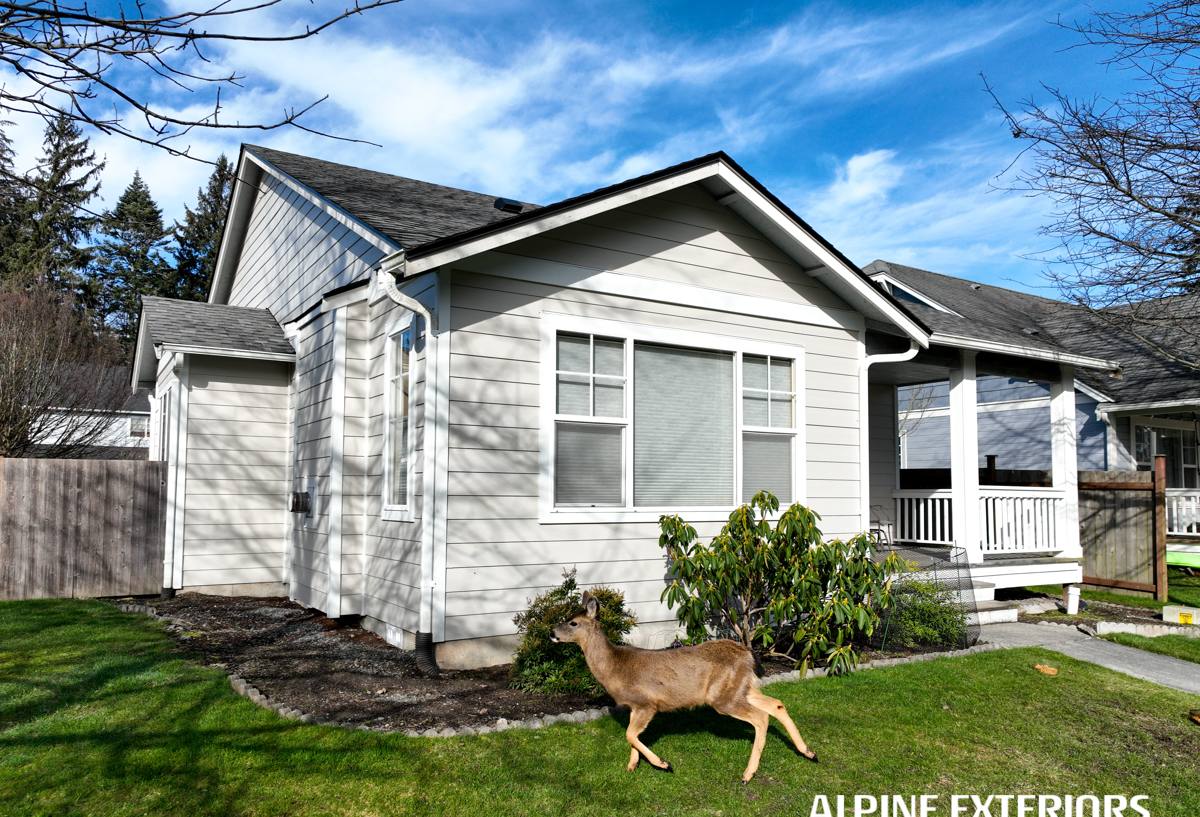
What the Island Climate Actually Does to a House
Guemes Island shares the general Skagit County marine climate — wet falls and winters, milder but still damp summers — but its position out in the water adds two things a lot of mainland homes don't deal with as heavily: direct salt air exposure and more consistent wind. Both matter to an exterior.
Salt Air and Marine Exposure
Homes closer to the shoreline take in airborne salt that settles on siding, trim, fasteners, and roofing metal. Over years, that accelerates corrosion of the wrong fastener types and speeds up the breakdown of coatings and finishes that weren't built to handle it. It's not dramatic — nobody's siding falls off in a season — but it's a slow, steady tax on anything not rated for coastal-adjacent conditions.
Driving Rain and Wind-Driven Moisture
Storms coming off the water don't just drop rain straight down — wind pushes it sideways into wall assemblies, especially on the west- and south-facing sides of a house. That means siding laps, flashing, and window integration have to actually be installed correctly, not just look right from the ground. Water finds gaps that wouldn't matter in a calmer inland location.
Moss, Algae, and a Long Wet Season
Between tree cover, shade, and the sheer number of damp months in a typical year, moss and algae growth is a constant on Skagit County exteriors, and island properties with mature trees see it as much as anywhere. Roofs, north-facing siding, and shaded trim are the usual targets. Left alone, that growth holds moisture against the surface underneath it, which is where slower, harder-to-see problems start.
The Ferry Changes How a Project Gets Planned
Working on Guemes Island means every load of material and every crew trip crosses on a schedule that isn't ours to set. That's not a complaint — it's just a planning input. We build ferry timing into the project schedule up front: material deliveries get consolidated so we're not making unnecessary crossings, crew days are planned to make full use of the time once we're on-island, and homeowners get a realistic timeline that accounts for the crossing rather than pretending the island is just another neighborhood. A crew that hasn't done island work before tends to underestimate this and it shows up as delays. We don't.
Why We Install Only James Hardie Fiber Cement Siding
We install James Hardie fiber cement exclusively — not vinyl, not LP SmartSide, not Cemplank or Allura, not primed spruce or cedar. On a property exposed to salt air, wind-driven rain, and heavy moss pressure, that standard isn't a brand preference, it's a practical one.
Fiber cement doesn't rot, and it isn't a food source for the organic growth that thrives in a shaded, damp island setting the way wood-based products can be. It's non-combustible, which matters given how much of Skagit County — Guemes Island included — sits close to trees and dry-season wildfire risk in late summer. Hardie's ColorPlus factory finish is baked on and engineered to hold up under UV and moisture cycling better than field-applied paint, which reduces the repainting cycle that salt air and shade otherwise shorten. And Hardie's HZ5 product line is specifically engineered for wetter, harsher climates like the Pacific Northwest.
None of this means other products are junk — vinyl, LP, and cedar all have legitimate uses in the right setting. It means that for the conditions we see on Guemes Island specifically, we'd rather stand behind one material we trust completely than install several we'd have to caveat.
Roofing, Windows, and Decks: The Rest of the Exterior Envelope
Siding is only part of what keeps water out of a house. We also handle:
- Roofing — replacement and repair, with attention to moss-prone north-facing slopes and proper flashing at every penetration and valley, which is where wind-driven rain finds its way in.
- Windows — replacement units and correct flashing integration with the siding system, since a poorly flashed window is one of the most common sources of hidden water intrusion on coastal-exposed homes.
- Decks — built and finished for a wet, shaded climate, with material and fastener choices that account for the same moisture and salt exposure that affects siding.
Treating these as one connected exterior system, rather than four separate trades, is how a house actually stays dry — a good roof and bad flashing at a window can undo the benefit of good siding.
Comparing Siding Materials for Island Conditions
| Material | Salt air / marine exposure | Moss and moisture resistance | Maintenance over time |
|---|---|---|---|
| James Hardie fiber cement | Non-combustible, engineered coastal-rated HZ5 line | Not an organic food source; holds paint/finish well | Low; factory ColorPlus finish extends repaint cycle |
| Vinyl siding | Can become brittle and fade faster under sun and salt cycling | Resists rot but seams and moisture drainage are installation-dependent | Low upfront, but limited repair options if damaged |
| Cedar / primed spruce | Attractive but vulnerable to salt-accelerated weathering | Organic material; prone to moss, mildew, and rot in shaded, damp spots | High; regular refinishing and moisture monitoring needed |
| LP SmartSide (engineered wood) | Coated but still a wood-strand product at its core | More moisture-resistant than raw wood but still an organic substrate | Moderate; edge sealing and caulking upkeep matters |
What a Guemes Island Project Typically Involves
Every job starts with an on-site look at the specific exposure a home faces — how close it sits to the water, how much tree cover and shade it has, which walls take the worst of the weather. That drives decisions on flashing details, moisture barrier approach, and where extra attention is warranted. From there we plan material staging and crew scheduling around ferry timing, then move through installation with the same code-compliant flashing, fastening, and water-management practices we'd use anywhere — just with island logistics built in rather than figured out on the fly.
A Homeowner's Pre-Project Checklist
- Walk the exterior and note any soft spots, visible moss buildup, or areas where paint or finish is failing faster than the rest of the house
- Check trim and window sills for water staining, which often points to a flashing issue rather than a siding issue
- Ask your contractor how they plan to handle material delivery and crew scheduling around the ferry
- Confirm whether siding, roofing, and window work will be coordinated as one connected water-management plan or handled as separate, disconnected trades
- Get a clear explanation of what siding material is being proposed and why it fits this specific property's exposure
Ongoing Maintenance for an Island Exterior
- Rinse or gently clean moss and algae buildup off siding and roofing at least once a year, more often on shaded north-facing sections
- Keep gutters clear so wind-driven rain has somewhere to go besides your wall assembly
- Trim back tree limbs that keep siding shaded and damp longer than the rest of the house
- Have caulking and flashing at windows and trim checked periodically — this is where hidden leaks usually start
- Watch for early paint or finish failure on any wood-based trim, since that's often the first visible sign of moisture getting in
Why a Local, Island-Experienced Crew Matters
Anyone can quote a siding job from a photo. Getting it right on Guemes Island means understanding the actual exposure a given property faces, planning around a ferry schedule instead of getting surprised by it, and using materials that are genuinely suited to salt air, driving rain, and a long moss season — not just whatever's cheapest to truck out. We're based in Anacortes and do this work regularly on the island, which means we're not learning the logistics on your project.
If you're weighing a siding, roofing, window, or deck project on Guemes Island, we're glad to come take a look and walk the property with you. Reach out for a free, no-pressure estimate — we'll give you an honest read on what your home's exposure actually calls for.