 Anacortes Siding
 Why Guemes Island Homes Need More Than a Standard Window Job
Guemes Island sits right in the path of everything the Salish Sea throws at a house. Salt-laden air moves off the water and settles on anything metal, wood-framed windows take on moisture from driving rain that comes in sideways during winter storms, and a long stretch of damp, low-light months lets moss and mildew get a foothold on sills, trim, and glazing that never fully dries out. None of that is unique to any one home on the island — it's just the baseline condition every window has to survive here, year after year.
Standard window installation practices, the kind that work fine in a drier inland neighborhood, don't always hold up under that combination. Hardware corrodes faster, seals get tested harder, and a sloppy flashing detail that would go unnoticed for years elsewhere shows up as a stained sill or a soft spot in the trim within a season or two out here. Energy efficiency and weather resistance aren't separate concerns on Guemes Island — a window that's leaking air is very often the same window that's letting in the moisture that will eventually rot the frame around it.
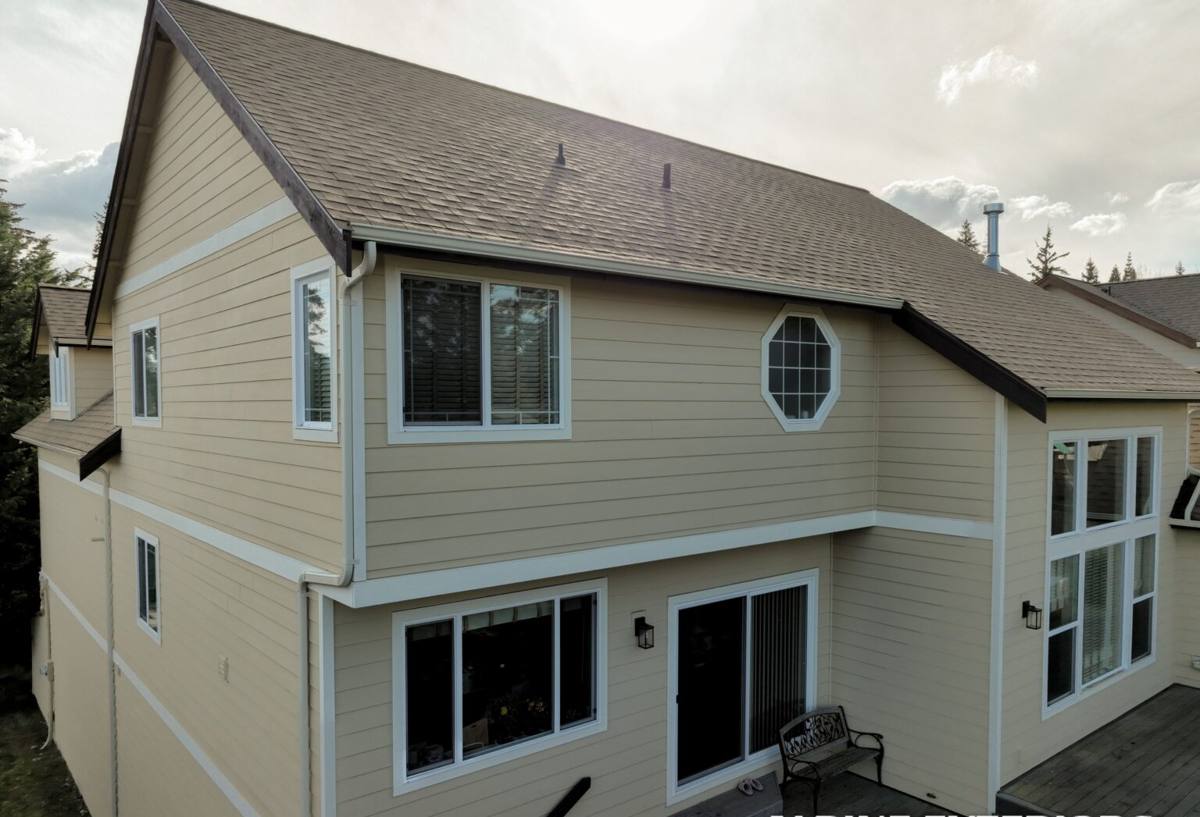
What "Energy-Efficient" Actually Means in This Climate
U-Factor Matters More Than Marketing Numbers
U-factor measures how much heat a window lets escape — lower is better for keeping heating costs down through a Pacific Northwest winter. It's the number worth paying attention to before anything else on a spec sheet, because it directly affects comfort near the glass and how hard your heating system has to work during the cold, wet months that make up most of the year here.
Low-E Coatings and Gas Fills
A low-emissivity (low-E) coating is a microscopically thin layer on the glass that reflects heat back into the room in winter and blocks solar heat gain in summer, without noticeably changing how clear the glass looks. Combined with an insulating gas fill — usually argon — between the panes, it's what separates a genuinely efficient window from one that's just double-paned. Both matter for comfort and utility bills, but neither one does much good if the frame around that glass isn't sealed and flashed correctly.
Why a Generic Energy Rating Isn't the Whole Story
Energy performance ratings are typically tested under controlled lab conditions, not against wind-driven rain and salt exposure. A window can carry a strong efficiency rating and still perform poorly on an exposed island lot if the frame material, hardware, and installation detailing aren't matched to the actual conditions it's going into. That's the piece a rating label can't tell you, and it's where local installation experience earns its keep.
Frame Material Comparison for Marine Exposure
The frame does as much work as the glass when it comes to durability near salt water. Here's how the common options generally compare for a home exposed to Guemes Island conditions:
| Frame Material | Salt Air Resistance | Maintenance | Typical Lifespan |
|---|---|---|---|
| Vinyl | Good — doesn't corrode or rust | Low; occasional cleaning | 20-30 years |
| Fiberglass | Very good — stable, low expansion/contraction | Low | 30-40+ years |
| Aluminum (uninsulated) | Poor to fair — prone to pitting and corrosion near salt air, also conducts cold | Moderate to high | Varies widely |
| Wood (untreated or unclad) | Weakest — absorbs moisture, vulnerable to rot and moss growth in shaded, damp spots | High; regular painting/sealing | Depends heavily on upkeep |
| Wood with aluminum or fiberglass cladding | Good — protected exterior face, wood warmth inside | Low to moderate | 25-35+ years |
We don't push one material as universally "best" — it's a real trade-off between upfront cost, appearance, and how much upkeep a homeowner wants to sign up for. What we won't do is install an unclad wood frame on a wall that takes direct driving rain without a serious conversation about the maintenance commitment that comes with it, because that's the combination that leads to callbacks a few years down the road.
Signs Your Current Windows Are Already Losing the Fight
Most window failures on the island show up gradually, and homeowners often adjust to them without realizing how much air and moisture is getting through. Worth checking for:
- Fogging or a milky haze between the panes — the seal has failed and the insulating gas is gone
- Soft, spongy, or discolored wood at the sill or lower corners of the frame
- Moss, black staining, or persistent green growth on the exterior trim or sill, especially on shaded or north-facing walls
- Noticeable drafts or a cold radiating feeling near the glass even with the window fully closed
- Condensation forming on the inside of the glass regularly during colder months
- Windows that are difficult to open, close, or latch — often a sign the frame has shifted from moisture
- Visible daylight or gaps around the frame where it meets the siding or trim
Any one of these on its own might just mean a caulking touch-up. Two or three together usually mean the window itself, or the flashing behind it, has reached the end of its useful life.
Installation Details That Actually Matter in Driving Rain
A high-efficiency window installed with careless flashing will still leak, and once water gets behind the frame it tends to travel and hide before it ever shows up as a visible stain inside. The details that make the real difference on wind-exposed, rain-heavy walls:
Sill Pans and Flashing
A sloped sill pan at the base of the rough opening gives any water that does get past the window a way out, rather than a place to pool. Proper flashing tape sequencing — integrated with the house wrap so water sheds downward and outward at every layer — is what actually keeps driving rain from working its way into the wall assembly over time.
Sealant Selection and Placement
Not every exterior sealant holds up to constant salt air and UV exposure. We use products rated for the exposure they'll actually face, and we don't rely on caulk alone to do a flashing detail's job — caulk is a backup layer, not the primary defense against water intrusion.
Shimming and Squaring
A window that isn't shimmed level and square will bind, won't seal evenly along all four sides, and puts uneven stress on the frame that shows up as premature wear. It's a basic step, but it's also the one most often rushed on a fast job.
Our Process for Guemes Island Window Projects
Working on the island means planning differently than a job on the mainland side of Anacortes, and we build that into how we schedule and run these projects:
- On-site assessment — we look at each opening individually, not just the window itself. Existing flashing condition, any rot in the surrounding trim, and the wall's actual sun and rain exposure all factor into the recommendation.
- Accurate measurement and material staging — because getting back for a forgotten part means another ferry crossing, we measure carefully and confirm materials before crew and windows are scheduled for the same trip.
- Removal and opening prep — old windows come out carefully to protect surrounding siding and trim, and we address any soft wood or damaged flashing we find before the new window goes in, not after.
- Installation — sill pan, flashing, shimming, and sealant work done in the correct order, every time, regardless of how straightforward the job looks.
- Cleanup and walk-through — job site cleared, and we walk the homeowner through anything they should watch for during the first real wet-season test.
Why It Matters That We Already Work on Guemes Island
A ferry crossing changes the math on a construction project in ways that aren't obvious until you're the one scheduling around it. Crews and materials need to be organized so a full day's work isn't lost to a missed sailing or a forgotten tool. Weather windows matter too — driving rain events are a genuine reason to delay exterior work here, and a crew that already plans around island logistics builds that flexibility into the schedule rather than treating it as a surprise.
There's also a familiarity factor. Homes on Guemes Island tend to share certain traits — older construction vintages, direct wind and salt exposure on certain lots, wells and septic systems that mean access and staging need a bit more care than a typical in-town job. A crew that's done this work on the island before isn't guessing at any of that on day one, and that shows up in fewer surprises and a smoother project from estimate to finish, whether the home is here or elsewhere in Skagit County.
What Affects the Cost of a Window Project Here
| Factor | Why It Affects Cost |
|---|---|
| Number and size of windows | More openings and larger units mean more material and labor time |
| Frame material chosen | Vinyl, fiberglass, and clad-wood options carry different material costs |
| Condition of the existing opening | Rot repair or flashing rebuild adds time beyond a straightforward swap |
| Trim and siding work | Matching or replacing exterior trim disturbed during removal adds scope |
| Site access and logistics | Ferry scheduling and material staging factor into project timing and planning |
We provide a straightforward, itemized estimate after seeing the actual openings in person — we don't quote sight unseen, because the condition behind an old window matters as much as the window going in.
If you're dealing with drafty, fogged, or aging windows on your Guemes Island property, we're happy to take a look and walk you through honest options for your home. Use the form below to request a free, no-pressure estimate — there's no obligation, just a straight assessment of what your windows actually need.