 Anacortes Siding
 Exterior Work on March Point: A Different Set of Conditions
March Point sits out on its own peninsula, wrapped by Fidalgo Bay and Padilla Bay, with open water and marine wind on more than one side of most homes. That location is part of what makes it a desirable place to live, but it also means the exterior of a house here takes a heavier beating than a comparable home a few miles inland in Anacortes or elsewhere in Skagit County. Wind comes off the water with real force, rain arrives sideways as often as it falls straight down, and the humid, shaded conditions that build up under eaves and along north-facing walls create long stretches of the year where siding simply does not fully dry out.
We work on homes throughout this area regularly, and the pattern is consistent: exteriors that were built or re-sided with materials not suited to sustained moisture and salt exposure tend to show problems years before they should. That's the starting point for how we approach siding, roofing, window, and deck work on March Point specifically.
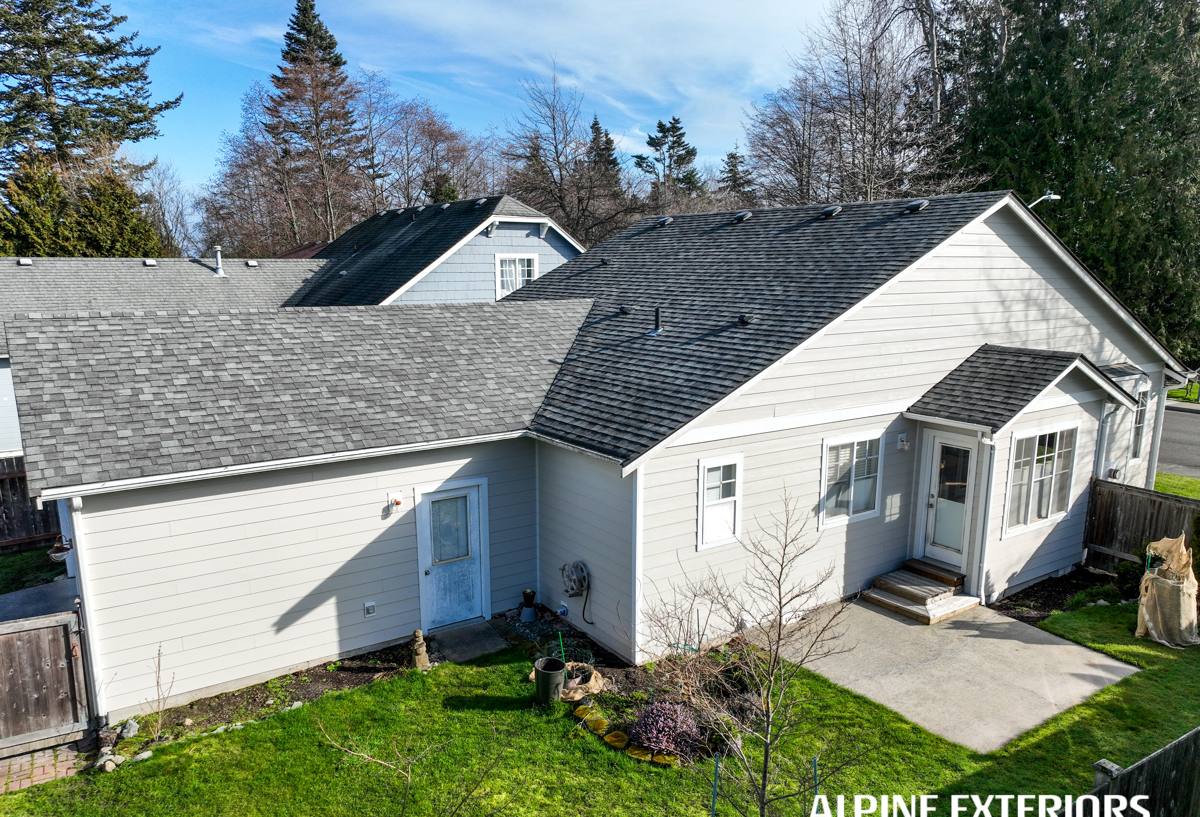
What the Climate Actually Does to a Home Out Here
Salt Air and Metal Fasteners
Airborne salt from the bay settles on every exterior surface, including the fasteners, flashing, and trim holding your siding system together. Over years, this accelerates corrosion on anything that isn't rated for coastal exposure. It's a slow process, so it's easy to miss until a fastener fails or a trim piece starts staining and streaking the siding below it.
Driving Rain
Wind-driven rain doesn't just fall on a wall — it gets pushed sideways into laps, seams, and butt joints. Siding systems and installation details that would be fine in a calmer inland setting can let water intrude on a site this exposed, especially around window and door trim, corner boards, and anywhere two materials meet.
Moss and Sustained Moisture
Skagit County's moss season runs long, and shaded, water-facing walls on March Point stay damp longer than most. Moss and algae hold moisture against the siding surface, and on materials that absorb water or aren't finished to resist organic growth, that constant dampness is what eventually leads to swelling, soft spots, or paint failure.
Wind Load
Open exposure across the bay means higher sustained wind and gusts than a sheltered lot would see. Roofing, siding panels, and trim all need to be fastened and detailed to handle that load, not just installed to a minimum-code standard.
Why We Install Only James Hardie Fiber Cement Siding
We get asked why we don't offer vinyl, LP SmartSide, or other engineered wood and composite products. The honest answer is that we've made a professional decision to standardize on one product system because it holds up consistently in exactly the conditions March Point homes face.
Vinyl siding can work fine in mild, sheltered settings, but on a wind-exposed waterfront site it can distort or become loose over time, and its seams and J-channels give wind-driven rain more opportunities to get behind the cladding. Engineered wood products like LP SmartSide use wood fiber, and while modern versions have improved moisture resistance, wood fiber based products are still more sensitive to sustained dampness and edge exposure than fiber cement — a real concern in a place where walls can stay wet for days at a time during the winter. Primed wood and cedar siding require the most diligent, frequent maintenance of any option, and in a salt-air, high-moisture environment, that maintenance window shrinks fast.
James Hardie fiber cement is composed of cement, sand, and cellulose fiber. It does not absorb water the way wood-based products do, it doesn't support moss and mildew growth the way porous or organic siding can, and it's non-combustible, which matters given how much of Washington's dry-season wildfire risk gets carried by wind. Hardie's ColorPlus factory-applied finish is baked on and warranted separately from the substrate, so the color holds up to UV and salt exposure without the homeowner needing to repaint every few years. For a peninsula site like March Point, that combination — a material that resists moisture intrusion, doesn't feed moss, and keeps its finish without repeated maintenance — is why we don't offer alternatives we'd have to caveat.
James Hardie Product Lines We Use
| Product | Best Use | Why It Fits This Area |
|---|---|---|
| HardiePlank lap siding | Most homes, classic and modern styles | HZ10 formulation engineered for the Pacific Northwest's wet climate zone |
| HardiePanel vertical siding | Accent walls, modern facades, gable ends | Clean lines with the same moisture and impact resistance |
| HardieTrim boards | Corner boards, window and door trim, fascia | Matches expansion/contraction rate of the field siding, reducing seam gaps |
| HardieSoffit panels | Eaves and overhangs | Vented options help manage moisture buildup under roof edges |
How a Siding Project Works on a Home Like Yours
Every March Point project starts with a walk-around assessment, not a sales pitch. We look at current siding condition, trim and flashing details, how water has historically moved around the house (staining and moss patterns tell that story clearly), and where the structure is most exposed to wind and rain. From there:
- We confirm what's underneath the existing siding — sheathing condition matters as much as the new material going on top.
- We address weather barrier and flashing details first. Fiber cement siding is only as good as the water management system behind it.
- We install James Hardie panels or lap siding to manufacturer fastening and clearance specifications, which are stricter in coastal wind zones than a general contractor might otherwise follow.
- We finish with Hardie trim and, where applicable, coordinate soffit and fascia work so the whole envelope is consistent.
Installation quality is where a lot of the long-term performance difference actually comes from — the same material installed with tight, uncaulked butt joints or insufficient ground clearance will fail faster than one installed to spec, regardless of the manufacturer's warranty.
Roofing, Windows, and Decks: The Rest of the Envelope
Siding doesn't work in isolation. On a March Point property, roofing, windows, and decks all face the same salt air, wind, and moisture load, and problems in one area often show up as damage in another — a failing roof edge can send water behind siding, and a leaking window can rot the trim around it no matter how good the siding itself is.
- Roofing: Proper flashing at valleys, penetrations, and roof-to-wall transitions matters more here than the shingle brand. We check these details on every roof we touch.
- Windows: Correctly flashed and sealed window installation is one of the most common failure points we find during siding tear-off — it's worth addressing at the same time if your windows are original to an older home.
- Decks: Wind and rain exposure on a bay-facing deck accelerates wear on fasteners, ledger connections, and any wood components. We build and repair decks with hardware and materials rated for that exposure.
Cost Factors for March Point Siding Projects
Every home is different, so we don't quote pricing sight unseen, but the main variables that affect cost on a project out here are consistent:
| Factor | Why It Matters |
|---|---|
| Existing siding removal | Tear-off, disposal, and sheathing repair add labor beyond the new install |
| Wall complexity | Dormers, multiple gables, and cut-in windows increase trim work and labor time |
| Water damage found during tear-off | Rot repair to sheathing or framing is common on older, water-facing walls |
| Product selection | Lap profile, panel style, and color all affect material cost |
| Access and site conditions | Waterfront lots, slopes, and limited staging area can affect scheduling and labor |
Choosing a Contractor for Coastal Exposure Work
Not every contractor who installs siding in Skagit County has experience with the specific demands of a wind- and salt-exposed site. Before hiring anyone for exterior work on March Point, it's worth confirming:
- They carry current Washington contractor licensing and adequate insurance, and can provide proof without hesitation.
- They can explain, specifically, how they'll detail flashing and water management around your windows, doors, and trim — not just what siding brand they'll use.
- They have direct experience with coastal or waterfront properties, not just general residential siding.
- They provide a written scope of work, not just a total price.
- They stand behind both material and workmanship warranties in writing.
A local crew that works this peninsula regularly will already understand which walls take the worst of the weather and where past installations in the area have failed — that's knowledge that's hard to replace with a general estimate.
Maintaining Your Exterior Once It's Installed
James Hardie siding is low-maintenance, not no-maintenance. A yearly rinse-down to remove salt residue and organic buildup, prompt attention to any caulking gaps around trim, and keeping gutters clear so water isn't overflowing onto wall surfaces will keep a Hardie exterior performing at its best for decades on a site like this one.
If you'd like an honest look at what your home's siding, roofing, windows, or deck actually need, we're glad to come take a look. The estimate is free, there's no pressure, and you'll get a straight answer about condition and options either way.