 Anacortes Siding
 Building Decks for March Point's Waterfront Climate
March Point sits out on the water, with homes and rural properties facing near-constant exposure to wind off Fidalgo Bay and Padilla Bay. That location is part of what makes it a great place to build a deck — but it's also what wears one out faster than a deck built a few miles inland in Anacortes proper. Salt-laden air corrodes hardware, driving rain finds every gap in flashing and fasteners, and the long gray moss season coats horizontal surfaces in a film that turns slick and starts breaking down wood and composite finishes alike. A deck built for March Point needs to be built with all of that in mind from the first footing, not patched for it later.
We've built and repaired decks across Skagit County long enough to know that a deck designed for a dry inland yard doesn't hold up the same way out here. This page covers what we actually do differently for a March Point property — the material choices, the framing details, the hardware, and the maintenance realities — so you know what a correct deck build looks like before you start comparing quotes.
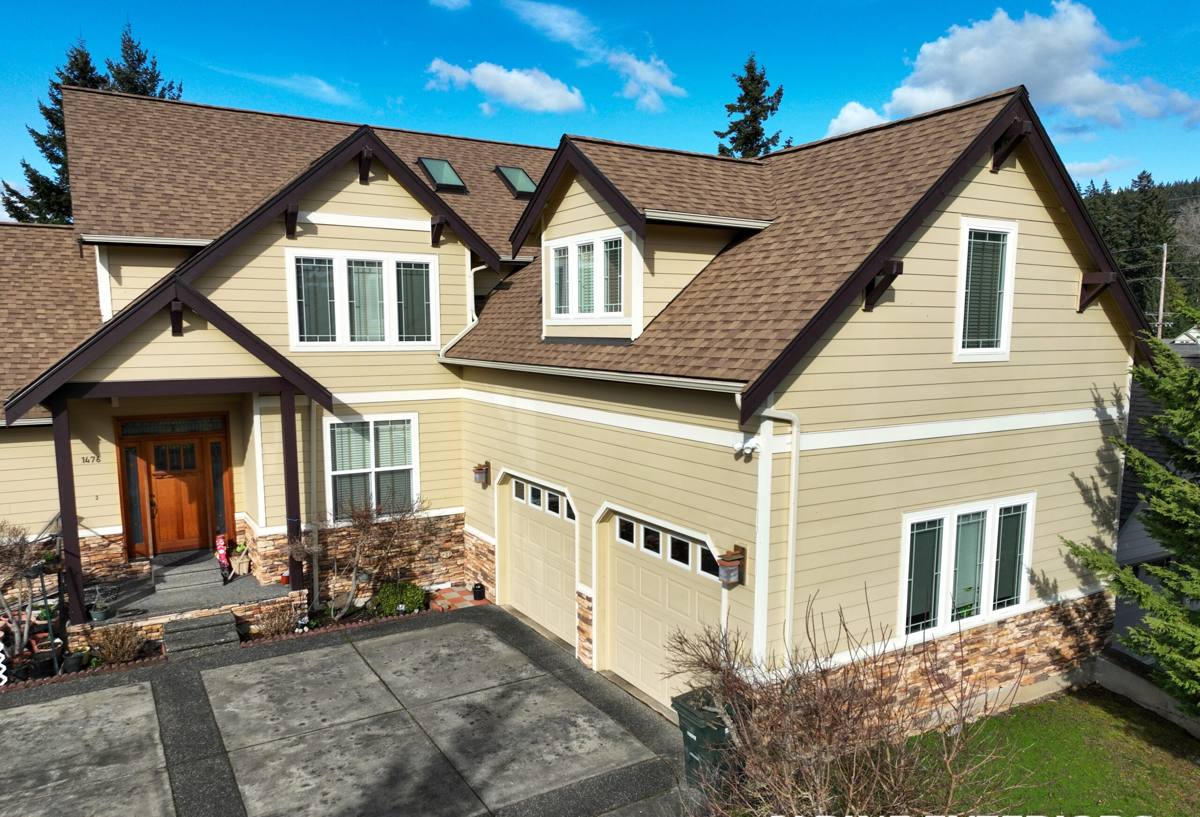
What March Point Properties Demand From a Deck
Most of the homes we work on in this area are on larger, semi-rural or waterfront-adjacent lots with more direct wind exposure than a typical in-town lot. That changes several things about how a deck should be designed and built:
- Salt air exposure accelerates corrosion on any exposed fastener, bracket, or railing hardware that isn't rated for it.
- Driving rain off the water hits decks at an angle, not just straight down — ledger flashing and board spacing both have to account for that.
- Low winter sun and tree cover in shaded or wooded lots keep decking surfaces damp longer, which is exactly what moss and algae need to take hold.
- Wind loading is a real structural consideration for elevated decks and railings on open, exposed sites.
- Drainage below the deck matters more here — standing water under a low deck on a wet lot leads to rot in framing you can't see until it's a problem.
None of these are exotic problems. They're the same forces every deck on Fidalgo Island deals with, just more concentrated the closer you are to open water. The fix isn't complicated either — it's using the right materials and details in the right places, consistently, instead of cutting corners that won't show up as a failure for a year or two.
Choosing the Right Decking Material
There's no single "best" decking material for March Point — the right choice depends on your budget, how much upkeep you want to do, and how exposed your site is. Here's how the common options actually compare under this area's conditions:
| Material | Moisture & Salt Air Behavior | Moss/Algae Resistance | Maintenance | Typical Lifespan |
|---|---|---|---|---|
| Pressure-treated fir/hem-fir | Good if sealed regularly; end grain and fasteners are the weak points | Low — needs regular cleaning | Annual cleaning, re-sealing every 1-2 years | 15-20 years with upkeep |
| Cedar | Naturally rot-resistant, but still needs sealing near salt air | Moderate — better than fir, still needs cleaning | Sealing every 1-2 years, occasional cleaning | 20-25 years with upkeep |
| Capped composite | Very good — won't rot or absorb moisture at the surface | Good, though grooved/textured boards can still hold moss film | Periodic washing, no sealing or staining | 25-30+ years, manufacturer warranty |
| PVC decking | Excellent — fully synthetic, no wood fiber to absorb moisture | Good, smooth surfaces shed moss film easiest | Occasional washing | 25-30+ years, manufacturer warranty |
On the most exposed March Point lots — close to the water, minimal tree cover, full sun-to-rain cycling — we lean toward capped composite or PVC because they don't give moisture anywhere to soak in. On more sheltered, wooded lots, a well-sealed cedar deck is still a solid, attractive choice as long as the owner is realistic about the sealing schedule. We'll walk your specific site with you and give you a straight recommendation rather than pushing one product line regardless of fit.
A Note on Wood Species and Grading
Not all "cedar" or "treated lumber" at the yard is graded the same, and the difference matters more here than in a dry climate. Tighter grain, fewer knots, and proper kiln-drying all affect how a board takes stain and how it weathers. We select material with this climate in mind rather than grabbing whatever's cheapest off the rack.
Framing and Structure Built to Last
The framing is the part of a deck nobody sees once it's finished, which is exactly why it's where shortcuts do the most damage. For a March Point build, we pay particular attention to:
Footings and Posts
Footings are sized and set to local frost and soil conditions, not just the minimum the span tables allow. On wetter or lower-lying lots, we grade for drainage away from posts so water doesn't sit against buried concrete and wood over the winter.
Ledger Attachment and Flashing
Where a deck attaches to the house, the ledger board and its flashing are the single most common failure point on decks we've been called to repair. Correct flashing — installed in the right order relative to the house's own water-resistive barrier, with proper fastener spacing — is non-negotiable on every deck we build, in-town or out at March Point.
Fasteners and Hardware
Given the salt air, we use corrosion-resistant, code-rated structural hardware and fasteners rated for exterior and coastal-adjacent use throughout — joist hangers, structural screws, and post bases included. Cheaper galvanized hardware can start showing rust streaks within a couple of seasons out here; it's not worth the savings on a structure holding up your deck.
Railings, Fasteners, and Hardware That Hold Up
Railing systems take the brunt of wind and rain exposure on an open site, and they're also what you touch and lean on. We spec railing hardware and cable or baluster connectors rated for coastal exposure, and we pay attention to how each railing style sheds water — a design that traps moisture at post bases or bottom rails will show rust and rot faster than one that lets water run off cleanly. If you want a specific railing look — cable, horizontal, traditional baluster — we'll tell you honestly how it performs in this environment before you commit to it.
Our Deck-Building Process
1. On-Site Design Consultation
We walk your March Point property with you, look at sun exposure, wind direction, drainage, and how you actually plan to use the space, then talk through material and layout options that fit both your budget and the site.
2. Permitting
Deck permitting requirements depend on size, height, and your property's exact jurisdiction — many March Point parcels fall under Skagit County's permitting process rather than the City of Anacortes, and the requirements aren't always identical. We handle that determination and the permit application so you're not the one figuring out which office to call.
3. Site Prep and Framing
Footings, posts, ledger, and framing go in first, with every structural connection and flashing detail inspected before decking goes down — this is the stage that determines how the deck performs in ten years, not just how it looks on day one.
4. Decking, Railing, and Finish Work
Decking and railing installation follows manufacturer spacing and fastening specs exactly, especially for composite and PVC products where improper installation can void the warranty.
5. Final Walkthrough
We walk the finished deck with you, cover care and maintenance specific to the material you chose, and answer any questions before we consider the job done.
Living With a Deck in a Moss-Prone, Rain-Heavy Climate
Even a correctly built deck needs some seasonal attention out here — that's just the reality of a long wet season and salt air. What changes based on your material and build is how much attention it needs, not whether it needs any. A simple seasonal routine keeps most decks looking and performing well for their full expected lifespan:
- Sweep debris and standing organic matter (leaves, needles) off the deck regularly through fall and winter — it's what feeds moss growth.
- Wash the surface at least once a year with a deck-safe cleaner to break up early moss and algae film before it takes hold.
- Check railing posts, stair stringers, and any wood-to-concrete contact points for early rot or rust once a year.
- Reseal or restain wood decking on the schedule appropriate to the product — don't wait until it's visibly gray and dry.
- Confirm gutters and downspouts near the deck are directing water away from framing and footings, not onto them.
- Clear leaves and debris from under low decks periodically so moisture isn't trapped against the framing.
A few minutes of seasonal upkeep is a lot cheaper than replacing rotted framing or rusted hardware five years early.
Why Hire a Crew That Already Works March Point
A deck built with generic, catalog-spec details might look fine the day it's finished anywhere in the country. Out at March Point, the difference shows up in year three or four — rusted hardware, a ledger leak you can't see until there's a soft spot underfoot, moss that never fully comes off a poorly chosen board texture. We build decks across Anacortes and the rest of Skagit County, and we adjust the material, hardware, and detailing based on exactly how exposed a given site is. That's not a sales pitch — it's the difference between a deck that needs real repair in five years and one that just needs a wash and reseal.
If you're planning a new deck or replacing an aging one at March Point, we'll come look at your property, talk through what actually makes sense for your site and budget, and give you a straightforward, no-pressure estimate. Use the form below to get started.