 Anacortes Siding
 Every few months a homeowner in Anacortes or elsewhere in Skagit County asks us to bid a job using Allura fiber cement siding, usually because a competing quote specified it or because they saw the name while researching materials online. It's a fair question, and it deserves a straight answer instead of a sales pitch. We don't install Allura. Not because it's a scam or a bad product on paper, but because after years of doing exterior work in a marine climate — salt air off Fidalgo Bay, driving rain off the Strait of Juan de Fuca, and a moss season that stretches from October into June — we made a decision to standardize on one fiber cement system we can stand behind completely: James Hardie. Here's the honest reasoning behind that call.
What Allura Siding Actually Is
Allura is a real fiber cement product, not a knockoff. It's manufactured from the same basic recipe as every other fiber cement siding on the market — Portland cement, sand, cellulose fiber, and water, cured under pressure into a dense, dimensionally stable board. That gives it the same core advantages of the category: it doesn't burn, it doesn't attract woodpeckers or carpenter ants, and it holds paint or factory finish far better than wood or vinyl over the long run. If you're comparing fiber cement to LP SmartSide, vinyl, or bare cedar, Allura and Hardie are playing in the same league.
So this isn't a case of "one product is fiber cement and the other is inferior." Both are legitimate. The differences that matter to us as installers — and to you as the homeowner living with the siding for the next 30-plus years — show up in the details around the product, not in the cement board itself.
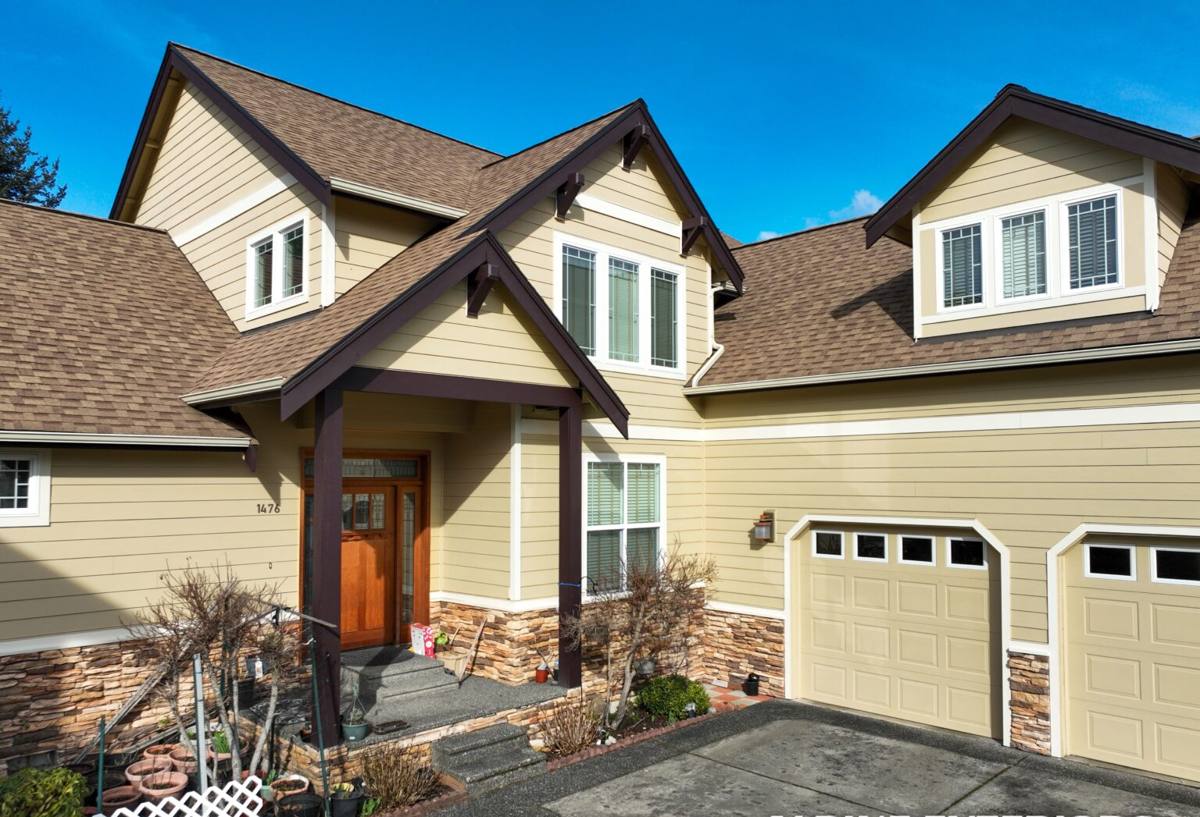
Why We Only Carry One Fiber Cement Brand
A lot of siding contractors quote whatever brand is cheapest to source for a given job, switching between two or three manufacturers depending on the week. We used to see the logic in that. But it means a crew is constantly relearning fastening patterns, factory-finish touch-up procedures, warranty paperwork, and manufacturer specs for each brand — and small inconsistencies compound into callbacks.
We chose to go all-in on James Hardie instead. Every installer on our crew trains on the same product line, the same HZ5 climate specs, the same ColorPlus finish process, every single job. That depth of repetition is where installation quality actually comes from — not from the brand name on the box, but from a crew that has installed thousands of feet of the exact same product and knows precisely how it behaves in wet, coastal Pacific Northwest conditions.
The Regional Support Gap
This is the biggest practical reason we walked away from Allura. James Hardie has spent decades building out distribution and installer support specifically in the Pacific Northwest, because HZ5-engineered product exists largely because of markets like ours. Distributors serving Skagit, Whatcom, and Snohomish counties stock Hardie panels, trim, and ColorPlus-matched accessories in volume, which means color runs are consistent and replacement pieces are easy to source years down the road if a piece gets damaged.
Allura's distribution network in western Washington is thinner. That might not matter on installation day if a supplier happens to have your job's order in stock, but it matters five or ten years later when a delivery truck backs into a corner board or a tree limb comes down in a windstorm and you need one replacement piece that matches the rest of the house. A shallower regional supply chain means longer waits and a real risk the color run doesn't match precisely.
What This Looks Like in Practice
- Faster turnaround on warranty and repair claims when the manufacturer has an established local distributor network
- Better color-lot matching when a board needs replacing years after original installation
- Local suppliers who know the product's install specs and can answer field questions during a job, not just take orders
- A used, proven track record of that specific finish system surviving PNW winters, not just lab testing
Factory Finish: Track Record Matters
The factory-applied finish is arguably more important than the board underneath it, because it's the finish — not the cement — that's fighting UV, salt air, and moss growth every single day. James Hardie's ColorPlus finish system has been on homes in wet coastal climates for more than two decades, which means there's a long, visible track record of how it holds color and resists cracking or fading in exactly the conditions Anacortes throws at a house.
Allura's factory finish systems are newer to the market and haven't had the same multi-decade exposure in marine environments that ColorPlus has. That doesn't mean they'll fail — it means there's less real-world evidence to point to when a homeowner asks "how will this look in year fifteen, after fifteen wet winters and fifteen dry summers of UV off the water?" We'd rather answer that question with two decades of visible proof than with a data sheet.
HardieZone Engineering Built for Where You Live
James Hardie splits its product formulations into climate zones — HZ5 for the wetter, milder regions like ours, and HZ10 for hot, dry climates — and engineers each version's moisture resistance and dimensional stability differently. It's a small thing that makes a real difference over the life of the siding, because a board formulated for the Southwest and one formulated for the Salish Sea are dealing with completely different moisture loads.
We haven't seen the same depth of climate-specific product segmentation from Allura's lineup in this market. Since our entire business is homes in a wet marine zone, we'd rather install a product line that was engineered with our specific rain, humidity, and moss exposure in mind from the factory floor, not a general-purpose board.
Warranty and Installer Accountability
Fiber cement warranties are only as good as the paperwork behind them and the installer standing behind the labor. James Hardie backs its ColorPlus products with a strong, transferable warranty — a real asset if you sell the house within the coverage period — and maintains a certified installer program with training and field support we can lean on if a technical question comes up mid-project.
Warranty terms and installer-support structures differ by manufacturer, and we don't think it's our place to characterize another company's warranty in detail on our own website. What we can say is that we know exactly what we're getting with Hardie's warranty and installer program because we've used it for years, and we'd rather offer our customers that certainty than ask them to take a newer program on faith.
Comparing the Factors That Actually Affect Homeowners
| Factor | James Hardie (what we install) | Allura (why it gave us pause) |
|---|---|---|
| Core material | Fiber cement, HZ5-formulated for wet climates | Fiber cement, general-market formulation |
| Factory finish track record | ColorPlus, 20+ years in coastal PNW markets | Newer factory finish systems, shorter regional history |
| Local distribution (Skagit/Whatcom) | Well-stocked, multiple distributors | Thinner regional supply chain |
| Installer training program | Established certified-installer network | Less regional installer infrastructure |
| Repair/color-match availability years later | Strong, due to distribution depth | Slower, more limited color-lot availability |
Questions Worth Asking Before You Choose a Siding Product
- How long has this exact finish system been installed in coastal Washington, and is there a visible track record of it aging here?
- If a single board gets damaged in five years, how fast can a matching color lot actually be sourced locally?
- Is the contractor certified or specifically trained on this product line, or is it just what happened to be cheapest that week?
- Does the warranty transfer to a new owner if the house sells, and what does that process actually require?
- Was this specific product formulated for a wet marine climate, or is it a general nationwide formulation?
What We Install Instead, and Why
We install James Hardie exclusively — HZ5 lap siding, panels, and trim finished in ColorPlus — because after years of exterior work along the water in Anacortes and greater Skagit County, it's the fiber cement system we've watched perform, hold its finish, and stay serviceable a decade or two after installation. Non-combustible, engineered for our specific rain and humidity load, backed by a distribution network that actually stocks matching product locally, and covered by a warranty program we understand inside and out. That combination is what we're willing to put our name behind.
If you're planning a siding project and want an honest comparison of what's actually right for your home, not just whichever brand a quote happens to specify, we're glad to walk through it with you. Reach out for a free, no-pressure estimate and we'll give you a straight answer about what your house needs.