 Anacortes Siding
 Siding Built for Edison's Climate
Edison sits out on the Skagit County flats near Samish Bay, in a stretch of Western Washington where farmland, tideflats, and open water all meet. That combination makes for a beautiful place to live and a genuinely tough place to keep a house dry. Homes here take a steady diet of salt-laden air off the bay, driving rain that comes in sideways more often than straight down, and long stretches of gray, damp weather that never quite lets siding, trim, or roofing fully dry out between storms. Add the open exposure that a lot of Edison-area properties have — fewer windbreaks than you'd find tucked into town — and you've got conditions that push exterior materials harder than the regional average.
We're a Skagit County-based crew, and Edison is well within our regular service area. We're not driving in from out of state to bid a job and disappear — we see how houses out here actually age, year over year, in this specific microclimate.
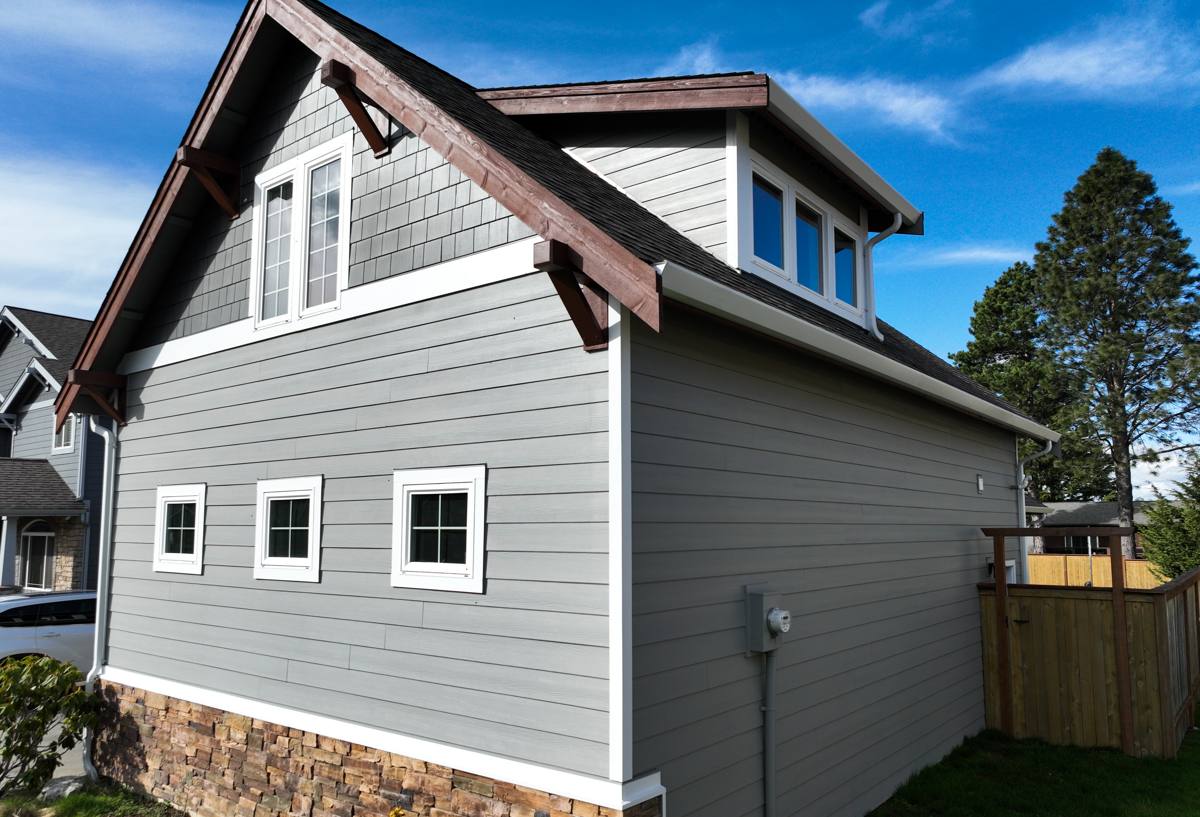
What We See Go Wrong on Homes in This Area
The failures we get called out for in and around Edison follow a pretty consistent pattern, and almost all of it traces back to moisture that had nowhere to go:
- Moss and algae buildup on north-facing walls and anywhere shaded by trees or neighboring structures, which holds moisture against the siding surface far longer than direct sun-exposed walls.
- Swollen or delaminating wood-based siding — cedar, primed spruce, and engineered wood products — where paint has failed at seams, fastener heads, or butt joints and water has worked its way in.
- Corroded fasteners and trim from prolonged exposure to salt-influenced air, especially on the sides of homes that face open water or open fields with little wind protection.
- Caulk and paint failure at a rate faster than manufacturers' published maintenance schedules assume, because the drying window between rain events out here is shorter than in drier parts of the state.
- Soft or spongy trim boards around windows and doors, usually the first visible sign that moisture has been getting behind the siding for a while before anyone noticed.
None of this means a home in Edison is doomed to constant repairs. It means the exterior materials and installation details matter more here than they do in a milder, more sheltered location.
Why We Standardized on James Hardie Fiber Cement
We install James Hardie fiber cement siding exclusively. We don't offer vinyl, LP SmartSide, Cemplank, Allura, primed spruce, or cedar as alternatives — not because those products don't have a place in the industry, but because after years of servicing homes in this climate, we decided we didn't want to keep replacing siding on the same houses every decade or two.
Fiber cement is non-combustible, dimensionally stable, and doesn't feed mold or rot the way wood-based products can once moisture gets behind them. Hardie's HZ5 product line is engineered specifically for climates like ours — cold, wet, and humid for long stretches of the year — with a formulation designed to resist moisture-related damage better than their standard product line built for drier regions. The factory-applied ColorPlus finish is baked on under controlled conditions, which gives you a far more consistent, durable finish than field-applied paint can match, and it comes with its own dedicated finish warranty separate from the substrate warranty.
What This Means in Practice
For a home in Edison, that translates to siding that handles the salt air without corroding, sheds wind-driven rain without swelling, and doesn't give moss and algae the soft, porous surface they thrive on the way untreated wood products do. It's also backed by a strong, transferable manufacturer warranty — worth something if you ever sell the house.
Our Installation Process
Correct installation matters as much as the material choice, maybe more. Fiber cement siding installed with the wrong flashing details, insufficient clearance, or poor caulking practices can still fail prematurely — the product isn't magic, it just gives you a much wider margin for error than the alternatives.
- Site walk and assessment. We look at your home's actual exposure — which walls face open water or prevailing wind, where moisture has already caused damage, and what's happening behind the current siding.
- Tear-off and sheathing inspection. We remove the old siding and check the sheathing and framing underneath for rot or damage before anything new goes up. This step catches problems that are invisible from the outside.
- Weather-resistive barrier and flashing. Proper house wrap, window and door flashing, and rain-screen detailing where appropriate — this is the layer that actually keeps water out, and it's the layer most commonly done poorly on lower-quality installs.
- Hardie panel or plank installation to manufacturer specifications, including correct fastener spacing, clearances at grade and roofline, and joint treatment.
- Trim, caulking, and final detail work at every penetration, corner, and transition — the small details that determine whether water sheds away from the house or finds a way in.
Comparing Siding Options for an Edison Home
| Material | Moisture Performance in This Climate | Maintenance | Typical Lifespan |
|---|---|---|---|
| James Hardie fiber cement | Strong — engineered HZ5 line for wet climates | Low; factory finish, occasional wash | 30+ years to substrate warranty |
| Vinyl | Moderate; can warp or crack under UV and cold cycling | Low, but limited repair options if damaged | 20-30 years, variable |
| Cedar | Weak without diligent upkeep; absorbs moisture | High; regular re-staining or painting required | Highly variable, often under 20 years without upkeep |
| Primed spruce / engineered wood | Weak; prone to swelling at joints and fasteners | Moderate to high; paint maintenance critical | Often shorter than warranted without strict upkeep |
This isn't a knock on any manufacturer — it's an honest summary of the trade-offs, and it's why our own installation lineup only includes the option on top of that table.
Beyond Siding: Roofing, Windows, and Decks
Siding doesn't work in isolation, and most of the moisture problems we see in this area involve more than one system failing together. A roof past its service life, a window with degraded flashing, or a deck ledger board that's trapping water against the house can all undermine even a well-installed siding job. Because we handle roofing, windows, and decks in addition to siding, we can look at your home's exterior as one connected system rather than quoting a siding job in isolation and hoping the rest holds up. If we spot a roofing or window issue during a siding estimate, we'll tell you — even if it's not what you called us about.
What Affects the Cost of a Siding Project
| Factor | Why It Matters |
|---|---|
| Home size and wall complexity | More corners, gables, and dormers mean more cutting, flashing, and labor time |
| Condition of existing sheathing | Rot or water damage found during tear-off adds repair scope before new siding goes on |
| Siding profile chosen | Lap, panel, and shingle-style Hardie products carry different material and labor costs |
| Trim and detail work | Window surrounds, corner boards, and fascia detailing add time and material |
| Site access | Rural and waterfront lots around Edison sometimes require extra staging or equipment |
We don't quote sight-unseen ranges that fall apart once we're actually on your roof or wall. A firm number comes after we've walked the property.
Choosing a Contractor for a Job Like This
Whoever you hire, a few things are worth checking before you sign anything:
- Are they licensed and insured to do exterior work in Washington State, and will they show you proof without being asked twice?
- Do they carry manufacturer certification or documented training for the specific product they're installing?
- Will they put the scope of work, materials, and warranty terms in writing before the job starts?
- Do they inspect sheathing and framing during tear-off, or just nail new siding over whatever's underneath?
- Are they familiar with this specific stretch of Skagit County, or is this their first job dealing with open-water exposure and salt air?
Keeping Your Siding Performing Long-Term
Even the best siding benefits from basic upkeep. A yearly rinse to knock down moss and algae before it establishes, keeping gutters clear so water isn't sheeting down the wall, and trimming back vegetation that shades and dampens a wall section all go a long way. Fiber cement doesn't need the repainting cycle that wood products do, but it still deserves a periodic look — especially at caulk joints and trim intersections — so small issues get caught before they become expensive ones.
If you're weighing a siding project for a home in Edison, or you want a second opinion on a roofing, window, or deck issue while we're out there, we're happy to take a look. Reach out for a free, no-pressure estimate — we'll give you a straight assessment of what your house actually needs.