 Anacortes Siding
 Edison sits on flat, low-lying farmland near the tidal sloughs off Samish Bay, in the part of Skagit County where open fields meet saltwater with almost nothing in between to slow the weather down. That setting is part of what makes the area distinctive — but it's also exactly the kind of exposure that wears out a house's siding faster than it would a few miles inland. If you own a home in or around Edison, your exterior is dealing with salt-laden air, wind-driven rain, and a moss season that runs longer than most homeowners expect, often all in the same week. This page covers what that means specifically for siding replacement on an Edison home, what a correctly done job actually involves, and how we approach that work in this part of Skagit County.
What Edison's Setting Does to Siding
Edison doesn't have hills or a dense tree line to break up incoming weather the way some nearby towns do. The land is flat, the water is close, and wind off Samish Bay moves across open farmland with little to slow it down before it reaches a house. That combination puts three specific stresses on siding here: salt air that corrodes exposed fasteners and accelerates the breakdown of lower-grade finishes, driving rain that gets pushed sideways into wall assemblies instead of falling straight down onto roofs, and a moss season that runs longer than it would on a drier, more sheltered lot.
None of these show up overnight. Salt air works slowly, dulling and pitting metal trim and hardware over years rather than months. Wind-driven rain finds the one seam, joint, or nail hole that wasn't sealed quite right, and it can take a season or two of repeated soaking before that weak point becomes a visible problem. Moss builds up gradually on shaded or damp-prone wall sections, holding moisture against the surface long after a storm has passed. Individually, none of these forces move fast — but on a low-lying, exposed property like the ones common around Edison, they compound faster than they would on a more sheltered lot.
Older Homes, Original Siding
A lot of the housing stock in and around Edison has been standing for decades, and it's common for us to find original siding — or a first replacement layer — still on a house that's due for another look. Wood-based siding installed thirty or forty years ago in this setting has usually taken on more cumulative moisture exposure than the same product would have inland, and it shows: soft spots at the bottom courses, peeling or chalky paint, and nail holes that have worked themselves loose over years of wet-dry cycling. None of that is a surprise given the setting. It's just a sign that the material has reached the end of what it can reasonably be expected to do.
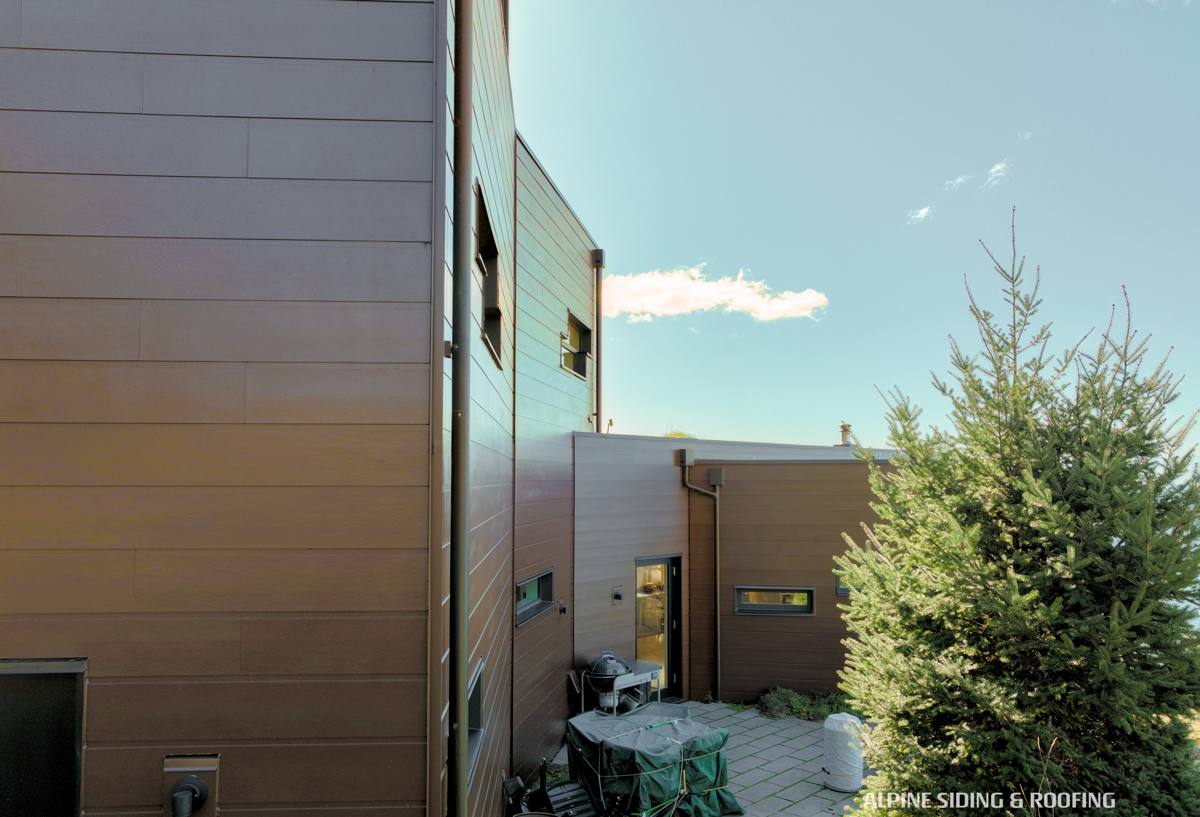
Signs an Edison Home Needs Siding Replacement, Not Just Repair
Repair makes sense for isolated damage — a cracked board, a small area behind a downspout that stayed wet too long. Replacement becomes the honest recommendation when the damage is spread across multiple wall sections, or when the underlying material itself has reached the end of its service life. Here's what we look for during an assessment:
- Soft, spongy, or crumbling siding when pressed near the bottom courses or under windows
- Paint that's chalking, peeling, or failing to hold a new coat even after prep work
- Visible warping, cupping, or gaps opening up at seams and butt joints
- Persistent moss or dark staining on the same wall sections year after year, even after cleaning
- Rusted or corroded fasteners visibly bleeding through the siding surface
- Rot or soft framing discovered at a window sill, corner board, or bottom plate during a closer look
- Rising energy bills alongside drafts near exterior walls, suggesting the wall assembly behind the siding is compromised
If you're only seeing one or two of these in a single spot, a repair may still be reasonable. If several of these show up across more than one wall, replacement is usually the more honest call — patching a wall assembly that's already failing in multiple places tends to cost more over time than doing the job right once.
Why We Install Only James Hardie Fiber Cement
We install one siding product on every job we take on in Edison and throughout our Skagit County service area: James Hardie fiber cement. We don't offer vinyl, LP SmartSide, Cemplank, Allura, primed spruce, or cedar. That's a deliberate professional standard, not a limited catalog, and it comes directly from what this specific setting does to a wall system over time.
Fiber cement doesn't have an organic core, so there's no wood substrate for driving rain to work into if a joint develops a gap over time, and it doesn't feed moss growth the way wood-based products can. James Hardie also engineers its HZ product lines around regional climate exposure rather than selling one generic formulation nationwide — the HZ5 line is built for the kind of sustained moisture and coastal air exposure that a low-lying, water-adjacent property near Samish Bay sees regularly. Paired with a factory-applied ColorPlus finish, which cures under controlled conditions instead of drying on-site between rain showers, it holds color and resists cracking longer than a field-applied paint job typically manages in a climate that doesn't offer many long dry stretches to cure in.
What We Don't Install, and Why
Each of the products we don't install gets something right in the right setting. Vinyl is inexpensive and low-maintenance in milder climates, but it can go brittle with age and its seams are exactly the kind of gap wind-driven rain works into over years of exposure. Engineered wood siding installs quickly and takes paint well, but it depends on flawless field priming and caulking at every single cut edge to keep sustained moisture out — a demanding standard to hold on every job, indefinitely, in a setting this exposed. Cedar has real, genuine character, but it's organic and asks for ongoing upkeep — refinishing, sealing, moss treatment — to keep performing on a property that doesn't get much of a dry season to recover in between storms off the bay. None of these are bad products everywhere. We just don't think they're the right call for a house sitting this close to open water and farmland with nothing to break the weather.
What a Correct Siding Replacement Job Involves
Siding is only as good as the installation behind it, and in a setting like Edison's, shortcuts show up faster than they would somewhere more sheltered. A correct job starts before the first new board goes up.
| Step | What It Involves |
|---|---|
| Tear-off and inspection | Removing old siding fully to check sheathing, framing, and moisture barrier condition underneath — not just resurfacing over unknown damage |
| Sheathing and framing repair | Replacing any rotted or soft wood found before new siding goes on, rather than covering it up |
| Weather-resistive barrier | Installing or repairing the house wrap correctly, lapped in the right direction to shed wind-driven rain downward and outward |
| Flashing integration | Properly lapped and sealed flashing at every window, door, and penetration — the single most common source of hidden leaks |
| Fastening and clearance | Manufacturer-specified fastener pattern, proper clearance from grade, decks, and rooflines to keep the bottom edge out of standing moisture |
| Joint and finish work | Seam treatment matched to each wall's actual sun and shade exposure, with factory-finished color matched at trim and touch-up points |
Skip any one of these steps and you've built a weak point into the wall — one that usually doesn't show up as a problem for a year or two, and then shows up as exactly the kind of moisture damage this whole job was supposed to prevent.
Our Process for an Edison Siding Job
- On-site assessment. We walk the property, check existing siding condition wall by wall, and identify any areas where moisture has likely already reached the sheathing.
- Written scope and estimate. You get a clear, honest breakdown of what the job involves and why, including any repair work the assessment turned up — no vague allowances buried in the fine print.
- Tear-off and repair. Old siding comes off, framing and sheathing get inspected and repaired as needed, and the weather-resistive barrier goes in correctly before anything new is installed.
- Hardie installation. Flashing, fastening, and joint treatment are handled to manufacturer spec, adjusted for the specific exposure of each wall on your property.
- Final walkthrough. We go over the finished work with you, point out anything worth keeping an eye on seasonally, and make sure you're clear on the warranty coverage.
Comparing Siding Options for an Edison Home
| Factor | Vinyl / Engineered Wood | James Hardie Fiber Cement |
|---|---|---|
| Moisture resistance | Depends on intact seams or flawless field-sealed cut edges | Non-organic core, not vulnerable to rot at cut edges |
| Performance near open water | Can warp, become brittle, or corrode faster under salt exposure | HZ5 line engineered for coastal and high-moisture exposure |
| Finish durability | Field-painted or factory vinyl color, fades and chalks over time | Factory-baked ColorPlus finish, longer color retention |
| Moss resistance | Organic products can feed moss growth on shaded walls | Doesn't feed moss growth the way wood-based siding can |
| Maintenance burden | Regular recoating, caulk renewal, or seam inspection | Lower ongoing maintenance when installed to spec |
Cost Factors for an Edison Siding Replacement
We don't publish blanket pricing, because on a property like the ones around Edison, the real cost drivers vary too much from house to house for a flat number to be honest. That said, these are the factors that consistently move a project's cost up or down.
| Factor | How It Affects Cost |
|---|---|
| Hidden moisture or rot found at tear-off | Sheathing and framing repair adds scope beyond the siding itself |
| Home size and wall complexity | More corners, gables, and window openings mean more flashing and labor time |
| Siding profile and trim package | Board-and-batten or heavier trim detail runs higher than standard lap siding |
| Site access | Farmland setbacks, fencing, or tight staging areas can affect labor time |
| Existing barrier condition | A house wrap that needs full replacement adds a step most homeowners don't budget for upfront |
Why Hiring a Crew That Already Works This Area Matters
A crew that's worked on homes around Edison and the surrounding Skagit County farmland already knows what to expect before the tear-off starts: how far salt air carries inland off Samish Bay, which wall orientations tend to hold moss the longest, and how much clearance a house needs from often-damp ground. That familiarity shows up in small decisions — where to pay closer attention during tear-off, how to sequence flashing at a window that faces the prevailing weather, which joints need extra attention on a north-facing wall. A contractor coming from a drier, more sheltered region and applying a generic approach here is more likely to miss exactly the details that matter most in this setting. We'd rather bring that local knowledge to the job from day one than have a homeowner find out the hard way, two winters later, what got missed.
If your Edison home's siding is showing its age, or you're just not sure whether you're looking at a repair or a full replacement, we're happy to take a look. Reach out for a free, no-pressure estimate and we'll walk the property with you and give you a straight read on what your house actually needs.