 Anacortes Siding
 Fidalgo Island Sits in a Climate That Doesn't Forgive Cheap Exterior Work
Fidalgo Island, home to Anacortes and the surrounding Skagit County shoreline, gets a version of Pacific Northwest weather that's a step harder on a house than what you'd find twenty miles inland. Being surrounded by saltwater on multiple sides means homes here deal with salt-laden air on top of the usual western Washington rain, wind, and long stretches of overcast, damp weather that never quite lets a house dry out between storms. Add in a moss season that can run most of the year on north-facing walls and shaded rooflines, and you've got an exterior that's under constant, low-grade attack even when nothing dramatic is happening.
None of this means a house here is doomed to rot or fade early. It means the materials and installation details matter more on Fidalgo Island than they would in a drier, calmer climate. A siding job that would hold up fine in eastern Washington can fail years early out here if it wasn't built for this environment.
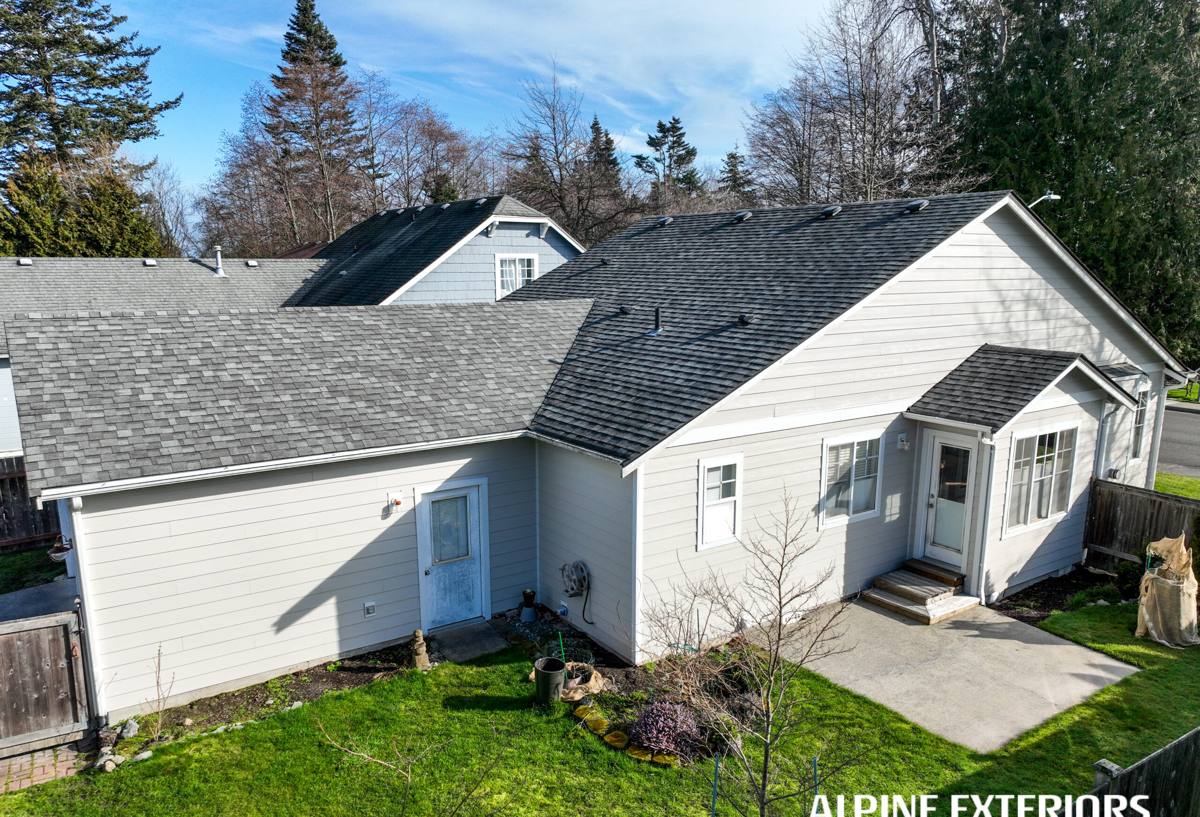
What Salt Air and Driving Rain Actually Do to a House
Salt air isn't just an inconvenience for cars and outdoor metal — it accelerates corrosion on fasteners, flashing, and any exposed metal trim, and it can work its way into porous or poorly sealed siding materials over time. Combined with wind-driven rain, which pushes water sideways into seams, laps, and joints that would stay dry in a straight-down rain, the result is more moisture intrusion opportunities than most siding products are designed to handle.
Then there's the moss and mildew problem. Shaded, north- and west-facing walls on Fidalgo Island properties — especially those tucked under mature trees or facing the water where fog sits longer in the morning — stay damp for extended stretches. Moss and algae don't just look bad; they hold moisture against the siding surface, which is exactly the condition that causes rot in wood-based products and coating breakdown in others.
- Wind-driven rain forces water into laps, seams, and butt joints that face away from prevailing weather
- Salt air accelerates corrosion of exposed fasteners and metal flashing
- Extended damp periods promote moss, algae, and mildew growth on shaded elevations
- Freeze-thaw cycles, while milder here than inland, still stress any siding that has already absorbed moisture
- UV exposure on south- and west-facing walls fades paint and coatings faster than most homeowners expect
Why This Company Installs Only James Hardie Fiber Cement
We made a decision to standardize on James Hardie fiber cement siding and not install vinyl, LP SmartSide, cedar, primed spruce, or other fiber cement brands. That's not a marketing position — it's a practical one, built around what actually holds up in a marine climate like this one over the long haul.
Fiber Cement Doesn't Feed Moisture Problems
James Hardie siding is cement-based, not wood-based, which means it doesn't provide the organic material that rot and moss thrive on the way wood or wood-composite products can. It also doesn't expand and contract with moisture the way wood does, which matters a lot in a climate where a wall can go from wet to dry and back again dozens of times a year.
Climate-Engineered Product Lines
Hardie manufactures different formulations for different climate zones — their HZ5 line is engineered for exactly the kind of wet, humid, freeze-prone Pacific Northwest conditions that Fidalgo Island sees. That's a meaningful distinction from a one-size-fits-all product, because the performance requirements for a house on a saltwater island are genuinely different from a house in a dry inland region.
ColorPlus Factory Finish
Hardie's ColorPlus finish is baked on at the factory under controlled conditions, rather than field-applied with a brush or sprayer. In a climate with this much UV exposure and salt air, a factory-cured finish holds color and resists fading, chipping, and peeling substantially longer than most site-applied paint jobs, and it comes backed by its own finish warranty separate from the substrate warranty.
A Warranty Structure That Reflects Confidence
Hardie backs its siding with a strong, transferable limited warranty. That transferability matters on Fidalgo Island specifically, where a fair number of homes change hands as vacation properties, retirement homes, or investment rentals — a warranty that follows the house, not the original owner, is a real asset at resale.
We're upfront that this means we turn down some jobs where a homeowner specifically wants vinyl or cedar. We'd rather explain our reasoning honestly than install something we don't believe will perform well here — see the trade-offs below for the products we don't install.
How Common Alternatives Perform in This Climate
| Material | Moisture / Salt Air Behavior | Maintenance Burden | Typical Trade-Off |
|---|---|---|---|
| Vinyl siding | Doesn't rot, but seams and panels can allow water behind the surface; can warp or crack in temperature swings | Low, but color fades and can't be repainted easily | Lower upfront cost, weaker long-term appearance and moisture management |
| Cedar / wood siding | Absorbs moisture, prone to rot and moss growth in shaded, damp areas | High — regular sealing, staining, and moss treatment required | Attractive natural look, but demands ongoing upkeep in this climate |
| LP SmartSide (engineered wood) | Better than raw wood but still wood-based; edges and cut ends are moisture-sensitive if not sealed correctly | Moderate — relies heavily on correct installation and caulking | More installation-sensitive than fiber cement in wet climates |
| James Hardie fiber cement | Cement-based, doesn't feed rot or moss, engineered HZ5 formulation for this region | Low — periodic washing, no repainting needed for years | Higher upfront cost than vinyl, offset by longevity and finish durability |
It's Not Just Siding — Roofing, Windows, and Decks Face the Same Conditions
A house on Fidalgo Island is a system, and the same salt air, wind-driven rain, and moss pressure that affects siding hits the roof, windows, and any exterior deck just as hard.
Roofing
Roofs here deal with moss buildup on shaded slopes and the granule and flashing wear that comes with salt exposure. Proper flashing details at valleys, chimneys, and roof-to-wall transitions are especially important given how much wind-driven rain this area sees.
Windows
Window flashing and sealing are where a lot of hidden moisture problems start on this island. Older or poorly flashed windows are a common source of the rot damage we find when we open up a wall during a siding replacement — getting the window integration right the first time saves a lot of grief later.
Decks
Exterior decks facing the water or open to weather take a similar beating from moisture cycling and UV, and ledger board flashing against the house needs the same careful moisture-management approach as siding does at any wall penetration.
Handling all four trades under one crew means the flashing, sealing, and moisture-management details at the seams between roof, wall, window, and deck are coordinated rather than left to chance between separate contractors.
Why a Local Crew Matters for This Specific Island
Skagit County's building conditions, wind exposure, and typical construction styles differ enough from house to house on Fidalgo Island that experience with this specific area is worth something. A crew that regularly works in and around Anacortes has a feel for which elevations tend to take the worst weather, how local permitting works, and what kind of moisture problems tend to show up when older siding comes off. That local pattern recognition doesn't replace good installation practice, but it does mean fewer surprises and a more accurate first estimate.
What Correct Installation Looks Like in This Climate
Fiber cement siding performs the way it's supposed to only when it's installed to spec, and in a wind-driven-rain environment, a handful of details matter more than the brand of siding itself:
- Proper weather-resistive barrier and flashing behind the siding, not just at the surface
- Correct clearances at grade, roof lines, and deck ledgers so water has somewhere to go
- Stainless or coated fasteners appropriate for coastal salt exposure, driven to Hardie's specifications
- Caulked and sealed joints at trim, windows, and penetrations — the spots most likely to leak
- Proper overlap and gapping at butt joints to accommodate seasonal movement without opening a water path
A quality product installed with shortcuts on any of these points will still develop moisture problems on an island like this one. That's why we treat installation detail as seriously as the material choice itself.
Keeping Fidalgo Island Siding Looking Right Over the Years
James Hardie siding is low-maintenance compared to wood or vinyl, but "low-maintenance" doesn't mean "no maintenance" in a climate this damp. A short seasonal routine goes a long way:
- Rinse siding down once or twice a year to clear salt residue and prevent moss and algae buildup, especially on shaded north- and west-facing walls
- Keep gutters clear so overflow doesn't run down the siding face and stay wet longer than it should
- Trim back vegetation and tree limbs that keep a wall shaded and damp
- Check caulking at trim, window, and door edges every year or two and re-seal where it's cracked or pulled away
- Have any soft spots, staining, or bubbling investigated promptly — on any siding material, small moisture issues are far cheaper to fix early
Get a Straight Answer for Your Fidalgo Island Home
Every house on this island faces its own mix of sun, shade, wind exposure, and salt air depending on where it sits, and that affects what your siding, roof, windows, and deck actually need. If you'd like a straightforward, no-pressure look at your home's exterior and an honest estimate, the form below is the fastest way to get one of our local crew out to take a look.