 Anacortes Siding
 Fidalgo Island Puts a Different Kind of Wear on a Roof
Fidalgo Island sits surrounded by saltwater, which means every roof here deals with a combination of stresses that inland Skagit County homes don't see nearly as often. Marine air carries salt that slowly corrodes exposed metal — nail heads, flashing, gutter hangers, and vent stacks all take the hit over the years. Add in driving rain that comes sideways during winter storms, and you've got water finding its way into laps, seams, and fastener penetrations that a calmer climate roof would never test.
Then there's moss. Anacortes and the rest of Fidalgo Island stay damp for most of the year, and shaded, north-facing roof slopes under fir and cedar cover barely dry out between rain events. Moss doesn't just look bad — its root structure lifts shingle edges, holds water against the roof deck, and accelerates granule loss. A roof that would last 25-plus years in a drier climate often shows real trouble a decade earlier here if it wasn't installed with this climate in mind.
None of that means roofing on Fidalgo Island is impossible to get right — it just means the details matter more. The material choice, the underlayment, the flashing work, and the ventilation all need to account for salt exposure, sustained moisture, and moss pressure, not just be "up to code."
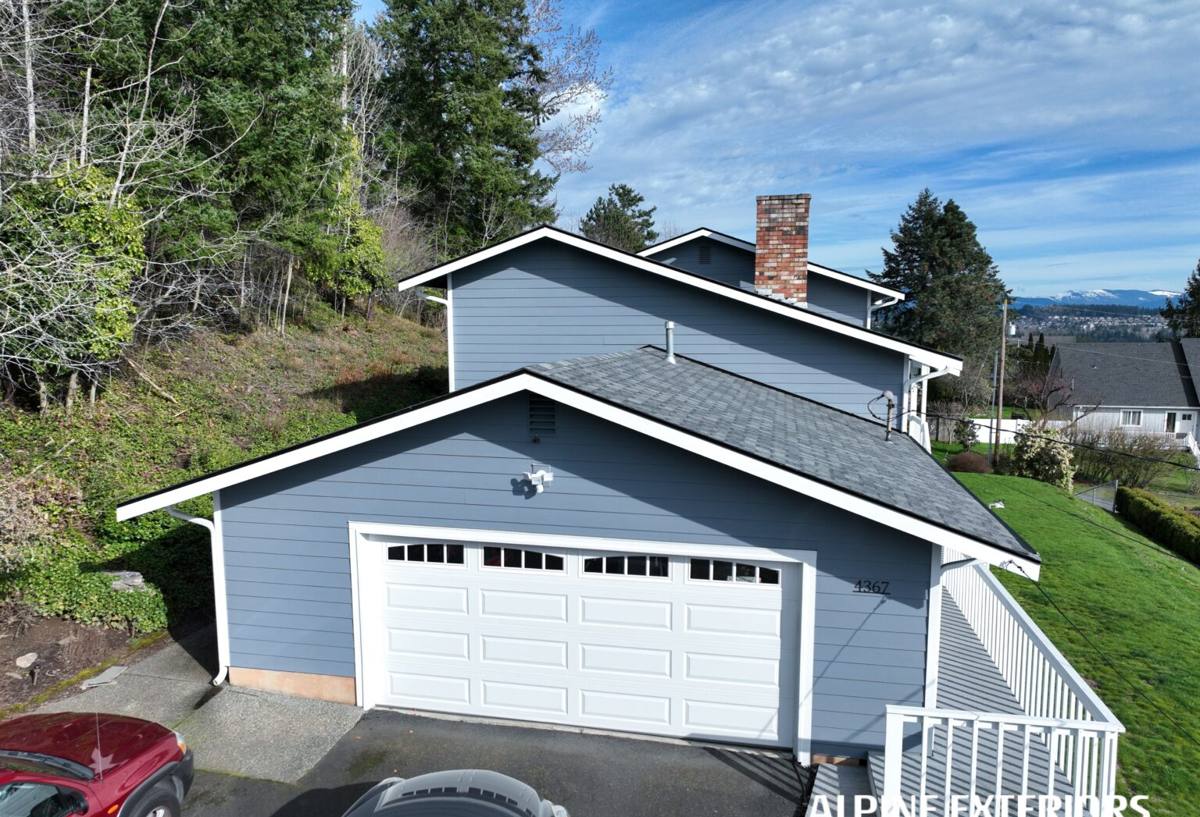
Signs a Fidalgo Island Roof Has Reached Replacement, Not Repair
Repair makes sense for a lot of roof problems. But there's a point where patching a roof is just delaying an expense and risking interior damage in the meantime. Homeowners on the island should watch for a combination of these signs, not just one:
- Granules collecting in gutters or at downspout outlets in noticeable amounts
- Shingles that are curling, cupping, or cracking, especially on south and west-facing slopes
- Moss or dark algae streaking across large sections rather than a small isolated patch
- Soft spots or slight sagging felt when walking the roof, which points to deck damage underneath
- Daylight or water stains visible in the attic near the ridge, valleys, or chimney flashing
- Multiple past repairs in different areas within the last few years
- Rusted or lifted flashing around vents, skylights, or chimneys
If you're seeing two or three of these at once, a full replacement is usually the more honest recommendation than another round of patching. We'll always tell you plainly which category your roof falls into — there's no benefit to us talking a homeowner into a replacement that isn't needed yet.
Choosing a Roofing Material for This Climate
There's no single "best" roofing material for every home, but on Fidalgo Island, salt exposure and moss pressure narrow the field of good choices. Here's how the common options compare for this specific environment:
| Material | Typical Lifespan Here | Moss/Moisture Behavior | Salt Air Performance |
|---|---|---|---|
| Asphalt composition shingle (architectural) | 20-30 years | Good with proper ventilation; moss-resistant granule options available | Good — minimal exposed metal fasteners when installed correctly |
| Standing seam metal | 40-50+ years | Excellent — sheds moisture fast, little surface for moss to grip | Requires marine-grade coatings/fasteners to avoid premature corrosion |
| Synthetic/composite shake | 30-40 years | Good; resists moisture absorption better than natural wood | Good — no organic material to feed moss growth |
| Cedar shake (natural wood) | 20-25 years, often less here | Poor without diligent maintenance — organic surface feeds moss and holds moisture | Fair; salt speeds up weathering of untreated wood |
We install architectural asphalt and metal roofing most often on the island, largely because they hold up against the moss-and-salt combination without demanding constant upkeep from the homeowner. Cedar shake can still be the right call for a specific look or historic match, but we'll walk through the added maintenance honestly before you commit to it — it's a maintenance-heavy choice in this climate, not a maintenance-free one.
Underlayment and Fasteners Matter as Much as the Surface Material
What's under the shingles and holding them down often determines whether a roof makes it to 25 years or fails at 15. On Fidalgo Island we default to a synthetic underlayment with ice-and-water shield in vulnerable areas — eaves, valleys, and around penetrations — and we use corrosion-resistant fasteners throughout. A roof is only as strong as its weakest connection point, and salt air finds weak connection points faster than any other climate factor.
What a Correct Roof Replacement Actually Involves
A roof replacement is more than stripping old shingles and nailing down new ones. Done right, it includes:
- Full tear-off down to the deck — never a re-roof over existing layers, which traps moisture and hides deck damage.
- Deck inspection and repair — any soft, rotted, or delaminated plywood/OSB gets replaced before anything new goes down.
- Ice-and-water shield at eaves, valleys, and roof-to-wall transitions where wind-driven rain is most likely to intrude.
- Synthetic underlayment across the full deck for a secondary moisture barrier.
- New flashing at every chimney, skylight, vent pipe, and wall intersection — reused old flashing is one of the most common causes of early leaks.
- Balanced ventilation — intake at the eaves, exhaust at the ridge — sized correctly for the attic space.
- Material installation per manufacturer spec, including proper nailing patterns and exposure.
- Cleanup and magnetic sweep of the yard for stray nails and debris.
Skipping steps like deck repair or new flashing is how a roof replacement ends up needing attention again in five years instead of twenty-five. We don't quote a job without accounting for these steps, because leaving them out just shifts the cost onto the homeowner later.
Ventilation and Moss Prevention Built Into the Job
Moss doesn't just grow because a roof is shaded — it grows because moisture lingers. A poorly ventilated attic pushes warm, moist air up against the underside of the roof deck, which keeps the topside cooler and damper than it should be and gives moss more time to establish itself each wet season. Correcting ventilation during a replacement is one of the most effective, and most overlooked, ways to slow moss regrowth long-term.
We also talk with homeowners about tree cover during the estimate. If large limbs overhang a slope and keep it shaded and damp most of the year, trimming that back will do more for moss prevention than any product applied to the shingles. It's not something we can always control, but it's worth mentioning honestly rather than pretending a coating alone will solve it.
Our Process, Start to Finish
Estimate and Inspection
We walk the roof (weather permitting) or do a close ground and attic inspection, document what we find, and explain what's driving the recommendation — repair or replacement. You get a written estimate with material options and a clear scope, not a vague number.
Scheduling and Material Order
Once you approve the scope, we order materials and schedule around the weather window. On the island, we watch the forecast closely — driving rain mid-tear-off is not something we let happen, and we'll delay a start date rather than risk exposing your home.
The Work Itself
Tear-off, deck repair, underlayment, flashing, material installation, and ventilation work happen in sequence, typically completed within one to a few days depending on roof size and complexity.
Final Walkthrough
We walk the finished roof and the site with you, point out what was done, and make sure gutters, downspouts, and cleanup are handled before we consider the job finished.
Why Local, Fidalgo Island-Specific Experience Matters
Roofing crews that mostly work drier, inland areas of Skagit County sometimes underbuild for this island's exposure — lighter underlayment, standard fasteners, or ventilation specs that would be fine forty minutes east but fall short here. A crew that regularly works Fidalgo Island homes knows to spec corrosion-resistant hardware as a default, not an upsell, and knows which slopes and orientations on this island tend to hold moss and moisture the longest.
Local experience also means fewer surprises with permitting and inspection timing through the relevant Skagit County or City of Anacortes building department process, and a better read on realistic weather windows for scheduling a multi-day tear-off without leaving a roof exposed overnight.
What Drives Roof Replacement Cost Here
We don't publish fake per-square-foot pricing because it's genuinely dependent on your specific roof — but these are the real factors that move the number up or down:
- Roof size and number of slopes/planes (more valleys and hips mean more labor)
- Roof pitch — steep roofs require more safety equipment and time
- Current layer count and whether extensive deck repair is needed underneath
- Material choice — architectural asphalt, metal, and synthetic shake carry different costs
- Number of penetrations needing new flashing (chimneys, skylights, plumbing vents)
- Access — tree cover, steep driveways, or tight lot lines affecting equipment staging
- Current ventilation setup and whether it needs to be corrected or upgraded
Most full replacements on typical island homes land in a broad mid-range for the region, but roof size and deck condition swing that range significantly in either direction. We'll give you real numbers after we've actually looked at your roof, not before.
Protecting the Investment After Replacement
A new roof still needs a small amount of upkeep in this climate to get its full lifespan. Keep gutters clear so water isn't backing up under the eaves, have moss growth addressed early each spring before it spreads, and keep an eye on flashing around chimneys and vents after major storms. None of this is expensive or time-consuming, but skipping it entirely is how homeowners end up back at "repair versus replace" sooner than they should.
If your roof is showing its age, or you just want an honest read on how many years you realistically have left, we're happy to take a look. Fill out the form below for a free, no-pressure estimate — we'll tell you what we actually see, not just what gets a signature.