 Anacortes Siding
 Sedro-Woolley's Climate Is Harder on a House Than It Looks
Sedro-Woolley sits inland from Anacortes along the Skagit River, and it's easy to assume that distance from the water buys a house some protection from the weather. It doesn't buy as much as people think. The same marine-influenced weather system that soaks the rest of Skagit County settles into the river valley too — long stretches of drizzle, heavier driving rain events off the Sound, and a fall-through-spring stretch where surfaces rarely get a chance to fully dry out. Add the tree cover common to Sedro-Woolley's older neighborhoods and rural lots, and you get shaded, damp siding and roof surfaces that stay wet longer than they would on an open lot in town.
That combination — persistent moisture, limited sun exposure, and organic debris from surrounding trees — is exactly what moss, algae, and mildew need to take hold on a home's exterior. It's also what slowly breaks down siding materials that aren't built to shed water and resist decay year after year. We work throughout Skagit County, including the coastal exposure closer to Anacortes where salt-laden air adds another layer of wear to paint, caulk, and fasteners, and we bring that same climate-tested approach to every Sedro-Woolley job.
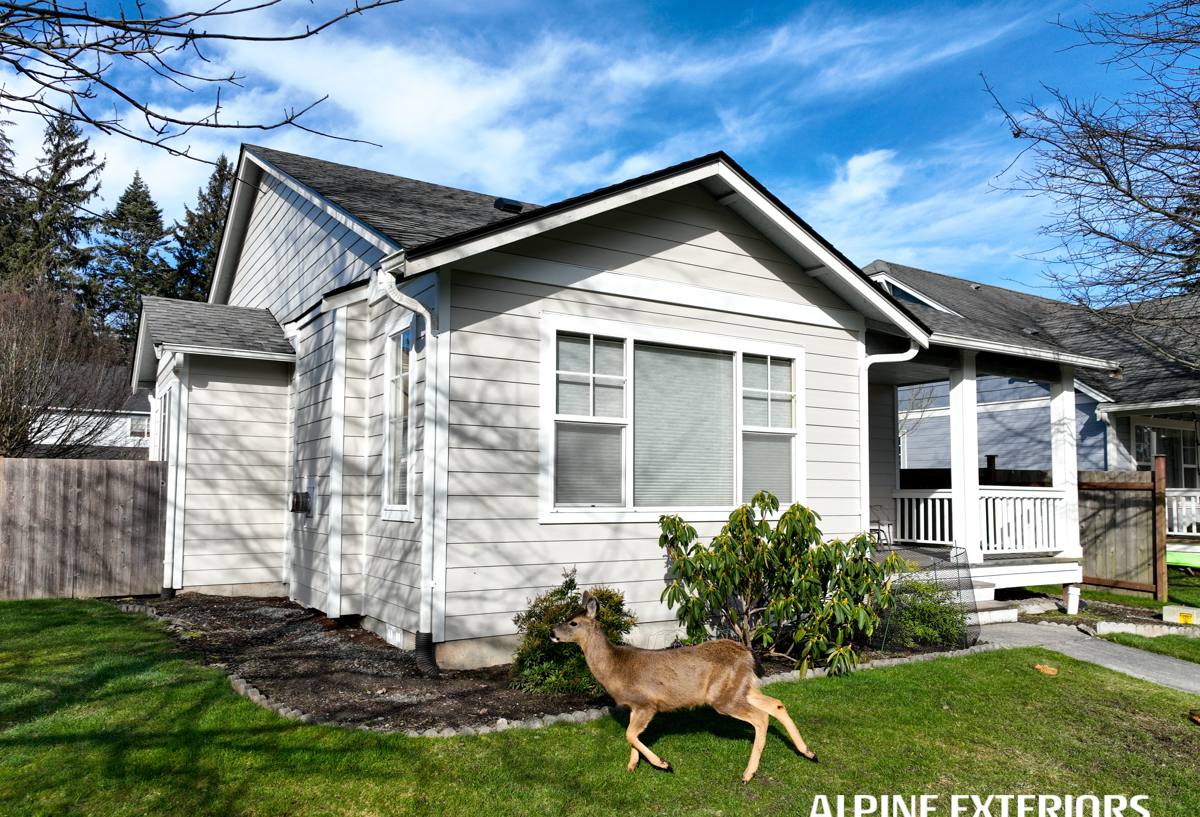
What This Climate Does to Different Siding Materials
Not all siding responds to a wet, mossy climate the same way. Understanding how different materials actually hold up here — not in a showroom, but on a house in Skagit County — is the reason we standardized on one product.
Wood and Cedar
Cedar looks great on day one. In a climate like this, it also absorbs moisture, which sets up the conditions for rot, cupping, and paint failure well before most homeowners expect to be repainting. Keeping cedar siding sound here means a real maintenance commitment — regular inspection, re-caulking, and repainting on a tighter cycle than most owners plan for.
Vinyl
Vinyl resists rot because it doesn't absorb water the way wood does, but it has its own weak points in this environment. It expands and contracts with temperature swings, seams and panels can loosen over time, and moss and algae still grow on its surface just like any other material exposed to constant damp shade. It's also a thin, flexible product — it dents and cracks more easily than fiber cement, and once it's damaged, color-matching replacement panels years later is often difficult.
LP SmartSide and Engineered Wood
Engineered wood products have improved over the years, but they're still wood-based, which means the same vulnerability: if water gets past the surface at a cut edge, a fastener point, or a compromised seam, the substrate can swell and deteriorate from the inside out. In a climate that stays wet as long as ours does, that's a real risk, not a hypothetical one.
Fiber Cement (James Hardie)
Fiber cement is cement, sand, and cellulose fiber — it doesn't rot, it isn't a food source for moss and mildew the way wood fiber can be, and it holds paint and factory finish far longer than wood-based alternatives. That's not a marketing claim; it's the basic chemistry of the material, and it's the reason it performs differently in a climate built to punish siding.
Why We Only Install James Hardie
We don't install LP SmartSide, vinyl, Cemplank, Allura, primed spruce, or cedar. That's a deliberate standard, not a lack of options. Every one of those products has legitimate strengths — cost, appearance, or ease of installation — and we're not going to tell you otherwise. What we won't do is put a product on a Sedro-Woolley home that we know will demand more maintenance, fail sooner in this specific climate, or leave a homeowner with a weaker warranty than what's available.
James Hardie's fiber cement siding is engineered specifically for wet, variable Pacific Northwest conditions through its HZ5 product line, factory-baked in with ColorPlus Technology finishes that resist fading and chipping far better than field-applied paint. It carries a strong, transferable warranty backed by a manufacturer with decades of track record in climates like this one. Non-combustible, dimensionally stable, and proven to hold up when installed correctly — that's the standard we hold every project to, and it's why we don't offer alternatives that don't meet it.
Siding Material Comparison in a Wet, Moss-Prone Climate
| Factor | Cedar/Wood | Vinyl | LP SmartSide | James Hardie Fiber Cement |
|---|---|---|---|---|
| Moisture/rot resistance | Low — absorbs water | Moderate — resists rot, not moss | Moderate — wood-based core | High — cement-based, does not rot |
| Moss/algae susceptibility | High | Moderate | Moderate | Low |
| Finish longevity | Repaint every few years | Fades, doesn't peel | Field or factory finish varies | Factory ColorPlus finish, long-lasting |
| Impact resistance | Moderate | Low — dents/cracks | Moderate | High |
| Fire resistance | Low | Low — melts/deforms | Low-moderate | Non-combustible |
| Typical maintenance cycle | Frequent | Periodic cleaning | Moderate | Occasional cleaning/inspection |
More Than Siding — Roofing, Windows, and Decks
Siding is only one piece of a home's building envelope, and in Sedro-Woolley's climate the pieces work together or they don't. A roof that's shedding moss and holding moisture feeds water down onto siding and trim. Windows with failing seals let moisture into wall cavities behind even well-installed siding. Decks exposed to the same rain and shade patterns face their own rot and slip-hazard issues over time. We handle siding, roofing, windows, and decks as one crew, which means when we're on your property we're looking at the whole exterior, not just the piece we were called out for — and we can flag a roofing or trim issue that's undermining your siding before it becomes a bigger repair.
What a Local Anacortes-Based Crew Means for Sedro-Woolley Homeowners
We're based in Anacortes and work throughout Skagit County, which means Sedro-Woolley isn't an unfamiliar drive for us — we know how this region's weather behaves through the seasons, from the wet winters to the moss that creeps back every year without maintenance. That local knowledge shapes real decisions on a job: how we sequence work around rain, how we detail flashing and water management for a climate that doesn't give siding much time to dry, and how we set homeowner expectations about maintenance in a way that matches what actually happens here, not a generic national script.
Working locally also means accountability. If a question comes up after the job is done, you're not chasing down a call center or a crew that's moved on to another state. You're calling a company that's still working in Skagit County and still has a reputation here to stand behind.
What Local Crew Experience Should Look Like
- Familiarity with how driving rain and prevailing wind hit different sides of a house in your specific area
- Knowledge of proper flashing and water-shedding details around windows, doors, and roof lines for this climate
- Realistic guidance on moss and algae growth patterns and what maintenance actually prevents them
- A crew that shows up as scheduled and communicates about weather-related delays rather than disappearing
- Manufacturer training on the specific product being installed, not general carpentry experience alone
What Correct James Hardie Installation Actually Involves
Fiber cement siding performs the way it's engineered to only when it's installed correctly, and installation quality matters more in a wet climate than a dry one. Proper installation includes correct fastener placement and spacing, appropriate clearances at grade and roof lines so water doesn't wick up into the bottom of the siding, properly lapped and sealed house wrap and flashing behind the siding, and correctly caulked joints and penetrations. Cutting corners on any of these steps can undermine even the best siding product — which is part of why manufacturer training and installer experience matter as much as the product choice itself.
We also pay attention to details that are easy to skip: back-priming or factory-primed cut edges, keeping siding the manufacturer-specified distance above roofing and paved surfaces, and using trim and flashing details that direct water away from the wall assembly rather than trapping it against it.
Cost Factors for a Sedro-Woolley Siding Project
Every home is different, and we'll always give you a real number after seeing your property, but a few factors tend to move the price on most Skagit County siding jobs:
| Factor | How It Affects Cost |
|---|---|
| Home size and wall complexity | More square footage and more corners, dormers, and trim details increase labor time |
| Condition of existing siding and sheathing | Hidden rot or moisture damage found during tear-off can add repair work |
| Siding profile and Hardie product line chosen | Lap, shingle, and panel styles vary in material and installation time |
| ColorPlus finish selection | Factory finish is included in the product but affects which options fit your budget |
| Access and site conditions | Steep lots, mature landscaping, or limited access can add setup and labor time |
| Tear-off vs. new construction | Removing and disposing of old siding adds cost compared to new builds |
A Practical Maintenance Checklist for Damp-Climate Siding
- Rinse siding annually to remove pollen, dust, and early moss or algae growth before it takes hold
- Trim back trees and shrubs so siding gets more air movement and sun exposure where possible
- Inspect caulking around windows, doors, and trim yearly and re-caulk where it's cracked or pulling away
- Check that gutters and downspouts are clear so roof runoff isn't sheeting down over siding
- Look for any siding sitting too close to grade, mulch beds, or pavement where moisture can wick upward
- Address any soft spots, discoloration, or bubbling paint promptly rather than waiting for a full season
Get a Straight Answer for Your Sedro-Woolley Home
If you're dealing with siding that's showing its age, chasing moss every year, or you're planning ahead for a replacement, we're happy to take a look and give you an honest read on what your home actually needs. There's no pressure and no sales script — just a straightforward assessment from a local crew that works in this climate every day. Use the form below to request a free estimate.