 Anacortes Siding
 Siding Repair in a Skagit County Climate
Sedro-Woolley sits inland along the Skagit River, but it still lives inside the same wet, marine-influenced weather pattern that defines this part of Washington. Homes here go through long stretches of steady rain, low winter sun angles that keep shaded walls damp for days at a time, and a moss and algae season that can run from fall through spring. Closer to the water, salt-laden air adds another layer of wear to exterior materials; even here, that humidity and driving rain reach every wall of a house eventually. Siding doesn't fail all at once in this environment — it fails one soft spot, one open seam, one shaded corner at a time.
That's why siding repair in this area is really a moisture-management problem first and a cosmetic problem second. A repair that only addresses what's visible on the surface, without checking what's happening behind the siding, tends to come back within a season or two. A repair done right accounts for how water moves across and behind a wall in a place that stays wet more months than it's dry.
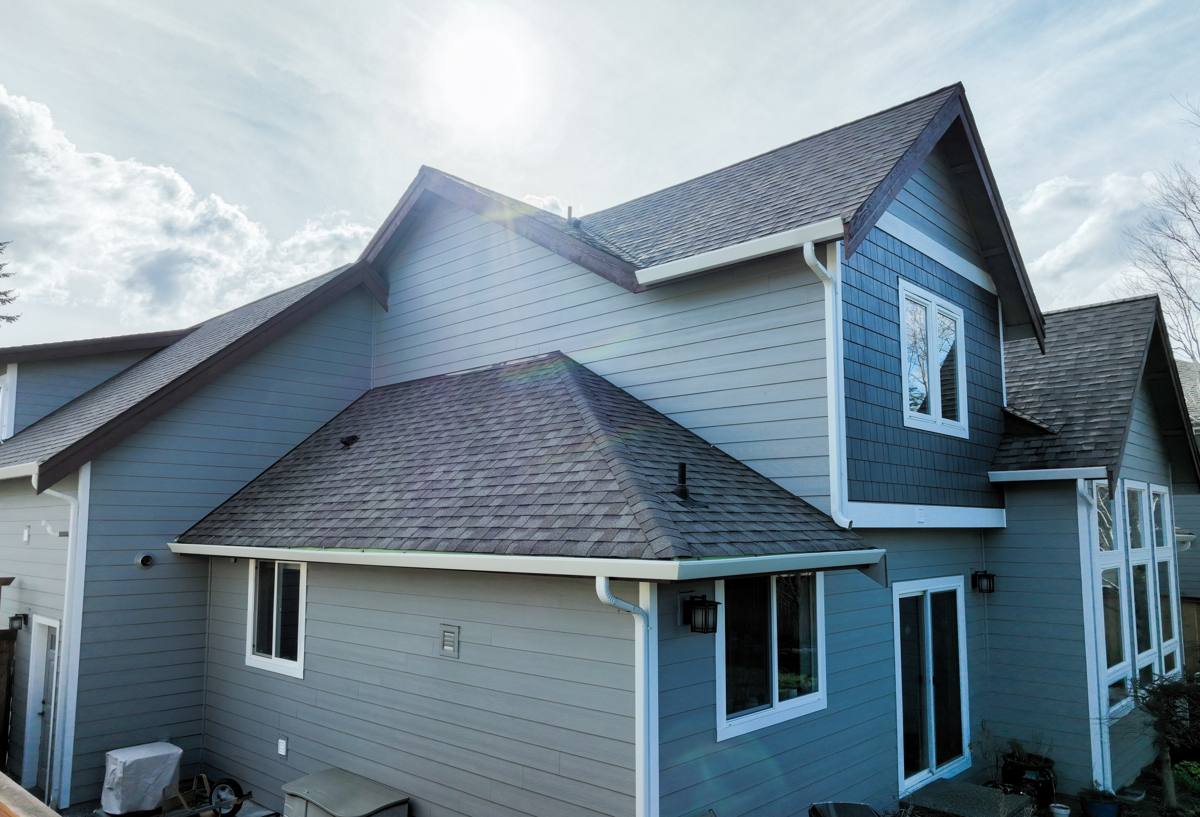
Signs Your Siding Needs Repair, Not a Full Replacement
Not every siding problem means a full re-side. Most Sedro-Woolley homes we look at need targeted repair — but knowing which is which starts with recognizing the early warning signs before they turn into structural ones.
- Soft or spongy spots when you press on the siding, especially near the bottom courses or under windows
- Persistent moss or dark streaking on north- and west-facing walls that pressure washing doesn't fully remove
- Cracked, split, or bowing boards, particularly around butt joints and corner trim
- Paint that's peeling, bubbling, or failing faster on one section of the house than the rest
- Gaps opening up around window and door trim, or caulk that's cracked and pulling away
- A musty smell or visible staining on interior walls that back up to an exterior wall
Any one of these by itself might be a simple fix. Several together, especially clustered in one area, usually means water has been getting behind the siding for a while and the repair needs to go deeper than a patch.
What's Actually Causing the Damage
Moisture That Doesn't Dry Out
Shaded walls, walls facing prevailing storms, and areas under overhangs that block airflow but not splash-back all stay damp longer here than they would in a drier climate. Wood-based sidings — cedar, primed spruce, older LP-style products — absorb that moisture at cut edges, fastener holes, and joints, and once the protective coating is compromised, the substrate itself starts to soften and rot from the inside out.
Moss and Organic Growth
Moss isn't just cosmetic. It holds moisture directly against the siding surface, and its root structure can work into seams and coating cracks, widening them over time. Left alone through a full wet season, a patch of moss can turn a hairline gap into a real entry point for water.
Failed Caulking and Flashing
Caulk has a service life, and in a climate with this much freeze-thaw cycling and UV/rain exposure, it doesn't last as long as homeowners expect. Once it cracks around trim, windows, or penetrations, water gets a direct path behind the siding — often with no visible sign until the damage shows up as staining or soft board weeks or months later.
What a Correct Repair Actually Involves
A proper siding repair isn't just pulling a damaged board and nailing up a new one. It involves a few steps that are easy to skip and hard to notice once the wall is closed back up:
- Diagnose the source, not just the symptom — a rotted board is often a downstream effect of a flashing or caulking failure upstream
- Check the water-resistive barrier and flashing underneath the removed siding for tears, gaps, or improper laps before anything new goes back on
- Match the material and profile so the repair doesn't create a visible patch or, worse, mix incompatible materials that expand and contract differently
- Use correct fasteners and nailing patterns specific to the siding product — under- or over-driven nails are a common cause of repeat failures
- Seal and finish to spec, including factory-matched or properly primed field-cut edges, which are the most vulnerable point on any board
Skipping any one of these turns a repair into a temporary cover-up. We've replaced plenty of "repairs" done by handyman-level work that looked fine for a year and then failed again in the exact same spot, because the actual water path was never addressed.
Repair vs. Replacement: How We Help You Decide
| Factor | Points Toward Repair | Points Toward Replacement |
|---|---|---|
| Extent of damage | Isolated to one or two wall sections | Recurring rot in multiple areas across the house |
| Siding material | Still in good condition elsewhere, material still available/matchable | Discontinued profile, or original material already failing broadly (common with older wood-composite products) |
| Underlying structure | Sheathing and framing test solid once opened up | Sheathing shows widespread soft spots or moisture damage |
| Age of siding | Under 15 years old with a clear, single cause | Original siding is at or past its expected service life |
| Budget timing | Targeted repair fits current budget, replacement can wait | Repeated repair costs are approaching what a partial or full re-side would cost |
We'll always tell you honestly which side of that table your house falls on. If a repair will genuinely hold, that's what we recommend — a full re-side isn't the answer to every problem, and we're not going to sell you one it doesn't need.
Our Sedro-Woolley Repair Process
When we come out for a repair estimate in Sedro-Woolley, the process is straightforward:
- On-site assessment of the damaged area and a check of the rest of the exterior for related issues you might not have noticed yet
- Probing suspect areas to confirm how far the moisture damage actually extends before quoting the scope
- A clear, written explanation of what caused the damage and what the repair will and won't fix
- Removal of damaged material, inspection and correction of the barrier/flashing underneath
- Installation of matched or compatible replacement siding with correct fastening and sealing
- A final walkthrough so you know exactly what was done and what to watch for going forward
Why We Repair With James Hardie Fiber Cement
When a repair calls for new material — whether that's a patch section or a full wall — we use James Hardie fiber cement, and only James Hardie. It's not the only siding product on the market, but it's the one we're willing to put our name behind in this climate. Fiber cement doesn't absorb and swell the way wood-based products do, it's engineered specifically for wet Pacific Northwest conditions in Hardie's HZ5 product line, and its factory-applied ColorPlus finish holds up to years of rain exposure without the recoating cycle that painted wood or composite siding demands.
That matters most on a repair job, because a patch is only as good as how well it performs long-term next to the original material. We won't install vinyl, LP SmartSide, Cemplank, Allura, or primed cedar or spruce as a repair material, even as a small patch — matching a failing product with more of the same product doesn't solve the underlying moisture problem, it just delays the next repair call. If a full section needs replacing, Hardie also gives you a real, transferable warranty backing the work, which most alternative siding repairs can't offer at the same level.
What to Ask Before Hiring Anyone for Siding Repair
- Will you open up the wall to check the barrier and flashing, or just replace the visible board?
- What caused this damage, and how does the repair address that cause specifically?
- What material will you use, and how will it hold up next to my existing siding?
- Is the work covered by a warranty, and is it from the manufacturer, the installer, or both?
- Can you show me examples of similar repair work in this area?
A contractor who can't answer the "what caused it" question clearly is probably planning to patch the symptom, not fix the problem.
Why Local Experience in This Area Matters
Skagit County's siding problems aren't generic. A crew that mostly works drier inland climates will underestimate how much water this region's walls actually see, and a crew that's never worked Sedro-Woolley specifically won't have a feel for how its mix of river valley humidity, shaded lots, and seasonal moss behaves against different wall exposures. Working this area regularly means we're not guessing at how a repair will hold up through the next wet season — we've already seen how similar repairs on similar homes perform here over time.
If you're seeing soft spots, moss buildup, or gaps opening up around your siding, it's worth getting an honest look before it turns into a bigger repair. We offer free, no-pressure estimates for siding repair in Sedro-Woolley — use the form below to get one scheduled.