 Anacortes Siding
 Mount Vernon's Climate and What It Means for Your Siding
Mount Vernon sits inland along the Skagit River, a few miles from the saltwater but still squarely inside Skagit County's marine-influenced weather pattern. That means homes here get a somewhat softer version of what coastal Anacortes and the San Juan shoreline deal with directly — less wind-driven salt spray, but the same long, wet winters, the same low-angle sun that never fully dries a north wall, and the same humidity load that settles into the river valley and lingers.
The practical effect on a house is moisture. Not a single storm event, but months of steady dampness working into seams, fastener holes, and anywhere caulk has started to fail. Add in the shade from mature trees common in older Mount Vernon neighborhoods, and you get ideal conditions for moss, algae, and mildew to take hold on north- and east-facing siding well before the rest of the house shows wear.
Why "Moss Season" Is a Real Thing Here
From late fall through early spring, Skagit Valley humidity rarely drops enough for exterior surfaces to fully dry between rain events. Wood-based siding products absorb that moisture, swell, and eventually start to cup or delaminate at the edges. Even siding that looks fine from the street can be soft or spongy at the bottom courses, behind shrubs, or under eaves that don't get direct sun.
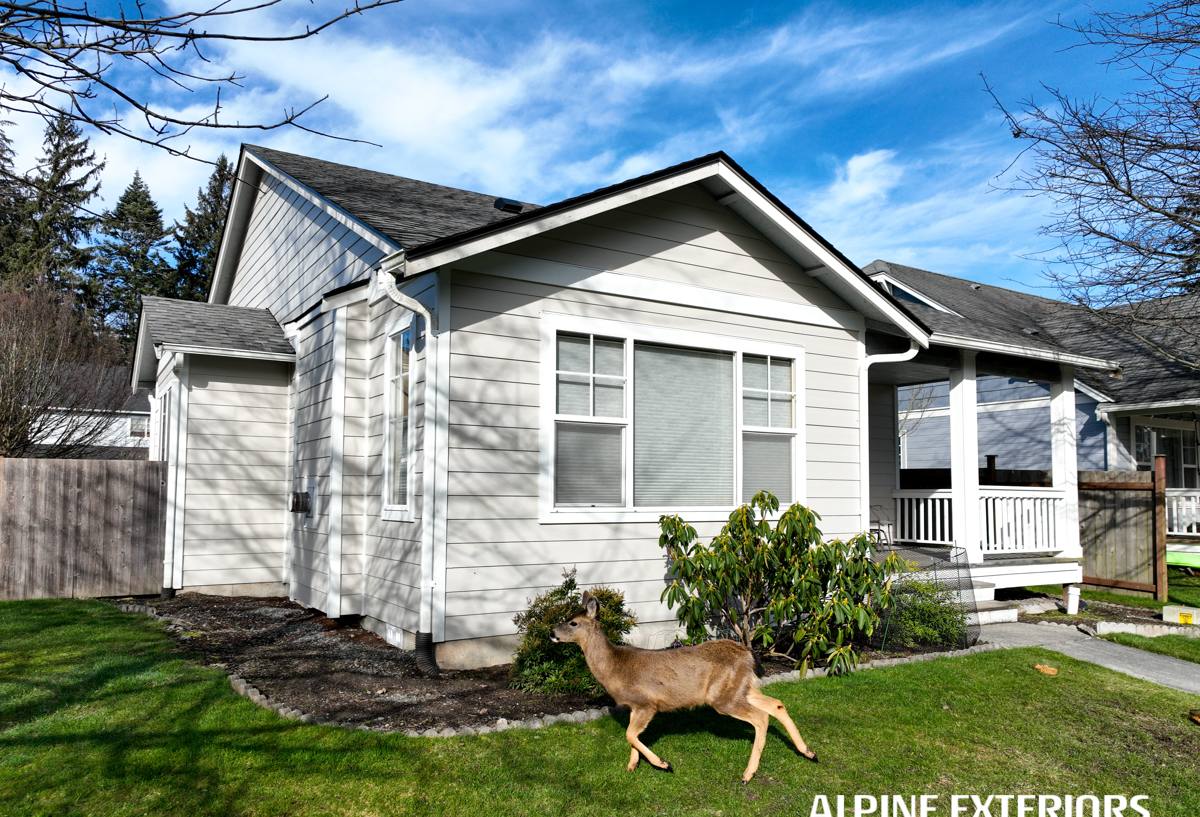
What We See on Mount Vernon Homes
The age and mix of housing stock in Mount Vernon — from older farmhouse-style homes near the river to newer developments on the valley's edges — means we run into a wide range of existing siding conditions on inspections.
- Cedar and wood lap siding with soft spots, checking, or paint that won't hold anymore
- Vinyl siding that's warped, faded unevenly, or has gapped at the seams after years of temperature swings
- Engineered wood siding (LP-style products) with swollen edges or bubbling near the bottom of walls
- Moss and algae staining concentrated on shaded or north-facing elevations
- Caulk failure around trim, windows, and butt joints letting moisture behind the cladding
None of these are unusual for the area — they're what you'd expect after enough winters in a river valley climate. The question isn't whether a house will eventually show this wear, it's what siding material handles it best going forward.
Why We Install Only James Hardie Fiber Cement
We made a standing decision as a company to install James Hardie fiber cement siding exclusively — not vinyl, not LP SmartSide or other engineered wood panels, not Cemplank, Allura, or primed spruce and cedar. That's not a marketing angle; it's a call we made after years of seeing how different products actually hold up in this specific climate.
What Sets Fiber Cement Apart Here
James Hardie siding is made primarily from cement, sand, and cellulose fibers. It doesn't absorb water the way wood-based products do, so it doesn't swell, cup, or delaminate from the kind of prolonged dampness Mount Vernon sees every winter. It's also non-combustible, which matters increasingly to insurers and to homeowners thinking about wildfire smoke and ember exposure during dry summer stretches.
Hardie's ColorPlus finish is baked on at the factory under controlled conditions, rather than field-painted after installation. That gives a more consistent, UV- and moisture-resistant finish than site-applied paint, and it's backed by its own finish warranty separate from the product warranty. For a climate that puts siding through repeated wet-dry cycles, a factory finish that doesn't rely on perfect field conditions is a real advantage.
Built for This Specific Region
Hardie engineers its siding in climate-specific formulations — an HZ5 product line for regions with more freeze-thaw activity, and HZ10 for wetter, milder coastal and marine climates like ours. That's not a marketing distinction; the underlying formulation is tuned to perform in exactly the moisture conditions Skagit County homes deal with. We install the version that matches this climate, not a one-size-fits-all product.
A Fair Look at the Alternatives We Don't Install
We don't think vinyl or engineered wood siding are bad products in every context — they have real advantages in the right climate and budget. But we've chosen not to install them here, and homeowners deserve to know why.
Vinyl
Vinyl is inexpensive and low-maintenance in the sense that it doesn't need painting. But it's a thin, flexible material that expands and contracts significantly with temperature, which over time opens gaps at seams and around trim — exactly where moisture gets behind the cladding. It also fades unevenly and can't be spot-repainted to match, so damaged sections often mean a full re-side.
Engineered Wood (LP SmartSide and Similar)
These products use wood strands bonded with resin, which makes them more affordable than fiber cement and easier to work with. The trade-off is that they're still wood at their core — if the factory seal is compromised at a cut edge, fastener hole, or seam and moisture gets in, the material can swell and soften. In a climate where surfaces stay damp for months at a time, that sensitivity to installation quality matters a lot.
Primed Spruce and Cedar
Real wood siding has genuine appeal, and traditional cedar has a long history in this region. But it demands an ongoing maintenance commitment — repainting or restaining on a cycle, checking caulk annually, and staying ahead of moisture before it becomes rot. That's a legitimate choice for homeowners who want that look and are prepared for the upkeep. It's just not what we install, because we'd rather stand behind a product that doesn't put that burden on the homeowner every few years.
Cost Factors for a Mount Vernon Siding Project
| Factor | How It Affects Your Project |
|---|---|
| Home size and wall complexity | More corners, dormers, and trim details mean more cutting, flashing, and labor time |
| Extent of existing damage | Rotted sheathing or framing found once old siding comes off adds repair cost before new siding goes up |
| Siding profile and accessories | Lap width, trim boards, and any shake or panel accents change material cost |
| Color and finish | Factory ColorPlus finishes come in a range of standard colors; custom colors may carry a premium |
| Access and site conditions | Mature landscaping, tight lot lines, or second-story sections affect scaffolding and staging |
We give every homeowner a written, itemized estimate after an in-person walk-through — not a phone-quote or a per-square-foot number pulled from a national average, because those don't hold up once we're actually looking at the wall assembly.
How We Approach a Siding Project
- On-site inspection of existing siding, trim, flashing, and any visible moisture damage
- Removal of old siding and inspection of the sheathing and weather barrier underneath
- Repair of any rot or damaged framing found before new material goes on
- Installation of new weather-resistant barrier and flashing at all penetrations, windows, and doors
- James Hardie fiber cement installation per manufacturer specifications, including proper fastening and clearances
- Final walk-through and warranty documentation
That second step — what's actually happening behind the old siding — is where a lot of the real decisions get made on any re-side project. It's also the step that gets skipped by contractors trying to move fast, which is a big part of why hiring the right crew matters as much as the material choice.
The Whole Exterior, Not Just the Walls
Siding doesn't fail in isolation. A roof that's shedding water poorly, gutters that overflow onto the wall below, or windows with failed flashing all send moisture straight into the same wall assembly we just spent time protecting. Because we handle roofing, windows, and decks in addition to siding, we look at a Mount Vernon home's exterior as one connected system rather than a single line-item repair. If a roofline is dumping water onto a wall section or a window is the actual source of a stain you're seeing on the siding, we'll tell you that directly rather than just re-siding over the symptom.
Hiring a Contractor for Siding Work in Skagit County
A few things worth checking before you sign with anyone for exterior work in this area:
- Current Washington State contractor license and active liability insurance — ask for the license number and verify it
- Manufacturer training or certification for the specific siding product they're installing
- A written scope of work and itemized estimate, not a verbal price or a single lump-sum number
- A clear explanation of what happens if rot or damage is found once old siding comes off
- References or examples of completed work in the local area, not just stock photos
- A real local presence — a crew that's still around in three years if a warranty issue comes up
Local matters here specifically because Skagit Valley weather is not the same as weather on the other side of the Cascades or even a few counties south. A crew that works this climate regularly knows where moisture tends to collect on a house like yours and builds the installation around that, rather than following a generic install guide.
Maintaining Fiber Cement Siding in This Climate
James Hardie siding is genuinely low-maintenance compared to wood, but "low-maintenance" isn't "no-maintenance." A simple seasonal routine goes a long way in a climate like this one:
- Rinse siding annually to clear moss, algae, and pollen buildup, especially on shaded elevations
- Check caulking around windows, doors, and trim once a year and re-caulk any cracked or gapped joints
- Keep gutters clear so overflow doesn't run down the wall face
- Trim back vegetation that keeps a wall section shaded and damp
- Watch for any nail pops or trim separation after the first couple of freeze-thaw cycles
If your Mount Vernon home has siding that's past its prime, showing moss and moisture wear, or you're just planning ahead for a project, we're happy to come take a look. Estimates are free, there's no pressure, and you'll get a straight answer about what your walls actually need — use the form below to get started.