 Anacortes Siding
 Windows Built for the Skagit Valley, Not Just "Installed"
Mount Vernon sits inland along the Skagit River, so it doesn't take the direct salt spray that hits homes right on the water in Anacortes. But it's still squarely inside the same marine climate, and that climate is hard on windows in ways that don't show up in the first year. Long stretches of driving rain, humidity that never fully lets go even in the drier months, and a moss and mildew season that can run eight or nine months out of the year all work on a window opening the same way they work on a roof or a fence: slowly, and mostly out of sight until something fails.
A window is not just the glass and the frame. It's an opening cut into the wall assembly, and every seam around it is a place water can get behind the siding if the installation isn't done right. In this climate, "isn't done right" usually doesn't mean the window falls out — it means water tracks in slowly behind the trim, framing lumber sits damp for months at a time, and by the time you see a soft spot on the interior sill or peeling paint below the window, the damage has been building for years.
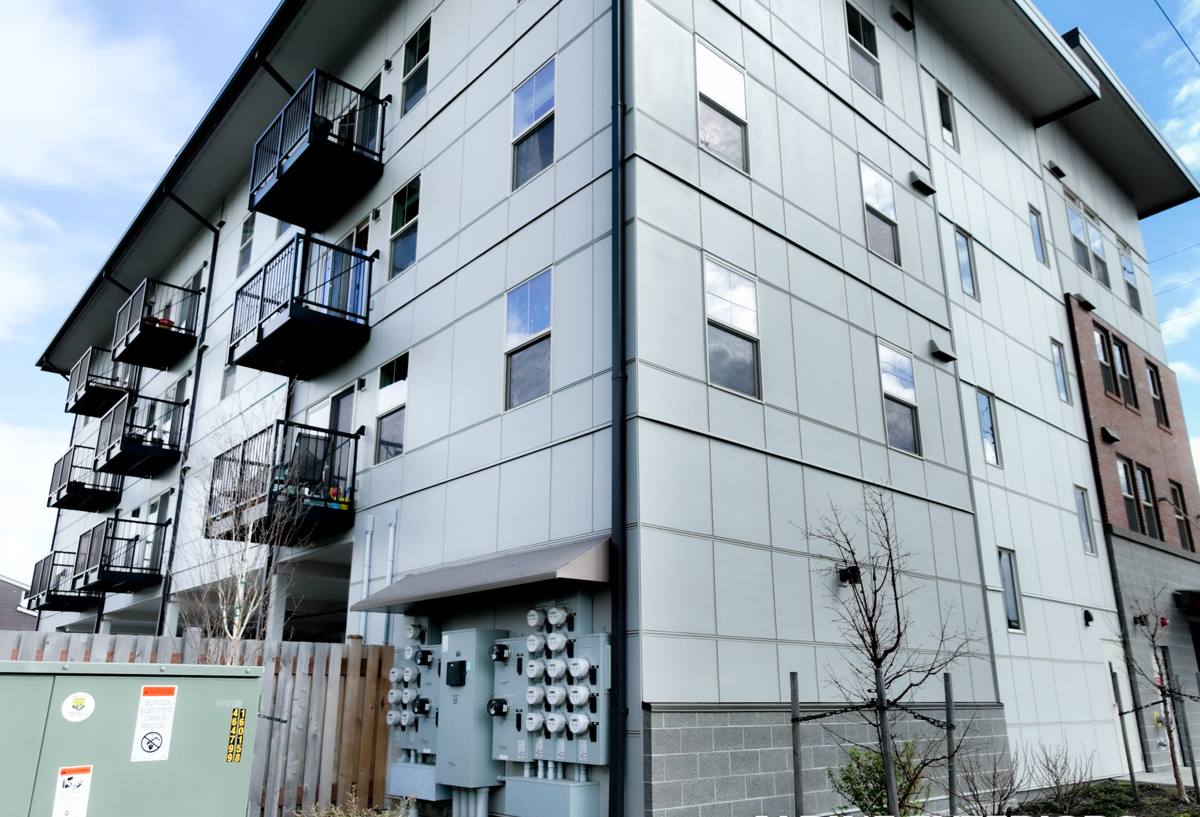
What Correct Window Installation Actually Involves
There's a lot of daylight between "the window is in and it looks fine" and "the window is installed correctly." The parts that matter most are the ones you can't see once the trim goes back on:
- Sill pan flashing — a sloped, sealed pan under the window opening that directs any water that gets past the window back outside instead of down into the wall.
- Shingle-lapped flashing tape integrated with the house's weather-resistive barrier, so water sheds down and over each layer, not up under it.
- Backer rod and sealant at the exterior joint, not just a bead of caulk smeared over a gap. Caulk over an unsupported gap cracks and fails fast in freeze-thaw and constant damp.
- Low-expansion foam in the shim space between the window frame and the rough opening — enough to insulate and air-seal without bowing the frame out of square.
- Clear weep holes on the exterior track so any water that does get into the frame track has somewhere to drain out.
Skip any one of these and the window can still look good for a few years. It's the seasons of driving rain that eventually find the shortcut.
Why This Matters More Here Than in a Dry Climate
In a dry climate, a mediocre seal might never get tested. In Skagit County, it gets tested every winter. Wood-framed openings that stay damp for weeks at a time are exactly the conditions moss, mildew, and rot need to take hold — and once moisture is inside the wall cavity around a window, it's a much bigger repair than the window itself.
Common Problems We See on Mount Vernon Homes
Skagit Valley has a lot of housing stock spanning several decades, and window problems tend to fall into a few repeatable patterns:
- Fogging between the panes on older double-pane units — the seal has failed and the gas fill (or plain air) has been replaced by moisture. This is a glass unit failure, not something caulk can fix.
- Soft or discolored sills and trim below windows that never had a drip cap or proper flashing, letting years of rain run straight down the face of the siding.
- Persistent moss or dark streaking under windows on the north and west-facing walls, which get the least sun to dry out between storms.
- Drafts around "recaulked" windows — a common quick fix where someone caulked over an old gap instead of properly reflashing and insulating it, which slows the draft but doesn't stop the moisture path.
- Condensation on the inside of the glass in winter, which is often more about ventilation and interior humidity than the window itself, but is worth checking against the glass seal.
Choosing the Right Window for This Climate
There's no single "best" window material — it's a trade-off between upfront cost, maintenance, and how the material handles constant moisture cycling. Here's how the common options stack up for a Skagit County home:
| Material | Moisture Behavior | Maintenance | Typical Lifespan |
|---|---|---|---|
| Vinyl | Won't rot; expands/contracts with temperature but handles constant damp well | Low — occasional cleaning | 20–30 years |
| Fiberglass | Very stable in wet/dry cycling, minimal expansion | Low | 30+ years |
| Wood (unclad) | Needs a sound paint or finish film to keep water out; most vulnerable to this climate if maintenance lapses | High — repainting/refinishing on a cycle | Varies widely with upkeep |
| Wood-clad (aluminum or vinyl exterior) | Good, as long as the cladding seams and corners are sealed correctly | Moderate | 25–35 years |
We don't push one brand over another — we'll talk through options from reputable manufacturers based on your home, your budget, and how much upkeep you actually want to sign up for. Our stronger opinion is on the installation details above, because a good window installed poorly will fail before a modest window installed correctly.
Our Installation Process
Every job runs the same way, whether it's one window or a whole-house replacement:
- On-site assessment and measurement — we check the existing opening, framing condition, and take precise measurements for the new unit.
- Removal and inspection — once the old window is out, we inspect the rough opening and framing for rot or moisture damage before anything new goes in. Hidden damage gets flagged and priced before we proceed, not discovered after the fact.
- Sill pan flashing — installed and sloped to shed water out, not in.
- Set, shim, and level — the new window is set plumb and level and shimmed so it operates correctly and doesn't stress the frame.
- Insulate the shim space with low-expansion foam sized to the gap.
- Integrate flashing with the existing weather barrier in proper shingle-lap order.
- Seal the exterior joint with backer rod and quality sealant rated for exterior movement.
- Trim and finish inside and out to match the home.
- Walkthrough — we test operation, check the seal, and clean up before we consider the job done.
Cost Factors for Window Installation in Mount Vernon
Every home is different, but the price of a window job is usually driven by the same handful of factors:
| Factor | Why It Matters |
|---|---|
| Number of openings | Per-window cost drops somewhat with volume, but each opening still needs full flashing and sealing work |
| Window material and size | Larger units, custom shapes, and higher-end materials cost more than standard vinyl |
| Existing framing condition | Rot or water damage found at removal adds repair scope before the new window can go in correctly |
| Story height and access | Second-story or hard-to-access windows take more time and equipment |
| Trim and siding work | Matching existing trim profiles or replacing damaged siding around the opening adds labor |
We give a broad range on the phone at best — an accurate number requires seeing the actual openings, which is what the estimate visit is for.
Why a Crew That Already Works Mount Vernon Matters
A crew that works Skagit County regularly isn't guessing at how this climate behaves — we've seen what eight months of valley rain does to a poorly flashed sill, and we know which older homes in this area are more likely to have outdated aluminum single-pane windows or wood frames that were never properly maintained. That matters for two practical reasons: we know what to look for when we open up an old frame, and we're close enough to come back for a warranty check or a service call without it being a special trip. Being based in Anacortes and working Skagit County day to day means Mount Vernon isn't an occasional drive-out job for us — it's part of the regular route.
After Your Windows Are Installed
New windows installed correctly need very little upkeep, but a little seasonal attention goes a long way in this climate:
- Rinse pollen, moss spores, and grime off the glass and frames a couple times a year, especially after the wet season eases up.
- Check the exterior sealant line once a year for cracking or separation, particularly on south and west exposures that see the most sun-to-rain cycling.
- Keep weep holes on the exterior track clear of dirt and debris so water drains out instead of sitting in the frame.
- Watch for moss buildup on trim below windows — a sign that water is sitting somewhere it shouldn't linger.
- Test locks and operation each season; a window that's suddenly hard to close can mean the frame has shifted or swelled.
If you're dealing with drafty, foggy, or aging windows in Mount Vernon, or you're planning ahead for a remodel, we're happy to take a look and give you a straightforward, no-pressure estimate — just fill out the form below.