 Anacortes Siding
 Siding Repair Built for Old Town Anacortes Homes
Old Town Anacortes is one of the city's older residential pockets, and the houses here reflect it — a mix of building eras, past renovations, and siding materials that were never designed with today's product standards in mind. When siding starts to fail in this part of town, it's rarely a simple "replace a board and move on" job. It usually means figuring out what's underneath the visible damage, how far moisture has traveled, and whether a targeted repair will actually hold up through another Skagit County winter.
We repair siding on Old Town Anacortes homes regularly, and we approach every job the same way: find the real cause of the damage before touching a hammer, be honest about what a repair can and can't fix, and use materials that will actually survive this climate long-term.
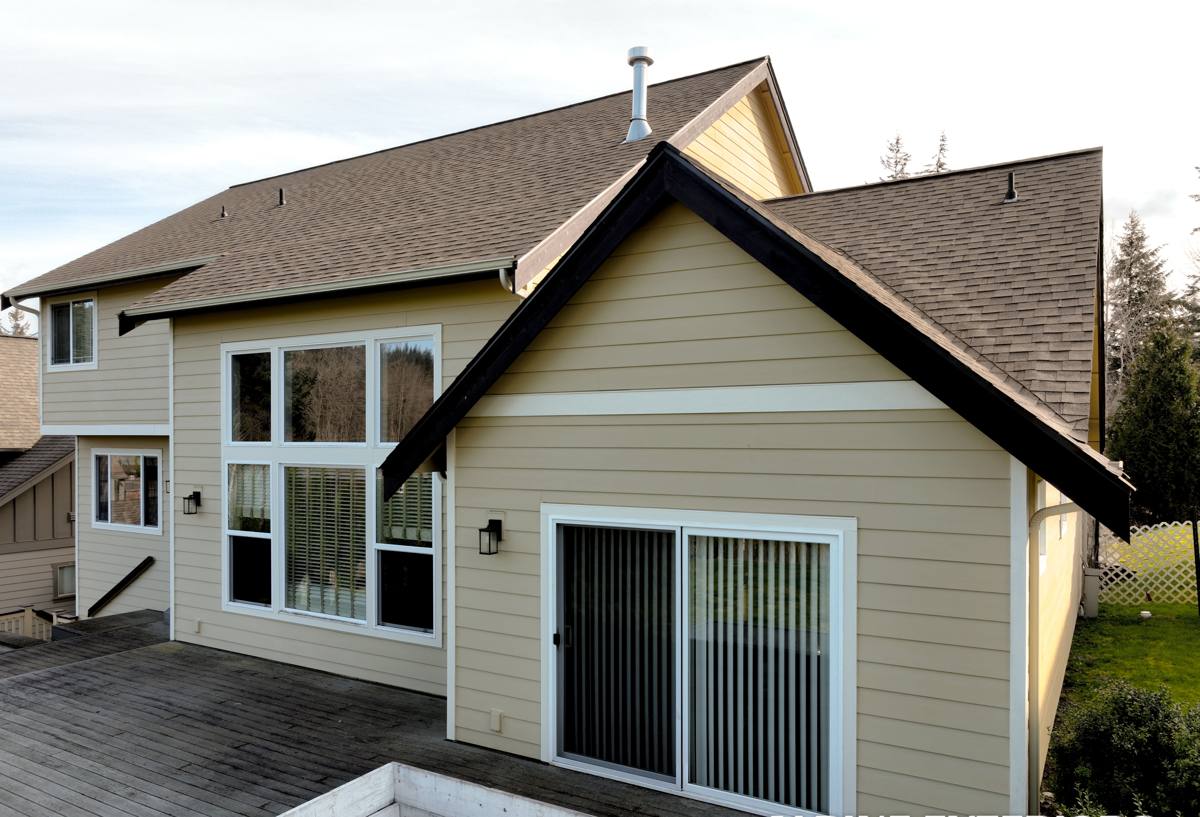
What Salt Air, Driving Rain, and Moss Season Do to Siding
Anacortes sits surrounded by saltwater on Fidalgo Island, and that proximity to the water shapes how siding ages here compared to homes further inland in Skagit County. Old Town's older housing stock has had decades to show exactly where these forces do the most damage.
Salt Air
Airborne salt accelerates corrosion on fasteners, flashing, and any exposed metal trim. On older homes, nails and staples that were never rated for coastal exposure rust from the inside out, which loosens siding boards long before the siding material itself looks obviously worn. By the time you see a board pulling away from the wall, the fasteners holding it have often been failing for years.
Driving Rain
Anacortes storms don't just fall straight down — wind off the water drives rain sideways into wall assemblies, which is exactly the condition that exposes weak caulking, poor flashing, and gaps at butt joints and corners. Water that gets behind siding during a wind-driven rain event doesn't always show up as a visible leak indoors; it often just sits in the wall cavity, doing slow damage that only becomes obvious once rot has set in.
Moss Season
The long, wet stretch of fall through spring gives moss and algae months to establish themselves on north-facing walls, under eaves, and anywhere siding stays shaded and damp. Beyond the cosmetic staining, moss holds moisture directly against the siding surface for extended periods, which is a major contributor to soft, rotted boards on older homes that were never treated or sealed for that kind of sustained exposure.
Common Repair Issues We See in Old Town Anacortes
- Fastener failure — rusted or corroded nails allowing boards to loosen, warp, or slip out of alignment
- Rot at butt joints and corners — the seams where water intrusion typically starts on older lap siding
- Moss and algae staining — especially on shaded, north-facing, and tree-covered walls
- Cracked or failed caulking around trim, windows, and siding seams that has dried out and split
- Buckling or cupping boards from repeated wet-dry cycling over many seasons
- Soft spots near the foundation line where splashback and poor grading keep siding wet longer than the rest of the wall
- Mismatched patch repairs from past quick fixes that used the wrong material or profile
Repair or Replace? How We Make That Call
Not every damaged section needs a full re-side, but not every problem should be patched either. We look at the extent of the damage, what's causing it, and how much of the wall assembly is affected before recommending a direction.
| Factor | Favors Repair | Favors Replacement |
|---|---|---|
| Extent of damage | Isolated to one or two boards or a small section | Spread across multiple walls or large areas |
| Underlying sheathing | Dry, solid, undamaged | Soft, delaminated, or showing rot |
| Cause of damage | Identifiable and fixable (bad caulk joint, one failed board) | Systemic — poor original flashing, chronic moisture path |
| Siding material | Still structurally sound elsewhere on the home | Original material is past its serviceable life |
| Age of existing siding | Relatively recent, matching material available | Old enough that matching profile/material is impractical |
When damage is contained and the wall behind it is dry, a repair is the honest recommendation — there's no reason to re-side a whole wall over one bad section. When we find rot has spread through the sheathing or the same failures are showing up in multiple spots, patching becomes a short-term fix that costs more in the long run than doing it right once.
What a Correct Siding Repair Actually Involves
- Remove the damaged material without disturbing more of the surrounding siding than necessary.
- Inspect the sheathing and framing underneath for rot, moisture staining, or soft wood — this is the step that separates a real repair from a cosmetic patch.
- Address the cause, not just the symptom — repair or replace failed flashing, reseal gaps, correct any water path that let moisture in.
- Let everything dry fully before closing the wall back up, especially important given how much of the year Anacortes stays damp.
- Install matching siding material cut and fastened correctly for coastal exposure, using fasteners rated for this environment.
- Reseal and finish all joints, corners, and trim intersections so the repaired section performs the same as the rest of the wall.
Skipping the inspection step is the single most common reason siding repairs fail early — a new board nailed over rotted sheathing looks fine for a season or two, then fails again because the actual problem was never fixed.
Matching Materials the Right Way
We install James Hardie fiber cement siding exclusively — we don't install vinyl, LP SmartSide, primed spruce, cedar, or other fiber cement brands. That standard applies to repair work too, and it matters for a specific reason: when we replace a damaged section on an Old Town Anacortes home, we want that section to hold up as well as the rest of the wall, not just match its appearance for a year or two.
On homes with older siding — wood, vinyl, or a fiber cement product we don't carry — we'll be straightforward about what a repair using the existing material can realistically deliver. In many cases we can source or fabricate a close match for a small, contained repair. But if a home has multiple areas failing, or the original material is simply reaching the end of its useful life, we'll tell you that plainly rather than keep patching a wall that's telling you it's done. When a home does move to full replacement, James Hardie is what goes up — a non-combustible fiber cement product with a factory-applied ColorPlus finish and HZ product lines engineered for climates exactly like coastal Skagit County, backed by a strong transferable warranty.
We won't mix a different brand or material into a Hardie wall just to save a step, and we won't tell you a patch will outlast the rest of the siding if it won't. That's the same standard whether we're repairing one board or replacing an entire elevation.
Our Process, Start to Finish
- On-site inspection of the damaged area and a broader look at the home's siding condition, not just the spot you called about.
- Moisture and sheathing check to confirm what's happening behind the siding, not just what's visible from outside.
- Honest scope and estimate — what needs repair, what's optional, and what we'd recommend versus what we'd simply do if asked.
- Scheduled repair work planned around Anacortes weather so materials aren't installed wet or during active rain.
- Final walkthrough so you can see exactly what was done and why.
Why a Crew That Already Works Old Town Anacortes Matters
Older neighborhoods like Old Town come with details a crew unfamiliar with the area can miss — older framing conventions, past renovation layers, and in some cases design or permitting considerations tied to the home's age or location. A crew that already works this part of Anacortes has seen how these homes were built, where the recurring problem spots tend to be, and how to work around them without creating new ones.
There's also a practical local-knowledge piece: understanding how Fidalgo Island's exposure to wind and salt air varies block to block, and adjusting fastener choices, sealant products, and flashing details accordingly. A repair that's correct for a sheltered inland Skagit County home isn't automatically correct for a wall that takes direct wind off the water — and that distinction shows up in how long the repair actually lasts.
After the Repair: A Simple Maintenance Checklist
A good repair buys you time, but a little upkeep buys you more of it — especially heading into another wet season.
- Rinse moss and algae off shaded or north-facing walls before it builds up and holds moisture against the siding
- Trim back vegetation and tree limbs that keep siding sections damp and shaded
- Check caulking at seams, corners, and trim once a year and reseal anything cracked or pulling away
- Confirm gutters and downspouts are directing water away from siding, not dripping onto it
- Walk the exterior after major windstorms and check for loosened boards or trim
- Watch for soft spots or discoloration near the foundation line, a common early sign of splashback damage
If you're noticing damage, staining, or loose boards on a home in Old Town Anacortes, we're happy to take a look and give you a straightforward assessment — no pressure, no upsell, just an honest read on what your siding actually needs. Reach out for a free estimate using the form below.