 Anacortes Siding
 Cedar Siding Isn't a Bad Product — It's a High-Maintenance One
We get asked about cedar siding often enough that it's worth explaining our position plainly. Cedar is a real, time-tested building material. It's naturally insect-resistant to a degree, it takes stain beautifully, and there's a warmth to a well-kept cedar exterior that manufactured products spend a lot of marketing effort trying to imitate. None of that is in dispute.
What we won't do is put cedar siding on a home in Anacortes and tell the owner it's a low-maintenance, install-it-and-forget-it decision. It isn't, anywhere. And in this specific climate — salt air off Fidalgo Bay and Rosario Strait, driving winter rain, and a moss season that can run eight or nine months of the year — cedar's maintenance schedule gets tighter, not looser. We'd rather be upfront about that before your project starts than have that conversation after the siding is already up.
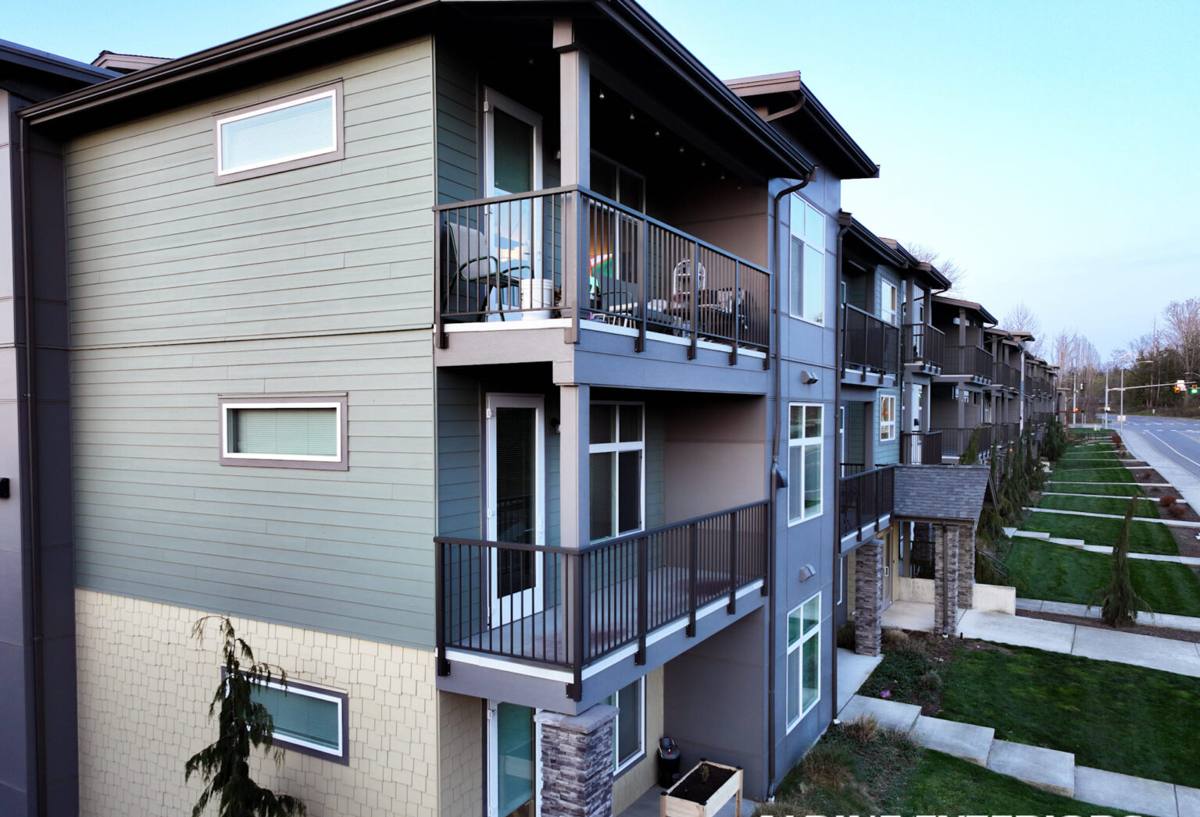
What Cedar Actually Requires to Perform Well
Cedar siding is wood. That's its appeal and its liability in the same breath. To hold up over the long term, it needs an ongoing maintenance relationship with the homeowner:
- Re-staining or re-sealing on a fixed cycle — not "when it looks like it needs it," but on a schedule, because by the time bare wood looks weathered, moisture has already been getting in
- Caulking and joint inspection every year or two, since wood moves seasonally and gaps open up
- Regular washing to keep organic growth (moss, algae, lichen) from taking hold and holding moisture against the wood
- Prompt replacement of any board showing soft spots, cupping, or checking before it spreads to fasteners and sheathing
- Careful attention to any spot where siding meets trim, flashing, or grade — the classic failure points for wood siding everywhere
None of that is unreasonable to ask of a homeowner who wants cedar and is willing to keep up with it. But it's a real, recurring commitment — not a one-time upgrade.
Where the Maintenance Burden Comes From
Cedar's natural oils give it some inherent resistance to rot and insects, which is why it has a long history as a siding material in the first place. But those oils fade with UV exposure and weathering, and once the factory or applied finish starts breaking down, the wood underneath is exposed to whatever moisture reaches it. Untreated or under-maintained cedar doesn't fail gracefully — it fails at the fastener holes and butt joints first, often before the visible surface looks obviously bad.
Why Anacortes' Climate Raises the Stakes
Every coastal town in the Pacific Northwest deals with rain. Anacortes deals with a particular combination that's harder on wood siding than most inland Skagit County locations.
Salt Air
Being surrounded by Puget Sound and Rosario Strait means airborne salt is a constant, low-level presence on north and west-facing walls especially. Salt accelerates the breakdown of finishes and speeds up moisture absorption into end grain and cut edges. Fasteners exposed to salt air also corrode faster if they're not rated for it, and corroding fasteners in wood siding create their own moisture entry points.
Driving Rain
Wind-driven rain off the water doesn't just fall on a wall — it gets pushed into laps, joints, and butt seams horizontally. Cedar siding depends on its finish and its installation detailing (proper overlaps, back-priming, flashing) to keep that water out. Any gap in that system, and water finds the seams.
Moss Season
Skagit County's damp, mild, shaded conditions are close to ideal for moss and algae growth on north-facing and tree-shaded walls. Moss holds moisture directly against the siding surface for extended periods, which is exactly the condition that accelerates wood decay. A homeowner with a wooded lot or a shaded north elevation in Anacortes is fighting an uphill battle keeping cedar clean enough to stay dry.
What This Looks Like Over Time
| Factor | Cedar Siding | James Hardie Fiber Cement |
|---|---|---|
| Refinishing cycle | Typically every 3-7 years depending on exposure and finish type | Factory ColorPlus finish; repaint interval is much longer, if ever needed |
| Moisture behavior | Absorbs and releases moisture; vulnerable at end grain and joints | Engineered to resist moisture-driven swelling, cupping, and rot |
| Salt air / marine exposure | Finish breaks down faster near the water; needs closer monitoring | Formulated to hold up under coastal exposure with proper installation |
| Fire performance | Combustible, like any wood product | Non-combustible fiber cement |
| Typical warranty structure | Varies by finish and installer; often limited on the wood itself | Manufacturer warranty on the product, transferable to a new owner |
| Ongoing homeowner labor | Regular washing, staining, caulking, spot repair | Occasional washing; no refinishing cycle to manage |
These aren't knocks on cedar as a material. They're the honest trade-offs of choosing a natural wood exterior versus an engineered one, and they matter more here than they would in a drier, inland climate.
The Fire and Insurance Angle
Wood siding is combustible. That's not a controversial statement — it's just physics. For most homeowners in Skagit County this isn't the deciding factor, but it's worth knowing that some insurers offer more favorable terms for non-combustible exterior cladding, and it's a real consideration if wildfire smoke and dry-season conditions have been on your mind the last several summers, even in a generally wet region like ours.
Why We Standardize on James Hardie Instead
We made a deliberate decision several years ago to install one siding system — James Hardie fiber cement — rather than offer a menu of products with wildly different maintenance profiles. A few reasons that decision holds up specifically for this area:
- Non-combustible material — fiber cement doesn't burn, full stop
- Factory-applied ColorPlus finish — baked-on color and protection that isn't dependent on a homeowner's maintenance schedule the way field-applied stain is
- Climate-engineered HZ product lines — Hardie makes region-specific formulations, and the HZ10 line is built for exactly the wet, marine conditions we have on Fidalgo Island and along the Anacortes waterfront
- Dimensionally stable — it doesn't swell, cup, or split the way wood can when it takes on moisture
- Strong, transferable warranty — backed by the manufacturer, not just the installer's word
- Proven longevity when installed correctly — which is the other half of the equation; even the best siding product fails early if it's hung wrong
We're not going to pretend fiber cement has zero maintenance — it still needs periodic washing and, eventually, caulking attention at trim joints like any siding system. But it removes the recurring refinishing cycle that drives most of cedar's long-term cost and labor, and it holds up to salt air and driving rain with a lot more margin for error.
If You're Set on a Wood Look
We hear from homeowners who want cedar specifically for the look, not necessarily the material. James Hardie's lap and shingle profiles come in finishes designed to read as a natural wood grain, in colors that don't require repainting on a cedar timeline. For most of the Anacortes homeowners we talk to, that gets them the aesthetic they're after without signing up for a maintenance schedule dictated by salt air and moss season.
Questions Worth Asking Before You Commit to Any Siding Product
- What's the realistic refinishing or maintenance interval for this material in a coastal climate, not a national average?
- Is the warranty on the material itself, on the finish, or only on installation labor?
- Is the warranty transferable if you sell the house?
- How does this product perform on north-facing, shaded, or tree-covered walls specifically?
- What happens at the fastener level — are they rated for salt air exposure?
- Who is responsible if the siding fails at a joint or seam due to installation error versus material defect?
If a contractor can't answer these clearly for the specific product they're proposing, that's worth noting before you sign anything.
Our Bottom Line
Cedar siding can look great and can perform reasonably well if a homeowner commits to staying on top of it. We simply don't think that's the right long-term bet for most homes in Anacortes, given what salt air, driving rain, and a long moss season do to wood exteriors here over time. We'd rather install one product we can stand behind fully than offer cedar and hope a busy homeowner keeps up with a maintenance schedule that isn't forgiving in this climate.
If you're weighing cedar against other options for your home, we're glad to walk through what we see on siding jobs around Skagit County and give you a straight answer — not a sales pitch. Reach out for a free, no-pressure estimate and we'll take a look at your specific home and exposure before recommending anything.