 Anacortes Siding
 Why Siding Replacement Doesn't Have One Simple Price
Every homeowner wants a number. The honest answer is that siding replacement cost depends on a handful of variables that change from house to house, and anyone who quotes you a firm price over the phone without seeing your home is guessing. What we can do is walk through exactly what drives the cost up or down, so you can budget realistically and spot a lowball bid before it costs you.
In Anacortes and the rest of Skagit County, there's an added layer: our climate. Salt air rolling off Rosario Strait and the Guemes Channel, driving rain off the water, and a moss season that can stretch from October into April all affect what siding choices make sense here and what a proper installation needs to include. Skimping on prep work or flashing to save a few dollars tends to show up as a bigger bill in five to ten years.
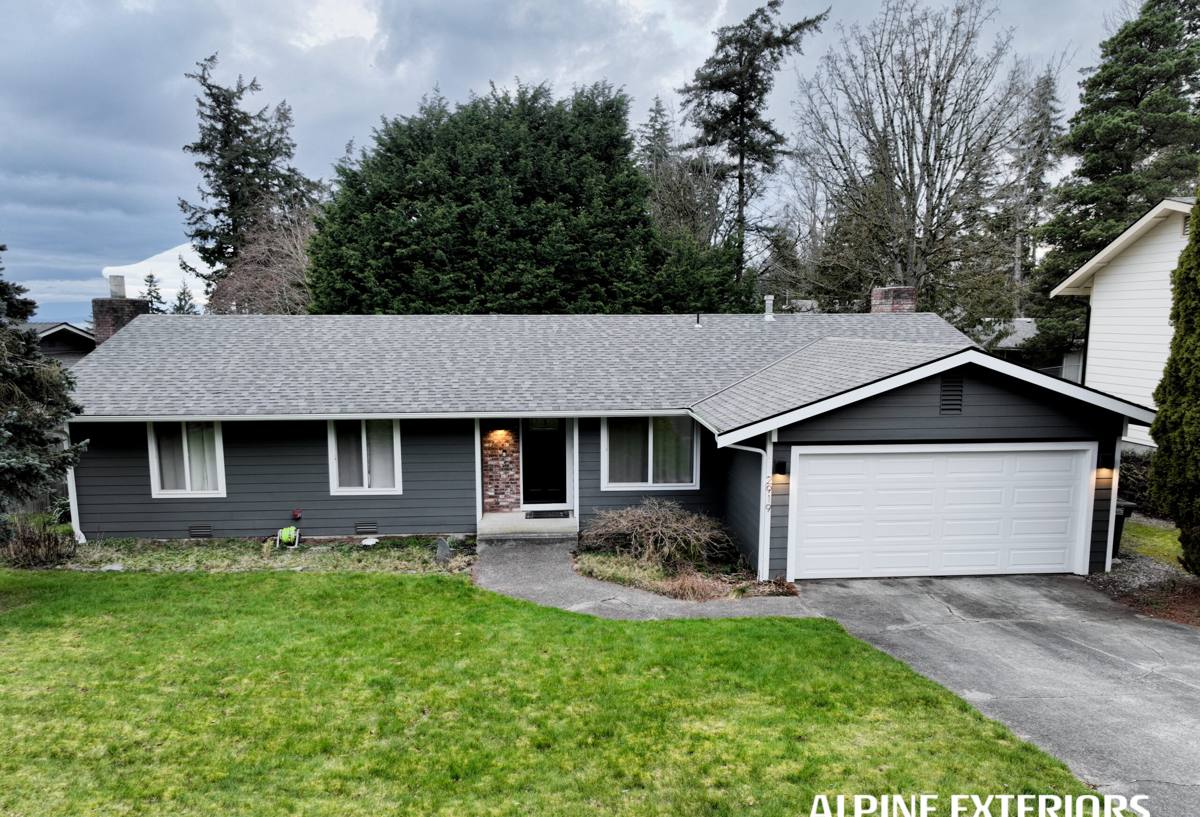
The Big Cost Drivers
House Size and Shape
Square footage of wall area is the obvious factor, but shape matters just as much. A simple rectangular ranch with few corners installs faster and cheaper per square foot than a home with lots of gables, dormers, bump-outs, and cut-in windows. Every inside corner, outside corner, and trim detail adds labor time.
Tear-Off vs. Overlay
Removing old siding down to the sheathing costs more upfront than installing over existing material, but it's the only way to properly inspect and repair what's underneath. Given how much moisture this region sees, we don't recommend covering over siding you can't first inspect — hidden rot or water damage doesn't go away because it's hidden.
What's Underneath
This is the variable that catches homeowners off guard. Once old siding comes off, we sometimes find soft or water-damaged sheathing, especially around old window flashing, roof-to-wall intersections, or anywhere caulk was doing a job that proper flashing should have been doing. Repairing or replacing sheathing adds cost that's impossible to quote sight-unseen. A contractor who promises a fixed price with zero contingency for this either hasn't thought it through or isn't planning to fix what they find.
Siding Material
Material choice is one of the biggest swings in total project cost, but it's not just about the price per square foot of the product itself — it's about installation complexity, trim and accessory costs, and what the product needs to perform correctly over decades of Pacific Northwest weather.
Trim, Accessories, and Detail Work
Corner boards, window and door trim, fascia, soffits, and frieze boards are often priced separately from the field siding but make up a meaningful share of the budget. A house with wide trim and lots of architectural detail costs more to finish properly than a plain box, even at the same square footage.
Access and Site Conditions
Steep lots, limited driveway access, tall walls requiring extra staging or lift equipment, and mature landscaping that has to be protected or worked around all add time and cost. Anacortes' hillside lots and older, tightly-spaced neighborhoods near downtown are a good example of where access can matter more than square footage.
Material Cost Comparison — What You're Actually Paying For
| Material | Relative Material Cost | Typical Lifespan (properly installed) | Maintenance Burden |
|---|---|---|---|
| Vinyl siding | Low | 15–25 years | Low, but prone to fading, warping, and cracking in cold or impact |
| Primed spruce / wood lap | Low–Moderate | 10–20 years with diligent upkeep | High — repainting, caulking, and moisture monitoring on a regular cycle |
| Cedar siding | Moderate–High | 20–30+ years with diligent upkeep | High — staining/sealing, checking for rot and insect damage |
| LP SmartSide (engineered wood) | Moderate | Manufacturer warranty terms vary; performance is installation-sensitive | Moderate — cut edges and seams need consistent sealing and monitoring |
| James Hardie fiber cement | Moderate–High | Decades, factory finish included | Low — non-combustible, dimensionally stable, factory ColorPlus finish reduces repaint cycles |
These are general industry ranges, not guarantees for any specific product line or warranty — every manufacturer's terms differ, and actual lifespan always depends on installation quality and maintenance. But the pattern is consistent: cheaper materials up front tend to ask for more of your time and money later, especially in a marine climate that doesn't give siding a break.
Where We Land: Why We Only Install James Hardie
We made a decision a while back to stop installing several common siding products — vinyl, LP SmartSide, Cemplank, Allura, primed spruce, and cedar — and to install James Hardie fiber cement exclusively. That's not a marketing gimmick; it's because we got tired of doing quality installation work on products that still gave homeowners moisture, warping, or maintenance headaches five or ten years down the road, through no fault of our workmanship.
James Hardie's fiber cement is non-combustible, holds up to the freeze-thaw and wet-dry cycling we get here, and comes with a factory-applied ColorPlus finish that's engineered to resist fading and doesn't require the repaint schedule that wood or spruce products do. Hardie also makes climate-specific HZ product lines — HZ5 for our wetter, harsher regions — engineered for exactly the kind of weather Anacortes deals with. It carries a strong, transferable limited warranty, which matters if you sell the home before the siding's useful life is up.
None of this means other products are junk. Vinyl is inexpensive and low-maintenance for the right budget. Cedar is genuinely beautiful and can last decades with real upkeep. LP SmartSide performs fine when installed exactly to spec and maintained on schedule. We simply decided that fiber cement, installed correctly, gives homeowners in this climate the best combination of durability, low maintenance, and long-term value — and we'd rather install one product extremely well than several products adequately.
Rough Budget Ranges
Without seeing your home we can't give you a number that means anything, but broadly speaking, siding replacement costs scale with square footage, tear-off requirements, sheathing repair, trim complexity, and material choice. Fiber cement typically sits above vinyl and below premium cedar in material cost, but the total installed cost gap narrows once you factor in cedar's trim and finishing labor, and it narrows further when you weigh in the maintenance and repainting costs cedar and spruce carry over a 20-year horizon. The only way to get an accurate number is a walk-around estimate, which is free and comes with no pressure to commit.
What Drives Up Your Specific Bid — A Quick Checklist
- Multiple stories or tall gable walls requiring staging or lift access
- Extensive trim detail — window casings, corner boards, decorative elements
- Sheathing or framing repair discovered once old siding comes off
- Poor original flashing at windows, doors, or roof-to-wall intersections
- Limited site access — narrow side yards, steep driveways, tight urban lots
- Existing moss, mildew, or moisture staining that signals hidden damage
- Custom color matching or specialty trim profiles
- Additional work bundled in, like new house wrap, insulation, or window trim replacement
Questions to Ask Before You Sign a Contract
Cost comparisons across bids are only useful if the bids are actually comparable. A lower number often means something was left out, not that the contractor found a better deal.
- Does the bid include full tear-off, or is it an overlay?
- Is house wrap or weather-resistive barrier included, and is it being installed to manufacturer spec?
- Who pays for sheathing repair if rot is found, and how is that priced?
- Are all trim, flashing, and caulking details included, or priced as extras later?
- What warranty covers the material, and what warranty covers the labor?
- Is the crew installing to the manufacturer's written installation instructions, which most warranties require?
Why Correct Installation Matters More Than the Material Itself
Even the best siding product on the market fails early if it's installed wrong — improper nailing patterns, missing or incorrect flashing, wrong clearances from grade or roofing, or caulking used in place of proper flashing details. This is especially true here, where wind-driven rain off the Sound and prolonged damp seasons will find every gap in a poorly executed install. Most manufacturer warranties, including James Hardie's, are conditioned on installation following the manufacturer's published instructions — a detail many homeowners never read until they need to file a claim and find out the installation didn't qualify.
When you're comparing cost between contractors, ask what specific installation practices they follow, not just what brand of siding they carry. A cheap install of a good product can underperform an expensive product installed with real attention to flashing, fastening, and moisture management.
Getting an Accurate Number for Your Home
The only responsible way to price a siding project is to look at the house — measure the walls, check the trim complexity, assess access, and get an honest read on what condition the existing siding and sheathing are likely in. We're happy to walk your property, explain what we see, and put together a clear, itemized estimate with no pressure to sign anything on the spot. If you'd like an honest look at what your specific project would cost, request a free estimate below and we'll get you a real answer instead of a guess.