 Anacortes Siding
 Why Cap Sante Roofs Age Differently
Cap Sante sits close enough to the water that salt air is a daily fact of life, not an occasional nuisance. That air carries moisture and fine salt particulate that settles on roofing materials, fasteners, and flashing year-round. Combine that with Skagit County's wet season — long stretches of driving, wind-pushed rain rather than gentle straight-down rain — and you get a roof that's tested from more angles than a typical inland home a few miles east.
Then there's shade and moisture retention. Homes tucked near mature trees or on the north and west-facing slopes around Cap Sante hold dampness longer after a storm passes. That extended damp period is exactly what moss, lichen, and algae need to establish themselves, and once they take hold on a roof they hold water against the surface long after the rest of the neighborhood has dried out. A roof replacement here isn't just about swapping old material for new — it's about specifying a system that's built to shed water fast, resist salt-driven corrosion, and discourage the moss cycle from starting over.
What "driving rain" actually does to a roof
Wind-driven rain doesn't just fall on a roof, it pushes sideways and upward under laps, around penetrations, and along ridge and hip lines. A roof that would perform fine in calm rain can leak in Cap Sante's weather if the underlayment, flashing details, and fastening pattern weren't specified for wind exposure. This is one of the most common gaps we find on older Anacortes-area roofs during a replacement estimate — the shingles look fine from the ground, but the underlayment and flashing behind them were never upgraded to handle the wind exposure this area actually gets.
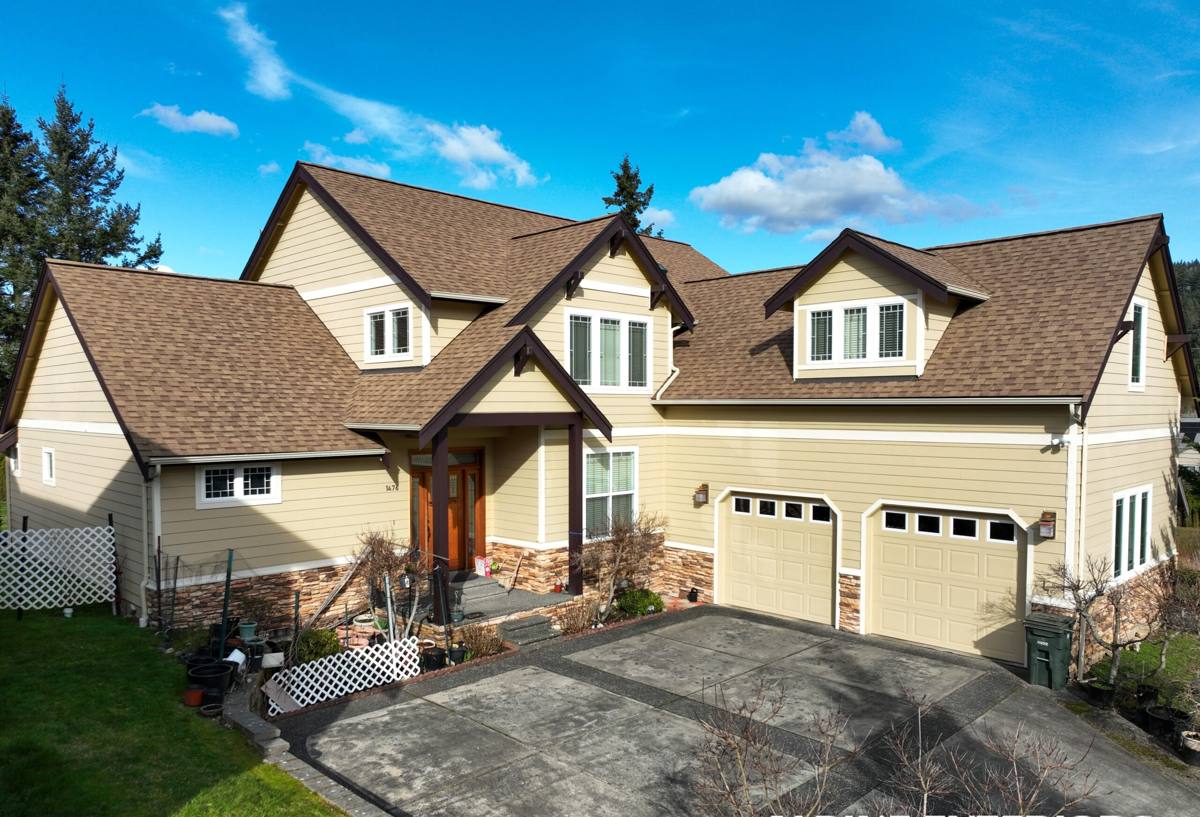
Signs a Cap Sante Home Needs a Full Replacement, Not a Repair
Not every roofing problem near the water calls for a full tear-off. But there's a point where patching becomes false economy, especially once the moss cycle or salt exposure has been working on a roof for a decade or more. Here's what we actually look for during an inspection:
- Granule loss heavy enough that you can see bare, shiny patches on asphalt shingles, especially on south and west-facing slopes
- Moss or algae that keeps coming back within a season or two of cleaning, which usually means the surface underneath is already degraded
- Soft spots or a spongy feel underfoot on the deck during inspection, which signals moisture has reached the sheathing
- Rust streaking or pitting on exposed metal flashing, valleys, or fasteners — a common early sign of salt-air corrosion
- Curling, cupping, or cracked shingles, particularly if the roof is already 18-20+ years old
- Daylight visible through the roof deck from the attic, or water staining on attic sheathing near eaves and valleys
- Multiple past repairs in different spots rather than one isolated problem area
If you're seeing two or more of these, it's worth getting a straight answer on whether repair still makes sense or whether you're better off putting that money toward a full replacement.
Choosing a Roofing System for This Climate
There's no single "best" roofing material for every home — it depends on your roof's exposure, your home's structure, and how much long-term maintenance you want to take on. Here's an honest comparison of the main options we install and discuss with homeowners in this area:
| Material | Salt air / moisture performance | Moss resistance | Typical lifespan here |
|---|---|---|---|
| Architectural asphalt shingle | Good with proper fasteners and flashing; standard choice | Moderate — benefits from algae-resistant granules | 20-30 years |
| Standing seam metal | Excellent when properly coated/fastened; sheds water fast | Very good — smooth surface discourages growth | 40-50+ years |
| Synthetic composite (slate/shake look) | Good; doesn't absorb moisture like natural wood | Good | 30-50 years |
| Cedar shake | Requires more upkeep near salt air and shade | Poor without regular treatment | 20-30 years with maintenance |
We still install cedar shake when that's what a homeowner wants for the look, but we're upfront about the trade-off: in a shaded, damp, salt-exposed spot like parts of Cap Sante, wood roofing needs a more disciplined maintenance schedule to hold up. If low maintenance is the priority, architectural asphalt with algae-resistant granules or standing seam metal are the more forgiving choices for this specific exposure.
Fasteners and flashing matter as much as the field material
A premium shingle installed with standard-grade fasteners and flashing in a salt-air zone will show corrosion at the fastener heads and flashing edges well before the shingle itself wears out. For Cap Sante roofs we spec corrosion-resistant fasteners and flashing rated for coastal exposure as a standard practice, not an upgrade — it's a small cost difference at install time versus a real difference in how the roof ages.
What a Correct Roof Replacement Actually Involves
A roof replacement is more than stripping old shingles and nailing down new ones. Done right, it's a sequence where each layer protects the one underneath it:
- Full tear-off to bare deck — we don't layer new roofing over old, because it traps moisture and hides deck problems
- Deck inspection and repair, replacing any sheathing that's soft, delaminated, or water-damaged before anything new goes down
- Ice and water shield at eaves, valleys, and around penetrations — the areas most exposed to wind-driven rain and ice damming during cold snaps
- Synthetic underlayment across the full field for a second line of defense beneath the roofing material
- Corrosion-resistant flashing at chimneys, walls, skylights, and valleys, sealed and lapped correctly for water to shed downhill at every layer
- Proper fastening pattern matched to the material manufacturer's wind-rated specification, not just the minimum code requirement
- Ridge and intake ventilation balanced correctly so the attic can actually dry out between storms
Skipping any one of these steps is usually invisible from the ground and invisible on the invoice — until the roof underperforms in exactly the conditions Cap Sante sees most: sustained wet weather and salt-laden wind.
Ventilation and Moisture: The Overlooked Half of the Job
A new roof with poor attic ventilation will age faster than an older roof with good ventilation, especially in a damp coastal climate. Trapped moist air condenses on the underside of the deck, which softens sheathing, feeds mold growth, and shortens the life of the roofing material from underneath — even while the top side still looks fine. When we replace a roof, we check intake ventilation at the eaves and exhaust at the ridge as a standard part of the scope, not an add-on. If the attic isn't breathing correctly, we'll tell you before the new roof goes on, because fixing it after the fact means pulling up brand-new roofing.
Our Replacement Process
We keep the process straightforward and try to minimize surprises, especially on a job that involves stripping a roof down to bare wood:
1. On-site inspection and honest assessment
We walk the roof, check the attic from inside where accessible, and give you a clear picture of what we find — including if repair is genuinely a reasonable option instead of full replacement.
2. Written estimate with material options
You'll see the cost difference between material choices in writing, not just a single number, so you can weigh trade-offs before committing.
3. Scheduling around the weather
Roof replacement needs a dry work window. We plan around Skagit County's forecast rather than rushing a tear-off into a storm system.
4. Tear-off, deck repair, and reroofing
Most residential replacements take one to a few days depending on roof size, pitch, and complexity. We protect landscaping and use magnetic sweeps for nails and debris before we consider the job done.
5. Final walkthrough
We walk the finished roof and the attic with you, explain what was done, and go over any maintenance recommendations specific to your home's exposure.
Cost Factors for a Cap Sante Roof Replacement
Every roof is different, so we won't quote a number without seeing yours, but these are the variables that actually move the price:
| Factor | Why it affects cost |
|---|---|
| Roof size and number of layers to remove | More tear-off labor and disposal, especially with old cedar or multiple layers of shingles |
| Roof pitch and complexity | Steep or cut-up roofs with multiple valleys and dormers take longer and need more safety setup |
| Deck condition | Rotted or soft sheathing found during tear-off adds material and labor to replace it properly |
| Material choice | Asphalt, metal, and synthetic options carry different material and installation costs |
| Access and site conditions | Tight lots, steep driveways, or limited staging area near the water can affect crew efficiency |
| Ventilation upgrades | Adding or correcting ridge/intake ventilation is worth doing during a replacement rather than after |
We'll walk through which of these apply to your home during the estimate, so the number you get reflects your roof, not a generic average.
Permits and Code Considerations in Skagit County
Anacortes and Skagit County have permitting requirements for roof replacement work, and wind exposure is part of what local code accounts for given the area's coastal weather. We handle the permitting process as part of the job so you're not left tracking down inspections yourself. This also matters for insurance and resale — a properly permitted and inspected roof replacement is documented, which future buyers' inspectors and your insurer will both want to see.
Why Local Experience in Cap Sante Matters
A crew that mostly works inland jobs may not think twice about standard-grade fasteners or skip the upgraded flashing at a valley, because on a typical inland roof it simply doesn't matter as much. On a Cap Sante roof, those shortcuts show up early — as rust streaks, early granule loss, or a leak at a flashing point within a few years instead of a couple decades. Working roofs in this specific stretch of Anacortes regularly means we already know which details need to be non-negotiable here: corrosion-resistant hardware, wind-rated fastening, and ventilation that accounts for how slowly things dry out near the water. That's not a marketing claim, it's just what the climate demands, and it's reflected in how we scope every job in this area.
After the Replacement: Keeping It Performing
A correctly installed roof still benefits from basic upkeep in this climate:
- Clear gutters and downspouts each fall so wind-driven rain has somewhere to go
- Have moss growth addressed early with proper treatment rather than pressure washing, which can strip granules
- Trim back overhanging branches that keep sections of the roof shaded and damp longer than the rest
- Schedule a quick visual inspection every couple of years, especially after a heavy windstorm
If you're weighing repair versus replacement, or just want a straight read on where your roof actually stands, we're glad to take a look. Reach out for a free, no-pressure estimate using the form below.