 Anacortes Siding
 Why Mount Vernon Roofs Wear on a Different Timeline
Mount Vernon sits inland from Anacortes along the Skagit River, but it's still squarely inside Skagit County's marine climate belt. That means the same combination of factors that ages roofs all over this part of Washington — persistent damp air, driving rain off the Salish Sea weather systems, and a moss season that can run eight months or longer — shows up on Mount Vernon roofs too, sometimes in slightly different ways than it does closer to the water.
A roof in a drier inland climate can go through a full lifespan with fairly even wear. A roof here rarely does. North-facing slopes and shaded valleys stay wet longer after every storm, algae and moss get a head start on those sections, and the freeze-thaw swings we get a handful of times each winter work into any spot where water has already found a way in. The result is roofs that often need attention — or full replacement — well before the shingle's rated lifespan would suggest, and roofs that fail unevenly, with one slope in much worse shape than the rest of the house.
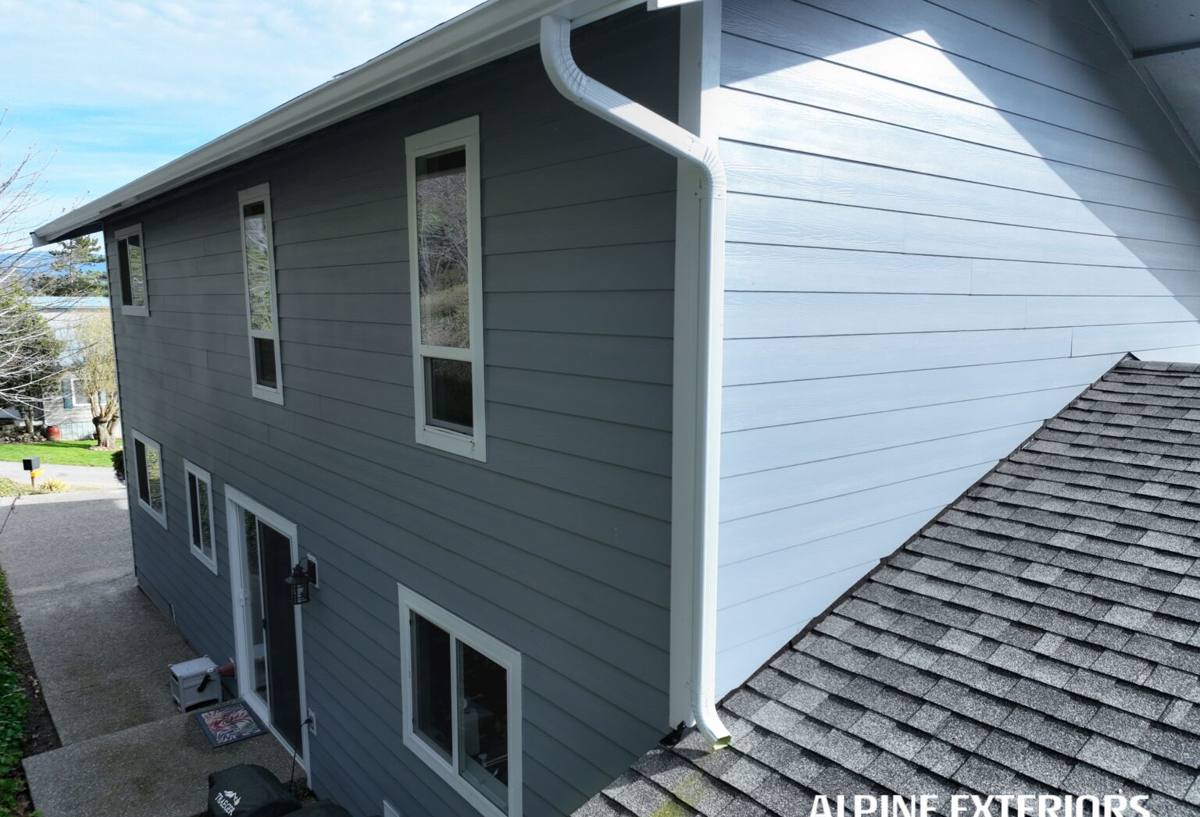
Signs a Mount Vernon Roof Is Past Patching
Homeowners usually call us for a repair quote and find out the roof has actually reached the point where patching just delays the inevitable. Some of the clearest signals:
- Granules collecting in gutters and downspouts, especially after a hard rain — a sign the shingle surface is wearing thin
- Moss or dark algae streaking that keeps coming back within a season or two of cleaning
- Shingles that are cupping, curling at the edges, or visibly brittle when walked
- Soft spots in the decking felt underfoot during inspection
- Daylight or water staining visible in the attic around vents, chimneys, or valleys
- A roof that's 20+ years old and has never had underlayment or flashing upgraded
Any one of these on its own might mean a repair. Two or three together, especially on a roof that's already had a couple of decades of Skagit County weather, usually means replacement is the more honest recommendation.
What a Correct Roof Replacement Actually Involves
Tear-Off, Not Overlay
We don't recommend installing a new layer of shingles over an old one, even though it's cheaper up front. A second layer traps moisture between courses, hides deck damage that needs to be found and fixed, and voids most manufacturer warranties. A proper job starts with a full tear-off down to the deck.
Deck Inspection and Repair
Once the old roofing is off, the plywood or OSB decking gets inspected panel by panel. Any wood that's soft, delaminating, or stained from long-term moisture gets replaced before anything new goes down. Skipping this step is one of the most common shortcuts we see on roofs that failed early — new shingles over a compromised deck just fail again.
Underlayment and Ice/Water Protection
Given how much rain this area sees, we use synthetic underlayment across the full roof and self-adhering ice-and-water barrier at the vulnerable spots — eaves, valleys, and around any penetration. This is the layer that actually keeps water out if wind-driven rain gets under a shingle, which happens here more than in drier climates.
Flashing
Flashing around chimneys, skylights, sidewalls, and valleys is where most leaks originate on older roofs — not the shingle field itself. We replace flashing rather than reuse it, and we form it to fit the actual roof rather than relying on universal pieces caulked into place.
Ventilation
A roof deck that can't breathe traps moisture from inside the house, which accelerates rot from underneath and feeds the exact conditions that grow moss and algae from above. Balanced intake (soffit) and exhaust (ridge or box vents) ventilation is part of a correct replacement, not an optional add-on.
Material Options for Skagit County Homes
There isn't one "right" material for every house — it depends on budget, roof pitch, and how long you want to go before thinking about it again. Here's how the common options compare for this climate specifically:
| Material | Typical Lifespan Here | How It Handles Moss & Moisture | Relative Cost |
|---|---|---|---|
| 3-tab asphalt shingle | 12–18 years | Lower algae resistance; moss takes hold faster on shaded slopes | Lowest |
| Architectural (laminate) asphalt shingle | 20–30 years | Algae-resistant granule options widely available; sheds water better due to thickness | Moderate |
| Standing seam metal | 40–60 years | Excellent — smooth surface gives moss little to grip; sheds moisture fast | High |
| Synthetic/composite shake | 30–50 years | Good moisture resistance; check specific product's algae-resistance rating | Moderate–High |
For most Mount Vernon homes, an architectural shingle with algae-resistant granules hits the right balance of upfront cost and realistic performance in this climate. Metal is worth serious consideration on steeper roofs or for homeowners planning to stay long-term, since the lifespan advantage is real. We'll walk through the honest trade-offs for your specific roof rather than pushing one option.
Why We Don't Push Certain Products
We're selective about a few product categories — not because they're inherently bad, but because our professional standard is matching material to this specific climate. Some lower-grade shingle lines have thinner mat construction that shows wear faster under repeated wet-dry cycling, and some specialty products carry installation tolerances that are hard to guarantee correctly in a rainy build schedule. When we steer a homeowner away from something, it's about moisture behavior, installation sensitivity, or warranty structure for our region — not a claim that the product fails everywhere.
Our Process, Start to Finish
- On-site inspection — we get on the roof, check the attic from inside, and look at the whole system, not just the shingles
- Written estimate — a clear scope covering tear-off, decking allowance, underlayment, flashing, ventilation, and material, so there are no surprise line items later
- Scheduling around weather — we plan tear-off days around the forecast so your deck isn't exposed longer than necessary
- Tear-off and deck repair — old material removed, decking inspected and repaired as needed
- Underlayment, flashing, and ventilation installed — the parts of the job that determine whether the roof actually performs
- New roofing installed to manufacturer specification, which matters for warranty coverage
- Full cleanup — magnetic sweep for nails, haul-away of old material and debris
- Final walkthrough — we go over the finished roof and the warranty paperwork with you before we consider the job done
Moisture and Moss: The Long Game
A new roof isn't maintenance-free in Skagit County. Trees overhanging the roofline, gutters that hold standing water, and north-facing slopes that stay shaded most of the day will always be more prone to moss regrowth than a wide-open, sun-exposed roof. Choosing algae-resistant materials and making sure ventilation is correct at install cuts down on the problem significantly, but it doesn't eliminate it. Periodic gentle cleaning — never pressure-washing, which strips granules — and keeping gutters clear go a long way toward protecting the investment once the new roof is on.
Why a Crew That Already Works This Area Matters
Roofing crews that mostly work drier inland regions sometimes underbuild for what this climate actually does over a decade — lighter underlayment, minimal flashing detail, ventilation treated as optional. A crew that works Anacortes, Mount Vernon, and the rest of Skagit County day in and day out builds every roof assuming the rain, the moss pressure, and the marine air are permanent conditions, not exceptions. That shows up in the details: how much ice-and-water barrier goes down, how flashing is formed instead of caulked, and how seriously ventilation gets treated. It also means we're a known, reachable crew if a warranty question or a storm-related concern comes up years down the line, rather than a name from out of the area you can't easily get back on the roof.
Questions Worth Asking Before You Hire
- Is the tear-off complete, or is this an overlay over existing shingles?
- What underlayment and ice-and-water barrier are specified, and where?
- Will damaged decking be replaced as part of the quoted price, or billed separately as found?
- What ventilation changes, if any, are included?
- Is the contractor licensed and insured in Washington, and can they provide proof?
- What does the workmanship warranty cover, separate from the manufacturer's material warranty?
- Do they have experience with roofs specifically in Skagit County's climate, not just general roofing experience?
If your Mount Vernon roof is showing its age, or you just want an honest opinion on how much life is left in it, we're glad to take a look. The estimate is free, there's no pressure attached to it, and you'll get a straight answer either way — use the form below to get started.