 Anacortes Siding
 Why March Point Puts Extra Demands on Siding
March Point sits out on the water side of Fidalgo Island, and that location comes with a very specific set of weather problems. Homes here take on salt-laden air, wind-driven rain that hits siding at an angle instead of falling straight down, and a long, damp shoulder season every year where moss and algae get a foothold on anything that stays wet too long. It's a beautiful place to live, but it's also a tough place to be a piece of exterior wall material.
Siding in this part of Skagit County isn't just cosmetic. It's the first line of defense against moisture getting into wall assemblies, and in a marine-exposed spot like March Point, that job never really lets up. Products that perform fine in a drier inland climate often struggle here — swelling, delaminating, or growing a green film within a few seasons. That's the backdrop for everything we do when we replace siding on a March Point home.
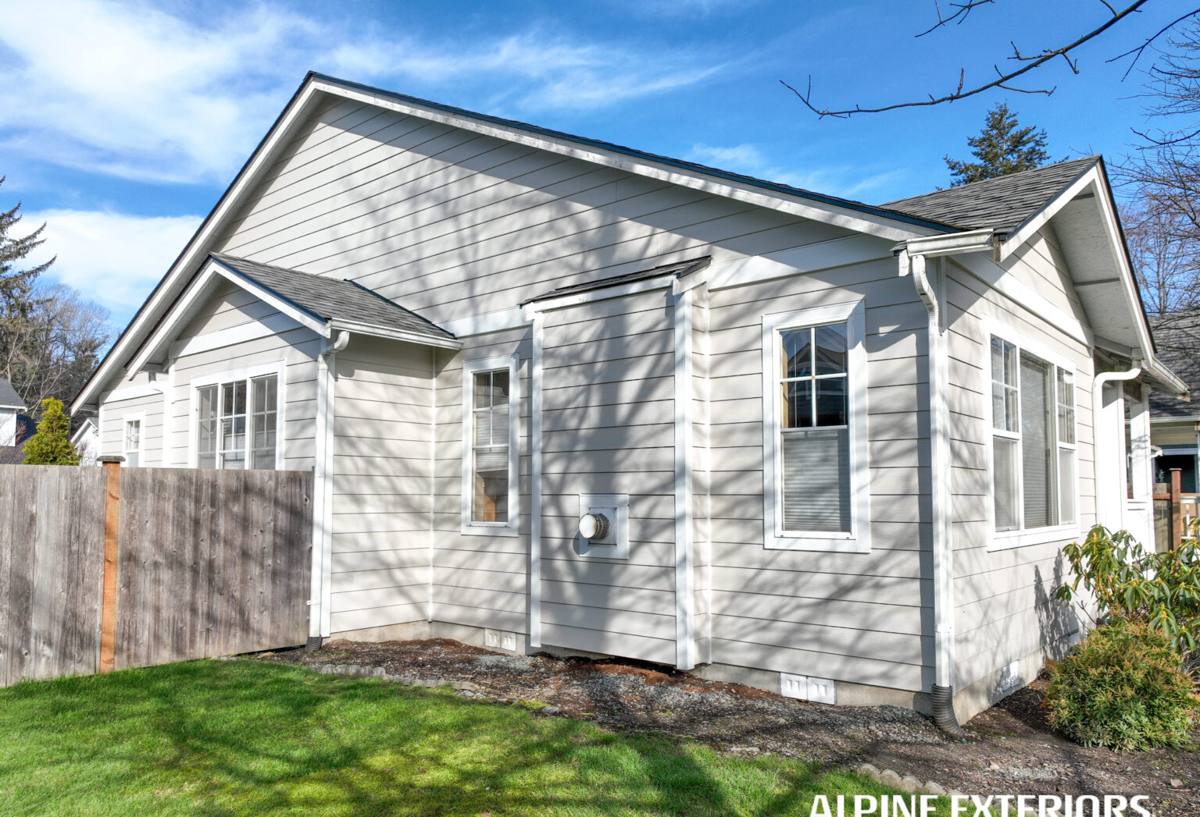
What "Correct" Siding Replacement Actually Involves
Replacing siding isn't just pulling off old boards and nailing up new ones. Done right, it's a full envelope job, and skipping steps is exactly how homes end up with hidden rot behind brand-new siding a few years later.
Tear-Off and Inspection
Old siding comes off in sections so we can inspect the sheathing underneath as we go. This is where problems that were invisible from the outside — soft sheathing, old water staining, failed flashing — get found and dealt with before anything new goes up. Skipping this step is the single most common shortcut that leads to callbacks.
Water-Resistive Barrier and Flashing
A correctly lapped weather-resistive barrier, properly integrated window and door flashing, and rain-screen detailing where it's called for are what actually keep bulk water out of the wall. The siding itself sheds the majority of the water, but it's never a perfect seal — the barrier system behind it is what protects the structure long-term, especially with the kind of driving rain March Point sees off the water.
Installation to Manufacturer Spec
Fastener spacing, clearance from grade and roofing, gaps at butt joints, and caulking at penetrations all matter. Fiber cement siding installed loosely, with the wrong fasteners, or without proper clearances will fail early no matter how good the product itself is. This is where a lot of the value in hiring an experienced crew actually shows up.
Why We Only Install James Hardie Fiber Cement
We made a decision a while back to stop installing vinyl siding, LP SmartSide, and other engineered wood or cement-board alternatives, and to install James Hardie fiber cement exclusively. It wasn't a marketing choice — it came from watching how different products actually held up in this climate over years, not just in the first season after installation.
Fiber cement is non-combustible, which matters in a region where wildfire smoke and ember exposure have become a real seasonal concern even west of the Cascades. It doesn't feed moisture the way engineered wood substrates can if a seam opens up, and it holds paint and factory finish far longer than vinyl, which tends to fade and become brittle with UV exposure over time. James Hardie's ColorPlus factory finish is baked on and warrantied against fading and peeling in a way that field-applied paint on other materials simply isn't.
Hardie also builds region-specific product lines — their HZ10 formulation is engineered for cold, wet, high-humidity climates like the Pacific Northwest, with moisture management built into the substrate itself. That's a meaningful difference from a one-size-fits-all siding product being installed the same way whether it's going on a house in Arizona or a house three blocks from Padilla Bay.
Our Process for a March Point Siding Replacement
- Site visit and estimate: we walk the exterior, check for rot, moisture damage, and trim condition, and talk through siding profile and color options.
- Detailed scope of work: a written estimate covering tear-off, sheathing repair allowances, flashing details, and the specific Hardie products being used.
- Tear-off and sheathing inspection: old siding and any compromised material removed, with photos of anything found before it's covered back up.
- Barrier, flashing, and rain-screen installation: the moisture-management layer goes in before a single piece of new siding is hung.
- Hardie siding installation: installed to manufacturer fastening and clearance specs, with attention to butt joints, corners, and penetrations.
- Trim, caulking, and final details: the finish work that determines how clean the job looks and how well it sheds water at transitions.
- Walkthrough and cleanup: we go over the finished exterior with the homeowner and clear the site of debris and old material.
Signs a March Point Home Needs Siding Replacement
Because of the moss season and salt air here, some warning signs show up earlier or look different than they would on a home fifty miles inland.
- Persistent moss, algae, or a greenish film on north- and west-facing walls that pressure washing only removes temporarily
- Paint that's bubbling, peeling, or chalking well before the age you'd expect for that coating
- Soft spots, warping, or visible swelling, especially near the bottom courses close to grade or under gutters
- Cracking or gapping at butt joints and corners that lets water track behind the siding
- Rising interior humidity, musty smells, or peeling interior paint near exterior walls — often the first sign of moisture getting in behind the siding
- Visible rust streaking from fasteners, which usually means the wrong fastener type was used originally
What Drives the Cost of a Siding Replacement Project
Every home is different, but the same handful of factors move the price up or down on nearly every March Point project we bid.
| Factor | Why It Matters |
|---|---|
| Total square footage and home shape | More wall area and more corners, gables, and dormers mean more cutting, flashing, and labor time |
| Condition of existing sheathing | Rot or moisture damage found during tear-off requires repair before new siding can go on |
| Siding profile chosen | Lap, shingle, and panel profiles differ in material and labor cost |
| Trim and accessory work | Fascia, soffit, and window trim replacement adds scope beyond the field siding itself |
| Number of stories and access | Second-story and steep-site work requires more staging and safety equipment |
| Color and finish selection | Factory ColorPlus finishes vs. field-painted options affect material pricing |
We don't quote siding jobs off a square-footage formula alone — the honest number comes after we've actually looked at the walls, because sheathing condition is the variable that swings a bid the most.
Why Hiring a Crew That Already Works in March Point Matters
Siding installation isn't identical everywhere in Skagit County, and a crew that mainly works drier, more sheltered inland sites will make different assumptions than one that's used to the wind and salt exposure March Point gets. Knowing which Hardie product line to specify, where rain-screen detailing earns its keep versus where it's optional, and how much clearance to leave at grade in a spot with higher ambient moisture all come from having actually done the work here before, not from a general contracting background.
There's also the practical side: permitting and inspection expectations through Anacortes and Skagit County, working around the wind patterns that come off the water on this peninsula, and scheduling around the wetter stretches of the year so tear-off sections aren't left exposed longer than necessary. None of that is exotic knowledge, but it's the difference between a job that goes smoothly and one that runs into avoidable problems.
Caring for Your Siding After Installation
Even the right product installed correctly benefits from a little basic upkeep, especially in a climate that grows moss as readily as this one does.
- Rinse siding with a garden hose once or twice a year to clear salt residue and organic buildup before it takes hold
- Keep gutters clear so overflow doesn't run down and saturate siding at the roofline
- Trim back vegetation and tree limbs that keep siding shaded and damp longer than the rest of the wall
- Check caulking at trim joints and penetrations annually and have any cracked sealant redone
- Address moss or algae early with a gentle wash rather than letting it establish and hold moisture against the surface
If your March Point home's siding is showing its age, or you just want an honest read on whether repair or full replacement makes sense, we're happy to come take a look. The estimate is free, there's no pressure, and you'll get a straight answer about what your home actually needs.