 Anacortes Siding
 Burlington's Climate Is Harder on Siding Than It Looks
Burlington sits inland along the Skagit River, but it isn't far enough from Padilla Bay and the Sound to escape the marine air that moves up the valley most mornings. Add the valley's own tendency to hold fog and moisture low against the ground, and you get a climate that keeps exterior walls damp for long stretches of the year — not from any single storm, but from a slow, steady dampness that never fully dries out between rains. That combination of salt-tinged air, driving rain off the water, and a moss season that can stretch from fall through spring is exactly the kind of environment that exposes weak siding fast.
Homes in this part of Skagit County don't usually fail because of one bad storm. They fail because whatever is on the walls — cheap vinyl, unpainted spruce, an old cedar system past its service life — was never really built for sustained moisture exposure. Fiber cement, installed correctly, is one of the few siding materials that holds up to that pattern year after year without warping, rotting, or feeding the moss and algae that thrive in valley humidity.
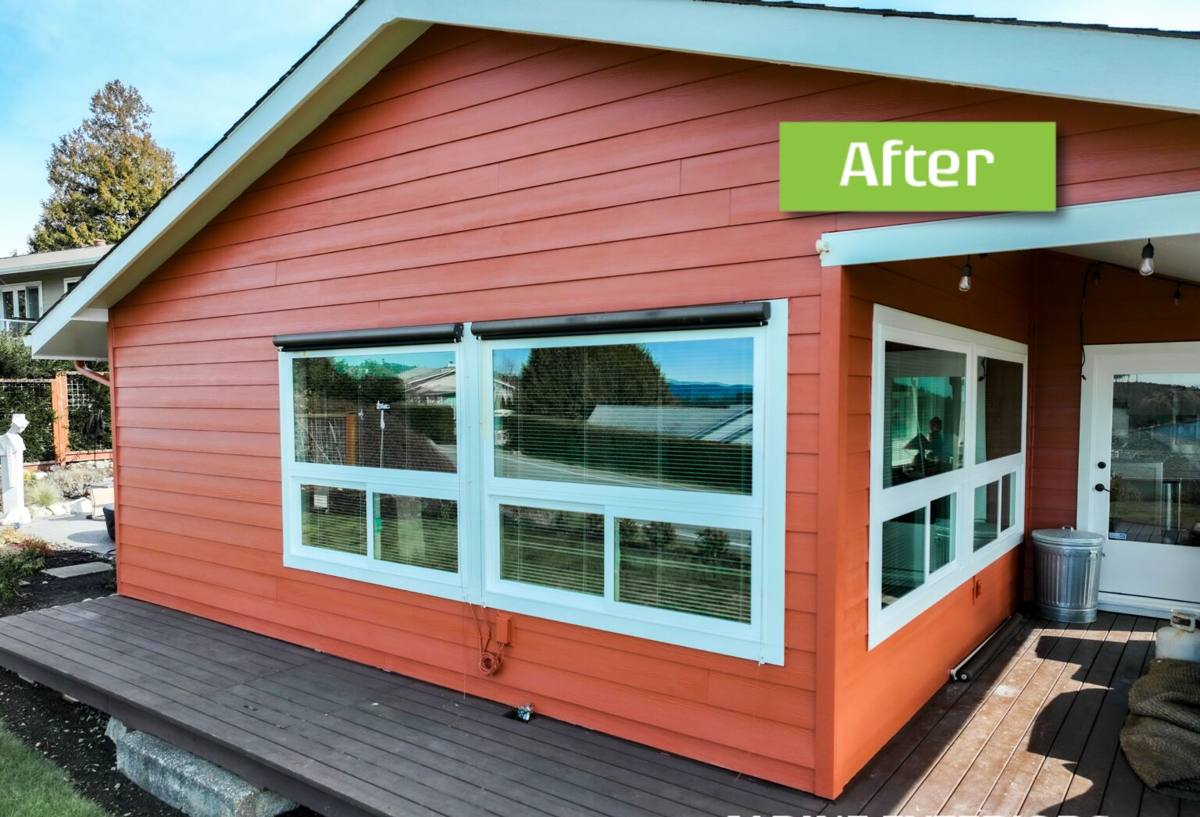
Why We Install James Hardie and Nothing Else
We install James Hardie fiber cement siding exclusively. We don't install vinyl, LP SmartSide, Cemplank, Allura, primed spruce, or bare cedar, and we're upfront with Burlington homeowners about why. Vinyl expands and contracts with temperature swings and can crack or bow over time, especially in older, lower-grade panels. Engineered wood products like LP SmartSide use wood strand cores that are more moisture-tolerant than raw wood but still rely on an intact factory coating to keep water out — any breach in that coating, and the core is vulnerable. Other fiber cement brands like Cemplank and Allura are legitimate products, but we've standardized on one manufacturer so our crews master one installation system, one flashing detail, one set of fastening specs, rather than splitting expertise across several product lines.
James Hardie backs its siding with factory-applied ColorPlus finish (baked-on, not field-painted, so it resists fading and chipping far longer than site-applied paint), climate-engineered HZ product lines built for specific moisture and freeze conditions, and a strong transferable warranty. None of that matters, though, if the installation is wrong — which is why how it goes on the wall matters as much as what goes on the wall.
What a Correct Fiber Cement Installation Actually Involves
Fiber cement is unforgiving of shortcuts in a way vinyl often isn't. Vinyl can hide a sloppy install behind its own flexibility; fiber cement will telegraph bad flashing, wrong nailing, or tight joints within a year or two, usually as cracking, staining, or trapped moisture behind the panel. A correct install includes:
- Proper water-resistive barrier and flashing at every window, door, and penetration, lapped so water always sheds outward and down
- Correct fastener type, spacing, and depth — Hardie specifies this precisely, and over-driven or under-driven nails are one of the most common failure points we see on re-siding jobs
- Manufacturer-specified clearances at the ground, roofline, and deck ledger so the bottom edge of the siding never sits in standing water or snow
- Expansion gaps at every joint and panel end, caulked or capped per spec rather than butted tight
- Careful attention to inside and outside corners, which are where moss and algae tend to establish first in a shaded, damp valley climate like Skagit County's
Get any one of these wrong and the siding itself can be perfect and the wall will still fail early. This is the part of the job that separates a crew that occasionally installs Hardie from one that works with it every day.
Signs Your Current Siding Is Already Losing the Fight
Before we ever talk about full replacement, it's worth knowing what to look for. In Burlington and the surrounding valley, the early warning signs tend to show up in predictable places:
- Persistent moss or dark green-black staining on north-facing or shaded walls that comes back within weeks of cleaning
- Soft or spongy spots when you press on wood or engineered wood siding, especially near the bottom courses
- Paint that's peeling or bubbling rather than just fading, which usually means moisture is getting trapped behind the surface
- Visible gaps, warping, or bowing at panel seams
- A musty smell near exterior walls inside the house, which can mean moisture has already worked its way past the siding
Any of these is worth a look before it turns into sheathing or framing damage, which costs far more to fix than siding alone.
How Our Process Works for Burlington Projects
Assessment and Estimate
We start with an on-site walkthrough of the home — checking existing siding condition, trim, flashing, moisture entry points, and anything hidden that a photo can't show. You get a straightforward estimate, not a high-pressure sales pitch.
Prep and Tear-Off
Old siding comes off down to the sheathing so we can actually see what's underneath. Any water-damaged sheathing or framing gets addressed before a single new panel goes up — covering over rot is how small problems become expensive ones.
Weather Barrier and Flashing
A new water-resistive barrier goes on, and every window, door, and penetration gets flashed to shed water outward. This step matters more in Skagit County's damp climate than almost anywhere in the drier parts of the state.
Installation
James Hardie panels, lap siding, or trim go on to manufacturer spec — correct fasteners, correct clearances, correct expansion gaps — by crews who install this system regularly, not occasionally.
Final Detail and Walkthrough
Caulking, touch-up, and a final walkthrough with the homeowner before we call the job done.
Choosing the Right Hardie Product Line for Your Home
James Hardie makes several product lines engineered for different climate zones and design goals. For Burlington and the rest of the marine, high-moisture Pacific Northwest, we typically point homeowners toward the HZ5 climate-engineered formulation, which is built specifically for regions with high rainfall and humidity like ours.
| Product Line | Best For | Key Trait |
|---|---|---|
| HardiePlank Lap Siding | Most homes, traditional lap look | Most common choice; wide color and texture range |
| HardiePanel Vertical Siding | Modern or accent facades | Clean vertical lines, often paired with lap siding |
| HardieShingle | Craftsman or cottage-style homes | Shingle look without the maintenance of real wood shingles |
| HardieTrim | Window, door, and corner trim | Matches siding durability; resists the rot common in wood trim |
Within any of these lines, ColorPlus finishes give you a factory-baked color coat that's far more consistent and long-lasting than field-applied paint, which matters a great deal in a climate where paint jobs on wood siding often need touch-up within a few years.
What Fiber Cement Siding Costs In Burlington
Pricing depends on the size and shape of the home, how much tear-off and repair the existing wall surface needs, trim complexity, and which Hardie product line you choose. We won't quote invented numbers here, but the factors below are what actually move the price:
| Cost Factor | Why It Matters |
|---|---|
| Existing siding removal | Full tear-off costs more than installing over a properly prepped surface, but it lets us inspect and fix hidden moisture damage |
| Sheathing or framing repair | Homes with long-term moisture exposure often need some sheathing replaced before new siding goes on |
| Home size and wall complexity | More corners, gables, and dormers mean more cutting, flashing, and labor time |
| Product line and trim package | Lap siding, panel, and shingle profiles carry different material costs, and trim upgrades add to the total |
| Color and finish | Factory ColorPlus finishes cost more upfront than primed siding painted on-site, but they last significantly longer |
Why It Matters That We Already Work in Burlington
A crew that works Skagit County regularly already knows how the valley's weather behaves — where moss establishes first, which wall orientations take the worst of the driving rain, and how to schedule tear-off and install around a climate that doesn't always give you a clean weather window. That local familiarity shows up in the details: flashing choices, clearance decisions, and the sequencing of a job so exposed sheathing isn't sitting open during a wet stretch. It also means a warranty and a crew you can actually reach if a question comes up five years down the road, not an out-of-area contractor who did one job in the neighborhood and moved on.
Keeping New Siding Looking Right
Fiber cement is low-maintenance compared to wood, but "low" isn't "none." A short seasonal routine keeps it performing the way it's designed to in this climate:
- Rinse walls annually, especially shaded and north-facing sides, to keep moss and algae from establishing
- Keep gutters clear so overflow doesn't run down the siding face repeatedly
- Trim back plantings and tree limbs that keep a wall shaded and damp longer than the rest of the house
- Re-caulk joints and trim seams if you notice gaps opening up over the years
- Have flashing and caulking checked periodically around windows and doors, since these are the most common points of water entry
If you're weighing a siding replacement for a Burlington home, we're happy to take a look and give you a straightforward, no-pressure estimate — just fill out the form below.