 Anacortes Siding
 Siding Repair for Mount Vernon Homes: Built for Skagit County Weather
Mount Vernon sits in the Skagit Valley, close enough to Puget Sound and the tidal flats to pick up salt-laden air, and low enough in the valley to trap moisture that takes its time drying out. Homes here don't fail the same way homes fail in drier parts of the state. Siding problems in this area tend to be slow, quiet, and easy to underestimate until a wall assembly is already wet behind the surface. Our siding repair work in Mount Vernon is built around that reality: diagnose what's actually happening to the wall, not just patch what's visible from the driveway.
This page covers siding repair specifically for Mount Vernon homes — what the local climate does to siding over time, what a correct repair involves, how we decide between repairing and replacing, and why it matters to hire a crew that already understands this valley's weather instead of one working from general assumptions.
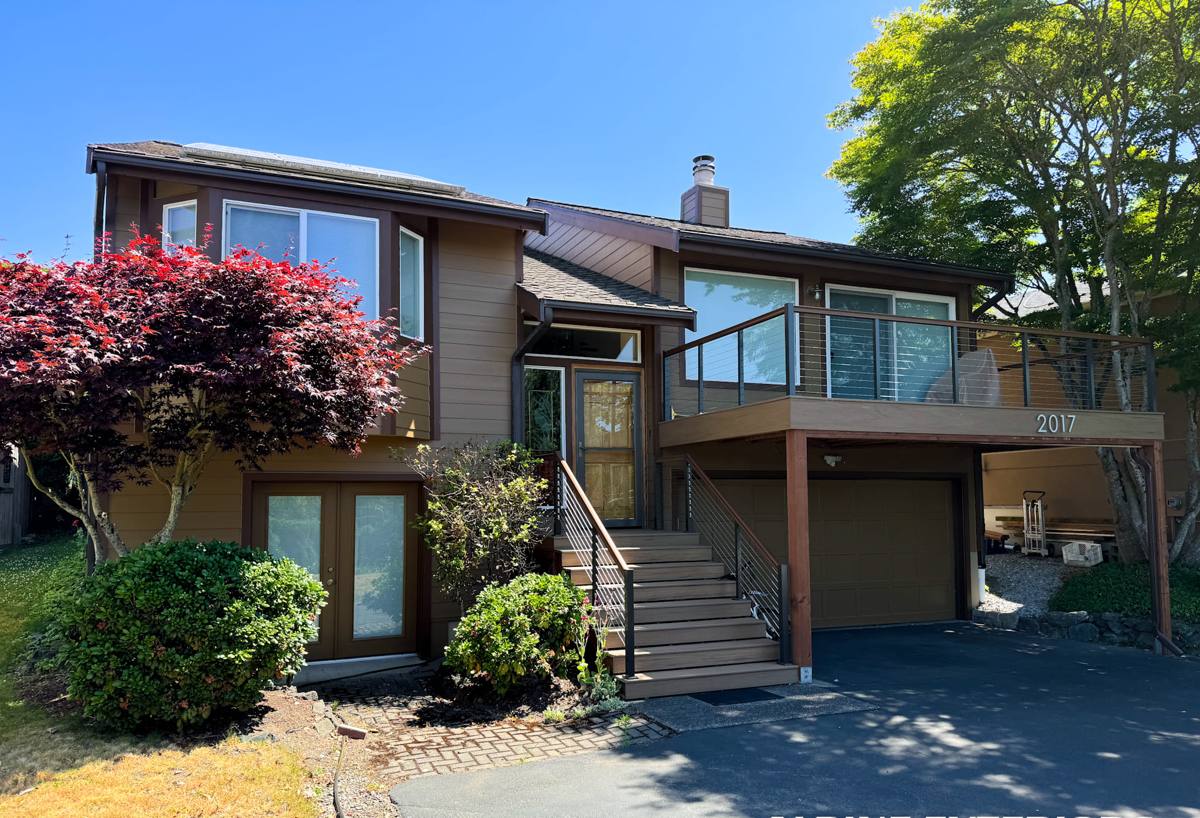
Why Mount Vernon Siding Takes a Beating
Salt Air and Moisture
Proximity to Puget Sound and the Skagit River delta means the air carries more salt and moisture than you'd find further inland. That combination accelerates corrosion on fasteners, trim flashing, and any exposed metal, and it keeps siding surfaces damp longer after a storm passes. Materials that aren't engineered for a marine climate age faster here than the manufacturer's brochure suggests.
Driving Rain and Wind-Driven Water
Skagit Valley storms don't just fall straight down — wind pushes rain sideways into laps, seams, and trim joints. Siding that relies on caulking alone to keep water out, rather than proper lap geometry and flashing, eventually lets water behind the cladding. Once that happens, the damage is usually happening inside the wall long before it shows up as a visible problem outside.
Moss, Algae, and a Long Wet Season
Shaded elevations, tree cover, and a wet season that stretches across much of the year give moss and algae plenty of time to establish themselves on siding surfaces. Beyond the cosmetic issue, moss holds moisture directly against the material, which is a slow but real threat to wood-based products and to any finish that isn't built to shed water and resist biological growth.
Common Siding Problems We Find on Mount Vernon Homes
- Moisture intrusion at seams and trim — water working behind siding through failed caulking or poor flashing detail, often invisible until sheathing is exposed.
- Warping, cupping, or swelling — common on wood-based and engineered wood siding products that have absorbed moisture repeatedly over multiple wet seasons.
- Delamination — layers of engineered siding separating at the edges, usually starting at cut ends or fastener penetrations that were never properly sealed.
- Moss and algae staining — persistent dark or green streaking on shaded walls and north-facing elevations.
- Cracked or failed caulk joints — a normal maintenance item that, left unaddressed, becomes a water entry point.
- Fastener corrosion and staining — rust streaks bleeding from nail heads, a sign the fastener wasn't rated for a marine environment.
- Impact damage — cracked or dented panels from storm debris, ladders, or yard equipment.
Signs You Need Siding Repair
- Soft or spongy spots when you press on the siding, especially near the bottom courses or below windows
- Visible gaps, cracks, or separation at seams and corner trim
- Paint or finish that's bubbling, peeling, or chalking unevenly in one area
- Persistent moss or algae growth that returns quickly after cleaning
- Warped, bowed, or wavy panels on one section of wall
- Musty smell or discoloration on interior walls that back up to exterior siding
- Higher-than-expected heating bills, which can point to moisture-compromised insulation behind damaged siding
Repair or Replace? How We Make That Call
Not every siding problem in Mount Vernon needs a full re-side, and we don't push a bigger job than a home actually needs. The decision comes down to a few honest factors we walk through with every homeowner before quoting anything.
| Factor | Favors Repair | Favors Replacement |
|---|---|---|
| Extent of damage | Isolated to one wall or a few panels | Spread across multiple elevations |
| Sheathing condition | Dry, sound wood behind the siding | Rot, soft spots, or mold in the sheathing |
| Material type | Product still manufactured or reasonably matched | Discontinued product, no reasonable color/profile match |
| Age of existing siding | Still within useful service life | Near or past its expected lifespan |
| Root cause | A localized, fixable water entry point | A systemic moisture or installation problem |
If we open a section of wall and find dry sheathing and an isolated problem, repair is usually the right call, and we'll say so. If we find rot, chronic moisture, or damage spread across the house, we'll explain why patching would just be a temporary fix — and give you a clear, honest picture of what full replacement would look like.
What a Correct Siding Repair Actually Involves
A repair that only addresses the visible surface tends to fail again within a season or two, especially in a climate this wet. A repair that holds up starts with understanding why the damage happened in the first place.
- Moisture check first. Before anything comes off the wall, we check for dampness in and around the damaged area, since that tells us how far the problem actually extends.
- Careful removal. Damaged siding, trim, or flashing comes off without tearing into sound material unnecessarily, and without damaging the water-resistive barrier underneath.
- Inspect what's behind it. Sheathing, framing, and the house wrap or building paper get a real look. If there's rot or mold, that gets addressed before any new siding goes back on — covering it up is not a repair.
- Fix the water path, not just the symptom. If a flashing detail or lap sequence was the actual cause, that gets corrected as part of the repair, not left in place to cause the same failure again.
- Match the replacement material properly. Profile, reveal, and finish need to match closely enough that the repair doesn't stand out, and the new material needs to be compatible with what's staying in place.
- Fasten and seal to spec. Corrosion-resistant fasteners, correct nailing patterns, and sealant only where the manufacturer calls for it — not as a substitute for proper lap and flashing work.
- Finish the job cleanly. Caulking, touch-up paint, or factory-finish matching so the repaired section blends in rather than becoming the obvious patch on the house.
Our Siding Repair Process in Mount Vernon
We keep the process straightforward because most homeowners just want a clear answer and a fair price, not a runaround.
- Inspection. We look at the damaged area and the surrounding siding, and check for moisture and underlying issues, not just the surface problem.
- Honest diagnosis. We tell you what we found, whether it's a straightforward repair or something bigger, and why.
- Clear estimate. A written quote before any work starts, with no pressure to upsell a repair into a full replacement unless the home actually needs it.
- The repair itself. Careful removal, correction of the underlying cause, and a properly matched, properly fastened repair.
- Cleanup and walkthrough. We clear debris and walk the finished repair with you before we consider the job done.
Why We Repair — and Replace — With James Hardie Fiber Cement
When a repair calls for new material, or when a home's damage points toward full replacement instead, we work exclusively with James Hardie fiber cement siding. We don't install vinyl, LP SmartSide, Cemplank, Allura, or primed wood products, and in a climate like Mount Vernon's, that's a deliberate standard, not a brand preference.
Fiber cement doesn't absorb and swell the way wood-based and engineered wood siding can after repeated wet seasons, and it's non-combustible, which matters as wildfire smoke seasons have become a more regular part of Pacific Northwest summers. Hardie's ColorPlus factory finish is baked on and warrantied against fading and chipping, which means a repaired section holds its color evenly against older Hardie siding — something that's much harder to achieve when matching a field-painted or engineered wood product years after the original installation. Hardie's HZ5 product line is specifically engineered for climates with high moisture exposure, which describes the Skagit Valley well.
For homeowners whose existing siding isn't Hardie, we're upfront that an exact material match isn't always possible on a partial repair, and we'll talk through the honest options — a close match, a full elevation replacement, or a phased path toward Hardie over time.
Why Hire a Crew That Already Works in Mount Vernon
Siding repair looks like a simple trade until you're dealing with a specific valley's weather patterns, drainage habits, and building stock. A crew that already works in Mount Vernon and the wider Anacortes and Skagit County area knows which elevations take the worst weather, which older product lines are common on local homes, and what correct flashing and water management actually looks like in a marine climate — not just what a general installation manual says. That local familiarity shows up in faster, more accurate diagnosis and repairs that are built for the weather this valley actually gets, not a generic version of it.
Caring for Your Siding After a Repair
- Rinse siding annually to keep moss, algae, and salt residue from building up, especially on shaded or north-facing walls
- Check caulking at trim, seams, and penetrations once a year and re-seal before small gaps become water entry points
- Keep gutters clear and downspouts directed away from the foundation so water isn't sheeting down or pooling against siding
- Trim back vegetation and tree limbs that keep walls shaded and damp longer than they need to be
- Watch the repaired area for the first couple of wet seasons to confirm the underlying cause was fully resolved
- Address any new soft spots, cracks, or staining promptly rather than waiting for the next dry stretch
If you're seeing warping, staining, soft spots, or failed seams on a Mount Vernon home, it's worth getting an honest look before the problem grows. We offer free, no-pressure estimates and will tell you plainly whether you're looking at a straightforward repair or something more — just fill out the form below to get started.