 Anacortes Siding
 Deck Repair Built for Mount Vernon's Climate
Mount Vernon sits inland from Anacortes along the Skagit River, but it shares the same weather pattern that wears down decks across Skagit County: long stretches of driving rain, damp air that never fully dries out between storms, and a moss season that can run from early fall through late spring. A deck here doesn't fail because it was built wrong. It fails because moisture finds the small gaps, seams, and fastener points that every deck has, and it keeps finding them for months at a time. Repair work in this area has to account for that reality, not just patch what's visible on the surface.
We work on decks throughout Mount Vernon and the surrounding Skagit County communities, and the damage we see is consistent enough that we can usually tell what's going on before we even get up on the structure. Soft boards near the house, rust streaks below fastener heads, green film building up in shaded corners — these are the fingerprints of a deck that's been fighting standing water and moss for a few seasons too long.
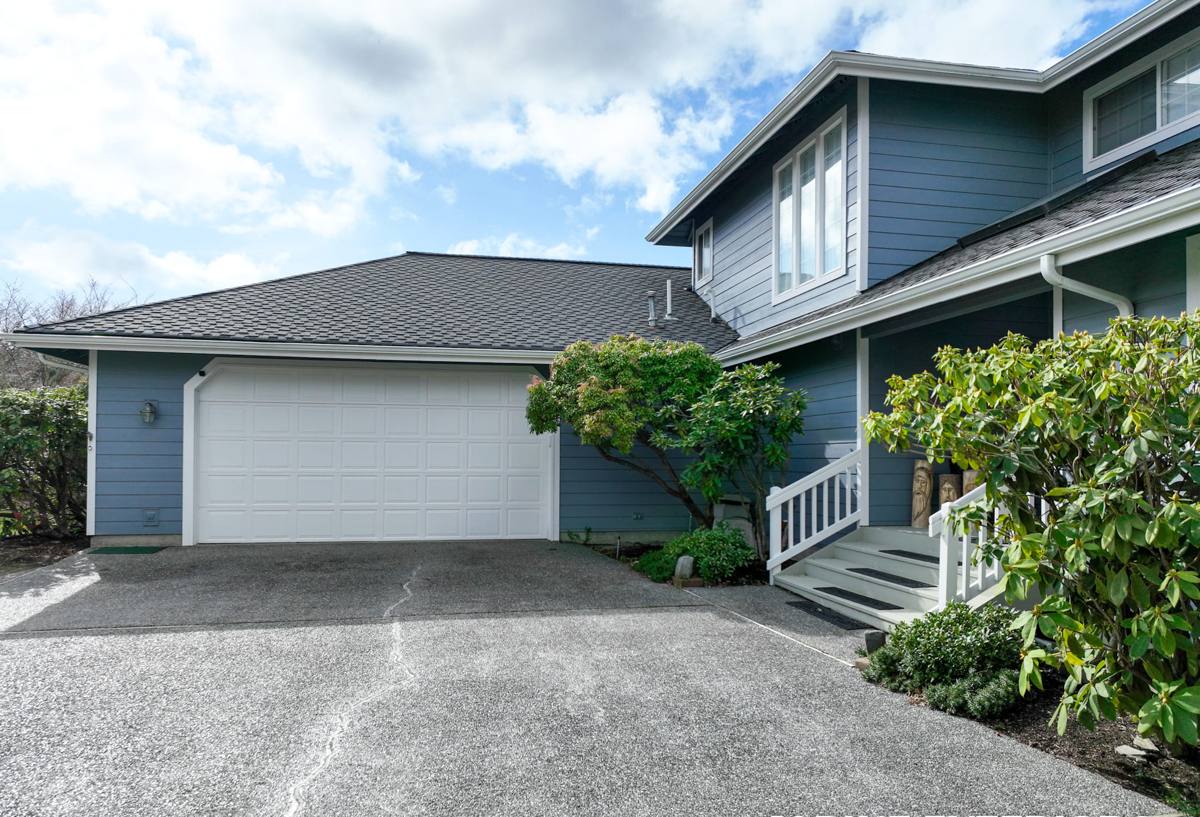
What Skagit County Weather Does to a Deck
Driving Rain and Standing Water
Unlike a light, straight-down rain, wind-driven rain gets pushed sideways into gaps between boards, under railings, and against the house where the deck ledger board attaches. That ledger connection is one of the most important structural points on any deck, and it's also one of the hardest to inspect without pulling boards. Repeated wetting at that joint, without enough drying time between storms, is the single biggest cause of hidden rot we find in this region.
Moss and Algae Growth
Shaded decks, or decks under trees, hold moisture longer and give moss a place to establish. Moss itself doesn't just sit on the surface — it holds water against the wood or composite decking underneath, which keeps that surface damp far longer than open, sun-exposed boards. Over a full moss season, that constant dampness softens wood fibers and can accelerate fastener corrosion underneath.
Fastener and Hardware Corrosion
Screws, joist hangers, and structural connectors that aren't rated for continuous wet exposure will corrode faster in this climate than the same hardware would in a drier region. Once a fastener starts rusting, it loses holding strength, and rust streaking down the board face is often the first visible sign that something below the surface needs attention.
Signs Your Mount Vernon Deck Needs Repair
- Boards that feel spongy, soft, or spring back slowly when you step on them
- Visible rust streaks running down from screw heads or nail holes
- Green or black film building up in corners, under railings, or on north-facing sections
- Gaps that have widened between boards, or boards that have cupped or crowned
- Railings or stair stringers that feel loose or flex when leaned on
- Any visible daylight or gap where the deck meets the house at the ledger board
- A musty smell coming from underneath the deck, especially after a stretch of rain
Any one of these on its own might just mean routine maintenance. Two or three together, especially near the ledger or in a low-light corner, usually means it's worth a closer look before the next wet season sets in.
What a Correct Repair Actually Involves
Structural Inspection First
Before we replace a single board, we check what's underneath it. Surface boards can look fine while the joists or ledger connection underneath are compromised — and replacing decking over a weak frame just means redoing the work in a year or two. A proper inspection includes checking the ledger flashing and attachment, probing joists for soft spots, and confirming that posts and footings are still sound.
Board-Level vs. Frame-Level Repair
Not every repair means tearing the whole deck apart. Isolated rot in a few boards, damaged stair treads, or a section of failed railing can often be addressed on its own. But if rot has reached the joists or the ledger connection, patching the surface without addressing the frame is a short-term fix that will need to be redone. We're upfront about which category a given repair falls into before we start.
Flashing and Drainage Details
A lot of deck rot in wet climates traces back to missing or failed flashing at the ledger board — the point where the deck meets the house. Correcting that detail, along with making sure water has somewhere to go instead of pooling against the house or between boards, is often more important to the deck's lifespan than the decking material itself.
Repair Scope Comparison
| Repair Type | Typical Cause | What's Involved |
|---|---|---|
| Board replacement | Localized rot, splitting, or storm damage | Remove and replace individual boards, match fasteners to existing hardware |
| Railing and stair repair | Loose connections, rot at posts, corroded hardware | Reinforce or rebuild affected sections, upgrade fasteners where needed |
| Ledger and flashing correction | Water intrusion at the house connection | Remove affected boards, inspect and correct flashing, reattach per code |
| Joist and framing repair | Long-term moisture exposure, sistering old lumber | Sister or replace damaged joists, confirm post and footing condition |
| Full resurfacing | Widespread board wear across an otherwise sound frame | Replace all decking over the existing structural frame |
Wood vs. Composite: What We Recommend and Why
Homeowners in Mount Vernon often ask whether to repair with matching wood or switch to composite decking during a repair. There's no universal right answer, but there are honest trade-offs.
Wood decking, when well-maintained with regular sealing, blends seamlessly with existing boards and costs less upfront. But in a climate with this much sustained moisture, wood needs consistent upkeep — cleaning, sealing, and moss removal — to avoid ending up back in the same situation in a few years. Composite decking costs more initially and can be harder to match if you're only replacing a section, but it doesn't absorb water the way wood does and needs far less maintenance to resist moss and rot over time. For a full resurfacing job, we'll walk through both options against your budget and how much upkeep you actually want to commit to. For a small patch repair, matching the existing material is usually the more practical call.
Our Repair Process
1. On-Site Assessment
We walk the deck with you, probe suspect areas, and check underneath where access allows. You'll get a straight answer about whether this is a board-level fix or something that reaches the frame.
2. Written Scope and Estimate
Before any work starts, you get a clear description of what's being repaired, what materials and fasteners will be used, and a cost range — no vague verbal quotes.
3. Repair Work
We match fasteners and hardware to the exposure conditions here, not just whatever's standard elsewhere, and we correct flashing and drainage issues we find along the way rather than working around them.
4. Final Walkthrough
We check the repaired area with you before we consider the job done, including pointing out anything you should keep an eye on going forward.
Timing Repairs Around Skagit County's Wet Season
Deck repair can be done for most of the year in this region, but there are practical reasons to act before the heaviest rains set in each fall. Rot doesn't pause over the winter — it keeps progressing, and a small area of soft wood in October can be a much larger repair by spring if it's left through a full wet season. Late summer and early fall are often the best window to catch problems before they compound, but if you're noticing signs of damage now, it's worth having it looked at regardless of season rather than waiting.
Why Local Experience with Mount Vernon Decks Matters
A repair crew that works Skagit County regularly already knows which details tend to fail here — the ledger flashing, the shaded corners where moss takes hold first, the fastener choices that hold up against this level of sustained moisture. That's not something you can fully substitute with a generic checklist. It means fewer surprises during the repair, and a better chance the fix actually holds through the next few wet seasons instead of needing to be revisited.
If you're seeing soft boards, rust stains, or moss buildup on your Mount Vernon deck, we're glad to take a look and give you a straight assessment of what it needs. Reach out for a free, no-pressure estimate using the form below.