 Anacortes Siding
 Windows Built for the Ship Harbor Microclimate
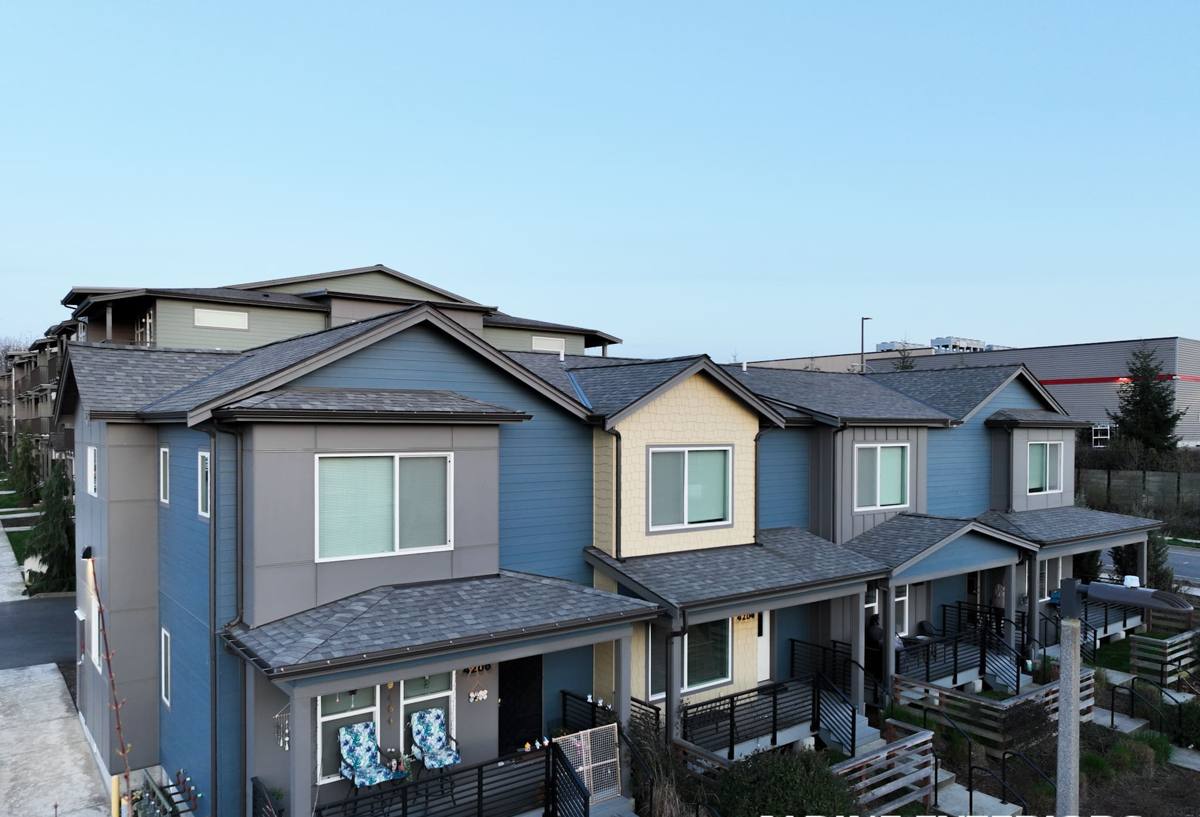
Ship Harbor sits close enough to the water that homes here take a different kind of weather beating than houses just a few miles inland. Salt-laden air moves off Rosario Strait and the harbor itself, wind-driven rain hits window walls at an angle instead of straight down, and the damp, low-light stretch of fall through spring keeps everything around a house wet longer than it should be. Windows in this setting aren't just about comfort and energy bills, though those matter. They're the first line of defense against moisture intrusion, frame corrosion, and the slow rot that shows up years later behind trim nobody's looked at since installation day.
When we talk about "energy-efficient windows" for a Ship Harbor home, we mean something more specific than a sticker on the glass. We mean a window and installation system chosen and installed to handle salt exposure, wind-driven rain, and near-constant seasonal dampness without failing early. A window that's efficient on paper but poorly flashed will leak before it ever pays back its energy savings.
What Salt Air and Driving Rain Actually Do to Windows
Salt and Corrosion
Airborne salt settles on everything near the water, including window hardware, screen frames, and any exposed fasteners. Over years, that accelerates corrosion on lower-grade hinges, cranks, and cladding fasteners. It's rarely dramatic — more a slow degradation that shows up as stiff hardware, streaking, or pitting on metal trim that a homeowner a mile inland would never see.
Wind-Driven Rain
Anacortes gets plenty of straight-down rain, but Ship Harbor's exposure means a fair amount of it arrives sideways during winter storms. That changes what "waterproof" needs to mean. A window can be rated for a certain amount of static water resistance and still take on water at the sill or head flashing when rain is being pushed horizontally by wind. Installation detailing — not just the window unit itself — is what actually stops that.
The Long Moss Season
Skagit County's wet season runs long, and anywhere shaded or north-facing tends to grow moss and algae on siding, trim, and window sills. That growth holds moisture against the building longer than bare material would, which is exactly the condition that rots wood trim and stains vinyl or fiber cement cladding around a window opening. It's a slow problem, which is why it's often ignored until the trim is already soft.
What a Correct Window Job Involves Here
A window swap that only addresses the glass and frame, and ignores the opening around it, is a job that will need to be redone. For Ship Harbor homes specifically, we treat these as non-negotiable steps:
- Full removal of old flashing and inspection of the sheathing and framing underneath for hidden water damage before anything new goes in
- Correct flashing sequence — sill pan, jamb flashing, and head flashing installed in the right order so water is always directed outward and down, never trapped
- Weather-resistant barrier integration so the window's flashing ties properly into the existing house wrap or building paper, not just taped over it
- Marine-grade or corrosion-resistant fasteners and hardware appropriate for near-water exposure
- Sealant chosen for exterior, UV, and salt exposure — not a generic caulk that will crack and separate within a couple seasons
- Sill design that sheds water fully and doesn't create a flat spot where standing water or moss can take hold
Skip any one of these and the window itself can be excellent while the installation still fails. Most of the water damage we find behind windows in coastal Skagit County homes traces back to flashing and sequencing, not the window unit.
Choosing the Right Window for a Ship Harbor Home
Frame Material
Vinyl, fiberglass, and wood-clad windows all show up in this area, and each has real trade-offs near salt air:
| Frame Type | Salt Air Behavior | Maintenance | Typical Trade-Off |
|---|---|---|---|
| Vinyl | Doesn't corrode; UV can chalk over time | Low | Less rigid over larger spans |
| Fiberglass | Very stable, resists corrosion and warping | Low | Higher upfront cost |
| Wood-clad (exterior clad) | Cladding protects wood, but any breach exposes wood to rot risk | Moderate | Best interior look, most installation-sensitive |
| Aluminum | Prone to corrosion and pitting in salt air without upgraded coatings | Higher | We generally steer clients away from bare aluminum this close to the water |
We don't push one brand or material on every job — a wood-clad window can be the right call on a home where the look matters and the detailing is done properly, while a fiberglass or vinyl unit might be the more sensible choice on a rental or a home where long-term, low-maintenance performance is the priority. What we won't do is install a frame material that we know is a poor match for a specific exposure just because it's cheaper or faster.
Glass Package
For this climate, we typically recommend double-pane, low-E glass as the baseline, with argon gas fill as a worthwhile upgrade for the added insulating value. Triple-pane is available and does add performance, but the marginal energy gain often doesn't justify the cost difference for most Ship Harbor homes — we'll walk through that math honestly rather than upsell it by default.
Energy Performance in a Coastal, Overcast Climate
Anacortes doesn't get brutal winter cold the way inland areas do, but it does get long stretches of damp, gray, 40-degree weather where a home's heating system runs steadily for days at a time. Old, leaky, single-pane or early-generation double-pane windows lose heat continuously through that stretch, and they also let in cold drafts that make a house feel colder than the thermostat says. Energy-efficient replacements address both:
- Lower U-factor glass reduces steady heat loss through the glass and frame
- Proper air sealing at installation stops draft infiltration, which affects comfort as much as the bill
- Low-E coatings reduce heat loss in winter and unwanted solar gain on the rare bright days
The energy savings are real, but for a Ship Harbor home the moisture and durability performance of the installation usually matters just as much to the home's long-term health as the utility bill savings.
Our Process for Ship Harbor Window Jobs
1. On-Site Assessment
We look at existing window condition, sill and trim condition, any visible moss or staining, and the specific exposure of each elevation of the house — a window facing the water gets different consideration than one on a sheltered side.
2. Product Recommendation
We walk through frame material and glass package options honestly, including cost, maintenance, and expected performance for that specific home's exposure — not a one-size answer.
3. Removal and Inspection
Old units come out carefully so we can inspect the framing and sheathing underneath before anything new is installed. If we find hidden rot or water damage, we flag it and address it before the new window goes in — installing a new window over a compromised opening just hides the problem temporarily.
4. Correct Installation and Flashing
Sill pan, flashing sequence, air sealing, and sealant application follow the same standard on every job, regardless of window brand or price point.
5. Final Check and Cleanup
We check operation, seal lines, and trim finish before we consider the job done, and we clean up the work area fully.
Why Local Experience with Ship Harbor Homes Matters
A crew that mostly works dry, inland neighborhoods can install a technically fine window and still get the flashing detail wrong for a coastal exposure, because they haven't had to solve for wind-driven rain and salt exposure on a regular basis. Working in and around Anacortes and Skagit County means we've seen how these specific conditions play out over years, not just at the moment of installation — which sills hold up, which sealants actually last through a wet winter, and which frame materials are worth the extra cost near the water versus a few miles inland. That kind of pattern recognition only comes from doing the work here repeatedly.
Signs It's Time to Consider Replacement
- Visible condensation or fogging between panes, indicating a failed seal
- Drafts or cold spots near the window even when it's fully closed
- Soft or discolored trim and sill material around the frame
- Difficulty opening, closing, or locking the window
- Visible moss, algae, or persistent staining on or around the sill
- Noticeably higher heating costs with no other explanation
Any one of these on its own isn't necessarily urgent, but a home with several of them, especially near the water, is worth a professional look before small issues become structural ones.
Get a Straight Answer for Your Home
Every Ship Harbor home handles wind, rain, and salt exposure a little differently depending on orientation, age, and how it was originally built. If you're noticing drafts, moisture, or aging windows and want an honest read on what's actually needed, we're happy to take a look and give you a straightforward estimate — no pressure, no upsell. Use the form below to request your free estimate.