 Anacortes Siding
 Windows Built for Skyline's Exposure
Skyline sits up on Anacortes' west side, close enough to Rosario Strait that homes here catch weather the rest of Skagit County doesn't see as directly — steady wind, salt-laden air, and rain that comes in sideways more often than straight down. Windows in this part of town do more work than windows in a sheltered inland neighborhood, and they show wear differently too. We've replaced and installed custom windows across Skyline for years, and the same handful of problems come up again and again: failed seals from wind-driven rain, corroded hardware from salt exposure, and frames that never quite dry out during the long gray stretch from November through March.
A "custom" window job in Skyline usually isn't about unusual shapes or oversized glass, though we do plenty of that too. More often it's about getting the fit, flashing, and materials right for a specific wall that takes more weather than most — a west-facing bedroom, a view window over a great room, a bank of windows on an elevated lot with nothing to block the wind. Custom means built and installed for that exact opening, not a stock size forced into place.
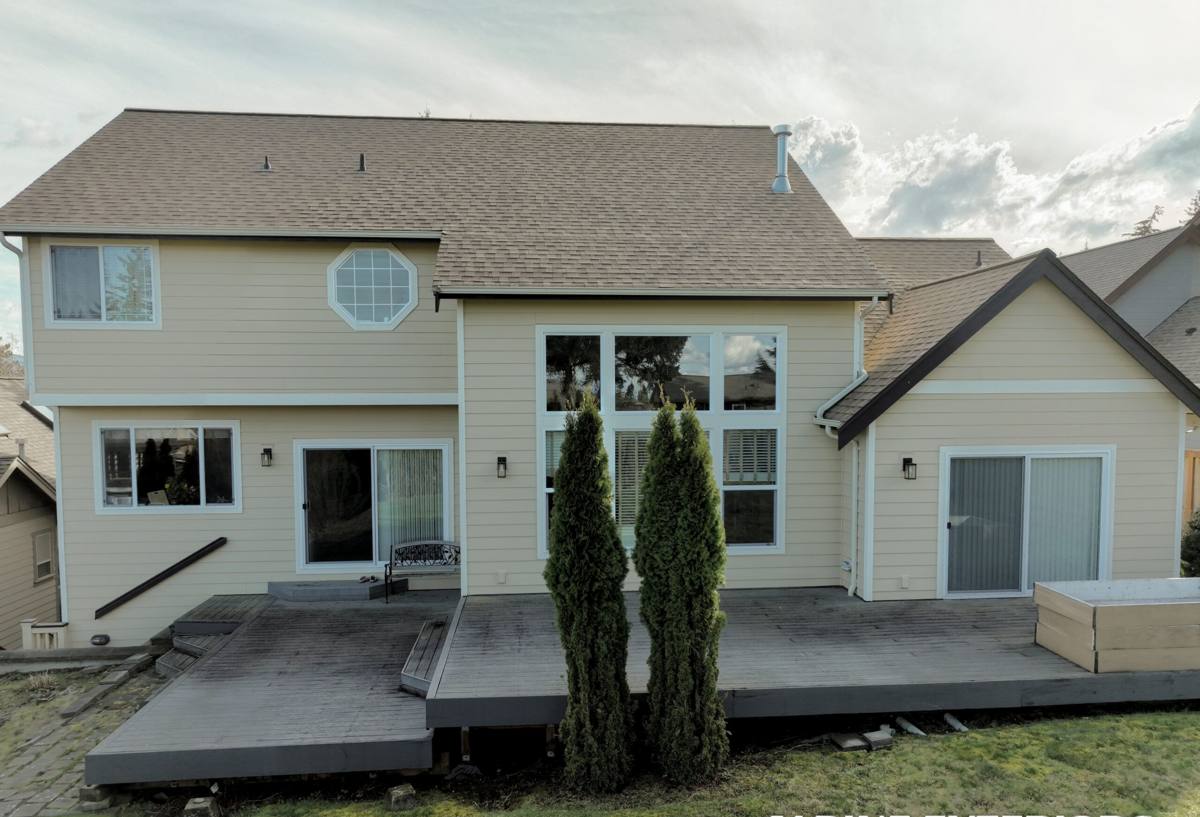
What the Climate Actually Does to a Window
Wind-Driven Rain
Ordinary rain falls straight down and sheds off a roof and siding without much trouble. Wind-driven rain off the Strait hits window walls at an angle, which means it's testing your flashing and sealant, not just your shingles. A window that's caulked well but flashed poorly will look fine for a year or two, then start showing water staining below the sill or soft trim as moisture works its way behind the frame.
Salt Air and Hardware
Salt in the air accelerates corrosion on anything metal — window locks, hinges, screen frames, and especially lower-grade aluminum components. On homes closer to the water, we see hardware that's pitted or seized up well before the glass or frame itself has any issues. It's one of the reasons hardware quality matters as much as glass quality when we're specifying a window for a Skyline home.
Moss Season and Moisture Cycling
Anacortes' moss season isn't just a roof problem. The same damp, low-light stretch that grows moss on north-facing siding also keeps window sills and trim wet longer between rain events. Wood trim that never fully dries out is where rot starts, and it's usually invisible until you push a screwdriver into it. Correct flashing and drainage matter more here than in a drier climate because the window gets far less time to dry between soakings.
Signs Your Current Windows Are Falling Behind
- Fogging or a permanent haze between the panes — the seal on the insulated glass unit has failed
- Visible daylight or a draft around the frame when it's windy
- Soft or discolored trim and sill boards, especially on west or north walls
- Locks, cranks, or hardware that stick, feel gritty, or have visible corrosion
- Condensation forming on the inside of the glass regularly during winter
- A noticeable jump in heating costs with no other explanation
Any one of these can be a minor fix. Two or three together usually mean the window's service life is winding down and replacement will cost less over time than repeated repairs.
What a Correct Installation Actually Involves
The window itself is maybe half the job. The other half is everything around it — the part that determines whether the window stays weathertight for the next 20 years or starts leaking in three.
- Remove and inspect. Old windows come out carefully so we can see the condition of the framing and sheathing underneath before anything new goes in.
- Address hidden damage. Any rot, soft sheathing, or prior water intrusion gets repaired before the new window goes in — installing a new window over a compromised opening just hides the problem for a while.
- Flash the opening. Proper flashing directs any water that gets past the window down and out, not into the wall cavity. This step matters more in wind-driven rain than almost anything else on the list.
- Set and shim the window. The unit gets leveled, plumbed, and shimmed so it operates smoothly and seals evenly on all four sides.
- Seal correctly. Backer rod and the right sealant for the material — not just a bead of caulk around the trim — closes the opening without trapping moisture where it shouldn't be.
- Finish and clean up. Interior and exterior trim get finished to match, and the site gets cleaned before we call it done.
Choosing the Right Frame Material
Frame material is one of the bigger decisions on a Skyline job because of the salt air and moisture exposure. There's no single right answer for every home — it depends on the wall's exposure, your maintenance preferences, and the look you're after.
| Material | Salt Air Performance | Maintenance | Best For |
|---|---|---|---|
| Vinyl | Good — won't corrode or rot | Low | Most Skyline homes, budget-conscious replacements |
| Fiberglass | Excellent — very stable, resists warping | Low | Exposed west or water-facing walls |
| Wood-clad | Good on exterior, needs interior care | Moderate | Homes wanting a traditional wood interior look |
| Aluminum | Fair — prone to corrosion near salt air unless marine-grade | Moderate | Large view openings where a narrow frame profile matters |
We're selective about which aluminum products we'll install on exposed Skyline walls. Standard aluminum frames can perform fine in sheltered locations, but on a west-facing wall taking direct salt-laden wind, the corrosion risk and the added maintenance burden usually outweigh the narrow-sightline benefit. If a homeowner wants that look, we'll talk through marine-grade options and be upfront about the tradeoffs rather than just installing whatever's cheapest and hoping it holds up.
Glass and Performance Options
Beyond frame material, a few glass choices make a real difference in this climate:
Low-E Coatings
Low-E glass reflects heat rather than letting it pass through, which helps in both directions — keeping summer heat gain down and winter heat loss down. It's close to standard on any quality replacement window now.
Double vs. Triple Pane
Double-pane is the standard choice for most Anacortes homes and performs well. Triple-pane adds meaningful sound and thermal performance but costs more and adds weight — worth considering on a large west-facing window that takes the brunt of the weather, less necessary on a smaller, sheltered opening.
Condensation Resistance
Given how much moisture sits in the air during moss season, a window's condensation resistance rating is worth asking about. A poorly rated window will fog on the inside during cold snaps even if the seal itself is fine.
What Drives Cost on a Skyline Window Project
| Factor | Why It Matters Here |
|---|---|
| Frame material | Fiberglass and quality vinyl cost more upfront but hold up better against salt air over time |
| Number and size of openings | Larger view windows and multi-window walls common in Skyline add cost and complexity |
| Extent of hidden repair | Rot or water damage found during removal adds labor before the new window can go in |
| Access and elevation | Upper-story or hard-to-reach openings on sloped Skyline lots can require more setup |
| Trim and finish work | Matching existing interior trim or upgrading exterior trim material affects the finish cost |
We won't quote a job sight unseen — a real number depends on what we find at your home, not a generic per-window rate pulled off a website.
Why a Crew That Already Works Skyline Matters
Skyline isn't a typical flat inland neighborhood. Lot grading, wind exposure, and how close a given wall sits to open water vary block to block, and that affects how we flash and seal a window even before we talk about which product to use. A crew that's worked the area knows which walls need extra attention and doesn't have to relearn that on your dime. We're a Skagit County contractor working Anacortes neighborhoods regularly, not a crew driving in once and guessing at local conditions.
Before You Hire — What to Ask
- Will you inspect and repair any rot or water damage found during removal, and how is that priced?
- What flashing method do you use, and is it appropriate for a wind-driven rain exposure?
- What's the warranty on the window itself versus the installation labor?
- Can you explain the difference between the frame materials you're quoting, not just the price?
- Are you licensed and insured to work in Washington, and can you provide that documentation?
A contractor who answers these plainly, without dodging the maintenance and tradeoff questions, is usually the one who'll still be around if something needs attention down the road.
If your Skyline home has windows showing their age — fogged glass, drafts, sticky hardware, or trim that's starting to soften — we're happy to take a look and give you a straight, no-pressure estimate. Use the form below to get started.