 Anacortes Siding
 New Roof Installation in Mount Vernon: Built for Skagit County Weather
A roof in Mount Vernon does a different job than a roof in a drier climate. It isn't just shedding the occasional storm — it's holding up under months of low-angle rain, shaded roof planes that never fully dry out, and air that carries salt and moisture off Puget Sound and up through the Skagit Valley. Over years, that combination is what actually wears a roof out, more than any single big storm.
When a Mount Vernon roof reaches the end of its life, a straight tear-off and rebuild done right the first time is worth far more than a patch-and-hope repair. This page covers what that job actually involves here, what materials make sense for this climate, and what to expect from a crew that works this area regularly rather than passing through once.
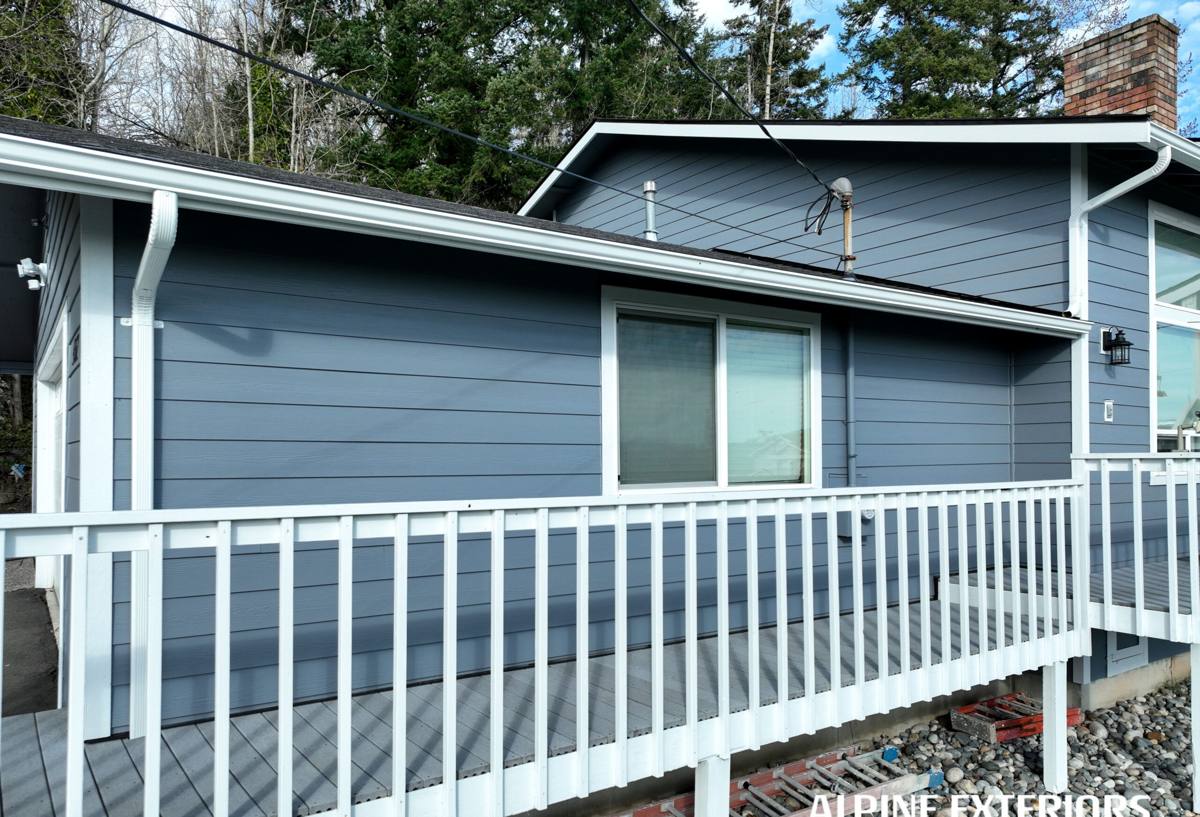
What Driving Rain, Moss, and Salt Air Do to a Roof Over Time
None of these factors is dramatic on its own. The damage is cumulative, and it happens in places you don't look at every day.
Driving Rain
Wind-driven rain doesn't just fall straight down — it gets pushed sideways under shingle tabs, around vent boots, and into any gap in flashing that a calmer climate could get away with ignoring. This is why underlayment quality, flashing detail, and how a roof is laced together at valleys and penetrations matter more here than the shingle brand printed on the wrapper.
Moss and Trapped Moisture
Skagit County's tree cover and long stretches of overcast, damp weather give moss a long growing season on north-facing and shaded roof slopes. Moss holds water against the roofing surface, works into shingle laps, and can lift edges over time. Left unaddressed, it shortens the life of an otherwise sound roof by years.
Salt-Laden Air
Being close to Puget Sound and the Salish Sea means the air carrying inland on weather systems isn't just wet — it's mildly corrosive. Exposed metal fasteners, flashing, and vent components take that exposure the hardest, which is why the grade and finish of the metal used on a roof matters as much as the shingle itself.
Signs a Mount Vernon Home Needs Replacement, Not Another Repair
Not every roof problem means a full replacement. But a few signs usually mean patching is just delaying a bigger job:
- Granule loss heavy enough that you're finding grit in gutters and downspouts every season
- Shingles that are cupping, curling, or cracking across multiple roof planes, not just one spot
- Soft or spongy decking felt underfoot in the attic, or daylight visible through the roof boards
- Repeated leaks in different locations after past patch jobs
- Moss or algae staining that keeps returning within a season or two of cleaning
- A roof at or past the manufacturer's expected service life for this climate, especially if it was installed with minimal underlayment or flashing detail
Roofing Materials That Hold Up in This Climate
There's no single "best" roofing material for every home — it depends on roof pitch, budget, and how long you want to go before thinking about the roof again. Here's how the common options actually perform under Skagit County conditions:
| Material | How It Handles Moss & Moisture | Typical Service Life | Maintenance Notes |
|---|---|---|---|
| Architectural (laminate) asphalt shingles | Good, especially with zinc/copper strips at the ridge to slow moss regrowth | 25–30+ years with proper install and airflow | Benefits from periodic gentle cleaning on shaded slopes |
| Standard 3-tab asphalt shingles | Fair — thinner profile means less resistance to lifting and algae staining | 15–20 years | More prone to edge lift under wind-driven rain over time |
| Standing seam metal | Excellent — sheds water and moss has little to grip; corrosion-resistant coatings matter here | 40–50+ years | Low ongoing maintenance; fastener and coating quality is what to verify |
| Wood shake | Poor without significant upkeep — retains moisture and is a common moss host | Varies widely with maintenance | Requires regular treatment and cleaning to avoid rot in this climate |
Our standard recommendation for most Mount Vernon homes is a quality architectural shingle system or a standing seam metal roof, both installed with full synthetic underlayment and proper ridge and valley ventilation. We steer away from lower-grade shake and minimal-underlayment builds on this coast not because a product is inherently bad, but because the maintenance burden and moisture risk they carry don't match what this climate demands of a roof meant to last decades.
What a Correct New Roof Installation Actually Involves
Tear-Off and Deck Inspection
A proper replacement starts with a full tear-off down to the decking — not a layover. That's the only way to actually see the plywood or plank decking underneath and catch soft spots, rot, or old damage before they're sealed under a new roof for the next 20-plus years.
Underlayment and Ice/Water Protection
Synthetic underlayment across the full roof, with self-adhering ice-and-water membrane at eaves, valleys, and around every penetration, is what actually stops wind-driven rain from finding its way under the shingles. This layer does more day-to-day work than most homeowners realize.
Flashing
Step flashing at walls, counter-flashing at chimneys, and properly lapped valley flashing are where most roof leaks in this region actually originate — not from the shingle field itself. Reusing old, corroded flashing to save time is a shortcut that shows up as a leak later.
Ventilation
Balanced intake and exhaust ventilation keeps the underside of the decking dry and helps prevent the moisture buildup that leads to rot and encourages moss to take hold from underneath as well as above.
Fastening and Wind Rating
Correct nail placement and pattern — not staples, not overdriven or underdriven nails — is what keeps a roof watertight and rated for wind under the kind of storms that move through the valley.
Our Process, Start to Finish
- On-site inspection and estimate. We walk the roof, check the attic and decking where accessible, and give you a written scope — not a verbal ballpark.
- Material selection. We go over the tradeoffs for your roof's pitch, shade exposure, and budget so you're picking based on facts, not a sales pitch.
- Permitting. We handle the local permit paperwork so you don't have to chase it down yourself.
- Tear-off and disposal. Old roofing is stripped, hauled, and disposed of properly, with the deck inspected before anything new goes down.
- Installation. Underlayment, flashing, ventilation, and roofing material go in following manufacturer specs and the details this climate actually requires.
- Site cleanup. Yard and gutters are cleared of debris and swept for stray nails before we consider the job done.
- Final walkthrough. We go over the finished roof with you and answer questions before closing out the job.
Why a Local Anacortes Crew That Works Mount Vernon Matters
Roofing crews that only pass through an area once tend to build to a generic spec. A crew based in Anacortes and working across Skagit County day in and day out has already seen how roofs here actually fail — which slopes hold moss the longest, where wind-driven rain finds gaps, and which flashing details hold up against salt-laden air over a decade rather than just looking fine at handoff.
That local pattern recognition doesn't show up on a spec sheet, but it shows up in fewer callbacks and a roof that's still doing its job when the next big Pacific storm system rolls through the valley.
Before You Hire: What to Verify
- Current Washington State contractor license and liability insurance, confirmed directly rather than taken on faith
- A written, itemized estimate — not just a total price with no breakdown of materials and labor
- Clarity on who pulls the permit and handles inspection
- A specific plan for decking repair if rot or soft spots are found, agreed on before work starts
- Manufacturer warranty terms explained in writing, including what voids them
- A defined cleanup and nail-sweep process included in the scope, not billed as an extra
What Affects the Cost of a Mount Vernon Roof Replacement
| Factor | Why It Matters | Typical Cost Impact |
|---|---|---|
| Roof size and number of planes | More square footage and more valleys/hips mean more material and labor time | Moderate to significant |
| Roof pitch and access | Steep or hard-to-access roofs require more safety setup and slow the work | Moderate |
| Layers being removed | Tearing off multiple old layers takes longer than a single-layer tear-off | Moderate |
| Decking condition | Rotted or soft decking found during tear-off needs replacement before roofing goes on | Variable, confirmed once decking is exposed |
| Material choice | Standard shingles, architectural shingles, and metal all sit at different price points | Low to significant, depending on material |
| Ventilation and flashing upgrades | Bringing an older roof system up to correct ventilation and flashing standards | Low to moderate |
We won't give you a number over the phone with no inspection — too much of the real cost depends on what's actually under the old roofing once it comes off. What we will give you is a written estimate that spells out exactly what's included, so there are no surprises partway through the job.
Get a Free Estimate
If your Mount Vernon home is due for a new roof, we're happy to come take a look, walk you through what we see, and put together a straightforward, no-pressure estimate — no obligation attached. Use the form below to get started.