 Anacortes Siding
 Why Ship Harbor Siding Takes More Punishment Than Most
Homes near Ship Harbor sit close to the water on Fidalgo Island, which means siding here deals with a combination most inland Skagit County houses never see: salt-laden air coming off the strait, wind-driven rain that hits walls sideways instead of falling straight down, and long stretches of shaded, damp weather that keep painted and wood-based products wet far longer than the label ever accounts for. Add in the tree cover common to lots in this part of Anacortes, and you get a moss and algae season that can run most of the year on north- and west-facing walls.
None of that is unusual for the Pacific Northwest coast. What is unusual is how many siding products are marketed as "weatherproof" without ever being tested against this specific combination of salt exposure, wind-driven moisture, and shade. We install James Hardie fiber cement almost exclusively because it's one of the few products engineered with maritime and high-moisture climates in mind, not just rain in general.
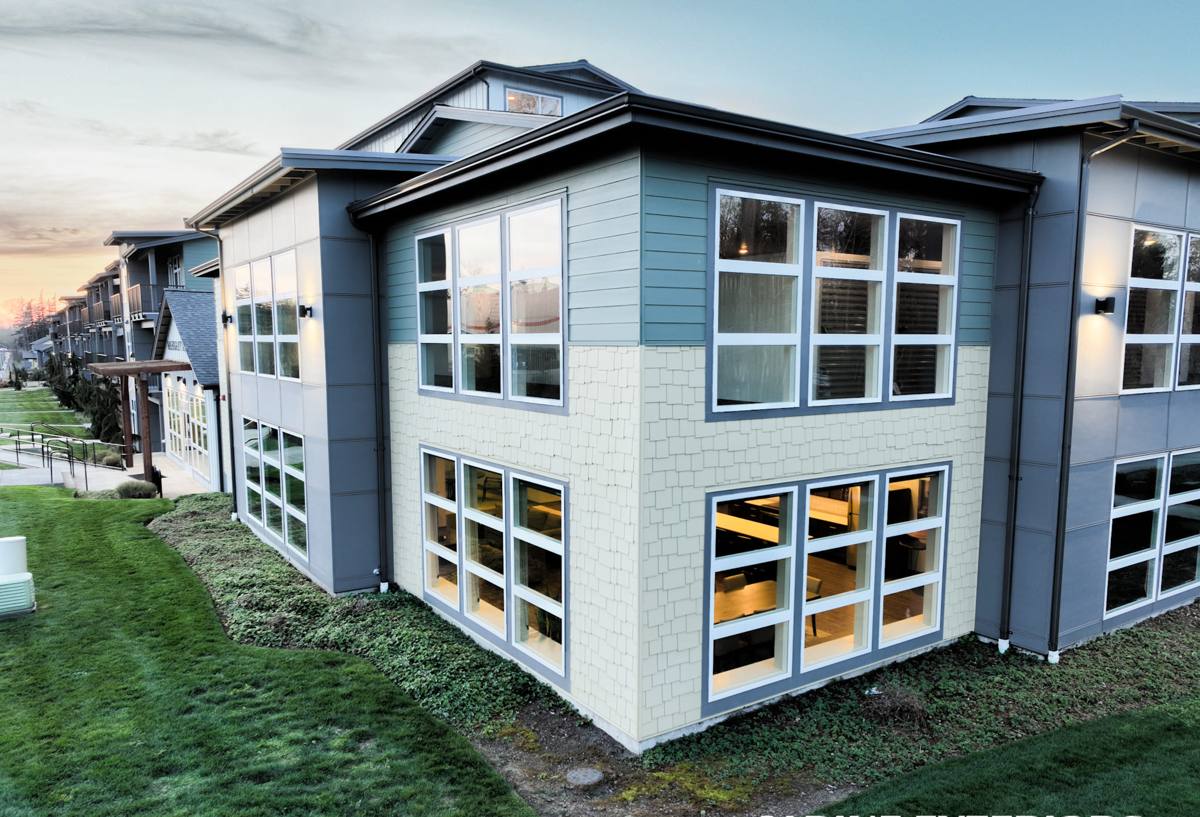
What Salt Air and Driving Rain Actually Do to a Wall
Salt air is corrosive to metal fasteners, flashing, and trim well before it does anything visible to the siding face itself. Over years, cheap or improperly rated fasteners can corrode at the head, staining the siding and eventually losing their grip. Wind-driven rain is a separate problem: it doesn't just wet the surface, it gets pushed up under laps, around penetrations, and into any gap that wasn't sealed or flashed correctly. On a wall that isn't detailed for that kind of exposure, water finds its way behind the cladding, and that's where real damage happens — rot in sheathing, mold in wall cavities, and siding that fails from the back before it ever looks bad from the street.
Moss and algae are more of a cosmetic and maintenance issue than a structural one, but they matter here because Ship Harbor's tree cover and marine humidity keep shaded siding damp for long stretches. Products that rely on a painted or coated wood substrate can trap that moisture against the wood, accelerating rot underneath a surface that still looks fine. Fiber cement doesn't have that failure mode because there's no wood substrate to trap moisture against.
Why We Only Install James Hardie — Not Vinyl, LP SmartSide, or Other Fiber Cement Brands
We get asked why we don't offer more options. The honest answer is that we've standardized on one product because it's the one we trust to hold up on this coastline without callbacks. Vinyl siding can warp and fade in direct sun and doesn't hold up well to the kind of wind gusts that come off open water — it can also trap moisture behind it if not installed with proper drainage, which is a real problem in a climate this wet. Engineered wood products like LP SmartSide use a wood-strand substrate that, no matter how well it's treated, is still wood — it can swell, delaminate at cut edges, or take on moisture damage if the factory coating is ever compromised, which is a bigger risk in a climate where siding rarely gets a chance to fully dry out.
Other fiber cement brands exist, and some are reasonable products. We standardized on James Hardie specifically because of its ColorPlus factory finish (which resists the fading and touch-up mismatches that come with field-painted siding), its HZ5 formulation engineered for wetter, harsher climates, and a warranty structure that's been consistent and transferable for homeowners who sell. That combination is hard to beat for a house that's going to spend its life a short walk from saltwater.
What We're Not Saying
We're not claiming other products are junk. Vinyl and engineered wood both have their place, and plenty of installers do good work with them. Our position is narrower: on this stretch of coastline, with this much salt exposure and shade, we don't think they're the right long-term bet, so we don't install them.
What Correct Fiber Cement Installation Actually Involves
Fiber cement siding is only as good as the wall assembly behind it. A rushed install can fail in this climate even with a premium product. Here's what we consider non-negotiable on every Ship Harbor project:
- A drainage plane (weather-resistive barrier) installed correctly, lapped shingle-style so water sheds outward, not into seams
- A rainscreen gap or furring strategy where the wall assembly calls for it, so any moisture that does get behind the siding can drain and dry instead of sitting against sheathing
- Corrosion-resistant, siding-rated fasteners driven at the correct spacing and depth — not overdriven, which cracks the board's edge and creates a moisture entry point
- Proper clearance at grade, decks, and roof lines (Hardie specifies minimum gaps for a reason — closing that gap traps water against the bottom edge)
- Flashing at every window, door, and penetration, integrated with the weather barrier rather than just caulked over the top
- Factory-cut and factory-primed edges kept intact wherever possible, with any field cuts sealed per manufacturer spec
Caulk gets a lot of blame for siding failures, but in most cases the caulk was asked to do a flashing detail's job. Proper flashing and lapping shed water before it ever reaches a joint; caulk is a backup, not the primary defense. This is the detail that separates a fiber cement job that lasts thirty-plus years from one that needs rework in five.
Picking the Right Hardie Product Line for This Location
James Hardie makes several product lines, and the right choice for a Ship Harbor home isn't always the same as what's standard for an inland lot.
| Product | Best Use Near Ship Harbor | Why |
|---|---|---|
| HardiePlank lap siding, HZ5 | Most walls, especially west- and water-facing exposures | HZ5 formulation is engineered for wetter, harsher climate zones like the Pacific Northwest coast |
| HardiePanel vertical siding | Accent walls, gables, modern facades | Fewer horizontal laps means fewer potential water entry points on high-exposure walls |
| HardieTrim boards | Corners, window and door surrounds, fascia | Matches the siding's moisture and salt resistance instead of mixing in a wood trim that ages differently |
| HardieSoffit | Eaves and overhangs, especially under tree cover | Resists the mildew and staining that shaded, damp soffits are prone to in this area |
Color also matters more here than people expect. Darker ColorPlus finishes hide moss and algae staining less well than mid-tones, and every color in the ColorPlus line is factory-baked to resist fading from the extended damp seasons this area sees — worth discussing during your estimate rather than picking purely on curb appeal.
Our Process, Start to Finish
Every project follows the same sequence, whether it's a single wall replacement or a full re-side:
- On-site assessment — we look at exposure direction, existing moisture damage, tree cover, and drainage around the foundation before quoting anything
- Tear-off and inspection — removing old siding lets us actually see the sheathing and framing underneath; this is where hidden rot or past water intrusion shows up
- Repair and prep — any damaged sheathing or framing gets addressed before a single new board goes up; new siding over rotten sheathing just hides the problem
- Weather barrier and drainage plane installation — done to manufacturer spec, not shortcut
- Flashing at every penetration and transition — windows, doors, hose bibs, vents, deck ledgers
- Siding installation — correct fastener schedule, clearances, and lapping per James Hardie's published specs for this climate zone
- Trim, caulking, and touch-up — factory finish touch-up paint matched to the ColorPlus color, not generic exterior paint
- Final walkthrough — we go over the finished work with you before calling it done
What Drives Cost on a Ship Harbor Project
| Factor | Why It Matters Here |
|---|---|
| Existing damage found at tear-off | Homes near the water with past moisture issues sometimes need sheathing or framing repair before re-siding |
| Wall complexity and access | Steep lots, tight side yards, and multi-story walls common on Fidalgo Island add labor time |
| Product line and profile | HZ5 lap siding, vertical panel accents, and trim packages price differently |
| Color and finish | Standard ColorPlus colors versus premium or custom-matched options |
| Scope | Full re-side versus targeted replacement of the most exposed (usually west-facing) walls |
We give firm, itemized quotes after the on-site assessment — not a phone estimate — because the condition of what's underneath the current siding usually matters more to the final price than the siding itself.
Living With Fiber Cement in a Marine Climate: Maintenance That Actually Matters
Fiber cement is low-maintenance compared to wood, but "low" isn't "none," especially this close to the water. A short seasonal routine keeps a correctly installed job looking and performing like new for decades:
- Rinse the siding down once or twice a year, especially shaded and north-facing walls, to keep moss and algae from getting a foothold
- Walk the exterior after major windstorms and check caulk lines at windows, doors, and trim for any new gaps
- Keep gutters clear so water isn't overflowing directly onto siding below
- Trim back vegetation and tree limbs that hold moisture against walls or block airflow and sun exposure
- Touch up any chips or fastener corrosion stains early with matched ColorPlus touch-up paint rather than letting them sit
Why a Crew That Already Works Ship Harbor Is Worth Choosing
Fiber cement siding installed to spec is a system, not just a product — the flashing details, fastener schedule, and clearances all have to be right for the exposure the wall actually faces. A crew that regularly works homes in this part of Anacortes has already seen how wind comes off the water here, which walls take the worst of the driving rain, and which lots hold moisture longest under tree cover. That's the kind of judgment that doesn't show up in a manufacturer's install manual but shows up in how the siding performs ten years down the road. It's also why we stand behind installation the same way James Hardie stands behind the product — a warranty is only as good as the work it's covering.
If you're weighing a re-side or replacing storm-damaged siding on a Ship Harbor property, we're happy to walk the exterior with you, point out what we see, and put together a straightforward, no-pressure estimate. There's a form below — reach out and we'll set up a time to take a look.