 Anacortes Siding
 Salt Air, Wind-Driven Rain, and Moss: What Cap Sante Siding Is Up Against
Cap Sante sits up on the bluff above the marina, looking out over Fidalgo Bay toward Rosario Strait, and that position is exactly what makes siding on this part of Anacortes work harder than siding a few blocks inland. Homes up here catch salt-laden air coming off the water, get more direct wind during storms, and take wind-driven rain straight into wall assemblies that a more sheltered lot would never see. Add in Skagit County's long stretch of damp, low-sun months, and you have a recipe for moss and algae growth that can start creeping across north- and west-facing walls well before spring.
None of that means siding on a Cap Sante home is doomed to fail early. It means the material and the installation both have to be chosen with that exposure in mind, not treated the same way you'd treat a dry, sheltered lot elsewhere in Anacortes. That's the whole basis for this page: what James Hardie siding needs to do differently here, and what a correct installation looks like when the job is this close to the water.
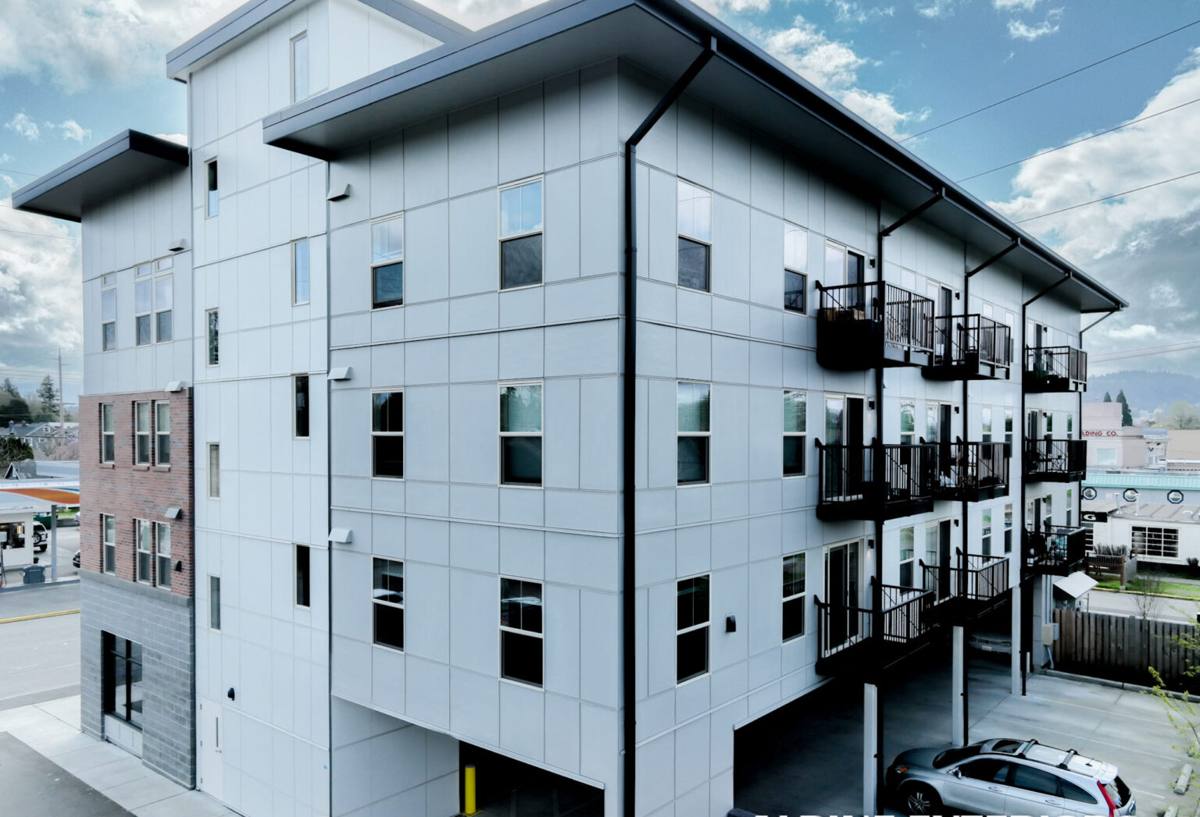
Why We Install James Hardie for This Kind of Exposure
Fiber Cement vs. What Salt Air Does to Other Materials
We only install James Hardie fiber cement siding, and a site like Cap Sante is a good illustration of why. Fiber cement doesn't rot, doesn't feed mold or moss the way wood-based products can once moisture sits against them, and it isn't sensitive to swelling and warping the way engineered wood siding can be when it takes repeated wetting from driving rain. Vinyl siding can hold up fine in mild weather, but it's a thinner material that flexes, gaps, and can crack in cold snaps or hard wind gusts — exactly the conditions this bluff sees more of than a sheltered inland street. Hardie's fiber cement panels are dense, dimensionally stable, and engineered to take on and release moisture without breaking down.
The ColorPlus Finish Advantage Near Water
Salt air is hard on paint. Field-applied paint on any siding material starts to chalk, fade, and peel faster near the water, which means more frequent repainting to keep a home looking right. James Hardie's ColorPlus Technology finish is baked on in a factory process, cures harder than a job-site paint job, and is backed by its own finish warranty. On a home that's catching salt spray and UV reflecting off the bay, that factory-cured finish is doing real work — it's one less maintenance item you're managing every few years.
What a Correct James Hardie Installation Involves in Cap Sante
James Hardie makes a good product, but the siding is only as good as the installation behind it. On an exposed, elevated site like Cap Sante, a few details matter more than they would on a calmer lot:
- Weather-resistant barrier: A continuous, properly lapped barrier behind the siding is the first line of defense against wind-driven rain — gaps or shortcuts here are where water gets in.
- Flashing at every penetration: Windows, doors, vents, and hose bibs all need correctly integrated flashing so water is directed out, not trapped behind the panel.
- Manufacturer-spec clearances and gaps: Hardie specifies minimum clearances from grade, roofing, and decks, along with expansion gaps at butt joints — skipping these is one of the most common causes of early siding failure.
- Corrosion-resistant fasteners: In a marine-air environment, fastener choice matters. Using fasteners rated for the exposure keeps rust streaking and fastener failure from becoming a problem down the road.
- Sealed, not just caulked, joints: Caulk at trim and joints needs to be applied to a clean, dry, compatible surface — done wrong, it fails within a season or two in this climate.
Every one of these is standard Hardie installation practice, but they take more discipline on a windy, salt-exposed bluff lot than on a sheltered one. This is where cutting corners shows up fastest.
How Siding Materials Compare on a Marine-Exposure Site
Homeowners in Cap Sante often ask how James Hardie stacks up against the other materials they've seen quoted. Here's an honest comparison focused specifically on the conditions this neighborhood deals with:
| Material | Salt Air / Moisture Behavior | Maintenance Near Water | Fire Resistance |
|---|---|---|---|
| James Hardie fiber cement | Dimensionally stable, doesn't rot or absorb moisture the way wood-based products do | Low — factory ColorPlus finish resists fading and chalking | Non-combustible |
| Vinyl siding | Can warp, crack, or loosen under repeated wind and temperature swings | Low upfront, but prone to visible weathering and impact damage over time | Combustible, can melt or deform near heat |
| Engineered wood (e.g. LP SmartSide) | Wood-based substrate is more sensitive to sustained moisture exposure | Moderate — finish and edge sealing need regular monitoring | Combustible |
| Cedar / primed spruce | Natural wood movement, higher risk of moisture absorption and rot at joints | High — refinishing and rot inspection on a regular cycle | Combustible |
This isn't about any of these materials being "bad" — it's about which one behaves best under the specific stress a Cap Sante site puts on it. That's why fiber cement is what we standardized on.
What Correct Installation Costs Depend On in Cap Sante
Every quote should be based on the actual home, not a flat per-square-foot number. On this part of Anacortes, the biggest cost drivers we see are:
- Tear-off and substrate condition: Removing old siding and repairing any water-damaged sheathing underneath — more likely on an older home that's taken years of coastal weather.
- Home height and access: Multi-story homes or steep bluff-lot access take longer and need more scaffolding or lift equipment.
- Trim, window, and corner count: More penetrations mean more flashing and detail work, which is where labor time really goes.
- Product line and profile: HardiePlank lap siding, HardiePanel vertical siding, and HardieShingle each have different material and labor costs.
- Color and finish selection: Standard ColorPlus colors versus custom color-matching can shift the budget.
Living with Hardie Siding Through Anacortes' Moss Season
James Hardie siding resists moisture damage far better than wood-based alternatives, but no exterior surface in this climate is entirely maintenance-free. A few habits keep a Cap Sante home looking sharp through the wet months:
Keep gutters and downspouts clear so water isn't sheeting down the wall face — that's the single biggest driver of streaking and moss growth on any siding material. Trim back shrubs and trees that shade north-facing walls, since shaded, damp surfaces are where moss and algae take hold first. A periodic rinse with a garden hose (not a pressure washer aimed directly at panel joints) clears salt residue and organic buildup before it has time to etch into the finish. And because the ColorPlus finish is factory-cured, you're not on a repainting cycle the way you would be with field-painted siding — inspection and light cleaning is most of what's needed.
Our Process for a Cap Sante Hardie Project
- On-site assessment: We look at the home's exposure, existing siding condition, and any moisture or rot at the sheathing before quoting anything.
- Product and color selection: We help you choose the right HardiePlank, HardiePanel, or HardieShingle profile and ColorPlus color for the home and its exposure.
- Tear-off and prep: Old siding comes off, damaged sheathing gets repaired, and the weather-resistant barrier goes on continuous and properly lapped.
- Installation to Hardie spec: Correct clearances, flashing at every penetration, and fasteners rated for the exposure — no shortcuts on the details that matter most this close to the water.
- Final inspection and walkthrough: We check the finished work against manufacturer installation requirements and walk the home with you before calling it done.
What to Check Before You Sign a Siding Contract in Cap Sante
- Is the crew factory-trained or certified on James Hardie installation, not just familiar with it?
- Does the written scope specifically call out weather-resistant barrier, flashing details, and fastener type?
- Will they register the manufacturer warranty in your name after the job is done?
- Do they have real experience installing on exposed, marine-adjacent sites — not just inland lots?
- Are permitting and inspection with the City of Anacortes part of the scope, not left to you?
Why Hiring a Crew That Already Works Cap Sante Matters
A crew that's worked this neighborhood already knows which walls take the worst of the wind and rain, where moss tends to establish first, and how much clearance and flashing detail a bluff-exposed home actually needs versus a generic installation checklist. That local pattern recognition is the difference between siding that's technically installed to spec and siding that's installed to spec for this specific site. Combined with a product built for the conditions — non-combustible, dimensionally stable, factory-finished fiber cement — that's how you get a siding job on Cap Sante that holds up instead of becoming a five-year maintenance project.
If you're weighing a siding project on Cap Sante or anywhere else in Anacortes, we're happy to walk the exterior with you, look at what your current siding is telling us, and put together a straightforward, no-pressure estimate. There's no obligation — just use the form below to get started.