 Anacortes Siding
 Decks on the West Side of Anacortes Work Harder Than Most
Homes on the west side of Anacortes sit closer to the water than almost anywhere else in Skagit County, and that location comes with a tradeoff. The views are better, but the decking takes a beating that inland decks never see. Salt-laden air off the Rosario Strait and surrounding shoreline settles on every exposed surface, driving rain blows in sideways during winter storms, and the shaded, damp stretches of the year turn into a long moss season that can run from October well into spring. A deck built without that reality in mind will show it within a couple of seasons — fading unevenly, staying damp longer than it should, and growing a green film in the shadier corners.
We install composite decking specifically with these conditions in mind. This page covers what West Anacortes homes actually need from a deck, what a correct installation looks like, and how our process accounts for the salt air and moisture this part of the island deals with every year.
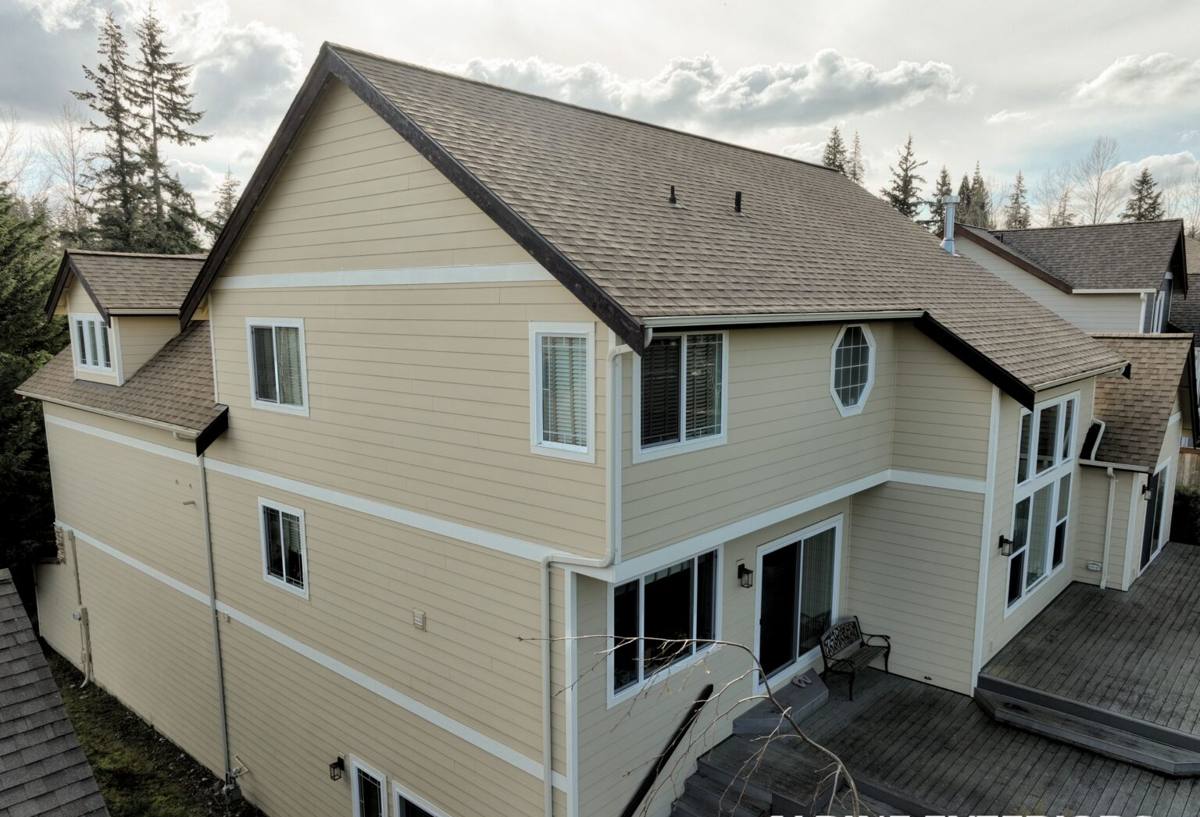
What Salt Air, Rain, and Moss Actually Do to a Deck
Salt Air
Airborne salt doesn't just sit on the surface — it works into fasteners, hinges, and any exposed metal hardware over time, encouraging corrosion faster than you'd see a few miles inland. On decking material itself, salt residue combines with moisture to accelerate surface breakdown on lower-quality boards and can dull finishes that aren't rated for coastal exposure.
Driving Rain
West-facing and water-facing decks in Anacortes catch wind-driven rain that pushes water into joints, fastener holes, and butt seams that a calmer inland deck would never see. Water that gets trapped under or between boards, rather than shedding off, is what causes rot in the substructure and staining or cupping on the surface.
Moss Season
Anacortes' shoulder seasons stay cool and damp for months at a time, and shaded portions of a deck — under overhangs, near fences, on the north side of the house — can stay wet for days after a storm. That's exactly the environment moss and algae need to take hold. Once established, moss holds moisture against the deck surface, which compounds the very problem that let it grow in the first place.
Why Composite Decking Is the Right Call for This Location
Wood decking can be installed well anywhere, including on the water, but it demands a maintenance schedule — sanding, staining, sealing — that most homeowners underestimate, especially with the moisture load this area gets. Composite decking is engineered to resist water absorption, which matters more here than in most parts of the county. It doesn't need annual sealing, it won't splinter or cup the way wood can when it takes on and releases moisture repeatedly, and modern capped composite boards resist staining from tannins, dirt, and the organic buildup that leads to moss.
That doesn't mean composite is maintenance-free — nothing installed outdoors in a marine climate is. But it shifts the maintenance burden from sanding and refinishing to simple periodic cleaning, which is a much more realistic ask for most homeowners.
Composite vs. Other Decking Materials for This Climate
| Factor | Capped Composite | Pressure-Treated Wood | PVC |
|---|---|---|---|
| Moisture/rot resistance | High — engineered core resists water absorption | Moderate — treatment slows rot but doesn't stop it | Very high — fully synthetic, no organic material |
| Moss/algae resistance | Good, especially with a capped surface | Poor — porous surface holds moisture and organics | Good — smooth, non-porous surface |
| Upfront cost | Moderate to higher | Lowest | Highest |
| Ongoing maintenance | Periodic cleaning, no sealing/staining | Annual sanding, staining, sealing | Periodic cleaning, no sealing/staining |
| Feel and appearance | Wood-like grain and color options | Natural wood look, changes with weathering | Can look more plastic without wood-grain texture |
| Typical lifespan in this climate | Long, backed by manufacturer warranty | Shorter without diligent upkeep | Long, but sensitive to installation quality |
We install composite for most West Anacortes projects because it strikes the right balance for this climate — better moisture and moss resistance than wood, without the added cost and installation sensitivity that comes with full PVC systems in colder, wetter conditions.
What a Correct Composite Deck Installation Involves
The board itself is only part of the equation. Most composite deck problems we get called out to inspect on the west side of the island trace back to substructure and installation shortcuts, not the decking material failing on its own. A correct install for this climate includes:
Substructure Protection
Joists and beams get a protective flashing tape over the top edge before any decking goes down. This is the single biggest factor in how long a deck's frame lasts in a wet climate — untreated cut ends and exposed joist tops are where rot starts, even under composite boards that never absorb water themselves.
Proper Ventilation and Drainage
Decking needs airflow underneath to dry out after rain. On lower decks or ground-level installations that are common on flatter West Anacortes lots, that means correct joist spacing off grade and, where needed, a drainage strategy so water doesn't pool under the structure.
Fastening System
Hidden fastener clip systems, installed to the board manufacturer's spacing spec, keep the deck surface free of exposed screw heads that collect moisture and corrode in salt air. Board gaps are set correctly for expansion and contraction, which matters more here given the temperature and moisture swings between seasons.
Flashing at the House
Where the deck meets the house — the ledger board connection — proper flashing keeps wind-driven rain from working its way behind siding or into the rim joist. This is one of the most common failure points we find on older decks in this area, and it's not optional on a new build.
Our Process for a West Anacortes Composite Deck
- Site assessment. We look at sun and shade exposure, prevailing wind and rain direction, existing drainage, and the condition of any structure we're building onto or replacing.
- Substructure evaluation or build. New framing is built to current code with joist protection tape as standard. If we're re-decking an existing structure, we inspect the frame before covering it — a solid composite deck on a compromised frame is a problem waiting to happen.
- Material selection. We walk through board options and color/finish choices with an eye toward how each performs in shade versus full sun exposure on your specific lot.
- Installation. Hidden fastening, correct gapping, flashing at all transitions, and attention to any low or shaded areas where moisture and moss are more likely to be an issue.
- Final walkthrough. We go over basic care for your specific board and location before we consider the job done.
Maintaining a Composite Deck in a Moss-Prone Marine Climate
Composite decking cuts out sanding and sealing, but it isn't zero-maintenance in this environment. A little seasonal attention keeps it looking right and prevents the buildup that eventually needs aggressive cleaning to remove.
- Sweep debris off the deck regularly, especially in fall when leaves and needles trap moisture against the surface
- Rinse with a garden hose periodically to clear salt residue and organic buildup before it accumulates
- Use a soft-bristle brush and a cleaner made for composite decking on shaded or north-facing sections where moss is more likely to start
- Avoid pressure washers on the highest settings — they can damage the capped surface of most composite boards
- Keep planters and furniture legs from sitting in one spot too long, since trapped moisture underneath is a common moss starting point
- Check and clear gaps between boards each season so water keeps draining the way the system was designed to
None of this is heavy work, but skipping it for a year or two in a climate this damp is how moss gets a foothold that takes real effort to remove later.
Why It Matters That We Already Work in This Area
Deck problems in West Anacortes rarely look the same as deck problems fifteen miles inland. A crew that mostly builds decks in drier parts of Skagit County may not think twice about joist flashing detail, board gapping for this much moisture swing, or where moss is likely to start on a specific lot's shade pattern. We build and repair decks in this exact environment regularly, which means the site assessment isn't guesswork — we already know what salt air, driving rain, and a long moss season do to a deck here, and we build accordingly from the first cut.
A Straightforward Deck That Handles This Climate
A composite deck done right for West Anacortes isn't complicated — it's a matter of protecting the substructure, installing with the right hardware and gapping, and choosing a board that's actually suited to salt air and shade. Skipping any one of those steps is what leads to the moss, staining, and early wear we get called to fix on decks that weren't built with this location in mind.
If you're planning a new deck or replacing one that hasn't held up to the marine climate, we're happy to walk your property, look at your sun and drainage situation, and give you a straightforward estimate. There's no pressure and no obligation — just an honest look at what your deck actually needs. Use the form below to request a free estimate.