 Anacortes Siding
 Mount Vernon's Climate Is Harder on Siding Than It Looks
Mount Vernon sits in the Skagit River valley, a few miles inland from the salt water that surrounds Anacortes, but it doesn't escape the moisture. The same marine air that rolls off Puget Sound pushes up the valley, mixes with river humidity, and settles over the flat farmland and residential streets for days at a time. Add long stretches of driving rain through fall and winter, and siding here is under near-constant moisture load for a good chunk of the year.
That combination — damp air that doesn't clear quickly, plus rain that finds every gap in a wall assembly — is why siding failures in this part of Skagit County tend to look different than failures in a drier climate. It's rarely one big storm that causes the damage. It's years of moisture cycling in and out of seams, fastener holes, and trim joints that were never quite sealed right the first time.
The Moss and Algae Problem
Shaded lots, fenced yards, and mature landscaping are common around Mount Vernon, and all of them slow down how fast a wall dries out after rain. Where siding stays damp longest, you'll see the moss and algae staining show up first — usually on north-facing walls, under eaves, and behind shrubs planted close to the house. On some siding materials that's just a cosmetic problem you can pressure-wash away. On others, especially wood-based products, sustained moss growth is a sign that moisture is sitting against the material long enough to start breaking it down underneath.
Signs a Mount Vernon Home Needs Replacement, Not Repair
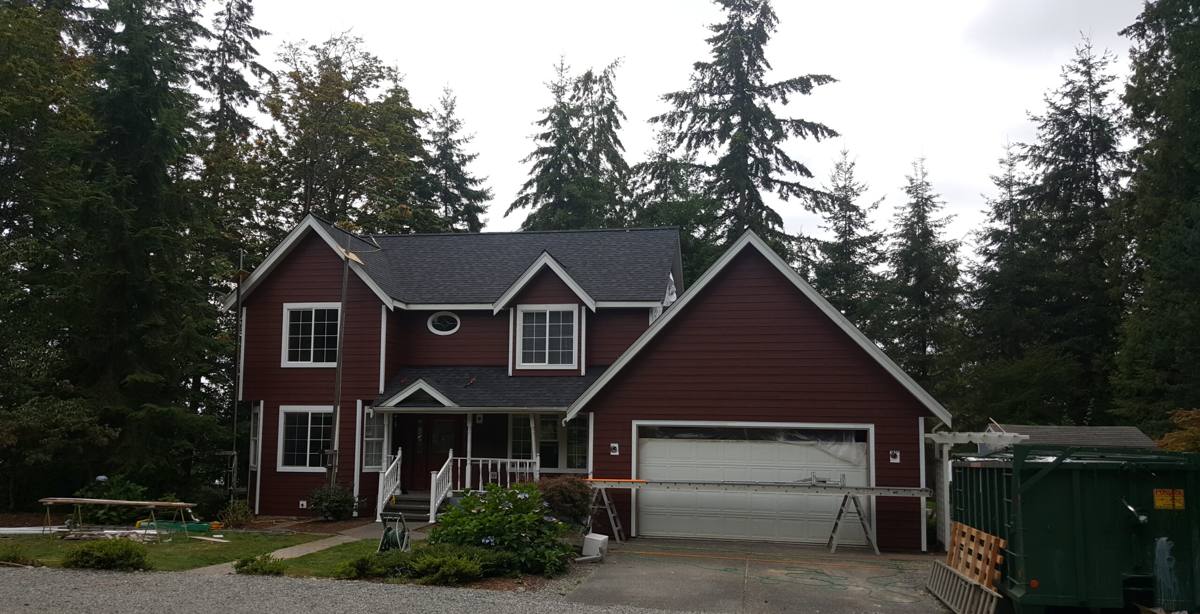
Not every siding problem calls for a full tear-off. But there's a point where patching individual boards or panels stops making sense — where the material itself has reached the end of what it can handle. Here's what we look for when we're deciding whether a Mount Vernon home is a repair job or a replacement job:
- Soft or spongy spots when you press on the siding, especially near the bottom courses and around window trim
- Paint that won't hold — you repainted within the last few years and it's already peeling or bubbling again
- Visible cupping, buckling, or warping across multiple boards or panels, not just one or two
- Persistent moss or algae staining that comes back within a season of cleaning
- Gaps opening up at butt joints, corners, or where siding meets trim and window frames
- Rising heating bills with no other obvious cause — often a sign moisture has degraded insulation behind the siding
- The siding is past the point where the manufacturer's expected service life would reasonably apply
If you're seeing two or more of these, it's worth having someone open up a section and look at what's happening behind the surface before you spend more money on repairs that won't hold.
What a Correct Siding Replacement Actually Involves
Siding replacement isn't just swapping old material for new. The siding itself is the least important part of keeping water out of a wall — the details underneath it do most of the real work. A job done right in a climate like Skagit County's includes:
Full Tear-Off and Sheathing Inspection
Once the old siding is off, we can actually see the wall — the sheathing, the framing, and the water-resistive barrier underneath. This is where you find the damage that never showed up from the outside: soft sheathing, rusted fasteners, or a house wrap that's been torn or improperly lapped for years. Any of that gets repaired or replaced before a single new panel goes up. Skipping this step is the single most common reason a siding job fails early.
Water Management, Not Just Water Resistance
New house wrap, correctly lapped from the bottom up. Proper flashing over windows, doors, and any horizontal trim where water collects. Kick-out flashing where a roofline meets a wall, so runoff gets directed into the gutter instead of behind the siding. A drainage gap that lets any moisture that does get behind the cladding actually drain and dry out, instead of sitting there. None of this is visible once the job is finished — but it's the difference between siding that lasts and siding that fails from the inside out.
Product Selection for the Climate
We install James Hardie fiber cement siding, and specifically the HZ5 product line engineered for the Pacific Northwest's wet, marine-influenced climate zone. It's formulated and warranted for the freeze-thaw and moisture patterns typical of Skagit County — which matters more here than in a drier region, because the material is dealing with sustained dampness for a much larger share of the year.
Why We Install Only James Hardie
We standardized on one product line for a reason: it lets us install to the same spec every time, and it's the product we're confident holds up in this valley's conditions. Fiber cement is non-combustible, doesn't feed moss and algae growth the way untreated wood-based products can, and holds a factory-applied ColorPlus finish that's designed to resist fading and hold up without repainting on the schedule wood siding needs. The HZ5 line's engineering is specific to high-moisture, marine climates — which describes Skagit County whether you're a few blocks from the water in Anacortes or further up the valley in Mount Vernon.
We don't install vinyl, LP SmartSide, or primed wood siding, and we're upfront about why: each of those products has real trade-offs in maintenance, moisture behavior, or long-term warranty coverage that we're not willing to install and then stand behind. Hardie isn't the cheapest option on day one, but it's the one we're comfortable putting our name on for a house that's going to sit in this climate for the next 30-plus years.
Our Process for Mount Vernon Projects
- Walk-through and estimate. We look at the current siding, check for soft spots and trouble areas, and talk through what you're seeing from the inside — drafts, stains, moisture smells.
- Tear-off and inspection. Old siding comes off, sheathing and framing get inspected, and we show you anything we find before covering it back up.
- Repair and prep. Any damaged sheathing or framing is repaired, new house wrap and flashing details go in.
- Hardie installation. Panels or lap siding go up to manufacturer spec — correct fastening, clearances, and joint treatment.
- Trim, caulking, and cleanup. Final trim work, paint touch-up where needed, and full site cleanup including nail and debris sweep.
- Warranty walkthrough. We go over what's covered, for how long, and what maintenance (if any) keeps that coverage intact.
Cost Factors for a Mount Vernon Siding Replacement
Every house is different, so we don't quote firm numbers without seeing the property, but these are the factors that move the price up or down on most jobs in this area:
| Factor | Why It Matters |
|---|---|
| Total square footage of siding | Bigger surface area means more material and labor hours, the largest single driver of cost |
| Condition of sheathing underneath | Rot or water damage found during tear-off adds repair work before new siding can go on |
| Home height and access | Two-story walls, steep lots, and tight side yards slow down installation and staging |
| Trim and accessory detail | Corner boards, window trim, and fascia work add labor beyond the flat wall areas |
| Removal and disposal | Tear-off and haul-away of old siding is priced separately from new material and install |
| Product line selected | Panel style, texture, and color finish within the Hardie lineup carry different material costs |
Why a Crew That Already Works Skagit County Matters
A contractor who's worked houses in Mount Vernon and around Skagit County has already seen how the local moisture pattern behaves against a wall — where moss builds up first, which wall orientations dry out slowest, and where the old flashing details in this area tend to fail. That's not something you get from a general contractor who mostly works drier inland counties and treats every siding job the same.
Local experience also means fewer surprises with permitting, weather scheduling, and knowing how much lead time to build in around this area's rainy stretches. A crew that's used to installing correctly in this kind of climate builds the water management details in as standard practice, not as an afterthought.
Timing the Project Around Skagit Valley Weather
Siding can technically be installed in most months, but tear-off leaves a wall exposed to weather until the new house wrap and siding go on. We plan around drier weather windows where we can, and sequence the work so a wall isn't left open longer than necessary. If you're thinking about a project for next spring or summer, scheduling an estimate now gives you the most flexibility on timing before the calendar fills up.
If your Mount Vernon home is showing any of the wear signs above, or you just want an honest read on what shape your current siding is in, we're happy to come take a look. The estimate is free, there's no pressure, and you'll get a straight answer about whether you need a full replacement or something less.