 Anacortes Siding
 Oak Harbor's Coastline Climate Is Hard on Siding
Homes in Oak Harbor sit close to open water, and that changes what siding has to survive. Between the salt-laden air coming off the Salish Sea, wind-driven rain that hits walls sideways instead of straight down, and a long stretch of the year when north-facing and shaded walls barely dry out, this is a tougher environment for exterior cladding than most manufacturers design around. A siding job that would hold up fine in a drier inland climate can start showing problems here within a few years if it wasn't installed with this coastline in mind.
We install siding across the Skagit and Island county waterfront communities, and Oak Harbor homes get the same treatment we give every job in this region: materials chosen for marine exposure, and installation details that account for how water actually moves across a wall in this climate — not just how it's supposed to move on paper.
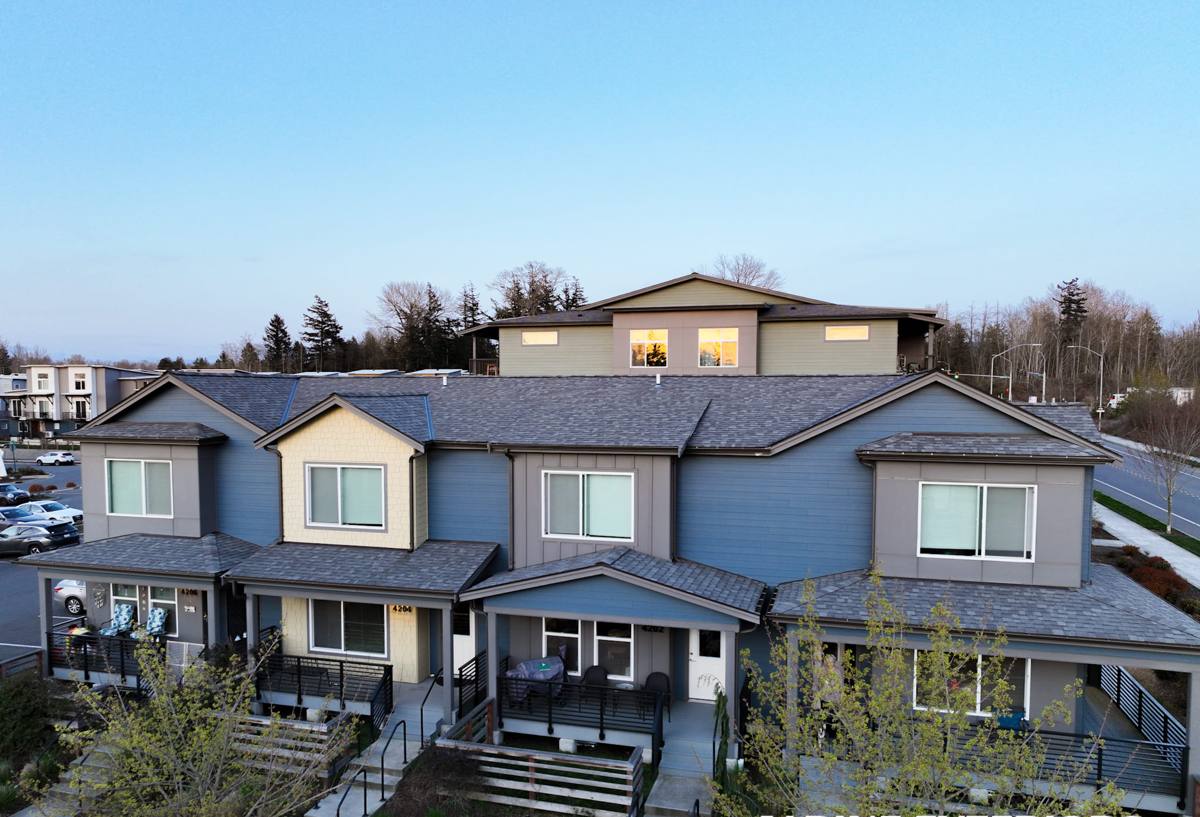
What the Salt Air, Rain, and Moss Actually Do to Siding
Salt Air and Metal Fasteners
Airborne salt accelerates corrosion on anything metal — fasteners, flashing, trim edges. Cheap or mismatched fasteners on a home this close to the water can start bleeding rust stains through the siding face well before the siding itself is due for attention. It's one of the first things we check on repair calls: the siding looks fine, but the fasteners holding it were never rated for a salt-air environment.
Wind-Driven Rain
Storms coming off the water don't just drop rain straight down — they push it sideways into the wall assembly. That means lap joints, butt seams, and every penetration (hose bibs, vents, light fixtures) are under more pressure to shed water outward than they would be in a sheltered inland lot. Gaps or short caulk runs that would never leak in calmer conditions can let water track behind the siding here.
The Long Moss and Mildew Season
Shaded walls, tree cover, and persistent damp air add up to a moss and mildew season that runs longer than most homeowners expect — often most of the year on north- and west-facing walls. Moss holds moisture against the siding surface, and on materials that aren't dimensionally stable, that sustained dampness is what eventually causes swelling, softening, or paint failure.
What a Correct Installation Involves in This Climate
The material matters, but installation detail is what actually determines whether a home stays dry. On every Oak Harbor project, this is non-negotiable:
- A drainage plane behind the siding — a weather-resistant barrier installed correctly, lapped shingle-style so water is directed out and down, never trapped against the sheathing.
- Rainscreen gap where conditions call for it — a small air gap behind the siding lets any moisture that does get past the cladding drain and dry instead of sitting against the wall.
- Proper flashing at every penetration — windows, doors, hose bibs, vents, and deck ledgers all get flashed to shed water outward, not just caulked and hoped for.
- Correct fastener spec — corrosion-resistant fasteners driven at the manufacturer's specified pattern and depth, not just "close enough."
- Proper clearances — siding held up off decks, roofs, and grade at the gaps the manufacturer requires, so it isn't sitting in standing water or snow load.
Skip any one of these and the siding itself becomes almost irrelevant — water will find the gap.
Why We Install Only James Hardie Fiber Cement Siding
We don't install vinyl, LP SmartSide, primed spruce, cedar, or other fiber cement brands. That's a deliberate standard, not a limitation of what we're capable of installing. In a climate like this one, the material has to be non-combustible, dimensionally stable when it gets wet and dries repeatedly, and resistant to the kind of sustained moisture exposure that comes with a long moss season and salty coastal air.
James Hardie fiber cement holds its shape and doesn't swell, rot, or feed the moss and mildew growth that engineered wood products are more prone to. Hardie's HZ5 product line is specifically engineered for climates with extended damp exposure and freeze-thaw cycling, which fits this region better than the standard HZ10 line built for hot, dry climates. The factory-applied ColorPlus finish is baked on under controlled conditions, so it holds color and resists the fading and touch-up patchiness you get from field-applied paint over years of coastal sun and salt exposure. It also comes with a transferable warranty, which matters to buyers if the home ever sells.
We're not saying every other product is unusable everywhere. We're saying that after years of installing and repairing siding in exactly this kind of marine, high-moisture environment, this is the one system we're willing to put our name behind and stand by the workmanship warranty for.
How James Hardie Compares for This Climate
| Material | Behavior in Salt Air / Sustained Damp | Combustibility | Typical Maintenance |
|---|---|---|---|
| James Hardie fiber cement | Dimensionally stable; doesn't swell or rot; resists moss-related surface damage | Non-combustible | Occasional wash; factory finish holds color for years |
| Vinyl siding | Can warp or become brittle with UV and temperature swings; seams are a water-entry risk | Combustible; can melt/deform near heat sources | Low, but limited repair options if damaged |
| LP SmartSide / engineered wood | Vulnerable to edge swelling and moisture wicking if caulking/paint isn't maintained | Combustible | Regular paint and caulk upkeep required |
| Cedar / primed spruce | Natural wood movement; prone to moss growth and rot in shaded, damp areas without diligent upkeep | Combustible | Highest — refinishing, caulking, moss treatment on a recurring schedule |
Our Process for Oak Harbor Siding Projects
- On-site assessment — we look at wall exposure, existing moisture damage, roofline drainage, and how much shade and wind each elevation gets, since that varies wall to wall.
- Tear-off and sheathing check — old siding comes off and we inspect the sheathing underneath for rot or soft spots before anything new goes up. This is where hidden moisture problems from a prior install usually turn up.
- Weather barrier and flashing — house wrap or building paper installed correctly, with flashing integrated at every window, door, and penetration before siding starts.
- Rainscreen and Hardie installation — siding installed to Hardie's fastening and clearance specs, with attention to butt joints and coastal-exposed elevations.
- Trim, caulking, and finish detail — corner boards, trim, and factory-finish touch-up done to spec so the whole system sheds water as designed.
- Final walkthrough — we go over the finished work with the homeowner and flag anything they should keep an eye on going forward.
Maintenance Oak Harbor Homeowners Should Actually Expect
Correctly installed Hardie siding is low-maintenance, not zero-maintenance. In this climate, a few habits go a long way:
- Rinse shaded and north-facing walls once or twice a year to knock back early moss and mildew growth before it takes hold.
- Keep gutters clear so overflow isn't running down the wall face during heavy storms.
- Trim back trees and shrubs that keep a wall section shaded and damp longer than the rest of the house.
- Check caulk lines at trim and penetrations every year or two — caulk is the first thing to give out under repeated wind-driven rain.
- Have any fastener rust staining or hairline cracking looked at early; it's far cheaper to address than a hidden moisture problem behind the wall.
What Affects the Cost of a Siding Project in Oak Harbor
| Cost Factor | Why It Matters Here |
|---|---|
| Wall exposure and elevation count | More water-exposed elevations may need extra flashing and rainscreen detail |
| Existing sheathing condition | Rot or moisture damage found during tear-off adds repair scope before new siding goes up |
| Trim and detail complexity | Corners, window returns, and multiple rooflines take more labor to flash and finish correctly |
| Access and site conditions | Waterfront lots, steep grades, or tight setbacks can affect staging and equipment needs |
| Product line and finish | HZ5 boards and specific ColorPlus finishes vary in material cost |
We give a firm, itemized quote after the on-site assessment — there's no way to price a coastal siding job accurately without seeing the actual walls and existing conditions first.
Why Hiring a Crew That Already Works This Area Matters
A crew that installs siding across Skagit and Island county waterfront communities already knows which walls in a given layout take the worst of the wind-driven rain, how much moss buildup to expect on shaded elevations, and which fastener and flashing details actually hold up under salt exposure year after year. That's different from general installation experience. A contractor who mostly works drier inland areas may build to code and still miss the details that matter specifically here — because those details don't come up as often where they normally work.
It also matters for accountability. A local crew is easy to reach if a question comes up two or five years after the job, and they have a direct stake in how their work holds up on homes their neighbors can see and compare.
If you're planning a siding project in Oak Harbor, we're happy to take a look and walk the property with you. The estimate is free, there's no pressure, and you'll get a straight answer about what your home actually needs.