 Anacortes Siding
 Decks Built for Oak Harbor's Coastal Conditions
Oak Harbor sits close enough to the water that every outdoor structure on a property deals with conditions an inland deck never sees. We're based out of Anacortes, and a good share of our custom deck work is on this side of the water — homes that catch salt-laden air off the sound, take driving rain straight off Puget Sound storms, and sit under tree cover long enough each year to grow a stubborn coat of moss. A deck built without those specifics in mind will look fine for a season or two. Then the fasteners start bleeding rust, the boards stay damp two extra days after every rain, and the north-facing stretch turns green by March.
This page covers what we actually do differently when we build a custom deck for a home in this area — the materials, the framing details, and the design choices that hold up here instead of just looking good on install day.
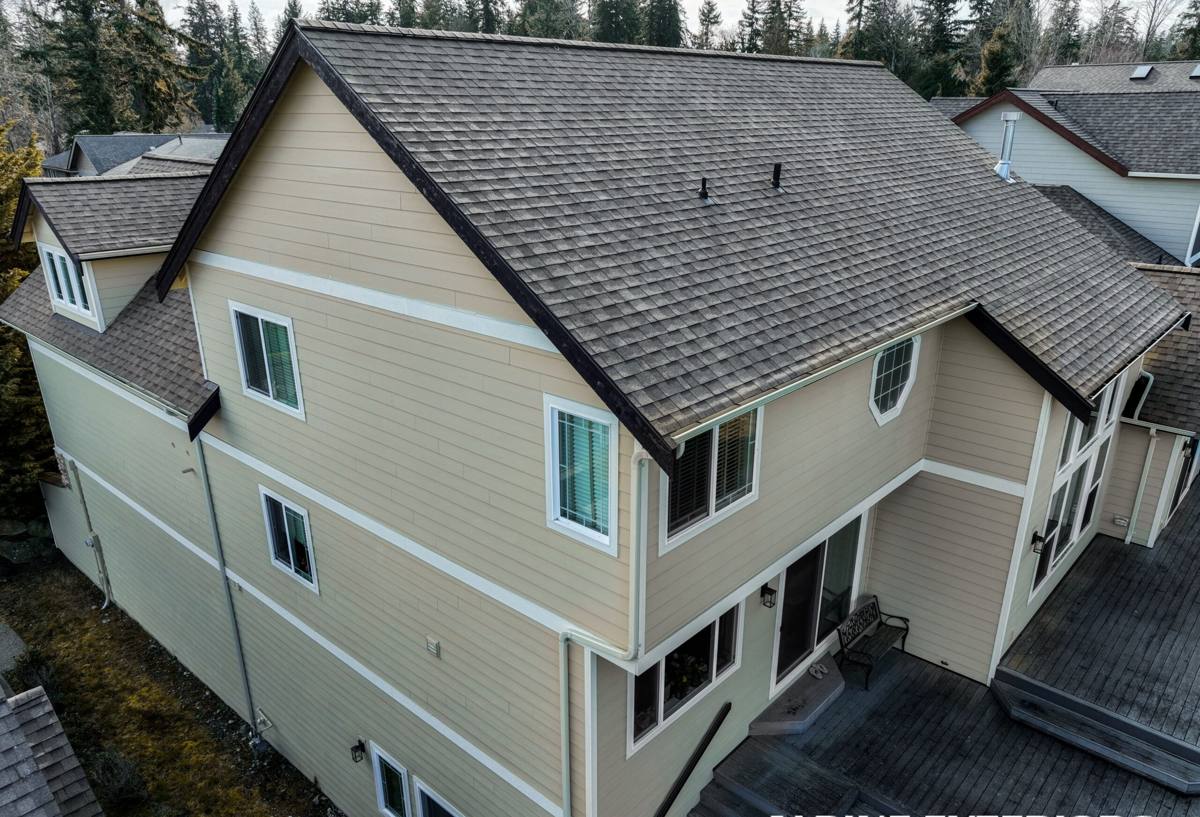
What the Regional Climate Does to an Unprotected Deck
Salt Air and Metal Fatigue
Even a few miles inland from open water, airborne salt accelerates corrosion on anything metal — fasteners, joist hangers, railing brackets. Standard zinc-coated hardware that would last decades in a dry inland climate can start showing surface rust within a couple of years out here. It's rarely a structural failure right away, but rust streaks bleeding down decking boards are one of the most common complaints we hear about decks built with the wrong hardware.
Driving Rain and Water Intrusion
Storms coming off the water tend to arrive with wind behind them, which pushes rain sideways into ledger boards, stair stringers, and any gap where a deck meets the house. Water intrusion at the ledger — the board that attaches the deck to the house framing — is the single most common source of hidden rot we find when we're asked to repair or replace an older deck.
The Long Moss Season
Between the rainfall totals and the tree cover common on Oak Harbor lots, moss has a long growing window here — realistically fall through spring, sometimes longer on shaded north sides. Moss holds moisture against the decking surface, which speeds up wood decay and makes boards slick and dangerous underfoot. A deck design that ignores airflow and sun exposure is signing up for a moss problem before it's even finished.
Choosing the Right Decking Material for a Coastal Property
There's no single "best" decking material — the right choice depends on your budget, how much upkeep you want to do, and how exposed the site is. Here's how the common options actually perform in this climate:
| Material | Moisture Behavior | Moss Resistance | Maintenance | Relative Cost |
|---|---|---|---|---|
| Pressure-treated fir/pine | Prone to cupping and checking if not sealed regularly | Low — porous surface holds moisture | Annual cleaning and re-sealing | Lowest |
| Cedar | Naturally rot-resistant, still needs sealing at joints and end grain | Moderate — better than treated lumber, still needs cleaning | Sealing every 1-2 years to hold color and protection | Mid |
| Composite decking | Doesn't absorb water into the board itself | Moderate — surface can still grow moss/mildew film if shaded and damp | Periodic washing, no sealing or staining | Mid-High |
| PVC/capped decking | Fully non-absorbent surface | Higher — least hospitable surface for moss, though still needs occasional cleaning | Lowest ongoing maintenance | Highest |
We'll walk you through this trade-off honestly during the estimate — composite and PVC cost more up front but save you the recurring sealing work, which matters if your deck is going to sit under trees or get shaded rain most of the year. Cedar and treated lumber cost less initially but need a homeowner who's willing to stay on top of maintenance, especially in a climate that doesn't give the wood many dry stretches to recover.
Framing, Fasteners, and Flashing — The Work Underneath
The decking boards are what you see, but the framing underneath is what determines whether the deck is still safe in fifteen years. This is where corners get cut on cheap deck builds, and it's the part that costs the most to fix later because you have to tear the surface off to get to it.
On every custom deck we build in this area, that means:
- Stainless steel or heavy hot-dip galvanized fasteners and hardware, not the lighter-duty coated screws that show rust streaks within a couple of seasons near salt air
- Proper ledger board flashing where the deck attaches to the house, so wind-driven rain can't work its way behind the siding
- Joist tape over the top of framing lumber to keep standing water from soaking into end grain and fastener holes
- Post bases that hold wood posts off the concrete or ground surface, so they're not sitting in standing moisture after a storm
- Correct joist spacing and blocking for whatever decking material you choose — composite and PVC products often have different span requirements than solid wood
None of this is visible once the deck is finished, which is exactly why it matters to have a crew that treats it as non-negotiable rather than an upsell.
Design Choices That Matter on Oak Harbor Lots
Beyond materials and framing, a handful of design decisions have an outsized effect on how well a deck holds up here:
Board Gapping and Airflow
Decking boards need enough gap between them to let water drain through and air circulate underneath. Too tight, and you're building a moss farm. This matters even more on shaded or north-facing decks, which are common on wooded Oak Harbor lots.
Wind Exposure
Properties with open water views often sit more exposed to wind than a typical inland lot. That affects railing design, how we brace larger deck structures, and sometimes the layout itself — a partially covered or wind-screened section can make a big difference in how usable the space is most of the year.
Drainage and Grading
Where the deck sheds water matters as much as the deck itself. We plan drainage so runoff moves away from the house foundation and doesn't pool under low decks, which is a common source of long-term moisture problems we get called out to fix.
Railings and Code
Any deck above a certain height needs code-compliant railings, and we build to current Washington building code requirements for guard height, baluster spacing, and stair rail construction — not just what looks right.
Our Process, Start to Finish
- Site visit and consultation. We look at sun exposure, drainage, existing structure (if it's a replacement), and talk through how you'll actually use the space.
- Design and material selection. We lay out size, layout, and material options with honest pros and cons for your specific site — not just the highest-margin option.
- Permitting. Most custom decks require a permit through the local building department; we handle that process so you're not chasing paperwork.
- Demolition and site prep (if replacing an existing deck), including a check of the ledger and house framing behind it for hidden rot.
- Framing and flashing. This is where the fastener and moisture-control details above get built in — not added as an afterthought.
- Decking, railing, and finish work. Final surface installed, railings set to code, and everything checked for level and fastening.
- Final walkthrough. We go over the finished deck with you and cover basic care for whatever material you chose.
Keeping a New Deck Looking Right
A well-built deck in this climate still needs some seasonal attention. Here's a realistic checklist for keeping it in good shape year-round:
- Sweep debris and standing leaves off the surface regularly, especially in fall — trapped organic matter is what feeds moss growth
- Clean the deck surface at least once a year with a deck-safe cleaner to knock back algae and moss before it takes hold
- Reseal wood decking (cedar or treated lumber) every one to two years depending on sun exposure
- Check fastener heads and railing connections annually for early rust or looseness
- Keep gutters and downspouts near the deck clear so runoff isn't dumping extra water onto the structure
- Trim back overhanging branches where practical to cut down on shade and leaf litter that prolong the moss season
Why Hiring a Crew That Already Works Oak Harbor Matters
A deck built to a generic spec sheet doesn't account for what actually happens to lumber and hardware on this stretch of coastline. We build decks across the Anacortes area and the surrounding waterways, including regularly working on Oak Harbor properties, so the material choices and framing details on this page aren't theoretical — they come from what we've seen fail on older decks we've been called to repair, and what's held up on the ones we've built correctly the first time. We also know the kind of exposure a given lot typically gets — whether it's a wind-exposed waterfront site or a shaded, moss-prone yard — before we ever show up for the first visit.
That local familiarity also means fewer surprises during permitting and a build sequence that accounts for the weather windows that actually work here, rather than a schedule built around a drier climate.
If you're planning a new deck or replacing one that's showing its age, we're happy to come take a look and give you a straightforward, no-pressure estimate — just fill out the form below.