 Anacortes Siding
 Deck Building for Mount Vernon's Marine Climate
Mount Vernon sits inland from Anacortes but still lives under the same weather system that rolls off Skagit Bay and the Salish Sea — salt-laden air, long stretches of driving rain, and a moss season that can run from October well into April. A deck built with generic, one-size-fits-all methods might look fine the first summer. By year three or four, homeowners in this area are often dealing with cupped boards, rusted fasteners, soft framing, and a slick green film that never fully goes away. Building a deck correctly here isn't about using fancier materials — it's about understanding exactly how this climate attacks wood, metal, and connections, and designing around those specific failure points from day one.
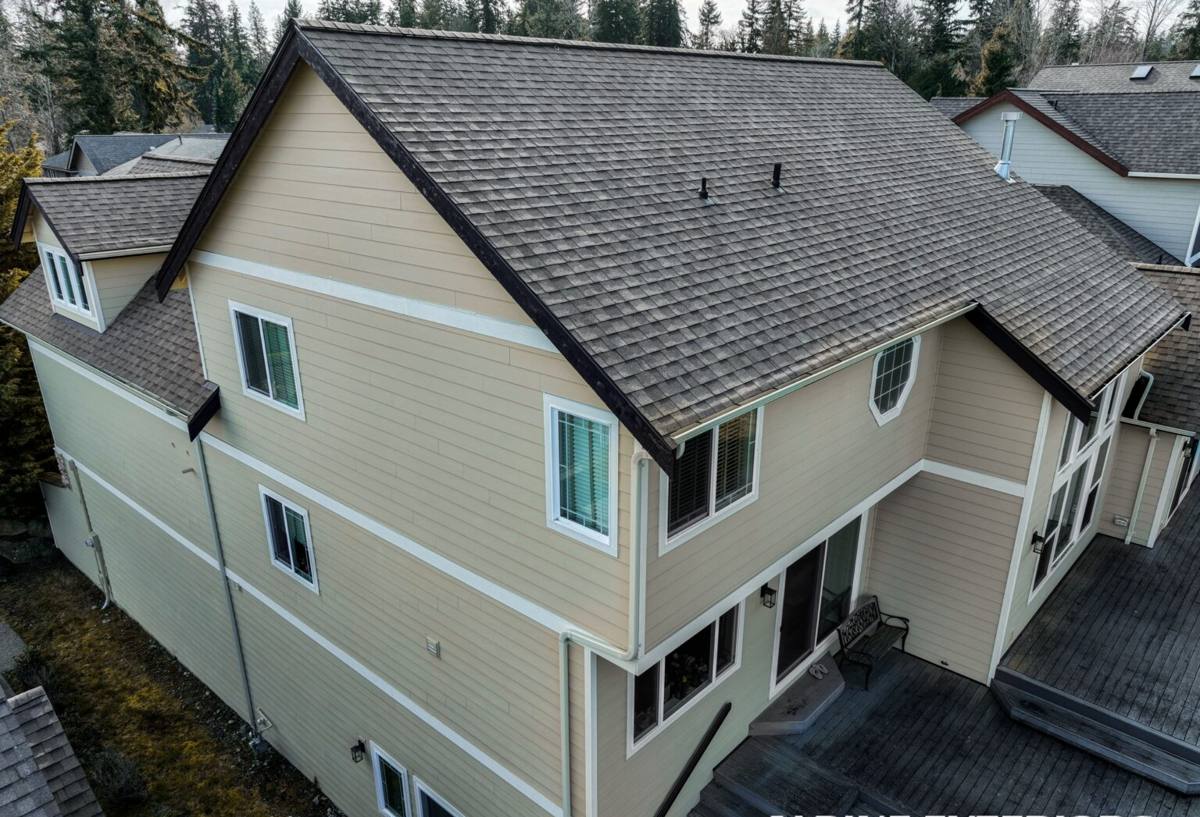
What Salt Air, Rain, and Moss Season Actually Do to a Deck
Every material choice on a Skagit County deck traces back to three regional realities:
- Salt air accelerates corrosion on any fastener, bracket, or hardware that isn't rated for it — even a few miles inland, prevailing winds off the water carry enough salt to matter over a 10-15 year deck lifespan.
- Driving rain doesn't just fall straight down; wind-driven rain gets pushed sideways under railings, into ledger board connections, and behind fascia — areas a lot of decks aren't detailed to handle.
- Moss and algae thrive in the shaded, damp, slow-to-dry conditions common under mature trees and on north-facing decks, and they retain moisture against the deck surface long after a storm has passed, which is exactly the condition that rots wood and stains composite.
None of this means a deck can't last decades here — it means the build has to account for drainage, ventilation, and corrosion resistance as core requirements, not upgrades.
Where We See the Most Damage
On decks we're called to inspect or repair in this area, the recurring problems are rarely the decking boards themselves. They're almost always: ledger boards attached without proper flashing, joist hangers using standard (non-coated) fasteners, insufficient gap between boards for drainage and airflow, and stair stringers or post bases sitting in standing water because there was no gravel bed or drainage path underneath.
Choosing the Right Decking Material
There's no single "best" decking material — there's a best material for your budget, your maintenance appetite, and how much sun or shade your specific lot gets. Here's how the common options actually perform under Skagit County conditions:
| Material | Upfront Cost | Moss/Mildew Resistance | Maintenance | Typical Lifespan Here |
|---|---|---|---|---|
| Pressure-treated wood | Lowest | Fair — needs regular sealing and cleaning to resist moss buildup | Annual cleaning, re-sealing every 1-2 years | 10-15 years with upkeep |
| Cedar | Moderate | Good natural resistance, but greys and can still host moss in shaded spots | Periodic cleaning, staining/sealing to hold color | 15-20 years with upkeep |
| Capped composite | Higher | Very good — dense, non-porous surface sheds moss far more easily than wood | Occasional wash-down, no sealing | 25+ years |
| PVC decking | Highest | Excellent — fully synthetic, doesn't absorb moisture | Occasional wash-down, no sealing | 25-30+ years |
Wood is a legitimate choice, and plenty of homeowners prefer the look and lower entry cost. The trade-off is honesty: wood in this climate needs consistent, ongoing maintenance to keep moss and rot at bay, and skipping a year or two of upkeep shows up fast. Composite and PVC cost more upfront but shift that maintenance burden from "seasonal chore" to "occasional rinse," which matters if you're building for the long term or don't want deck care on your annual to-do list. We'll walk through the actual trade-offs for your yard's sun exposure and shade pattern rather than pushing one product across the board.
Framing and Substructure: Where Most Deck Failures Start
The decking surface gets all the attention, but the framing underneath is what actually determines how long a deck lasts in this climate. A correct substructure for our region includes:
- Ledger board flashing that properly sheds water away from the house rim joist, not just a bead of caulk
- Joist hangers, screws, and structural connectors rated for coastal or treated-lumber contact (standard electro-galvanized hardware corrodes faster here than it would inland)
- Proper joist spacing and blocking sized to your actual decking material and span, per current code
- Post bases set above grade, on footings deep enough to clear the local frost line and positioned so water drains away rather than pooling at the base
- Airflow underneath the deck — enough clearance and ventilation that the framing can actually dry out between rain events instead of staying damp for weeks
Cutting corners on framing is invisible on install day and expensive five years later, when boards start feeling springy or a post base is found sitting in a permanent puddle.
Our Deck Building Process
We run every Mount Vernon-area deck project through the same sequence, adjusted for site conditions:
- On-site assessment — we look at grade, drainage, sun/shade exposure, existing structure (if replacing a deck), and how the house's siding and rim joist are built before recommending anything.
- Design and material selection — size, layout, railing style, and decking material chosen based on your budget and how much upkeep you actually want to sign up for.
- Permitting — we pull the required permit and schedule inspections through the appropriate local jurisdiction before work begins.
- Demolition (if applicable) — old decking and framing removed, with an honest look at whether the existing footings and posts are salvageable or need replacing.
- Framing and flashing — ledger flashing, joist layout, corrosion-resistant hardware, and footings installed to code and to hold up under repeated wet-dry cycles.
- Decking, railing, and stairs installed — with proper board gapping for drainage and airflow.
- Final walkthrough and inspection — we confirm the build passes inspection and walk you through basic care for whatever material you chose.
Permits and Code Requirements
Most new decks and any deck significantly raised off grade require a building permit, and Skagit County and its incorporated cities each have their own permitting process and inspection schedule. Requirements typically cover footing depth and spacing, guardrail height for elevated decks, stair rise/run, and ledger attachment. We handle the permit application and coordinate inspections as part of the job — it's not an optional add-on, since an unpermitted deck can become a real problem at resale or insurance time. If you're unsure whether your specific project needs a permit, that's one of the first things we'll confirm before design work starts.
Railings, Fasteners, and Hardware for a Marine Climate
Hardware choice matters as much as decking choice here, and it's the part homeowners rarely think to ask about. We spec stainless steel or coated structural screws and connectors rated for treated lumber and coastal exposure, rather than standard galvanized fasteners that corrode faster under salt-air conditions. For railings, the same logic applies — powder-coated aluminum and properly sealed wood both hold up well, but bare or under-rated metal hardware is often the first thing to fail on an otherwise sound deck, showing up as rust streaks down the decking boards within a few seasons.
Maintenance That Actually Matters Here
Whatever material you choose, a little seasonal attention goes a long way in this climate. A realistic maintenance checklist for a Mount Vernon-area deck:
- Sweep debris and standing leaves off the deck regularly, especially in fall — trapped organic matter is what feeds moss growth
- Rinse or gently power-wash the surface at least once a year, more often in shaded or north-facing areas
- Check board gaps and drainage paths aren't clogged with debris that traps moisture against the wood
- For wood decks, re-seal or re-stain on the schedule the product calls for — don't wait until it visibly needs it, since damage starts before it's cosmetically obvious
- Inspect railings, stair connections, and visible hardware once a year for early rust or loosening
- Confirm the area underneath the deck stays ventilated — trim back plants or clear stored items that block airflow to the framing
Why a Crew That Already Works Mount Vernon Matters
A deck built by someone unfamiliar with Skagit County's specific rain patterns, permitting process, and salt-air corrosion issues can still look good the day it's finished — the failures show up later, after the crew is long gone. Working with a contractor who already builds decks in this area means the flashing details, hardware specs, drainage planning, and material recommendations are based on what actually holds up here, not generic national installation guidance. It also means a shorter, more predictable permitting process, since we already know the local inspection requirements and how to design to them the first time.
If you're planning a new deck or replacing one that's showing its age, we're happy to take a look and put together a straightforward, no-pressure estimate — just fill out the form below.