 Anacortes Siding
 Roofing a Waterfront Neighborhood Like Flounder Bay
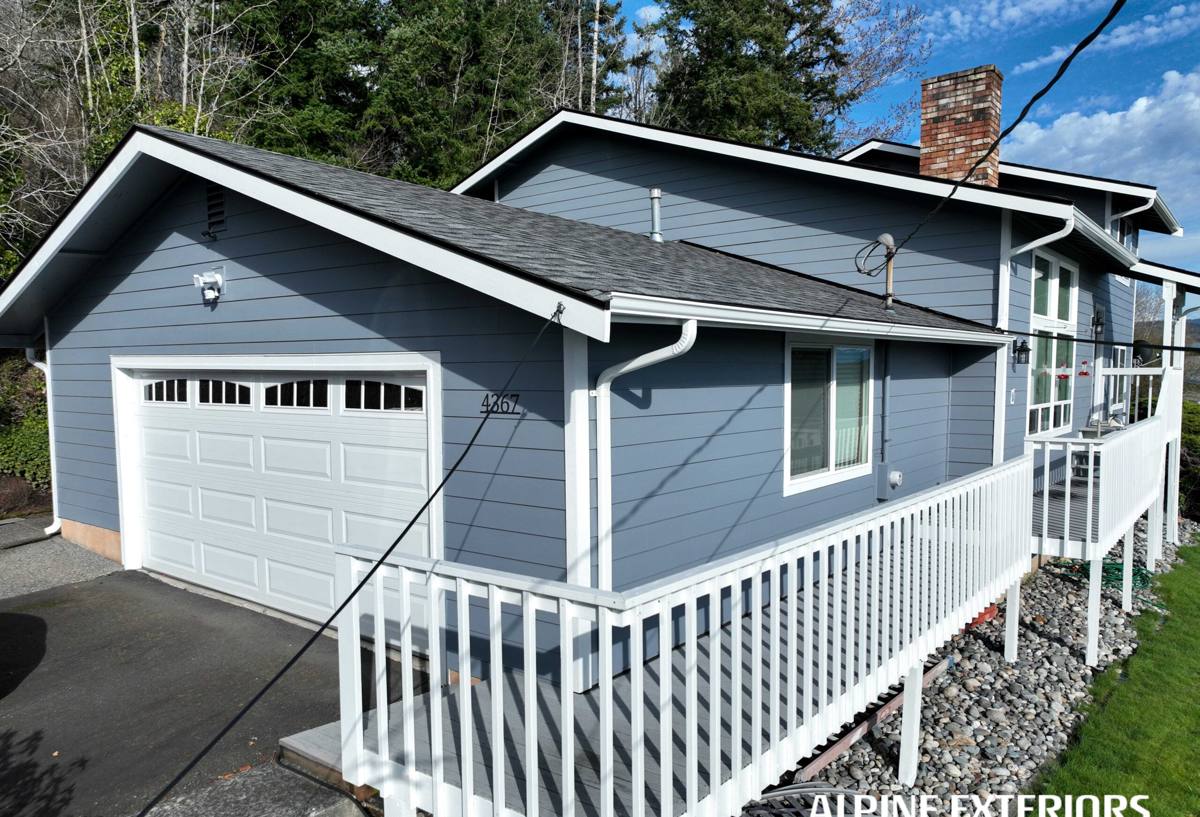
Flounder Bay sits close enough to the water that the air itself is part of the roofing equation. Homes here take on a different combination of stresses than a roof three miles inland in downtown Anacortes: salt-laden air off the marina and Rosario Strait, wind-driven rain that hits shingles sideways instead of straight down, and long stretches of shaded, damp weather that give moss and moisture time to work into a roof system rather than just run off it. None of that means asphalt shingles are the wrong choice for the neighborhood — they're still one of the most practical, cost-effective roofing materials available, and a huge share of Skagit County homes are roofed in them for good reason. It means the installation has to be done with the local conditions in mind, not treated like a generic job pulled from a catalog spec sheet.
This page is specifically about asphalt shingle roofing for Flounder Bay properties — new installations and full re-roofs. If your roof just needs a repair rather than a replacement, the same crew handles that too, but the focus below is on what a correct, built-for-this-location shingle roof actually involves.
What Flounder Bay's Climate Actually Does to a Roof
Salt Air and Metal Components
Salt in the air accelerates corrosion on anything metal on a roof — nails, flashing, vent boots, drip edge. A roof installed with the wrong fastener or flashing grade might look fine for a couple of years and then start showing rust streaks, stained shingles, or flashing that's thinned out and no longer sealing properly. Waterfront and near-waterfront homes need corrosion-resistant fasteners and flashing as a baseline, not an upgrade.
Wind-Driven Rain
Anacortes gets plenty of straight-down rain, but proximity to open water also means gustier, more sideways weather at times. Wind-driven rain finds its way under shingles at the edges, around penetrations, and at any seam where the underlayment or flashing wasn't lapped correctly. A roof that would perform fine in a calmer inland setting can leak in a waterfront location if the underlayment and flashing details weren't upgraded to match.
Moss and Shade
A long moss season is standard for this whole region, but tree cover and persistent dampness common around Flounder Bay properties can make it worse. Moss holds moisture against the shingle surface, works its way under shingle tabs as it grows, and can lift edges enough to let water in. Left unmanaged for years, moss growth shortens the usable life of an otherwise sound roof.
What a Correctly Built Asphalt Shingle Roof Needs Here
A roof that's going to hold up in Flounder Bay's conditions is built in layers, and every layer matters — not just the shingle you can see from the street.
- Starter strip at eaves and rakes — sets the first course and seals the vulnerable roof edges against wind-driven rain
- High-quality synthetic or self-adhered underlayment — the actual waterproofing layer beneath the shingles; this is what protects the deck if wind or ice ever gets water past the shingle surface
- Ice-and-water shield at eaves, valleys, and penetrations — self-sealing membrane in the spots most likely to see standing water or wind-forced moisture
- Corrosion-resistant flashing and fasteners — a must near the water, and cheap insurance everywhere else in Skagit County
- Proper nailing pattern — correct nail count and placement per shingle, not just "enough to hold it down," which affects both wind rating and warranty validity
- Balanced attic ventilation — intake at the eaves, exhaust at the ridge, sized to the attic volume
- Algae-resistant shingle granules — copper- or zinc-infused granules that resist the dark streaking common in damp coastal climates
Skip any one of these and the roof might still look right at installation — the problems show up two, five, or ten years later, usually as leaks, premature granule loss, or moss that keeps coming back no matter how often it's cleaned off.
Choosing a Shingle for a Marine-Influenced Climate
Not every asphalt shingle product is built the same way, and the differences matter more in a location like Flounder Bay than they would somewhere drier and more sheltered.
| Shingle Type | Typical Lifespan | Best Fit For | Trade-Offs |
|---|---|---|---|
| 3-tab shingle | 15–20 years | Budget-conscious re-roofs, secondary structures | Lower wind rating, less algae resistance, flatter look |
| Architectural (dimensional) shingle | 25–30 years | Most Flounder Bay homes | Higher upfront cost, but stronger wind rating and better moisture shedding |
| Premium/designer architectural shingle | 30+ years | Homes prioritizing curb appeal and longevity | Highest material cost, longer warranty terms |
For a waterfront or near-waterfront property, we generally steer homeowners toward architectural shingles with algae-resistant granules and a wind rating suited to open exposure. It's not that 3-tab shingles are a bad product — it's that the lighter weight and lower wind rating make them a poorer match for a location that regularly sees stronger, wetter weather off the water. That's a fit-for-climate judgment, not a knock on the product itself.
Our Installation Process
- On-site assessment — we look at the existing roof deck, ventilation setup, flashing conditions, and any moss or moisture damage before quoting anything
- Tear-off and deck inspection — old roofing comes off down to the deck, and any soft, rotted, or delaminated sheathing gets flagged and replaced before anything new goes down
- Flashing and drip edge — new corrosion-resistant flashing at valleys, chimneys, walls, and roof edges
- Ice-and-water shield and underlayment — installed at all vulnerable points, then across the full deck
- Ventilation check and correction — intake and exhaust venting verified or upgraded so the attic can actually breathe
- Shingle installation — laid to manufacturer spec with correct nailing pattern and exposure, working around every penetration and valley individually
- Final walk-through — we go over the finished roof with the homeowner and explain what was done and why
Every step matters, but the tear-off and deck inspection is where a lot of hidden problems get found — and where a rushed job cuts corners that don't show up until years later.
Repair, Moss Treatment, and Roof Maintenance for Existing Roofs
Not every Flounder Bay roof needs full replacement. If the shingles and deck are still sound, targeted repair and regular maintenance can add real years to the roof's life:
- Moss removal using methods that don't damage the granule surface, followed by a treatment to slow regrowth
- Replacing cracked, curling, or wind-lifted shingles before they let water into the deck
- Re-sealing or replacing worn flashing around chimneys, skylights, and vent pipes
- Clearing gutters and valleys so water actually leaves the roof instead of sitting against it
- Checking and correcting attic ventilation if moisture staining is showing up on the underside of the deck
If moss has been a recurring issue, we'll also talk honestly about tree cover and shading around the house — sometimes the roof material isn't the problem, the amount of sun the roof gets is.
Ventilation: The Part of the Roof Nobody Sees
A shingle roof is only half the system — the other half is what's happening underneath it in the attic. Without balanced intake and exhaust ventilation, warm moist air from the house gets trapped against the underside of the deck. In a climate as damp as Skagit County's, that trapped moisture condenses, and over time it can rot sheathing, degrade insulation, and shorten the life of the shingles from below even while the top side looks fine. Correcting ventilation is often the single highest-value thing we can do on an older Flounder Bay home during a re-roof, and it's something a rushed or low-bid job frequently skips because it doesn't show up in a walk-around inspection.
What Affects the Cost of the Job
| Factor | Why It Matters |
|---|---|
| Roof size and pitch | More surface area and steeper pitches mean more material, labor, and safety setup |
| Number of layers to remove | Tear-off of multiple old layers takes longer and adds disposal cost |
| Deck condition | Rotted or soft sheathing needs replacement before new roofing goes down |
| Shingle grade chosen | 3-tab, architectural, and premium products carry different material costs |
| Flashing and penetration count | Chimneys, skylights, and multiple valleys add labor and material |
| Ventilation upgrades needed | Adding or correcting intake/exhaust venting is worth the added cost long-term |
We won't quote a Flounder Bay roof off a satellite photo — the only way to give an honest number is to actually get on or under the roof and look at the deck, flashing, and ventilation firsthand.
A Simple Maintenance Checklist for Flounder Bay Homeowners
- Have gutters and valleys cleared at least twice a year, more often under heavy tree cover
- Watch for dark streaking or moss patches and address them early rather than waiting for a full growth mat
- After major windstorms, do a visual check from the ground for lifted or missing shingles
- Keep an eye on attic moisture — musty smells or visible staining on the underside of the deck are early warning signs
- Have flashing around chimneys and skylights checked every few years, since these are the most common leak points on an otherwise sound roof
Why It Matters That We Already Work in Flounder Bay
A roofing crew that regularly works Flounder Bay and the surrounding Anacortes waterfront already knows which fastener and flashing grades hold up against salt air, how much ventilation a given attic actually needs in this climate, and where moss tends to come back fastest based on tree cover and sun exposure. That's the kind of judgment that comes from doing the work here repeatedly, not from a generic install guide. It shows up in the details — the flashing choice, the underlayment spec, the nailing pattern — that don't matter until the first real windstorm off the water, and then matter a great deal.
If you're weighing a new roof or a repair on a Flounder Bay home, we're happy to come take a look and give you a straightforward assessment — what shape the roof is actually in, what it needs, and what your real options are. Reach out for a free, no-pressure estimate using the form below.