 Anacortes Siding
 Why Burlington Homes Need a Different Approach to Windows
Burlington sits in the Skagit Valley, close enough to the Salish Sea that salt-laden air reaches window frames and hardware even on properties that never see open water. Add in the driving, wind-pushed rain that comes through the valley most of the fall and winter, plus a moss and mildew season that can stretch six months or more on shaded north and west walls, and you have a climate that is genuinely tough on windows — not because it's extreme, but because it's relentless. A window that would hold up fine in a dry inland climate can develop seal failure, frame rot, or chronic condensation here within a few years if it wasn't chosen or installed with this specific climate in mind.
Energy efficiency in Burlington isn't just about a lower power bill, though that matters. It's about keeping moisture out of the wall assembly, keeping frames from swelling and sticking, and keeping glass from fogging between panes when the temperature swings the way it does in a marine valley climate. A window that's efficient on paper but poorly suited to sustained wet exposure will underperform here no matter what the label says.
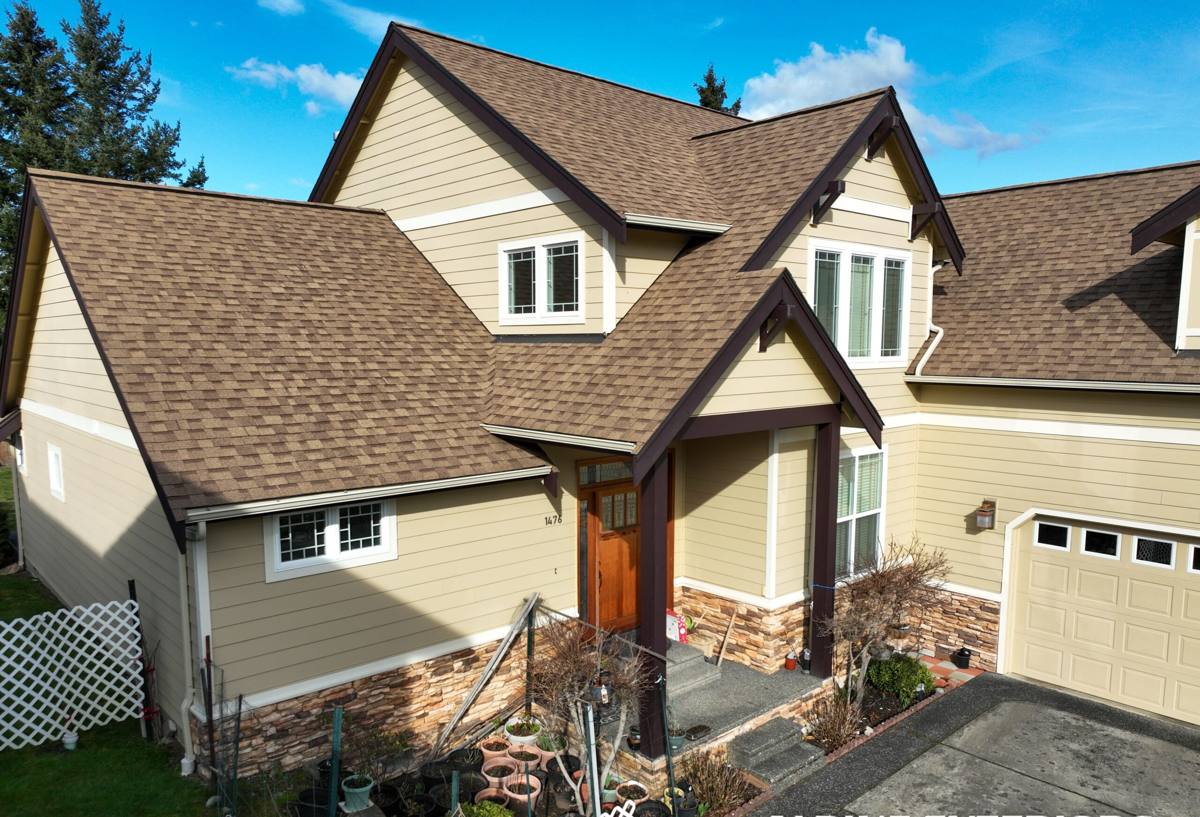
What Salt Air, Driving Rain, and Moss Season Actually Do to Windows
Salt air and hardware corrosion
Salt in the air accelerates corrosion on window hardware — hinges, locks, balances, and screws — well before most homeowners notice a problem with the glass itself. Once hardware starts to bind or corrode, windows get harder to open and close, seals get stressed, and small gaps start letting in both air and moisture.
Driving rain and wind-driven infiltration
Skagit County storms rarely come straight down. Wind pushes rain sideways into wall assemblies, which means the flashing and sealant details around a window matter as much as the window unit itself. A well-built window installed with poor flashing will still leak. This is the single most common cause of window-related water damage we see in this area, and it has almost nothing to do with the window brand.
Moss, mildew, and shaded exposures
Long stretches of damp, low-light weather let moss and mildew take hold on sills, trim, and any wood surfaces that stay wet for days at a time. Wood-frame windows without a durable exterior cladding are especially vulnerable on shaded elevations. This doesn't mean wood windows are off the table — it means the exterior-facing material needs to be one that sheds moisture and resists organic growth, with interior wood reserved for where it can stay dry.
Signs Your Current Windows Are Costing You Money
- Visible fog or moisture trapped between panes of double-pane glass — the seal has failed and the insulating gas is gone
- Frames feel cold to the touch even when the glass itself feels fine
- Windows are hard to open, close, or lock — often a sign of frame swelling or corroded hardware
- Condensation forms on the inside of the glass regularly, especially in bathrooms, kitchens, or bedrooms
- You can feel a draft near the frame edge on a windy day, even with the window fully latched
- Visible gaps, cracked caulking, or soft trim around the window exterior
- Noticeably higher heating bills compared to similar-sized homes nearby
Any one of these on its own might not mean full replacement is necessary. Several together, especially on a home more than 20 years old, usually mean the windows are working against you rather than for you.
What "Energy-Efficient" Actually Means in This Climate
Energy-efficient windows are rated on a few key numbers, and in a marine climate like Burlington's, some matter more than others:
- U-factor — measures how well the window resists heat loss. Lower is better. This is the number that most directly affects your heating bill through our long, mild-but-cool winters.
- Condensation resistance — measures how well a window resists interior condensation. This matters more here than in drier climates, because our humidity stays elevated for much of the year.
- Air leakage rating — measures how much air passes through the window assembly itself, separate from the installation. Lower is better, but a great air leakage rating on paper won't help if the installation isn't sealed correctly.
- Solar heat gain coefficient (SHGC) — matters less here than in sunnier climates, but still relevant on south- and west-facing walls that get direct afternoon sun in summer.
For most Burlington homes, we prioritize a low U-factor and strong condensation resistance over aggressive solar control, because the bigger year-round cost here is heat loss and moisture, not overheating.
Frame Materials: What Holds Up Here and What Doesn't
| Frame Material | How It Handles Our Climate | Maintenance |
|---|---|---|
| Vinyl | Doesn't rot, resists moisture well, good insulating value; quality varies significantly by manufacturer and welded-corner construction | Low — occasional cleaning |
| Fiberglass | Excellent dimensional stability, doesn't expand/contract with our temperature swings, strong moisture resistance | Low |
| Wood-clad (exterior clad, interior wood) | Good performance when the exterior cladding is intact; interior wood offers a traditional look and stays protected from weather | Moderate — exterior cladding needs to remain sealed at joints |
| Solid wood (unclad) | Requires diligent upkeep to resist moss, mildew, and rot on shaded or north-facing walls in this climate | High — regular repainting and sealing |
| Aluminum | Conducts heat and cold readily, prone to condensation on the frame itself unless thermally broken | Low, but efficiency suffers without a thermal break |
We don't push one frame material as the universal answer. A vinyl or fiberglass window is often the lower-maintenance, better-value choice for most Burlington homes, particularly on shaded or weather-exposed walls. Wood-clad windows still make sense where the look matters and the homeowner is comfortable with the added upkeep. We'll walk through the honest trade-offs for your specific home and exposure rather than defaulting to whatever's easiest to sell.
Why Installation Matters More Than the Window Itself
We've said it above but it's worth its own section: in this climate, a mediocre window installed correctly will outperform an excellent window installed poorly. The installation details that actually keep water out during a driving Skagit Valley rain include:
- Proper flashing integration — the window flashing needs to tie into the building's water-resistive barrier correctly, shingle-style, so water is directed out and down, never trapped behind the siding.
- Sill pan installation — a sloped, sealed sill pan under the window unit catches any water that gets past the primary seal and directs it back outside instead of into the wall framing.
- Correct sealant selection and placement — not every gap should be sealed solid; some need to stay as a drainage path. Sealing the wrong spot can trap moisture instead of releasing it.
- Proper shimming and squaring — a window that's out of square puts uneven stress on the frame and seals, which shortens the life of both.
- Insulation of the gap between window and framing — done correctly, without over-compressing insulation or leaving voids that become cold spots.
Any one of these done wrong can undo the benefit of an otherwise good window, and the failure often doesn't show up for a year or two — by which point water has already found its way into the wall assembly.
Our Process for Burlington Window Replacement
1. On-site assessment
We look at each window opening individually — not just the glass, but the surrounding trim, siding, and any signs of past water intrusion. Different elevations of the same house often need different solutions depending on sun and rain exposure.
2. Product selection based on exposure, not just budget
We'll recommend frame material and glass package based on where each window sits — a shaded, rain-exposed north wall gets a different recommendation than a sheltered, south-facing wall — and explain why, in plain terms.
3. Removal and inspection of the opening
Old windows come out carefully so we can inspect the framing underneath for rot or existing moisture damage before anything new goes in. This step catches problems that are invisible from outside.
4. Correct flashing and sill pan installation
This is the step described above that determines whether the new window actually stays dry through our wet season, not just the first year but for the life of the window.
5. Window installation, shimming, and sealing
The unit is set square and level, properly insulated, and sealed with the right products in the right locations — solid where it should be solid, open where drainage needs a path.
6. Interior and exterior trim-out
Trim is finished to match the existing home, and exterior details are sealed against the driving rain this area is known for.
7. Final walkthrough
We check every window operates smoothly, seals correctly, and looks right before we consider the job done.
What Affects the Cost of a Window Project
| Factor | Why It Matters |
|---|---|
| Number and size of windows | The most direct driver of total project cost |
| Frame material | Vinyl is typically the most budget-friendly; fiberglass and wood-clad cost more upfront but differ in longevity and upkeep |
| Glass package | Double-pane vs. triple-pane, low-E coatings, and gas fill all affect both cost and performance |
| Condition of the existing opening | Rot or water damage found during removal adds repair work before the new window goes in |
| Exterior finish work | Matching existing trim, siding cuts, or paint adds labor beyond the window unit itself |
| Access and window height | Second-story or hard-to-access windows take more time and equipment |
We won't quote a number without seeing the actual windows and openings — anyone who does is guessing. What we can tell you honestly is that the installation labor and flashing detail, not just the window unit, make up a real share of what a correct job costs, and it's not the place to cut corners in this climate.
Checklist: What to Confirm Before Hiring a Window Contractor in Burlington
- Do they inspect the framing behind each opening, not just measure for the new unit?
- Do they explain their flashing and sill pan approach specifically, rather than just naming a window brand?
- Are they familiar with how our wind-driven rain affects installation on your home's specific exposure?
- Do they offer a written scope that covers trim, sealing, and cleanup — not just the window units?
- Can they explain frame material trade-offs for your home rather than pushing one product line?
- Do they carry proper licensing and insurance for exterior work in Washington?
- Will they walk the finished job with you before calling it complete?
Why a Crew That Already Works Burlington Matters
Skagit County's marine climate isn't uniform even within a few miles. A home a short distance from open water deals with more direct salt exposure; a home tucked against tree cover deals with more shade and slower drying after rain. A crew that already works Burlington and the surrounding valley regularly has seen how these differences play out on real houses — which elevations fail first, which frame materials hold up under sustained damp shade, and where driving rain actually gets into a wall if the flashing isn't right. That local pattern recognition is hard to replace with a general install crew working from a spec sheet, and it's usually the difference between a window job that lasts and one that needs revisiting in a few years.
If your windows are drafty, fogged, hard to operate, or just old enough that you're wondering whether it's worth it, we're happy to take a look and give you a straight answer — no pressure, no upsell. Reach out for a free estimate using the form below, and we'll walk your home's specific exposures with you before recommending anything.