 Anacortes Siding
 Conway's Climate Is Harder on Siding Than It Looks
Conway sits in the lowlands of Skagit County, close enough to the water and the river delta that homes here deal with a specific combination of punishment: salt-tinged air moving in off the Salish Sea, long stretches of driving rain in fall and winter, and a moss and mildew season that can run eight months or more in a shaded yard. None of that is dramatic on its own. It's the combination, repeated year after year, that wears out siding that wasn't built or installed for it.
Wood-based siding swells and checks as it cycles wet and dry. Vinyl gets brittle in cold snaps and can warp where it faces afternoon sun through gaps in the tree cover. Anything with exposed seams or poor flashing detail gives moisture a path behind the cladding, where it does the real damage — to sheathing, framing, and insulation you can't see until there's a problem. A siding job in Conway isn't just about what's on the outside; it's about whether water and moss have anywhere to take hold.
Why We Only Install James Hardie Here
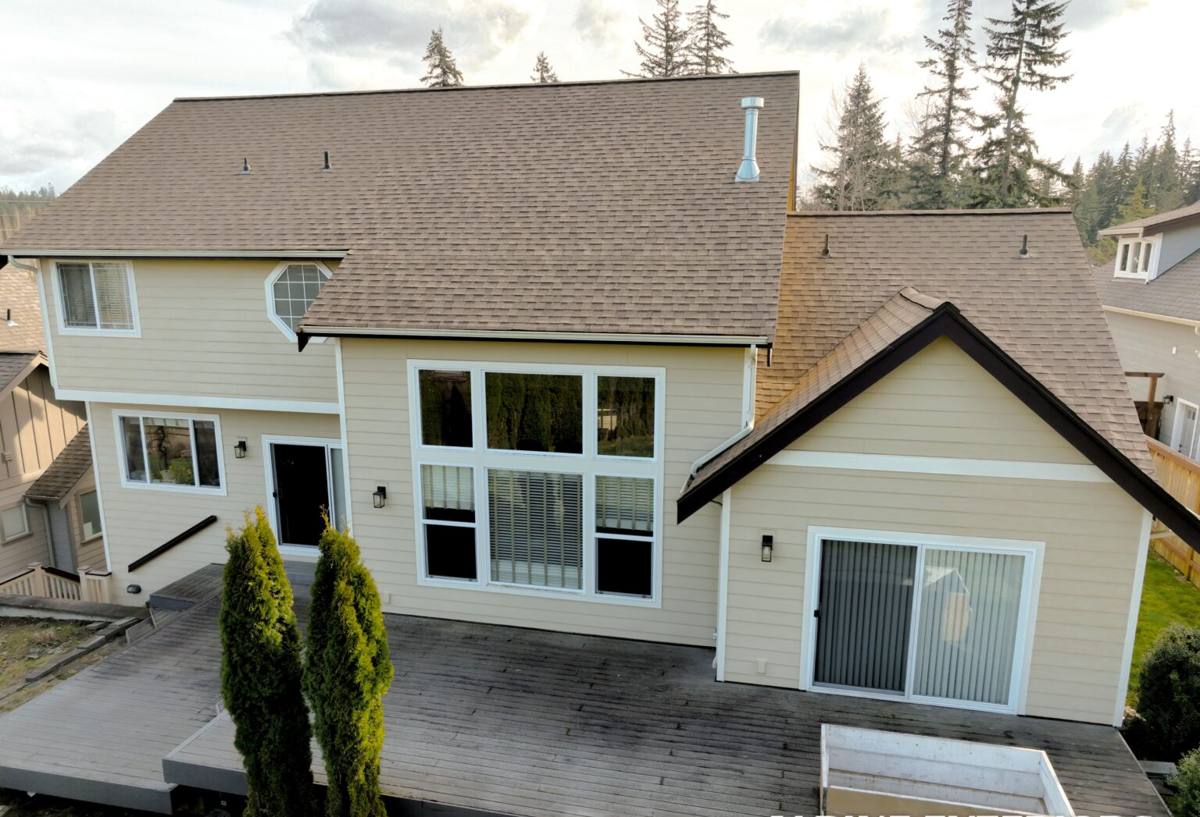
We're a Hardie-only crew, and Conway is exactly the kind of environment that explains why. James Hardie fiber cement is engineered specifically for wet coastal climates like this one. It's manufactured with an HZ5 formulation for the Pacific Northwest, meaning the product itself — not just the paint on top of it — is built to handle the moisture cycling that's routine here. It won't rot, it won't feed mold the way wood fiber can, and it's non-combustible, which matters as much for insurance conversations as it does for peace of mind.
What ColorPlus Finish Adds in a Wet Climate
Most of the boards we install carry Hardie's factory-applied ColorPlus finish rather than field paint. That finish is baked on under controlled conditions and backed by its own warranty against fading and peeling. In a climate where paint failure is usually a moisture problem in disguise, starting with a finish that's already cured and factory-bonded to the board removes one of the most common failure points we see on older homes in this area.
Why We Turn Down Other Products
We don't install vinyl, LP SmartSide, cedar, or primed spruce, and we're upfront about why. Vinyl flexes and gaps over time and doesn't hold paint if a homeowner ever wants to change the color. Wood-based products, even engineered ones, still rely on a wood core that can wick moisture at cut edges. Cedar looks great new but demands a maintenance schedule most homeowners don't keep up with in a climate this wet. None of these are "bad" products in every setting — they just aren't the right fit for what Conway's weather does to a house, and we'd rather turn down work than install something we don't think will hold up here.
What a Correct Hardie Installation Actually Involves
Fiber cement siding is only as good as the details underneath it. This is where most of the difference between a job that lasts decades and one that fails early actually happens — and it's mostly invisible once the siding is up.
Moisture Management Comes First
Before a single board goes on, the wall needs a properly lapped weather-resistant barrier, correctly integrated window and door flashing, and a drainage plane that gives any water that does get behind the cladding a way back out. In a rainfall-heavy area like this, we pay particular attention to head flashing above windows and doors and to how the barrier terminates at the foundation — two spots where a shortcut shows up as rot or staining within a few wet seasons.
Clearance, Fasteners, and Joints
Hardie's installation specifications call for a minimum clearance between the bottom of the siding and grade, roof lines, decks, and paved surfaces, so splashback and standing water don't sit against the board. We follow Hardie's nailing patterns and fastener spacing exactly — over-driving or under-driving nails is a common source of callback problems — and we treat butt joints and trim intersections with the sealants Hardie specifies, not whatever caulk happens to be on the truck.
Trim, Caulk, and Field Painting
Even with ColorPlus boards, field-cut edges and trim need proper sealing and, in some cases, field touch-up to stay protected. We treat these details as part of the install, not an afterthought, because a skipped bead of sealant at a butt joint is exactly the kind of small miss that turns into a moisture problem two winters later.
Comparing Siding Options for a Conway Home
Homeowners often ask us to explain, plainly, how the options stack up. Here's the honest comparison we'd give a neighbor, not a sales pitch.
| Factor | James Hardie Fiber Cement | Vinyl | Wood / Engineered Wood |
|---|---|---|---|
| Moisture resistance | Engineered for wet climates (HZ5); resists rot | Doesn't rot, but seams and gaps let moisture behind it | Vulnerable at cut edges and joints even when treated |
| Fire performance | Non-combustible | Combustible, can melt or warp near heat | Combustible |
| Finish durability | Factory ColorPlus finish, warrantied against fade/peel | Color molded in, can fade and chalk over time | Requires repainting/staining on a maintenance cycle |
| Upfront cost | Medium-High | Low-Medium | Medium |
| Long-term maintenance cost | Low when installed to spec | Low, but limited repair/color options | Higher — recoating, sealing, spot repairs |
| Typical lifespan when installed correctly | Multiple decades | 15-25 years | Varies widely with maintenance |
None of these numbers are guarantees — lifespan and cost always depend on installation quality, sun and rain exposure, and upkeep. But the pattern holds across most homes we see in this part of Skagit County: the siding that performs best long-term is the one engineered for exactly this kind of weather.
Our Process for a Conway Siding Project
We approach every Conway home the same methodical way, because skipping steps is where problems start.
- On-site inspection of existing siding, trim, and any signs of moisture intrusion behind the current cladding
- Written scope covering tear-off, house wrap or weather barrier condition, flashing repair or replacement, and the specific Hardie product line and profile
- Removal of old siding and inspection of sheathing for hidden rot or damage before anything new goes up
- Installation of weather barrier, flashing, and drainage details before the first board is hung
- Hardie siding installed to manufacturer fastening and clearance specs, with trim and joint sealing as we go
- Final walk-through and warranty registration paperwork so the manufacturer warranty is properly on file
Living With Hardie Siding in a Salt-Air, Mossy Climate
Fiber cement is low-maintenance, not no-maintenance. A little seasonal attention goes a long way toward getting the full lifespan out of the product, especially with the moss and mildew pressure common in shaded parts of Skagit County.
- Rinse siding with a garden hose once or twice a year to clear salt residue, pollen, and organic buildup before it feeds moss
- Keep gutters clear so overflow doesn't run down the face of the siding or pool at the base of a wall
- Trim back shrubs and trees so siding gets airflow and sun exposure — shaded, damp walls are where moss and mildew take hold fastest
- Inspect caulking at trim and joints every year or two and have gaps resealed before they become entry points for water
- Address any paint or ColorPlus finish scuffs promptly rather than letting bare fiber cement sit exposed
- Watch for staining or soft spots near grade, decks, or roof-to-wall intersections — early signs are much cheaper to fix than deferred ones
Warranty and What It Actually Covers
James Hardie backs its siding with a manufacturer warranty, and ColorPlus-finished products carry a separate finish warranty covering fade and peel. These are transferable to a new owner if the home is sold, which is worth mentioning to anyone thinking about resale value down the road. What the manufacturer warranty does not cover is installation error — which is exactly why correct installation, not just the product choice, determines whether a warranty claim is ever needed in the first place. We keep our installation documentation and product lot information on file so that if a warranty question ever comes up, it's a straightforward conversation, not a scramble.
Why Hiring a Crew That Already Works Conway Matters
Conway isn't a big market, and a lot of siding crews treat it as a drive-by stop between bigger jobs elsewhere. That shows up in small ways — unfamiliarity with how local permitting works, generic detailing that ignores how much rain a specific wall orientation actually takes, or simply not being around if a warranty or maintenance question comes up a few years later. Our crew is based out of Anacortes and works this stretch of Skagit County regularly, so we're not guessing at how the climate here behaves or scrambling to source Hardie product and trim to match an existing job. Familiarity with the area isn't a marketing line — it's the difference between a generic install and one detailed for what this specific climate actually does to a house.
If you're weighing a full re-side or dealing with aging, failing siding on a Conway-area home, we're happy to take a look and give you a straight answer about what your home needs. Reach out for a free, no-pressure estimate — there's a form below to get started.