 Anacortes Siding
 Roof Repair Built for Mount Vernon's Weather
Mount Vernon sits in the heart of Skagit County, close enough to the Sound and the Cascade foothills to catch the worst of both worlds: salt-laden air moving in off the water, long stretches of driving rain through the fall and winter, and the shaded, damp conditions that make moss season last most of the year. A roof out here doesn't fail because of one big storm. It fails slowly, from small problems that get ignored until they're expensive.
We do roof repair work for homes in Mount Vernon and the surrounding area, and most of the calls we get aren't emergencies. They're roofs that have been quietly losing ground to moisture and moss for a year or two, and the owner finally noticed a stain on the ceiling or a soft spot in the decking. This page covers what actually goes wrong with roofs here, what a correct repair looks like, and how we work.
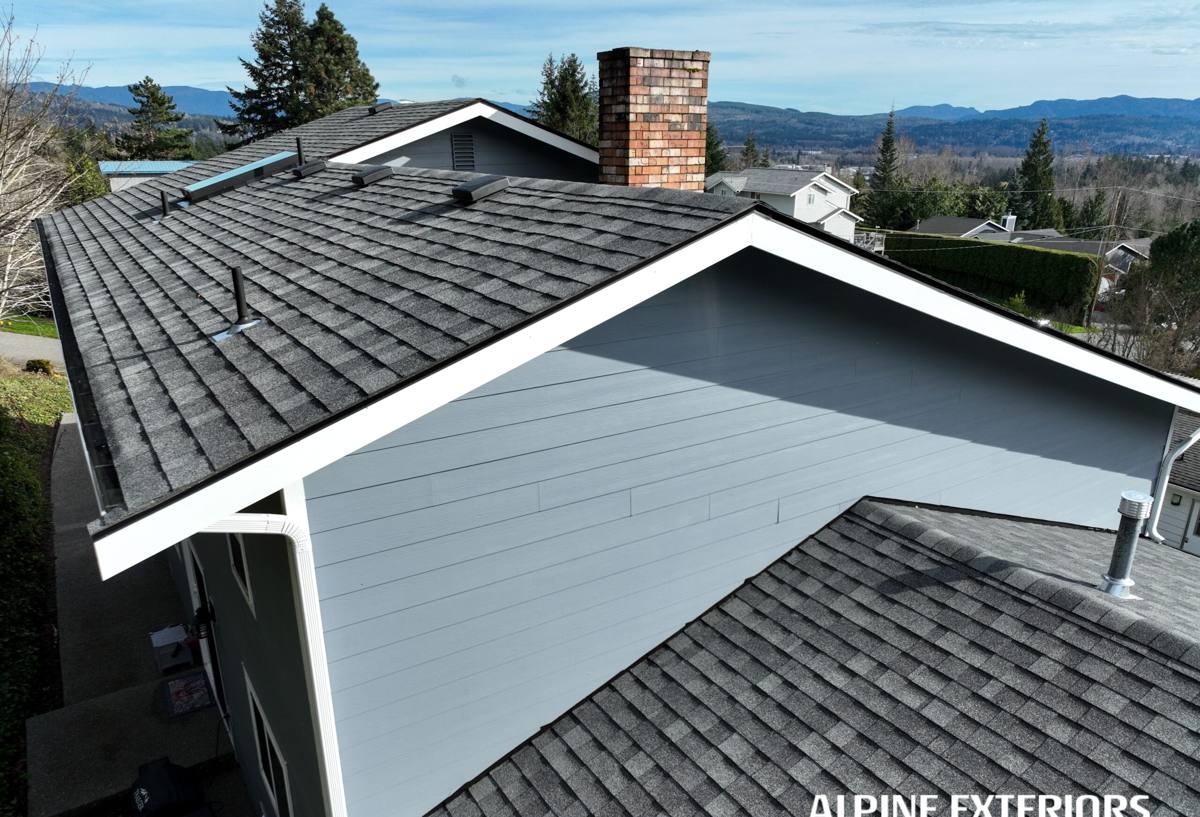
Why Skagit County Roofs Take a Different Kind of Beating
Salt Air and Corrosion
Even inland from the immediate waterfront, salt-carrying air moves through Skagit County and accelerates corrosion on exposed metal — flashing, fasteners, gutter hardware, and vent caps. Once that metal starts to rust and pit, it stops shedding water the way it's supposed to, and that's usually where a leak starts, not in the shingles themselves.
Driving Rain
Pacific Northwest rain doesn't just fall straight down. Wind-driven rain gets pushed sideways under shingle edges, into open laps at flashing joints, and up under ridge caps that have started to lift. A roof can look fine from the ground and still be letting water in at these pressure points every time a storm rolls through.
Moss Season
Between the moisture and the mild temperatures, moss and algae have a long growing window here — often most of the year on north-facing or shaded slopes. Moss isn't just cosmetic. It holds water against the roofing material, works its way under shingle tabs as it grows, and can lift edges enough to let wind and rain in underneath.
Signs Your Mount Vernon Roof Needs Repair
Most roof problems give warning signs well before there's an active leak inside the house. Worth checking for, especially heading into the wet months:
- Moss buildup on shaded or north-facing slopes, especially anything thick enough to hold visible moisture
- Shingles that are curling, cracked, or missing granules (check the bottom of downspouts for granule buildup)
- Rust streaks or soft, pitted spots on flashing around chimneys, vents, and skylights
- Water stains or discoloration on ceilings or in the attic, even faint ones
- Daylight visible through the roof deck when viewed from inside the attic
- Sagging in any section of the roofline, which can indicate deck or structural moisture damage
- Gutters that are pulling away from the fascia or overflowing during normal rain
Any one of these on its own might be a minor fix. A few of them together usually means the roof has been dealing with moisture longer than it should have.
Common Repair Issues We See in This Area
Flashing Failures
Flashing around chimneys, skylights, vent pipes, and roof-to-wall transitions is where most leaks actually originate — not in the field of the roof. Corroded, improperly lapped, or poorly sealed flashing is one of the most common repairs we're called out for in Mount Vernon.
Moss and Algae Damage
Beyond the moss itself, we regularly find shingle granule loss, soft decking, and lifted shingle edges underneath heavy moss growth that's gone untreated for a season or more. Removing the moss without addressing what let it take hold in the first place just means it comes back.
Valley and Ridge Leaks
Roof valleys concentrate a huge volume of water during a heavy Skagit County rain event, and any gap, debris buildup, or aging underlayment there shows up fast as an interior leak. Ridge caps that have lifted from wind or age let driving rain work its way in from above.
Gutter-Related Damage
Clogged or failing gutters back water up under the roof edge, which rots fascia boards and can damage the lowest course of shingles or roofing material over time. It's a roof problem that actually starts at the gutter.
What a Correct Roof Repair Actually Involves
A Real Inspection First
We don't quote a roof repair from the ground or from a photo. A proper inspection means getting on the roof, checking the attic from inside where accessible, and tracing water stains back to their actual source — which is often several feet from where the stain shows up inside the house.
Matching Materials, Not Just Patching
A repair that doesn't match the existing roofing material's type, profile, and weathered color stands out and can create its own water-shedding problems at the seams. We match materials as closely as possible and tie new work into the existing roofing correctly, not just caulk over the gap.
Underlayment and Flashing Done Right
Surface-level shingle repairs that skip damaged underlayment or corroded flashing underneath are a short-term fix. If the underlayment or flashing is compromised, we replace it as part of the repair — that's usually where the actual leak protection lives, not in the visible shingles.
Addressing the Cause, Not Just the Symptom
If moss caused the damage, we treat and address the moss growth, not just repair the shingle underneath it. If a gutter backup caused fascia rot, we deal with the gutter too. A repair that ignores the root cause is a repair you'll be paying for again.
Repair or Replacement? How We Help You Decide
Not every damaged roof needs to be replaced, and not every roof is worth repairing indefinitely. We give you an honest read on which situation you're in — we don't push replacement on a roof that has years of life left in it.
| Factor | Repair Usually Makes Sense | Replacement Usually Makes Sense |
|---|---|---|
| Roof age | Roughly under 15–20 years, depending on material | At or past the material's expected service life |
| Extent of damage | Localized to one section, flashing point, or valley | Widespread across multiple slopes |
| Repair history | First or second repair in this area | Same spot has been repaired multiple times already |
| Decking condition | Solid decking under the damaged area | Soft, rotted, or delaminated decking in multiple spots |
| Moss/algae staining | Surface growth without underlying material damage | Long-term staining with granule loss and shingle lifting |
Even when we recommend replacement, that's a separate conversation and a separate estimate — this page is specifically about repair work, and we'll always tell you plainly which one your roof actually needs.
Our Roof Repair Process
1. Inspection and Estimate
We inspect the roof, identify the cause of the damage (not just where it shows up), and give you a written estimate that explains what we found and what the repair involves — no vague line items.
2. The Repair
We remove and replace damaged material, correct any flashing or underlayment issues found underneath, and treat moss or algae growth as needed. We work efficiently around Skagit County's weather windows, since roof work depends on dry conditions.
3. Cleanup and Walkthrough
Job site debris, old materials, and stray fasteners get cleared from the roof, gutters, and ground before we consider the job done. We walk the repair with you so you know exactly what was done and why.
Materials We Work With
Most Mount Vernon homes are roofed in asphalt composition shingle, and that's the majority of our repair work. We also repair metal roofing and, less often, cedar shake. Each has different repair considerations:
- Asphalt composition shingle — the most common material locally; repairs involve matching shingle profile and color as closely as the weathered original allows
- Metal roofing — durable against moss and driving rain, but repairs require matching panel profile and paying close attention to fastener and seam condition, since that's where leaks develop
- Cedar shake — has real aesthetic appeal, but in this climate it demands more consistent maintenance to manage moisture and moss than other materials; we'll walk you through that maintenance burden honestly if your home has it
We don't push a material switch during a repair unless the existing roofing has a structural reason to change. Our job on a repair call is to fix what's there correctly, not upsell a different system.
Why Hire a Crew That Already Works Mount Vernon
A roof repair done by someone unfamiliar with Skagit County conditions can miss the real cause. A crew that works this area regularly knows which slopes hold moss longest, how driving rain off the Sound behaves against certain roof orientations, and which flashing details tend to fail first in salt-influenced air. That local pattern recognition is the difference between a repair that lasts and one that's back on the schedule next winter.
We're based nearby in Anacortes and work throughout Skagit County, so a repair visit isn't a special trip — it's part of our regular route. That matters when you need someone back out for a follow-up check, or when timing a repair around the next incoming storm actually matters.
Maintenance That Extends the Life of a Repair
A correctly done repair still needs some basic upkeep in this climate to get its full lifespan:
- Clear moss and debris from shaded slopes at least once a year, more often under overhanging trees
- Keep gutters clear so water isn't backing up under roof edges
- Trim back branches that keep roof sections damp and shaded longer than necessary
- Have flashing points checked periodically, especially after a hard windstorm
If you're seeing moss buildup, a stain on the ceiling, or you just haven't had your roof looked at in a few years, we're happy to come take a look. Reach out for a free, no-pressure estimate — fill out the form below and we'll get back to you.