 Anacortes Siding
 Roofing Built for Where You Actually Live
Mount Vernon sits far enough inland to escape the worst of the salt spray that hits Anacortes waterfront homes directly, but it still gets the same weather system: long stretches of low-pressure rain rolling in off the Salish Sea, damp ground fog that lingers into the afternoon, and a moss season that can run eight or nine months out of the year. A roof that was cut corners on in a drier climate will show it here within a few winters — not with a dramatic failure, but with slow, quiet problems: a soft spot near a valley, a stain creeping across a ceiling, shingles that granulate faster than they should. Asphalt shingle roofing done right for Skagit County isn't about a fancier shingle. It's about details most crews rush past.
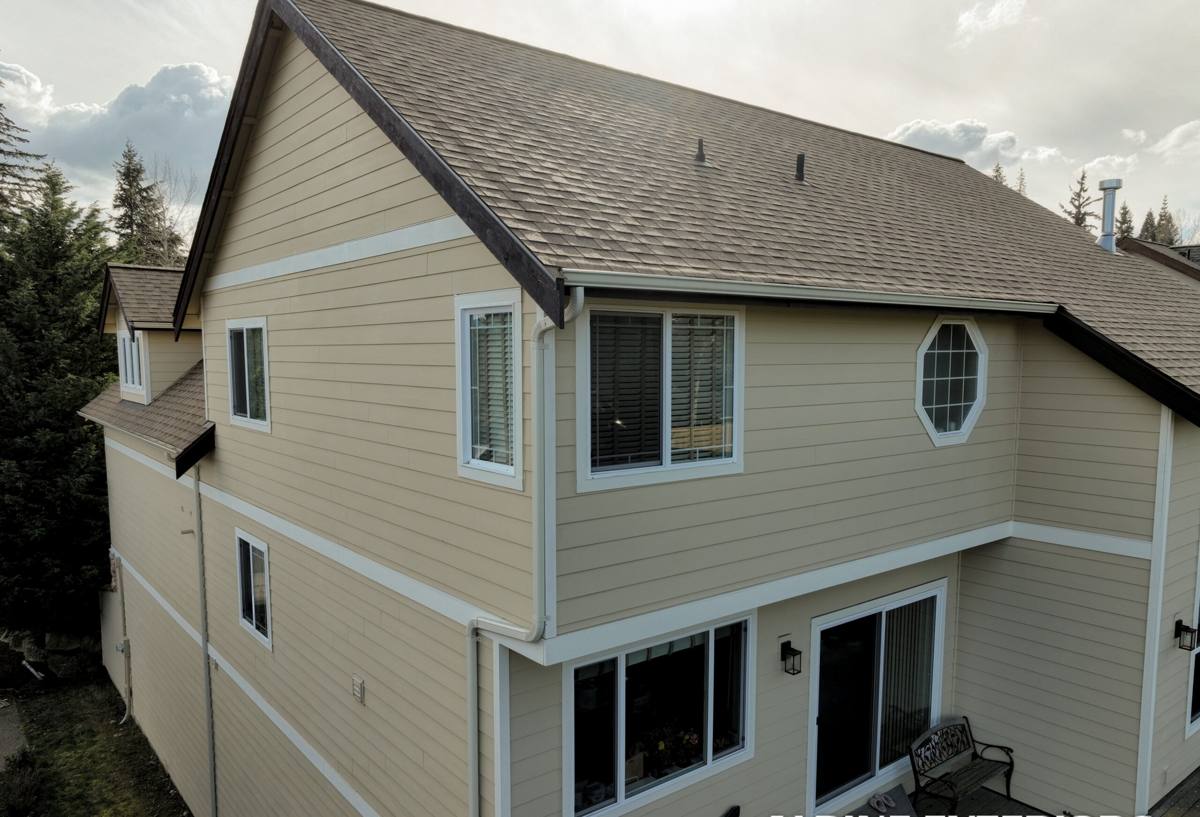
What Local Homes Are Actually Fighting
Three things drive most of the roofing problems we see on Mount Vernon and Anacortes homes, and none of them are exotic — they're just relentless.
Driving Rain, Not Just Rain
Wind off the water pushes rain sideways into roof valleys, wall-to-roof transitions, and skylight curbs. A roof that would shed water fine in a calm downpour can leak under wind-driven rain if flashing details were installed loosely or sealed with caulk instead of properly lapped metal.
Salt-Laden Air
Even a few miles inland, marine air carries enough salt to accelerate corrosion on exposed fasteners, drip edge, and vent flashing. Cheap galvanized components pit and rust years before the shingles themselves wear out, and once flashing corrodes, it stops doing its job long before it looks obviously bad.
Moss, Shade, and Standing Moisture
Mount Vernon's mature tree cover and the region's damp, mild winters are close to ideal growing conditions for moss and algae. Moss doesn't just look bad — it lifts shingle edges, traps moisture against the roof deck, and holds water against fasteners far longer than open air would. Left alone through a few wet seasons, it shortens the life of an otherwise sound roof.
What a Correct Installation Actually Involves
A lot of what protects a roof in this climate is invisible once the shingles are down. This is where quality separates itself from a roof that merely looks finished.
Underlayment and Ice-and-Water Barrier
Synthetic underlayment across the full deck is the baseline, but the more important decision is where self-adhered ice-and-water membrane goes: eaves, valleys, around chimneys and skylights, and low-slope transitions. In a climate with this much sustained rainfall, that membrane is what keeps a roof dry when wind pushes water back up under the shingle course.
Flashing, Not Sealant
Step flashing at walls, counter-flashing at chimneys, and properly formed valley metal should do the physical work of shedding water. Caulk and roofing cement have a place, but a roof that leans on sealant instead of correctly lapped metal is a roof that will start leaking the moment that sealant ages and cracks — usually a few years after the crew that used it is long gone.
Ventilation That Matches the Attic
Balanced intake and exhaust ventilation keeps moist indoor air from condensing against a cold roof deck in winter, which is exactly the setup that leads to hidden rot and premature shingle failure from underneath. We check existing ventilation as part of any re-roof rather than assuming what's there is adequate.
Nailing Pattern and Fastener Choice
Manufacturer nailing patterns exist for wind resistance, and this region gets enough winter windstorms that skipping or misplacing nails matters. We also use corrosion-resistant fasteners throughout, given how much faster standard galvanized nails can rust in marine-influenced air.
Choosing a Shingle for Skagit County Conditions
Most manufacturers offer several tiers of asphalt shingle, and the right one depends on how much wind and algae exposure your specific roof deals with, plus how long you plan to be in the house.
| Shingle Type | Typical Wind Rating | Algae Resistance | Best Fit |
|---|---|---|---|
| 3-Tab (Economy) | Lower | Basic or none | Budget re-roofs, shorter-term ownership |
| Architectural / Laminate | Higher | Usually available as an upgrade | Most Mount Vernon homes — best balance of cost and durability |
| Premium / Designer | Highest tier offered | Standard | Steep-slope, highly visible roofs, longer-term hold |
For most homes in this area, we steer people toward a mid-to-upper architectural shingle with algae-resistant granules. It's not the cheapest option, but it's the one that best matches what this climate actually asks of a roof — and the price difference over a 3-tab is modest compared to the cost of redoing a roof early.
Dealing With Moss the Right Way
Moss prevention starts at installation, not after moss shows up. A few things make a real difference over the life of the roof:
- Algae-resistant shingles with copper- or zinc-infused granules along the ridge, which discourage regrowth as rain washes trace metal down the slope
- Keeping overhanging branches trimmed back so the roof gets more light and air movement
- Gentle, low-pressure moss removal rather than power washing, which can strip granules and shorten shingle life
- Clear gutters and valleys, since trapped debris holds moisture and gives moss a place to start
We don't recommend pressure washing a shingle roof to "clean" it — it's one of the fastest ways to strip the granule layer that protects the shingle from UV and weather, which trades a short-term cosmetic fix for real long-term wear.
How Our Process Works
- On-site inspection. We look at the existing roof deck, flashing, ventilation, and any interior signs of past leaks before quoting anything.
- Honest scope and estimate. You get a written breakdown of what's being replaced, what shingle and underlayment system is being used, and why — no vague line items.
- Tear-off and deck check. We remove old roofing down to the deck and repair any soft or water-damaged sheathing before anything new goes down.
- Underlayment, flashing, and shingle installation. Ice-and-water membrane at vulnerable areas, new flashing where needed, then shingles installed to manufacturer wind and nailing specs.
- Ventilation check. We confirm intake and exhaust venting is balanced for the attic space.
- Cleanup and walkthrough. Magnetic sweep for stray fasteners, debris hauled off, and a final walkthrough so you know exactly what was done.
Signs Your Roof Needs Attention
Most shingle roof problems in this area give warning signs well before an actual leak shows up indoors. Worth checking for, especially after a hard winter storm season:
- Granules collecting in gutters or at downspout outlets
- Shingle edges curling, cupping, or lifting, especially on south- and west-facing slopes
- Moss or dark streaking building up along ridges or in shaded valleys
- Rusty streaks below metal flashing or vent boots
- Soft or spongy spots when walking the roof, which can indicate deck damage underneath
- Daylight visible through the attic roof deck, or damp insulation near the eaves
Any one of these is worth a look before it turns into an interior repair, which almost always costs more than the roofing fix itself.
What Affects the Cost
Every roof is different, but the same handful of factors drive most of the price variation we see on Mount Vernon and Anacortes homes.
| Factor | Why It Matters |
|---|---|
| Roof size and number of layers to remove | Tear-off labor and disposal scale directly with square footage and old material |
| Roof pitch and complexity | Steep slopes, multiple valleys, and dormers add labor time and flashing detail |
| Deck condition | Rotted or soft sheathing found during tear-off needs repair before shingles go on |
| Shingle tier chosen | Architectural and premium shingles cost more per square than 3-tab |
| Ventilation and flashing upgrades | Bringing older systems up to current standards adds material and labor |
We'd rather walk you through these factors on your actual roof than quote a number that doesn't hold up once tear-off starts. Surprises during a roofing job usually come from skipping the inspection step, not from the weather.
Why It Matters That We Work This Area
A crew that roofs across a wide, dry region and occasionally picks up a Skagit County job will build to a generic spec. A crew that works Mount Vernon and Anacortes regularly knows which slopes in this area collect moss fastest, how much ice-and-water membrane a given valley actually needs given local rain patterns, and which flashing details tend to fail first under sustained marine wind. That familiarity shows up in fewer callbacks and a roof that's actually built for the weather it has to survive, not just the weather on a spec sheet.
If your roof is showing wear, due for replacement, or you just want an honest read on where it stands, we're happy to take a look. Estimates are free and there's no pressure — fill out the form below and we'll get you scheduled.