 Anacortes Siding
 Window Installation in Sedro-Woolley: A Valley Climate Problem, Not Just a Product Choice
Sedro-Woolley sits inland from Puget Sound, at the point where the flat farmland of the Skagit Valley starts climbing into the foothills of the North Cascades. That setting spares the town some of the direct salt spray that coastal Skagit County towns deal with, but it trades that for something just as hard on windows: valley air that holds onto moisture longer, driving rain that gets funneled and intensified as storm systems push up the valley, and a moss and mildew season that runs most of the year on shaded, slow-drying walls. Windows take the brunt of that weather in a specific way — they're the largest concentration of seams, joints, and penetrations in an exterior wall, and every one of those is a potential path for water to get behind the cladding.
A window installed correctly for this climate isn't just a matter of picking a good unit. It's a matter of getting the flashing, the sill pan, and the sequencing with the surrounding wall right — details that matter more here than they would in a drier, calmer market.
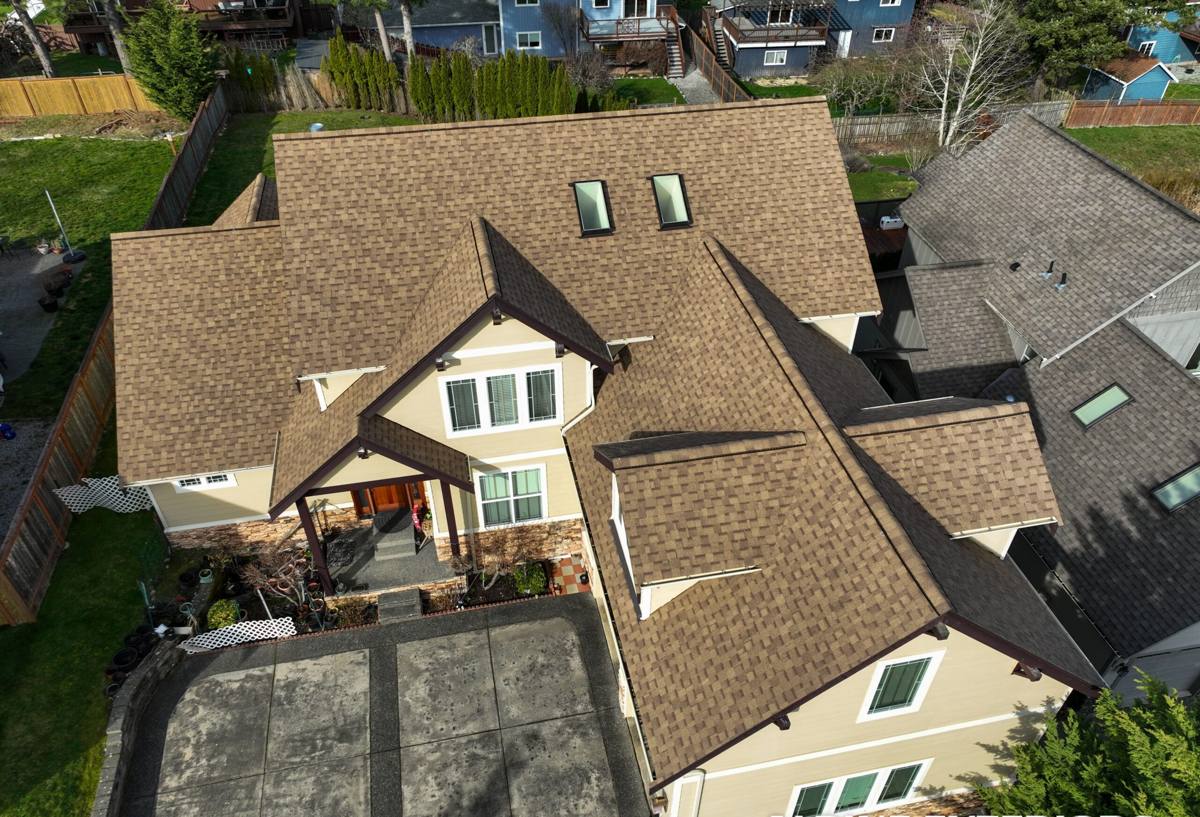
What Sedro-Woolley's Climate Actually Demands From a Window Installation
Driving Rain and Valley Moisture
Weather moving in off Puget Sound often gets funneled and pushed harder as it travels up the Skagit Valley, and Sedro-Woolley catches a real share of that driving rain. Wind-driven rain doesn't fall straight down onto a sill — it's forced sideways and upward into the gap between the window frame and the rough opening, which is exactly where a rushed or generic installation is most likely to leak. The valley also tends to hold humidity longer after a storm than more open, breezier parts of the county, so a poorly sealed window rarely gets a full chance to dry out between weather events, especially through fall and winter.
A Long Moss Season
Mild temperatures, filtered shade from surrounding trees, and near-constant moisture add up to a moss and mildew season that runs most of the year in this part of Skagit County. Window sills, trim, and the bottom corners of frames are common places we find that growth establishing, especially on north-facing or tree-shaded walls. Moss and mildew hold moisture against wood trim and frame components longer than open air would, which accelerates decay in any spot where sealant or flashing has already started to fail.
Salt Air's Reach Up the Valley
Sedro-Woolley isn't a coastal town, but Skagit County's salt-laden air off Puget Sound still reaches inland during windier weather patterns, adding a low but real corrosion load to window hardware, fasteners, and exposed metal flashing over the years. It's a smaller factor here than in towns sitting directly on the water, but it's still part of why we spec hardware and fasteners rated for coastal-adjacent conditions rather than the bare minimum a manufacturer assumes for an average inland install.
Freeze-Thaw and Temperature Swings
Sedro-Woolley's proximity to the foothills brings slightly cooler overnight temperatures and more frequent freeze-thaw cycling in winter than towns closer to the Sound. Water that's gotten behind a poorly sealed frame and then freezes can expand joints, crack sealant, and work fasteners loose over repeated cycles — a slow, easy-to-miss failure mode that usually isn't obvious until drafts or fogging show up between the panes.
What a Correct Window Installation Actually Involves
Removing the Old Window Without Damaging the Opening
Careless removal is one of the most common ways a straightforward window replacement turns into a bigger repair. We take the old unit out in a way that protects the surrounding trim, siding, and sheathing, since that's the material we're about to build the new installation on top of.
Checking What's Underneath
Once the old window is out, we check the framing, sheathing, and any existing flashing around the opening before anything new goes in. Rotted framing or a sill that's already soft from years of slow water intrusion gets repaired, not covered over. Skipping this step is one of the most common shortcuts on low-bid window jobs, and it's the reason a new window can still leak within a year or two if the opening underneath it was never actually fixed.
The Sill Pan and Flashing Sequence
The sill beneath a window opening needs a real slope and drainage path directing water outward, not just a flat surface and a bead of caulk. From there, flashing at the jambs and head has to be lapped in the correct order — sill first, then jambs, then head — so that water moving down the wall always sheds outward over the layer below it instead of getting trapped behind the window. This is the single detail that determines whether a window stays dry for decades or starts leaking within a few wet seasons, and it's non-negotiable on every window we install, not an upgrade homeowners have to ask for.
Setting, Shimming, and Sealing
The new window is set square, plumb, and level, shimmed so it isn't relying on the surrounding frame to hold its shape, and fastened with corrosion-resistant hardware appropriate for this region's moisture and salt exposure. Sealant goes in at the specified joints, not as a substitute for proper flashing but as the final layer on top of it.
Frame Materials and Glass: The Honest Trade-Offs
Frame Material Options
We install vinyl and fiberglass window systems suited to the Pacific Northwest's wet, mild conditions, and we'll walk you through the real trade-offs rather than pushing one option as the only correct answer. Vinyl frames are generally more affordable and perform well in a mild, wet climate like this one, though they can flex more with large temperature swings than fiberglass does. Fiberglass frames tend to be more dimensionally stable through the freeze-thaw cycling Sedro-Woolley sees more of than towns closer to the Sound, and they can be painted later if a homeowner wants a different color down the road. Both resist rot in a way an uncladded wood frame doesn't, which matters given how much moisture this valley holds through the year. We don't lead with all-wood exterior frames on this climate's weather-facing walls — wood asks for a level of ongoing refinishing and moisture monitoring that we don't think is realistic to expect most homeowners to keep up with here.
Glazing and Glass Packages
What matters more than the brand printed on the frame is the glazing package behind the glass — the low-E coating and gas fill between panes. Low-E coatings help a window perform in both directions: cutting heat loss during cold, damp stretches while also reducing solar heat gain in warmer months, and they typically reduce interior condensation on cold glass, a common complaint in older Skagit County homes during winter. The specific coating and fill vary by manufacturer and product line, so it's worth asking exactly what's included in a quote rather than assuming every "energy-efficient" window means the same thing.
Our Installation Process, Start to Finish
- On-site assessment — we measure each opening, check the condition of the existing frame, trim, and flashing, and flag anything that suggests hidden water damage before we quote the work
- Honest product recommendation — vinyl or fiberglass, and what glazing package makes sense for the specific wall and exposure, explained with the reasoning rather than a one-size answer
- Careful removal — the old window comes out without damaging the surrounding siding, trim, or sheathing
- Opening repair — any rotted framing, sheathing, or failed flashing found underneath gets corrected before a new window goes in
- Sill pan and flashing installation — a properly pitched sill pan and correctly lapped jamb and head flashing, built to shed water outward at every layer
- Setting and sealing — the new window is set square and plumb, shimmed, fastened with corrosion-resistant hardware, and sealed at the specified joints
- Trim and finish — exterior trim is integrated cleanly with the surrounding siding so the finished opening looks intentional
- Final walkthrough — we check operation, seals, and trim with the homeowner and go over basic long-term care
Comparing Frame Materials for This Climate
| Frame Material | Moisture & Corrosion Resistance | Maintenance | Typical Lifespan |
|---|---|---|---|
| Vinyl | Good — won't rot, performs well when installed correctly | Low — occasional track and weep-hole cleaning | 20-30 years |
| Fiberglass | Very good — dimensionally stable through freeze-thaw and moisture cycling | Low | 30-40+ years |
| Uncladded wood | Lower — absorbs moisture at joints and sills without diligent upkeep | High — regular refinishing and inspection needed | 15-25 years without diligent upkeep |
These are general industry ranges, not guarantees — actual results depend heavily on installation quality, the specific wall's exposure, and ongoing maintenance.
Cost Factors for a Sedro-Woolley Window Project
We don't post fixed prices because every home and opening is different, but the variables that move the number on a window job here are consistent from house to house:
- Number of windows and whether it's a full-house project or a handful of problem openings
- Condition of the existing framing and whether water-damaged sheathing needs repair before new windows go in
- Frame material and glazing package selected
- Standard replacement sizes versus openings that need reframing or custom units
- Whether siding, trim, or roofing work is bundled into the same project timeline
- Site access, which varies more on the larger, tree-covered, and rural-style lots common around Sedro-Woolley
Signs Your Windows Are Past Their Service Life
- Fogging or moisture trapped between panes on double- or triple-glazed units
- Drafts near the frame even when the window is fully closed and latched
- Soft or spongy trim and sills when pressed, especially on shaded or north-facing walls
- Visible gaps, cracked sealant, or paint failure at the frame-to-siding joint
- Difficulty opening, closing, or latching that wasn't there a few years ago
- Rising energy bills that track with drafts near specific windows
- Moss or dark staining building up on sills and trim faster than it can be cleaned off
Why Hiring a Crew That Already Works Sedro-Woolley Matters
A window installed correctly for a wind-exposed coastal Skagit County property isn't automatically installed correctly for a valley setting like Sedro-Woolley, and the reverse is just as true. A crew that works this county regularly knows which wall orientations dry out slowest here, where moss and hidden moisture tend to establish first, and how the valley's driving rain actually behaves across a full year rather than on a single install day. That local, repeated exposure is what shapes flashing sequencing, sealant choices, and hardware decisions that hold up for decades instead of just looking finished when the crew packs up.
It also means accountability after the fact. A local company is easy to find if a question comes up after the job is done, and has a reputation in the community worth protecting — not just a job number in a call center queue. When a home needs more than windows addressed, we typically sequence roofing first since it affects how water moves down the wall, then siding, then windows, so each system gets tied into the next correctly instead of installed in isolation.
Get a Free, No-Pressure Estimate
If your Sedro-Woolley home has windows that are fogging, drafting, or showing soft trim, or you're planning ahead before small problems turn into a bigger repair, we're glad to take a look and give you a straight assessment of what's actually going on. No pressure, no upsell script — just an honest read on what your windows need. Use the form below to schedule a free estimate.