 Anacortes Siding
 Roof Replacement for Sedro-Woolley Homes
Sedro-Woolley sits inland from the coast, tucked against the foothills along the Skagit River, and that location shapes what a roof has to deal with here. You don't get the direct salt spray that hits homes right on the water in places like Anacortes, but you get something almost as hard on a roof over time: heavy tree canopy, deep shade on north-facing slopes, and rain that settles in rather than blowing through. Combine that with the driving rain that rolls off the Sound and up the valley during fall and winter storms, and you have a climate that's genuinely tough on roofing, just in a different way than the immediate coastline.
We work across Skagit County, and we treat Sedro-Woolley roofs differently than a bare, sun-exposed roof out on open ground would be treated. This page is about what a correct roof replacement looks like for this specific area — not a generic overview of roofing in general.
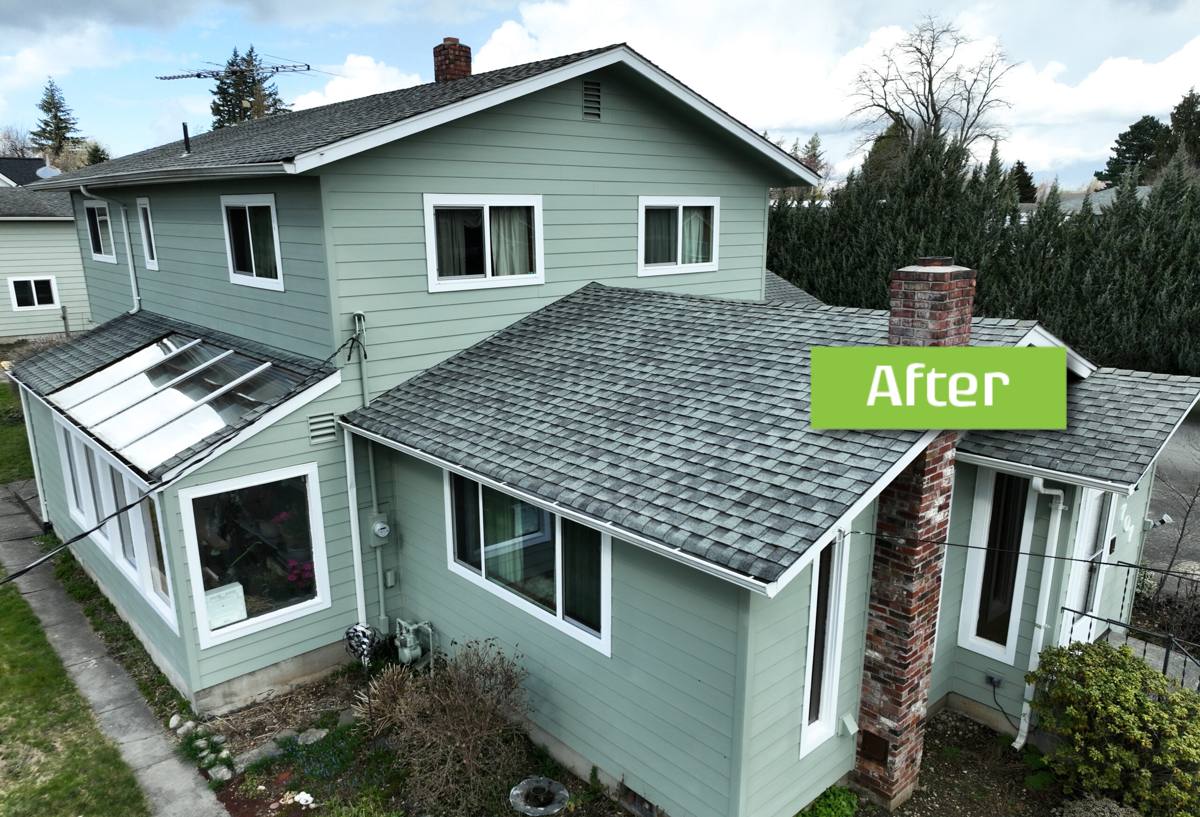
What Sedro-Woolley's Climate Actually Does to a Roof
Moss and Organic Growth
This is the number one issue we see on roofs in this area. Mature trees, filtered sunlight, and consistent moisture add up to a long moss season that can run most of the year on shaded slopes. Moss holds water against the roofing surface, lifts shingle edges, and works its way under flashing over time. A roof that looks fine from the ground can already have moss rooted into the granule layer or working under ridge caps.
Driving Rain and Wind-Driven Water
Storms coming off the Sound don't always fall straight down — wind pushes rain sideways into vertical surfaces, up under eaves, and into any gap in flashing or underlayment. A roof system built for occasional light rain will eventually leak here. One built with proper underlayment lap, ice-and-water protection at vulnerable points, and correctly integrated flashing won't.
Shade, Debris, and Slower Drying
Tree cover keeps homes cooler in summer but means roofs stay wet longer after every rain. Needles, leaves, and small branches collect in valleys and behind chimneys, holding moisture against the roof deck and clogging drainage paths. A roof design that ignores this — flat valleys, minimal overhang, poor gutter integration — ages faster here than the same roof would on an open lot.
Signs a Sedro-Woolley Roof Needs Replacing, Not Patching
- Moss established across multiple slopes, not just a patch or two, especially if it's visibly lifting shingle tabs
- Granule loss showing up in gutters consistently, not just after a single storm
- Soft spots or sag when walked, which usually means deck damage under the roofing
- Repeated leaks in the same general area even after past patch repairs
- Roofing material at or past its expected service life, especially on a home you know has had minimal maintenance
- Visible daylight or water staining in the attic near valleys, chimneys, or skylights
- Curling, cracking, or brittle shingles, particularly on south- or west-facing slopes that see more temperature swing
Any one of these on its own might be a repair. Several together, especially on a roof already well into its expected lifespan, usually means replacement is the more honest recommendation — patching a roof that's structurally at the end of its life just delays the same decision at greater eventual cost.
What a Correct Roof Replacement Involves Here
Full Tear-Off, Not Overlay
We don't recommend roofing over an existing layer in this climate. Overlaying traps moisture that's already worked its way into the old roofing, and it hides deck damage that needs to be addressed, not covered up. A full tear-off lets us actually see the deck and fix problems before they're sealed under new material.
Deck Inspection and Repair
Once the old roofing is off, we check the sheathing for soft spots, rot, and delamination — common wherever moss or leaks have been sitting for a while. Any damaged sections get replaced before anything new goes down. Skipping this step is one of the most common ways a "new roof" fails early.
Underlayment Built for Wind-Driven Rain
Given how much sideways rain this area gets during winter storms, underlayment coverage and lap direction matter more than they would in a drier climate. We pay particular attention to valleys, eaves, and any low-slope transitions where wind-driven water tends to find its way in.
Flashing at Every Transition
Chimneys, skylights, sidewalls, and valleys are where roofs actually fail — the open field of shingles rarely is the problem. Flashing gets properly integrated with the underlayment, not just caulked over the top, which is a shortcut that fails within a few seasons.
Ventilation That Matches the Home
Homes under heavy tree cover often run cooler and damper in the attic space than homes in the open. Proper intake and exhaust ventilation keeps moisture from condensing on the underside of the deck, which matters as much for roof longevity as what's happening on the outside surface.
Material Selection for Shaded, Wet Conditions
Not every roofing product performs the same way under heavy shade and sustained moisture. We'll walk through the realistic trade-offs for your specific roof — algae-resistant shingle options, appropriate ventilation accessories, and any product-specific installation sensitivities — rather than defaulting to whatever's easiest to install.
Comparing Roofing Options for a Shaded, Wet Site
| Material | How It Handles Moss/Shade | Maintenance Consideration |
|---|---|---|
| Algae-resistant asphalt shingle | Copper/zinc granules slow moss and algae growth on shaded slopes | Still benefits from periodic moss removal on the heaviest-shade areas |
| Standard asphalt shingle | No built-in resistance; moss establishes faster under tree cover | Needs closer, more frequent moss monitoring |
| Metal roofing | Smooth, non-porous surface resists moss rooting better than granular surfaces | Fastener and seam maintenance; higher upfront cost |
| Wood shake | Absorbs and holds moisture, encouraging moss and rot in shaded, wet conditions | Higher ongoing maintenance burden in this specific climate; we're upfront about that trade-off |
We're not going to tell you there's one "right" material for every home — a roof under full tree canopy has different needs than one on a more open lot even a few streets over. Part of the estimate visit is looking at your actual exposure and giving you a straight recommendation based on that, not a one-size answer.
Our Process for a Sedro-Woolley Roof Replacement
- On-site assessment. We look at slope exposure, tree cover, existing moss or damage, attic ventilation, and the condition of flashing and valleys before quoting anything.
- Written estimate. You get a clear scope — tear-off, deck repair allowance, underlayment, flashing, material, and ventilation — so there are no surprises mid-project.
- Scheduling around weather. Given how much of the year here sees rain, we plan tear-off and dry-in carefully so your home isn't exposed longer than necessary.
- Tear-off and deck inspection. Old material comes off, the deck gets checked, and any repairs are addressed and documented before new roofing goes on.
- Installation. Underlayment, flashing, ventilation components, and roofing material go in following manufacturer specifications, not shortcuts.
- Final walkthrough. We go over the finished roof with you, including any moss-prevention or maintenance notes specific to your property's shade and exposure.
Why a Crew That Already Works Sedro-Woolley Matters
Roofing crews that mostly work open, sun-exposed subdivisions can miss things on a heavily wooded lot — under-ventilated attics that trap moisture, valleys that need extra attention because of debris load, or moss patterns that tell you where a roof is failing before it's visibly leaking. Working regularly in Skagit County, including the shaded, inland pockets around Sedro-Woolley as well as the more coastal, salt-air-exposed parts of Anacortes, means we're used to reading a roof's actual exposure rather than applying a generic checklist.
It also means we know what permitting and inspection expectations look like locally, and we're not learning the area's weather patterns on your project.
What Affects the Cost of a Roof Replacement Here
| Factor | Why It Matters in This Area |
|---|---|
| Deck condition | Moss and moisture-related rot found during tear-off add repair cost, but skipping repair costs more later |
| Roof complexity | Valleys, dormers, and multiple slopes create more flashing work and more places for wind-driven rain to get in |
| Tree cover and access | Heavy canopy can affect equipment staging and debris removal, and increases moss-prevention needs long term |
| Material choice | Algae-resistant shingle, standard shingle, and metal roofing carry different upfront and maintenance costs |
| Ventilation upgrades | Homes with poor existing attic ventilation may need added intake/exhaust components during replacement |
We don't publish blanket prices because these factors genuinely change the number from one house to the next — a straightforward roof on an open lot and a complex roof under heavy tree cover aren't the same job. What we can tell you honestly is that skipping deck repair or proper flashing to save money upfront tends to cost more within a few years, once problems resurface under the new material.
Simple Maintenance That Extends a New Roof's Life Here
- Keep gutters and valleys clear of needles and leaves, especially heading into the wet season
- Have moss growth addressed early rather than letting it establish across a slope
- Trim back overhanging branches where practical to reduce shade and debris load
- Check attic ventilation periodically, particularly if you notice condensation or musty smell
- Have flashing and seals around chimneys and skylights checked after major storms
If you're weighing whether your Sedro-Woolley roof needs repair or full replacement, we're glad to take a look and give you a straight answer either way. Use the form below to request a free, no-pressure estimate.