 Anacortes Siding
 Composite Decking for Sedro-Woolley Homes
Composite decking has become a common choice for homeowners in Sedro-Woolley who are tired of sanding, staining, and re-sealing a wood deck every year or two. It's a reasonable move — but composite isn't maintenance-free, and it isn't installed the same way everywhere. A deck built for a dry inland climate doesn't automatically hold up the way it should here in the Skagit Valley. We build and install composite decks for homeowners throughout Sedro-Woolley and the rest of Skagit County, and this page covers what actually matters for a deck that's going to sit outside through our wet season year after year.
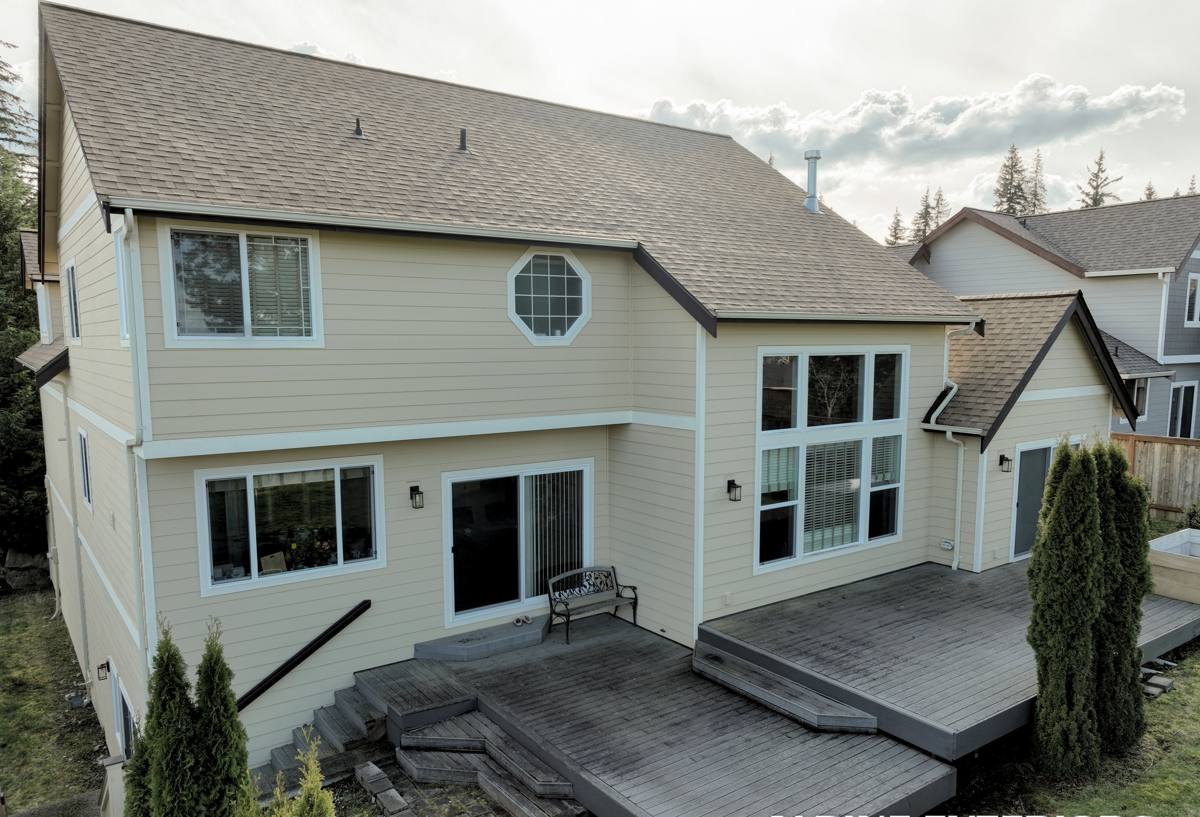
What Sedro-Woolley's Climate Actually Does to a Deck
Sedro-Woolley sits inland from Anacortes along the Skagit River, tucked against forested hillsides rather than open water. That means less direct salt spray than a deck right on Fidalgo Island or the Anacortes waterfront — but the region still pulls in damp, salt-tinged marine air off Puget Sound often enough that it shouldn't be ignored, especially on decks facing west or exposed to prevailing wind.
What Sedro-Woolley gets more of than the coast is shade and standing moisture. Tree cover, river valley fog, and long stretches of driving rain keep decking surfaces wet longer than they would stay wet in an open, sunny yard. Add a slow-draining lawn or a deck tucked under overhanging trees, and you get exactly the conditions moss and mildew like best — cool, shaded, and damp for weeks at a time between dry spells. None of this ruins composite decking on its own. It ruins decking that was installed without those conditions in mind.
Why This Matters More Than the Board Itself
Homeowners often assume the composite material is the whole story. In our experience, the install details — drainage, ventilation under the deck, and how the boards meet the house — decide whether a composite deck stays clean and solid for decades or starts showing problems within a few wet seasons.
What a Correct Composite Deck Install Requires Here
Substructure and Ground Clearance
Composite boards are only as good as what's underneath them. In our soil and rainfall conditions, joists need proper spacing for the specific composite product (composite typically needs tighter joist spacing than wood, especially on diagonal or angled patterns), and the framing needs enough clearance above grade for air to actually move underneath. A deck built low to wet ground, or over soil that doesn't drain, traps moisture against the underside of the boards and the framing year-round — which is a framing problem long before it's ever a composite problem.
Flashing at the House Connection
Most of the water damage we find on older decks isn't on the deck surface — it's where the deck ledger board meets the house. Without correct flashing, driving rain works its way behind the ledger and into the rim joist or wall sheathing over time, which in our climate means a slow, hidden rot problem long before anyone notices a soft spot. This is the single most important detail on any deck attached to a house in this area, composite or wood.
Hidden Fasteners, Board Spacing, and Drainage Gaps
Composite boards need consistent gapping between boards so water can shed through rather than pool on the surface. Too tight, and the deck holds water and debris; too wide, and it's uncomfortable underfoot and collects grime at the edges. Hidden fastener systems, correctly seated, keep the surface clean-looking and avoid the screw-hole water entry points that plague older gray-decked builds.
Choosing the Right Decking Material for This Area
Not all composite is built the same, and wood still has a place for some homeowners. Here's how the common options compare for a Skagit Valley deck:
| Material | Moisture & Rot Resistance | Moss/Mildew Resistance | Maintenance | Relative Upfront Cost |
|---|---|---|---|---|
| Capped composite | Very good — core is moisture-resistant, cap sheds water | Good; occasional cleaning keeps surface film from building up | Periodic rinse/scrub; no staining or sealing | Higher |
| Uncapped or older-style composite | Fair — more prone to surface moisture absorption over time | Fair; can hold moss/algae in shaded spots more than capped boards | Regular cleaning; more sensitive to pressure-washing damage | Moderate |
| PVC decking | Excellent — no wood fiber content to absorb moisture | Good, similar to capped composite | Low; rinse as needed | Higher |
| Pressure-treated wood | Fair — treatment resists rot but surface still absorbs water | Poor to fair — needs regular cleaning and re-sealing to resist moss/mildew | Annual cleaning, staining, or sealing recommended | Lower |
For most Sedro-Woolley homes, especially anything shaded by trees or set close to the river valley floor, capped composite or PVC earns its higher upfront cost back in reduced upkeep over the years. Wood still makes sense for homeowners who want that traditional look and don't mind the annual maintenance — we install both, and we'll give you an honest read on which fits your yard and budget rather than pushing one option.
Our Installation Process
- Site walk and drainage assessment — we look at grade, shade, existing water flow, and how the deck will tie into the house before anything is designed.
- Substructure design — joist spacing, ledger flashing plan, and footing layout matched to the specific composite product and local soil conditions.
- Framing and flashing — this stage gets the most attention from us, since it's the part that determines whether the deck stays dry where it meets the house.
- Composite decking install — hidden fastener systems, correct board gapping, and picture-frame or border detailing where applicable.
- Final walkthrough — we check drainage under the deck, board spacing, and railing/stair attachment before calling the job done.
Moss, Mildew, and What Composite Decking Actually Needs
Composite doesn't need staining or sealing, but it isn't self-cleaning either. In shaded Sedro-Woolley yards, a light film of algae or moss can build up on the surface over a wet winter, especially in spots that don't get much sun or airflow. A soft-bristle brush, mild soap, and a garden hose handle this in most cases — composite manufacturers generally advise against high-pressure washing at close range, since it can etch or discolor the cap layer. Keeping gutters clear above the deck and trimming back overhanging branches does more to keep moss from taking hold than any cleaning product will.
Underneath the deck matters too. Leaves and debris that build up between joists hold moisture against the framing long after the surface has dried, so clearing that space out once or twice a year is worth the ten minutes it takes.
Mistakes We See on Older and DIY Decks in the Area
- Ledger boards attached directly to siding with no flashing, letting water track behind the wall over years
- Composite boards laid tight against the house trim with no gap for water and debris to clear
- Joist spacing built for wood decking and never adjusted for a composite product's tighter requirements
- Decking framed low to the ground with little to no airflow underneath
- Fasteners that don't match the composite manufacturer's system, leading to surface cracking or squeaking over time
Most of these aren't visible from the surface until years later, which is exactly why the framing and flashing stage deserves as much care as the decking itself.
Why a Crew That Already Works in Sedro-Woolley Makes a Difference
Skagit County permitting, local inspection expectations, and the practical realities of building on river valley lots aren't things you want a contractor learning on your project. We already work throughout Sedro-Woolley and the surrounding Anacortes area, so we know what a permit application here needs, how local soil and drainage tend to behave, and what this climate does to a deck over five, ten, and twenty years — not just what a manufacturer's spec sheet says in ideal conditions. That local track record also means if something needs a warranty follow-up, we're not driving in from across the state to handle it.
Before You Hire — What to Check
- Do they carry current WA state contractor licensing and insurance, and will they show you proof without hesitation?
- Do they pull the required Skagit County permit rather than suggesting you skip it?
- Will they explain their ledger flashing and drainage plan in plain terms, not just the brand of board they're selling?
- Do they have recent work in Sedro-Woolley or nearby Skagit County communities, not just projects hours away?
- Do they give you a written estimate that breaks out substructure, materials, and labor separately?
If you're weighing composite decking for a Sedro-Woolley home, we're happy to walk the site, look at your drainage and shade conditions, and give you a straightforward, no-pressure estimate. Use the form below to get started.