 Anacortes Siding
 Siding Installation Built for Sedro-Woolley's Climate
Sedro-Woolley sits back from the water compared to waterfront Anacortes, tucked along the Skagit River at the edge of the foothills. That location changes the climate math a little: homes here deal with less direct salt exposure than the coastline, but they take on more shade, more standing humidity, and a longer moss season thanks to the tree cover and river-valley moisture that settles in and doesn't burn off as fast as it does out on the water. Add in Skagit County's driving winter rain, and siding on a Sedro-Woolley home is working hard almost year-round, whether or not the neighborhood ever sees a stiff salt breeze.
We install James Hardie fiber cement siding across Skagit County, including Anacortes and Sedro-Woolley, and this page is specifically about what a correct siding installation looks like on a Sedro-Woolley home — not a generic overview of siding in general.
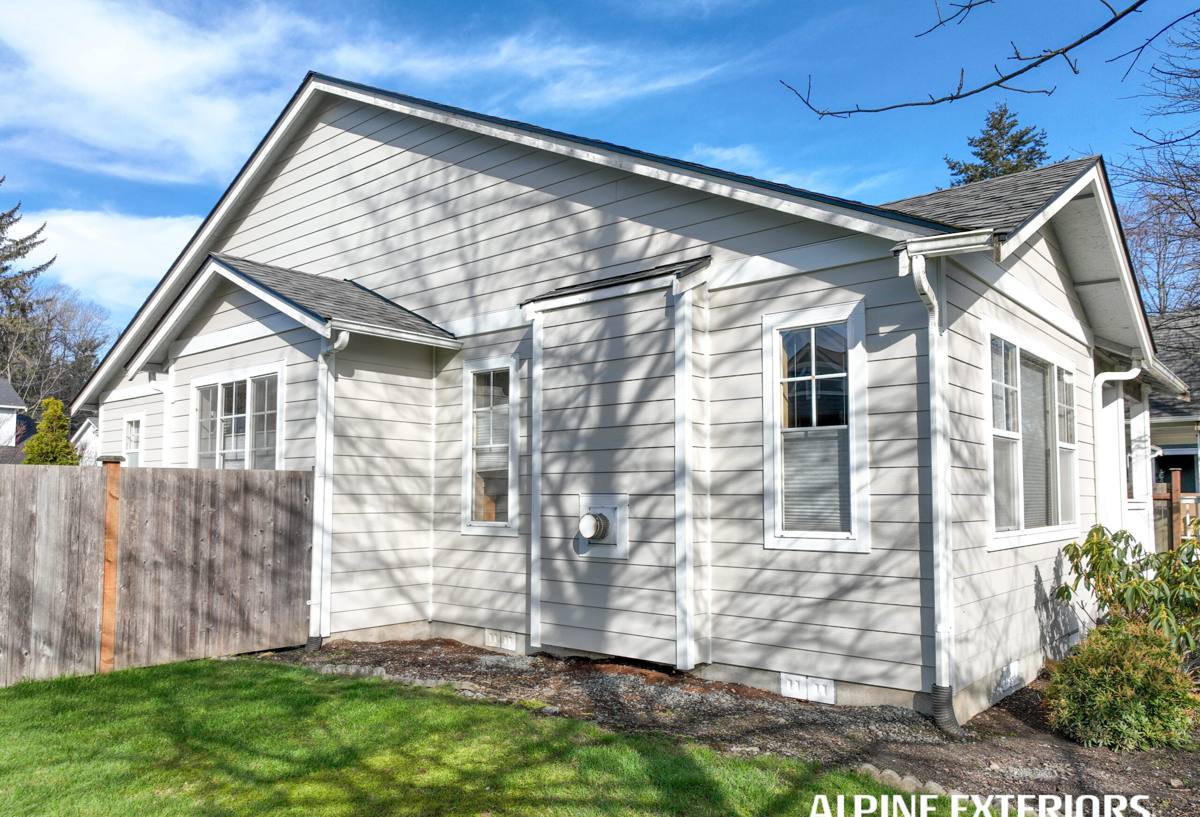
What Sedro-Woolley Homes Actually Need From Their Siding
Shade, Humidity, and Moss
Wooded lots and river-valley fog keep a lot of Sedro-Woolley siding damp longer than siding on an open, sun-exposed lot would be. Damp siding that stays damp is what grows moss and algae, and it's also what invites rot in any material that isn't dimensionally stable when wet. The siding itself matters here, but so does how it's installed — proper clearance from grade, gutters that actually direct water away from walls, and a drainage plane behind the cladding all do more to control moss and moisture than the siding material alone.
Driving Rain and Wind-Driven Water
Skagit County storms don't just fall straight down — wind pushes rain sideways into wall assemblies, especially on exposed gable ends and around windows. Siding and flashing details have to work together to shed that water before it finds a seam, a nail hole, or a butt joint to get behind.
Freeze-Thaw and Temperature Swings
Sedro-Woolley gets colder overnight lows than the immediate coastline, and the area sees more frost days than waterfront Anacortes. Materials that absorb moisture and then freeze are more prone to cracking and swelling over a winter season. Siding that stays dimensionally stable through those swings holds paint, caulk lines, and butt joints far longer.
Signs a Sedro-Woolley Home Needs New Siding
Because moss and shade mask a lot of surface damage, it's worth checking more than the color of the siding. Walk the exterior and look for:
- Soft or spongy spots when you press on the siding, especially near the bottom courses and around window trim
- Persistent moss or algae that comes back within weeks of being cleaned off
- Paint that's peeling, bubbling, or chalking heavily, especially on north- and west-facing walls
- Visible gaps, warping, or cupping in individual boards or panels
- Cracked or missing caulk at seams, corners, and trim joints
- Water stains or discoloration on interior walls near exterior corners
- Siding that was never properly flashed above windows, doors, or decks
Any one of these can be a minor fix. Several together, especially soft spots plus interior staining, usually mean water has been getting behind the siding for a while and the sheathing underneath deserves a closer look before new siding goes on.
What a Correct Siding Installation Actually Involves
Tear-Off and Sheathing Check
We don't install new siding over rot, soft sheathing, or a moisture barrier that's already failed. Once the old siding is off, we inspect the wall sheathing and framing underneath, especially around window openings and at the base of walls where damp shade tends to do the most damage. Anything compromised gets repaired before the new assembly goes on — covering it up doesn't fix it, it just hides it for a few more years.
Weather-Resistive Barrier and Drainage Plane
A correctly installed weather-resistive barrier, lapped properly with flashing at every penetration, is what actually keeps bulk water out of the wall assembly. In a shaded, humid area like Sedro-Woolley, we also pay close attention to creating a drainage plane so any moisture that does get behind the cladding has somewhere to go instead of sitting against the sheathing.
Flashing at Every Penetration
Windows, doors, hose bibs, vents, and deck ledgers are where water intrusion actually starts. Each one needs flashing installed in the right order, integrated with the weather-resistive barrier, so water sheds down and out rather than working its way inward. This is detail work that's easy to rush and expensive to get wrong.
Fastening and Clearance to Manufacturer Spec
James Hardie siding has specific fastening patterns, nail types, and clearance requirements from grade, roofing, and decks — clearances that matter even more in a location where ground moisture and moss are a persistent issue. Installing to that spec is also what keeps the manufacturer's warranty intact; shortcuts here void coverage even if the siding itself is a good product.
Caulking and Paint or Factory Finish
Seams and butt joints get sealed with a quality exterior sealant rated for the movement and moisture cycles our climate puts them through. Where we install ColorPlus factory-finished Hardie products, that finish is baked on and warranted separately from the substrate, which removes one of the biggest long-term maintenance items — repainting siding on a shaded, hard-to-access wall.
Why We Install Only James Hardie Fiber Cement
We standardized on James Hardie fiber cement siding and don't install vinyl, LP SmartSide, or other engineered wood or fiber cement alternatives. That's a deliberate call, not a lack of options. Fiber cement doesn't feed mold or moss the way organic wood-fiber products can if a finish gets compromised, and it holds its shape through the wet-to-dry, warm-to-freezing cycles that are normal for a Skagit County winter. It's also non-combustible, which matters given how much of the county borders forest and brush. James Hardie's HZ5 product line is engineered specifically for the freeze-thaw and moisture conditions of the Pacific Northwest, and the ColorPlus finish is factory-cured under conditions a job-site paint job can't match. None of that means other products can't work anywhere — it means we'd rather stand behind one system we trust fully than install several we have reservations about.
Comparing Siding Options for a Wet, Shaded Climate
| Material | Moisture Behavior | Moss/Algae Resistance | Typical Maintenance |
|---|---|---|---|
| James Hardie Fiber Cement | Dimensionally stable, doesn't swell or rot | Doesn't feed organic growth; growth stays surface-level and washes off | Occasional wash; factory finish rarely needs repainting |
| Vinyl | Doesn't absorb water but can warp or buckle with heat and cold cycling | Growth sits on the surface, especially in shaded panel seams | Periodic washing; brittle over time, prone to cracking in cold snaps |
| Engineered Wood (e.g. LP SmartSide) | Wood-based core is vulnerable if the finish or seams fail | Higher risk if moisture reaches the wood fiber core | Finish upkeep and prompt seam sealing are important |
| Cedar / Primed Spruce | Natural wood movement; absorbs moisture without a well-maintained finish | Prone to moss and mildew in shaded, damp conditions | Regular refinishing and moss treatment needed |
This table reflects general material behavior, not a claim that every product in a category fails — it's why we made the call we did for the climate we work in.
Our Installation Process
1. On-Site Assessment
We walk the exterior with you, check current siding condition, identify problem areas like shaded walls or poor drainage, and talk through what a Hardie system would look like on your specific home.
2. Written Scope and Estimate
You get a clear, itemized scope covering tear-off, any sheathing repair allowance, the specific Hardie product and color, trim details, and flashing work — no vague line items.
3. Tear-Off and Inspection
Old siding comes off, sheathing gets inspected and repaired as needed, and we flag anything unexpected before moving forward.
4. Weather Barrier, Flashing, and Installation
Weather-resistive barrier, flashing, and the Hardie siding go on to manufacturer spec, with attention to the clearances and drainage details that matter most in a shaded, damp location like Sedro-Woolley.
5. Trim, Caulking, and Final Detail
Trim gets fitted, seams sealed, and touch-up work completed so the finished job looks as clean at the corners and butt joints as it does from the street.
6. Walkthrough and Cleanup
We walk the finished job with you, cover care and warranty registration, and clear the site of debris and old material.
Cost Factors for a Sedro-Woolley Siding Project
| Factor | Why It Affects Cost |
|---|---|
| Home size and wall complexity | More linear footage and more corners, dormers, and gables mean more labor and material |
| Sheathing condition | Rot or moisture damage found during tear-off adds repair scope before new siding goes on |
| Access and site conditions | Tree cover, tight lot lines, or steep grade around the home can slow staging and scaffolding |
| Product selection | Panel vs. lap siding, trim profiles, and factory-finish color options carry different material costs |
| Existing siding removal | Multiple layers of old siding or extensive prep work add tear-off time |
We don't publish flat pricing because these factors vary too much from one Sedro-Woolley property to the next, but a walkthrough estimate will give you real numbers, not a rough guess.
Why a Crew That Already Works Sedro-Woolley Matters
Siding work in Sedro-Woolley isn't identical to siding work on the Anacortes waterfront, and a crew that treats every Skagit County job the same misses details that matter. We know how tree-covered and shaded lots around Sedro-Woolley behave differently than open, sun-exposed sites — where moss tends to establish first, which walls stay damp longest, and how that should change flashing and drainage decisions. We're also familiar with permitting and inspection expectations across Skagit County jurisdictions, which keeps a project moving instead of stalling on paperwork. And because we're already routing crews through the area regularly, we're not adding a long, one-off drive time premium to a Sedro-Woolley job the way an out-of-area contractor might.
Maintenance and Warranty After Installation
One of the practical advantages of a correctly installed Hardie system in this climate is how little ongoing maintenance it asks for. An occasional rinse to knock off surface moss or pollen, a yearly walk-around to check caulk lines and trim, and prompt attention if a tree limb or ladder ever dings a panel is about it. James Hardie backs its siding with a manufacturer warranty, and ColorPlus finishes carry their own separate finish warranty — both of which depend on installation following Hardie's published specifications, which is one more reason installation quality isn't optional.
If your Sedro-Woolley home's siding is showing moss that won't quit, soft spots, or paint that keeps failing no matter how often it's touched up, we're happy to take a look. Reach out for a free, no-pressure estimate and we'll walk the exterior with you and tell you honestly what we see.