 Anacortes Siding
 Window Replacement in Sedro-Woolley: A Different Set of Conditions Than the Waterfront
Sedro-Woolley sits inland from Anacortes, up the Skagit River valley, and that changes what your windows deal with day to day. You're not fighting the same direct salt spray a waterfront home on Fidalgo Island takes, but you get your own version of the same problem: persistent valley humidity, heavy tree cover that keeps siding and trim damp longer after a storm, and driving rain that comes through on the same weather systems moving in off the Sound. Add Skagit County's long, gray stretch of fall-through-spring weather, and older windows in this area tend to show their age through moisture problems more than sun damage.
We work window replacement jobs across Skagit County, including a fair number of homes in and around Sedro-Woolley, so this page is about that specific job in that specific setting — not a generic window pitch.
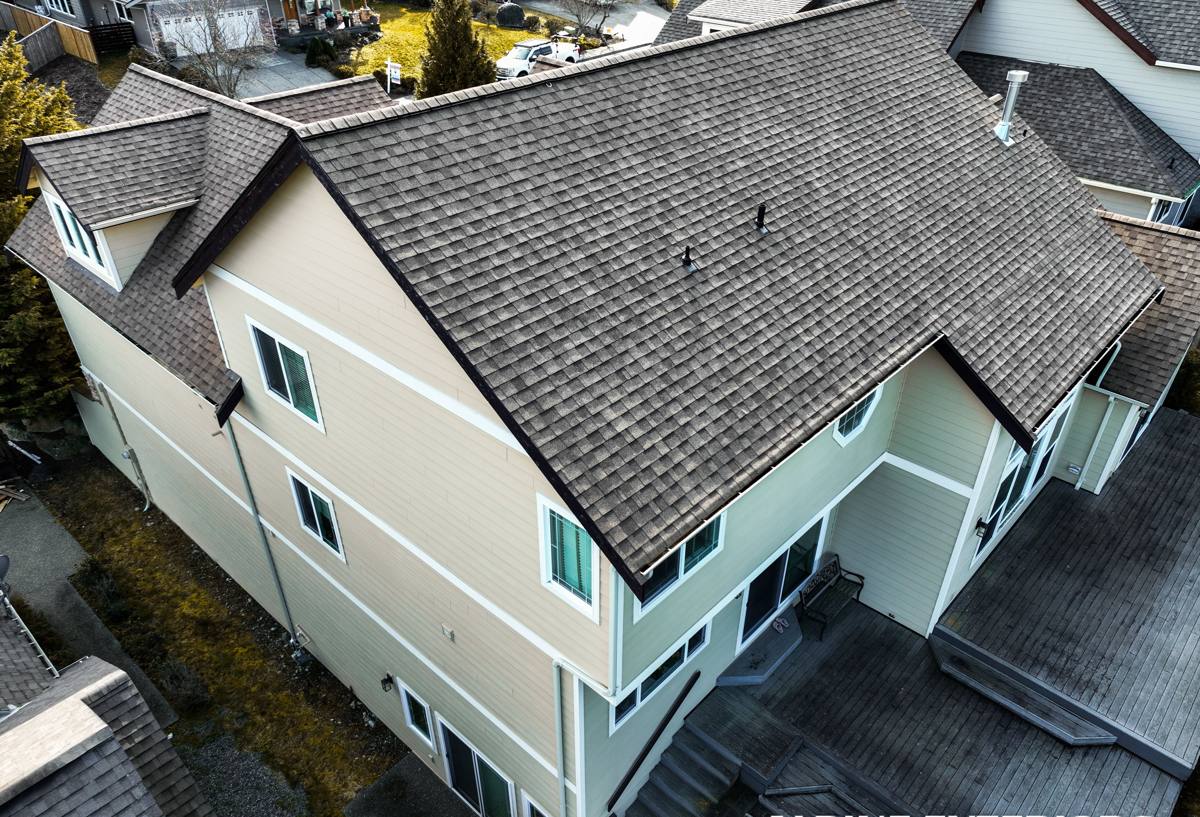
What the Skagit Valley Climate Actually Does to Windows
Most of the window failures we find in this area aren't dramatic. They're slow. A few of the patterns that show up again and again on inland Skagit County homes:
- Wood rot at the sill and lower frame corners — the lowest point of a window frame holds water longest after rain, and it's usually the first place a failing seal shows up.
- Fogged or failed insulated glass units — the seal between panes breaks down over years of temperature swings and moisture cycling, and once fog gets between the panes it's permanent.
- Soft or swollen trim and casing — driving rain pushed by wind finds gaps around older, poorly flashed windows and gets into the wall framing before it ever shows up as a stain inside.
- Moss and green growth on north- and shade-facing trim — Sedro-Woolley's tree cover and the valley's slower drying time mean moss gets a longer season here than it would on an open, sun-exposed lot.
- Drafts and condensation — original single-pane or early dual-pane windows from the '80s and '90s were never built for today's insulation standards, and they show it every winter with fogged glass and cold spots along the frame.
None of these problems fix themselves, and painting over soft trim or caulking around a failed seal buys a season, not a solution.
Why "It Still Opens and Closes" Isn't the Same as "It's Fine"
A window can operate normally and still be failing behind the trim. Moisture damage to the framing around a window usually starts before the sash itself gives you any trouble, which is why a visual check from the outside — flashing, caulk lines, trim condition — tells us more than whether the window still slides.
Signs a Sedro-Woolley Home Is Due for Window Replacement
You don't need to wait for a window to fail outright. Here's what we tell homeowners to watch for between now and their next full exterior check:
- Visible fog, haze, or moisture trapped between panes of glass
- Soft, spongy, or discolored wood at the sill, jambs, or exterior trim
- Paint that keeps peeling or bubbling around the same window no matter how often it's touched up
- Persistent moss or dark streaking on the trim above or beside a window
- A noticeable draft, or the room around the window is colder than the rest of the house
- Windows that are hard to open, don't stay up on their own, or have broken balances
- Rising heating bills without any other obvious cause
- Visible daylight or gaps around the frame from outside
Any one of these on its own might just mean a repair. Two or three together, especially on windows original to the house, usually means replacement is the more honest recommendation — and we'll tell you that plainly rather than trying to sell a repair that won't hold.
Choosing Windows for This Climate
There's no single "best" window — there's a best fit for how exposed a given wall is, how much upkeep you want to do, and your budget. For Skagit County homes, frame material is usually the first real decision.
| Frame Material | How It Handles This Climate | Maintenance |
|---|---|---|
| Vinyl | Won't rot, resists moisture well, performs consistently through wet winters | Low — occasional cleaning |
| Fiberglass | Very stable in temperature swings, holds paint well, strong moisture resistance | Low |
| Wood (clad or unclad) | Classic look but the most vulnerable to our rain and humidity if any seal or paint fails | High — regular inspection and refinishing needed |
| Aluminum | Durable but conducts cold, which shows up as condensation and drafts in our winters | Low, but thermal performance is a real trade-off |
We're honest with clients about wood windows: they can look great, but in a valley climate with this much sustained moisture, they demand more upkeep to keep water out over the long run. That's not a knock on wood as a material — it's just what the maintenance schedule looks like here, and we'd rather tell you that up front than have you find out after the fact.
Glass Matters as Much as the Frame
Double-pane, argon-filled, low-E glass is the standard we recommend for this area. It cuts heat loss in winter, reduces solar gain from what summer sun we do get, and holds up well against the condensation that comes with our humidity and temperature swings. Triple-pane is available for homeowners who want the extra performance, but for most Sedro-Woolley homes, a well-installed double-pane low-E window is the more practical choice for the cost.
Our Window Replacement Process
1. On-Site Assessment
We look at every window from both sides — glass, sash, frame, and the trim and flashing around it. We're checking for rot, failed seals, and how the current windows were originally flashed, since that tells us what we're working with once the old unit comes out.
2. Product Selection
We walk through frame material, glass package, and style options based on your budget and how exposed each wall of the house is. A window on the weather side of the house doesn't always need the same spec as one tucked under an eave.
3. Removal and Prep
Old windows come out carefully so we can inspect the rough opening underneath. This is where hidden problems — soft framing, missing or degraded flashing, old water damage — actually get found. If we find it, we tell you before we cover it back up, not after.
4. Installation
New flashing and moisture barrier go in correctly around the opening, the window is set level and square, and it's insulated and sealed properly on all sides. This step is where most of the long-term performance of a window actually comes from — more on that below.
5. Finish and Cleanup
Interior and exterior trim gets finished, hardware is checked, and the site is cleaned up. We walk the finished windows with you before we consider the job done.
What a Correct Installation Actually Involves
A window is only as good as the opening it sits in. This is the part of the job a homeowner can't easily see once it's finished, which is exactly why it matters so much.
Flashing and Moisture Barrier
Water needs a planned path out, not just a caulk bead to stop it. Proper flashing integrates with the house wrap or building paper so any water that gets past the window sheds down and out, rather than getting trapped behind the siding where it will eventually rot the framing.
Sealing and Insulation
Gaps between the window frame and the rough opening need to be insulated, not just sealed on the surface. An air gap left inside the wall is where drafts and condensation come from, even with a brand-new, high-performance window installed on top of it.
Level, Plumb, and Square
A window that isn't set correctly will bind, won't seal evenly, and puts uneven stress on the frame and hardware over time — shortening the life of a window that should otherwise last decades.
We've replaced windows behind other contractors' work where the glass itself was fine, but the flashing was skipped or the opening wasn't properly insulated. That's the kind of shortcut that doesn't show up as a problem for a year or two, and by the time it does, it's a repair job on the surrounding wall, not just the window. We don't cut that corner — it's not worth the callback, and it's not worth your wall framing.
What It Costs
Every home is different, but these are the main factors that move the price on a Sedro-Woolley window replacement job:
| Factor | How It Affects Cost |
|---|---|
| Frame material | Vinyl is typically the most budget-friendly; fiberglass and wood-clad run higher |
| Window size and style | Standard sliders and double-hungs cost less than large picture windows or custom shapes |
| Condition of the rough opening | Hidden rot or framing repair found during removal adds labor and material |
| Glass package | Upgraded low-E coatings or triple-pane glass add cost but improve efficiency |
| Number of windows | Doing a full-house replacement at once is usually more cost-efficient per window than one-off jobs |
| Trim and finish work | Matching existing interior trim or upgrading exterior trim adds to the scope |
We give a firm, itemized quote after we've actually looked at your windows and openings — not a phone estimate — because the condition of what's behind the old window is the biggest unknown until we open it up.
Why It Matters to Hire a Crew That Already Works Sedro-Woolley
A window replacement crew that regularly works this part of Skagit County knows what to expect before they pull the first old window: how local homes from different building eras were typically flashed, what the moss and moisture pattern looks like on shaded lots, and what a realistic install window looks like given how much rain we get in a given season. That's not something you can fully substitute with a general contractor who's driving in from outside the area for a one-off job.
We also handle the practical side that's easy to overlook — pulling any required permits, scheduling around weather rather than fighting it, and protecting your landscaping and interior during the work. None of that is glamorous, but it's the difference between a clean job and a stressful one.
- Ask whether the contractor is licensed and insured to work in Washington, and ask to see it
- Ask who pulls the permit, if one is required for your job
- Ask what brand and glass package they're quoting, and why they recommend it for your home
- Ask what happens if they find rot or damage once the old window is out
- Ask for a written, itemized quote — not a rough verbal number
- Ask about warranty coverage on both the window itself and the installation labor
If you're comparing quotes for window replacement in Sedro-Woolley, the low bid usually gets there by skipping something on that list — most often the flashing detail or the labor warranty. Neither shows up until later.
If your windows are fogging, drafting, or showing soft trim, we're happy to take a look and give you a straight, no-pressure assessment of what's actually going on and what it would take to fix it right. Use the form below to request a free estimate — there's no obligation, and we'll tell you honestly if replacement isn't yet the right call.