 Anacortes Siding
 Conway Roofs Work Harder Than Most
Conway sits low in the Skagit River delta, close enough to Skagit Bay that salt-laden air is a regular part of the weather, not an occasional visitor. Add in the wind-driven rain that rolls off Puget Sound through the fall and winter, plus the deep shade and dampness that let moss take hold on roofs almost year-round, and you've got a climate that's genuinely tough on a roof system. We see it constantly across Skagit County: roofs that would have another five to ten years of life left in a drier, sunnier location are already failing here because the install didn't account for what this specific area throws at it.
A new roof installation in Conway isn't just about picking a shingle color and nailing it down. It's about underlayment, flashing, ventilation, and material choices that are specifically suited to salt exposure, near-constant moisture, and long stretches without direct sun. Get those details right and a roof will genuinely outlast its warranty. Get them wrong and you'll be dealing with moss, leaks, and premature granule loss within a handful of years, no matter how good the shingle brand is.
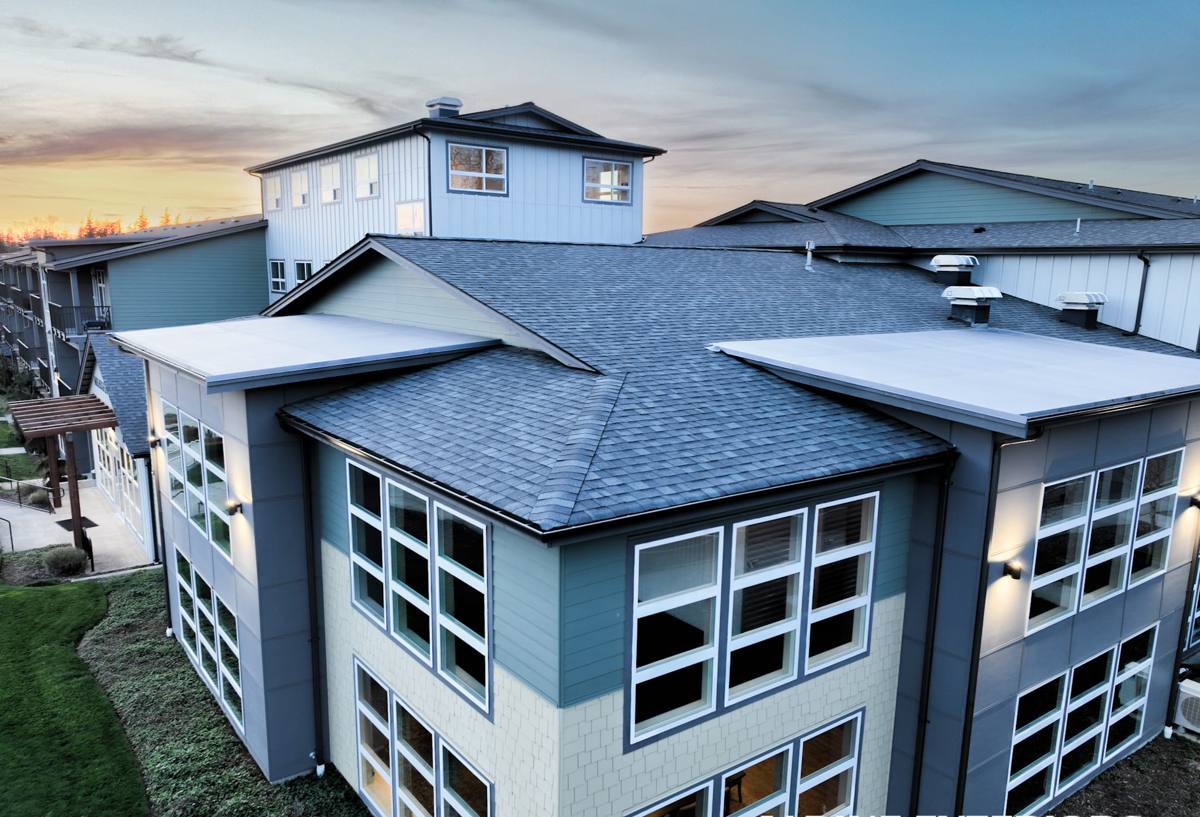
What "Correct" Actually Means for a New Roof Installation
Any crew can strip old shingles and nail down new ones. A correct installation for a Conway home means every layer underneath the visible surface is built to handle sustained moisture and salt exposure, not just typical Pacific Northwest rain.
Tear-Off and Deck Inspection
We remove the old roofing down to the deck on every job — no layering a new roof over an old one. That's the only way to actually see the plywood or plank sheathing underneath. In this area, we routinely find soft or delaminated deck sections around old valleys, chimneys, and eaves where moisture worked its way in over the years. Any compromised sheathing gets replaced before anything new goes down. Skipping this step is the single most common shortcut that leads to a roof failing early, because a new roofing system is only as good as the deck holding it up.
Underlayment and Ice-and-Water Protection
Standard felt paper is not enough for a home exposed to driving rain and long stretches of dampness. We install a synthetic underlayment across the full deck for a more reliable moisture barrier, with self-adhering ice-and-water shield membrane at the eaves, valleys, and any roof-to-wall transitions — the spots where wind-driven rain is most likely to get pushed backward under the shingles rather than running off normally.
Flashing That's Built for Salt Air
Flashing is where most roof leaks actually start, and it's also where salt air does the most damage over time. Thin, poorly coated metal flashing corrodes faster this close to Skagit Bay, which is why we pay close attention to flashing material and detailing at chimneys, skylights, sidewalls, and valleys — not just tucking a piece of metal under the shingles and calling it done, but step-flashing and counter-flashing every transition properly so water is directed out and away from the structure.
Material Choices That Hold Up Near Skagit Bay
There's no single "best" roofing material for every home — it depends on your roof's pitch, sun exposure, budget, and how much maintenance you're willing to do. Here's how the common options actually perform under Conway's specific conditions:
| Material | Moss Resistance | Salt Air Durability | Typical Lifespan Here |
|---|---|---|---|
| Architectural asphalt shingle (algae-resistant) | Good with proper ventilation | Solid with quality fasteners/flashing | 25-30 years |
| Standard 3-tab asphalt shingle | Fair — more prone to moss buildup | Moderate | 15-20 years |
| Standing seam metal | Excellent — sheds moisture, little moss purchase | Very good with coated/marine-grade fasteners | 40-50+ years |
| Cedar shake | Poor without diligent upkeep | Moderate, high maintenance | 20-25 years with regular treatment |
Algae-resistant architectural shingles are our default recommendation for most Conway homes — they carry copper-infused granules that actively discourage moss and algae growth, and they hold up well against wind-driven rain when installed with proper underlayment. Metal roofing is worth a serious look on homes with heavy tree shade or lower-pitch sections where moss tends to be worst, since almost nothing takes root on a properly installed standing seam roof. We'll walk through the honest trade-offs — cost, noise, appearance, install complexity — for your specific roof rather than pushing one product across the board.
Ventilation: The Difference Between a Roof That Sheds Moss and One That Grows It
Moss doesn't grow because of bad shingles — it grows because a roof surface stays damp and shaded longer than it should. Ventilation is the part of a new roof installation that homeowners think about least and that affects moss growth the most. A balanced system — continuous soffit intake at the eaves paired with ridge venting at the top — keeps air moving under the roof deck, which helps the surface dry out faster after our long wet stretches and reduces the cool, damp conditions moss thrives in.
We also look at tree cover and roof orientation during the estimate. If large trees are keeping a section of your roof in near-constant shade, that section will need moss prevention built in from the start — proper ventilation, the right shingle granules, and sometimes zinc or copper strips near the ridge — rather than relying on power-washing after the fact, which shortens shingle life if done too aggressively or too often.
Our Installation Process, Start to Finish
- On-site inspection and estimate — we assess your existing roof, deck condition where visible, ventilation, tree exposure, and material options, and give you a written, no-pressure quote.
- Permitting — we pull the necessary permits so the work is inspected and documented, protecting you if you ever sell the home.
- Material delivery and site protection — landscaping, gutters, and siding get protected before tear-off begins.
- Full tear-off — old roofing removed down to bare deck, debris hauled off continuously so it isn't piling up in your yard.
- Deck inspection and repair — any soft, rotted, or delaminated sheathing is replaced before moving forward.
- Underlayment and ice-and-water shield installation — synthetic underlayment across the deck, membrane at all vulnerable transitions.
- Flashing installation — new flashing at every chimney, skylight, valley, and sidewall.
- Roofing material installation — shingles, metal panels, or your chosen material installed to manufacturer specification.
- Ventilation and ridge work — intake and exhaust venting balanced and ridge capped.
- Cleanup and magnetic nail sweep — full site cleanup, including a magnetic sweep of the yard and driveway for stray fasteners.
- Final walkthrough — we review the finished roof with you before calling the job complete.
Signs Your Conway Roof Is Telling You It's Time
A roof rarely fails all at once — it usually gives warning signs first. Worth a closer look if you're seeing:
- Heavy moss growth across shaded sections, even after cleaning
- Granules collecting in gutters or at downspout outlets
- Curling, cracked, or missing shingles, especially on the side facing prevailing storms
- Daylight visible through the roof deck from inside the attic
- Soft or spongy spots when walked on (a sign to call a professional rather than climb up yourself)
- Rusty streaking near flashing, vents, or fasteners
- Interior water stains on ceilings or upper walls after heavy rain
- A roof that's 20+ years old and has never been fully replaced
Why Hire a Crew That Already Works in Conway
Roofing crews who mostly work drier, inland areas don't always think about salt air corrosion or moss-prone shading as a default part of the job — it's an afterthought instead of a starting assumption. Working roofs throughout Skagit County, including low-lying delta communities like Conway, means we build in ice-and-water shield placement, corrosion-resistant flashing and fasteners, and proper ventilation as standard practice, not upgrades you have to know to ask for. That local familiarity with how this specific stretch of coastline and river delta behaves is part of what a correct installation depends on.
After Installation: Keeping Moss and Salt Air From Winning Long-Term
A well-installed roof still benefits from basic upkeep in this climate. Keep gutters clear so water isn't backing up under the eaves, trim back overhanging branches where practical to cut down on shade and debris, and have the roof looked at every couple of years rather than waiting for a leak to show up inside the house. Light moss on a properly ventilated, algae-resistant roof is normal and manageable — heavy, spreading moss usually means airflow or drainage isn't doing its job, and it's worth having that looked at rather than just scraping the surface.
If your Conway home needs a new roof, or you're not sure whether repair or full replacement makes more sense, we're happy to take a look and give you a straight answer. Fill out the form below for a free, no-pressure estimate.